

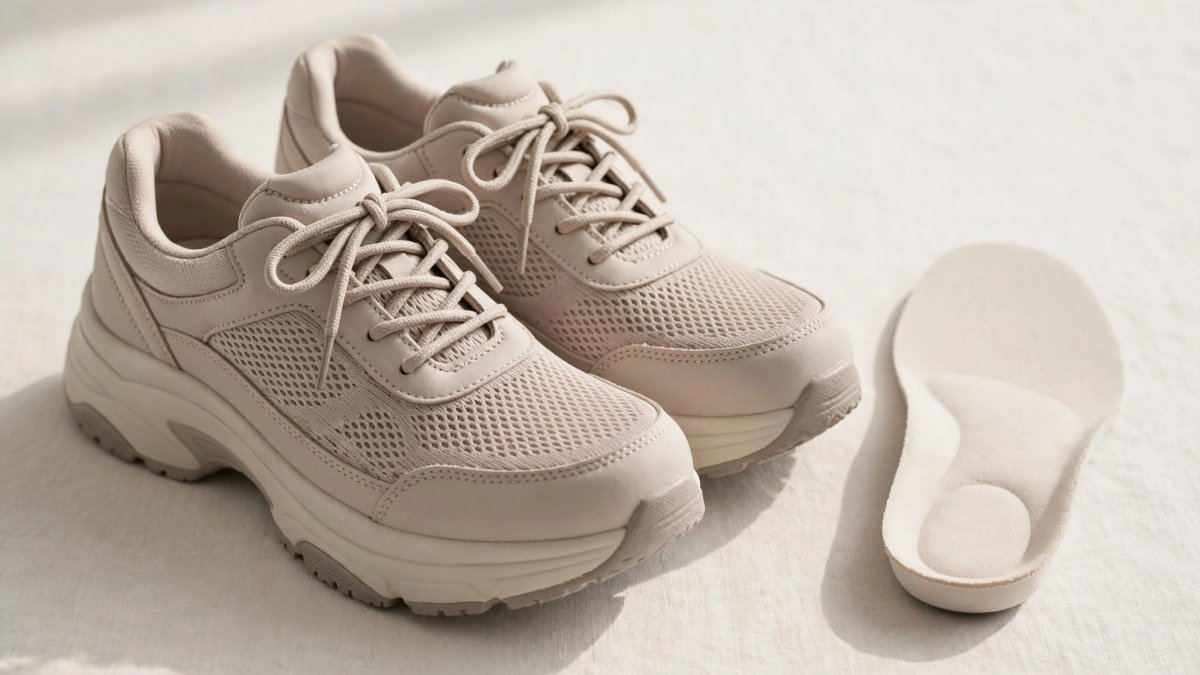
The best shoes for arthritis give your toes room, feel stable underfoot, and fit comfortably around the joints that bother you. The right pair depends on where you feel pain and how your feet change throughout the day.
A soft insole alone won't make up for a narrow toe box or a shoe that rubs a swollen joint. Start with fit, then compare cushioning, support, and closures as you walk.
Start With the Location of Your Foot Pain
Arthritis can affect the big toe, midfoot, ankle, or other joints in the foot. Before shopping, note where a shoe feels uncomfortable and whether the pressure comes from above, underneath, or along the side.
Pain Around the Toes and Forefoot
If your big toe joint is tender or you have a bunion, look for a forefoot shape that doesn't press against the side of your foot. A deep toe box also leaves room above raised or curled toes.
For discomfort under the ball of the foot, compare how different footbeds feel while walking. A cushioned shoe may feel pleasant, but the placement of its support matters too. A raised area under the forefoot should feel comfortable rather than adding pressure.
Pain Through the Midfoot or Ankle
If the top of your foot is sensitive, pay attention to the tongue, seams, and laces. A shoe with an adjustable opening gives you more control over pressure across the instep.
For ankle discomfort, consider how securely the heel sits and whether the sole feels steady. The goal is a shoe you can walk in without gripping with your toes or changing your stride to keep it on.
Give Your Toes Enough Width and Depth
A roomy toe box is one of the first features to look for in shoes for arthritis. Your toes should be able to lie naturally without pressing into the front, sides, or top of the shoe.
Compare Width Without Adding Extra Length
Feet spread when you stand, so assess toe room with your weight on both feet. Leave space in front of your longest toe, and make sure the widest part of your foot sits comfortably inside the shoe.
If the sides squeeze, try a wider width or a different toe shape before moving up a whole size. Extra length can leave the heel loose without solving pressure across the forefoot.
Width labels vary between brands and styles. Our guide to proper shoe fit explains how width, depth, and the shape of a shoe work together.
Look for Space Above Sensitive Joints
Depth matters as much as width if you have hammertoes or swelling. The upper shouldn't rest tightly on top of your toes when you're standing.
Run your hand inside the shoe to feel for seams near tender areas. Soft mesh or supple leather may feel more comfortable against a sensitive joint, but the shape beneath the material still needs to give your foot enough space.
Compare Cushioning, Support, and Sole Shape
Cushioning and support affect how a shoe feels underfoot. Neither feature has a single ideal level for everyone, so compare pairs while standing and walking.
Choose Cushioning You Can Stand On Comfortably
A cushioned midsole can make a hard floor feel less firm underfoot. However, a very soft shoe may feel unsteady to some wearers, particularly if the sole is tall or the foot moves around inside it.
Look for a balance of padding and stability. Stand on one foot while holding a counter if needed, then walk at your usual pace. Your foot should feel supported without the sole tipping or shifting beneath you.
Try a Rocker Sole if Toe Movement Is Uncomfortable
A rocker sole has a curved shape that changes how the shoe rolls during a step. Some shoppers find that shape comfortable when bending the toes feels awkward. Others prefer a flatter sole with a more familiar feel.
Compare both on a firm surface. Pay attention to your balance, especially when turning or stopping. If the curve makes you feel unsteady, choose a shape that gives you better control.
A shoe's construction can influence comfort, but it doesn't establish that the shoe will treat arthritis or prevent joint damage.
Find an Upper and Closure That Adjust to Your Feet
Swelling can change how a shoe feels over the course of a day. An adjustable upper gives you room to loosen the fit when needed, while still holding the shoe securely.
Look Beyond Standard Laces
Laces let you adjust different parts of the shoe, while hook-and-loop straps can be easier to manage if arthritis also affects your hands. Both should hold the foot without squeezing the top of it.
If a lace-up feels tight across your instep, try loosening that section rather than tightening the entire shoe to secure your heel. Our advice on adjusting laces for a high instep covers ways to reduce pressure and recognize when to stop.
Check Where the Upper Touches Your Foot
A padded tongue can feel comfortable, but seams and stiff panels may still rub. Notice whether a strap crosses a tender joint or a shoe opening presses against the ankle.
Don't rely on a painful shoe stretching into a comfortable one. A new pair should fit without pinching when you try it on.
Decide Whether You Need a Removable Insole
Some shoes have built-in footbeds, while others let you remove the original insole. A removable footbed is useful if you already wear an insert or want the option to change it later.
Built-In Support or a Separate Insert?
Built-in support is convenient when the shoe feels good as it comes. Separate insoles give you another way to adjust the feel of a pair you already own. Our guide to Aetrex arch support shoes and insoles compares those options.
Choose support based on how it feels under your foot, not on how prominent the arch looks. If a footbed presses uncomfortably into your arch or forefoot, try a different shape.
Leave Enough Room for Your Foot
An insert takes up space. When possible, remove the shoe's original footbed before adding another one, then make sure the replacement lies flat.
Walk in the shoe with your usual socks and insert. Your toes should still have room, and your heel shouldn't lift excessively. If an insert creates new or worsening discomfort, stop using it and speak with a podiatrist.
Test the Fit While Standing and Walking
A shoe can feel comfortable for a moment while seated and still rub when you move. Take time to try both shoes under conditions close to how you'll wear them.
- Wear your usual socks and bring any inserts you plan to use. Their thickness can change the fit.
- Stand in both shoes and compare toe room, width, and pressure over the top of each foot. Fit the larger foot if your feet differ in size.
- Walk on a firm surface at your normal pace. Turn around and notice whether your heel slips, your toes hit the front, or your foot slides sideways.
- Pay attention to pressure after walking. Remove the shoes and look for areas that feel irritated, especially around tender joints.
If your feet tend to swell later in the day, try shoes when that swelling is present. A pair that fits only when your feet are at their least swollen may become uncomfortable during ordinary wear.
For online orders, try the shoes indoors and spend enough time walking to compare the fit. A familiar brand or size is a starting point, not a guarantee that every style will fit the same way.
Three Shoe Styles to Compare
These shoes offer different features worth considering. Your own fit and walking comfort should guide the choice.
SAS Women's Tour: A Lace-Up With a Removable Footbed
The SAS Women's Tour mesh walking shoe has a lace-up closure, suede and mesh upper, and removable CoolStep footbed. It also includes SAS Tripad cushioning and an Arcfit heel stabilizer.
It's a useful style to compare if you want an adjustable everyday shoe with the option to remove the footbed. Bring your usual insert when trying it, and allow enough room for your toes after the insert is in place.
Dansko Professional: A Roomy Rocker-Bottom Clog
The Dansko Professional clog has a roomy toe box, contoured midsole, and rocker-bottom sole. Its leather upper offers a different feel from a mesh walking shoe.
Try it if you want to compare a clog with a lace-up. Walk and turn in it before deciding, since the rocker shape and heel fit may feel unfamiliar if you usually wear sneakers.
Mephisto Men's Match: A Leather Walking Shoe
The Mephisto Men's Match walking shoe combines a full-grain leather upper with speed lacing, a padded tongue and collar, and an Air-Bag shock-absorption feature.
It offers a more traditional leather-shoe appearance for everyday wear. As with any structured upper, pay attention to pressure over the toes and instep rather than assuming the material will soften enough to fix a tight fit.
Match the Shoe to Your Daily Routine
The right pair also depends on where you'll wear it. For errands and longer walks, prioritize a secure heel and a sole that feels stable on the surfaces you use. If you stand for much of the day, compare how the footbed feels after several minutes on a firm floor.
Dress shoes can be worth trying, too. Look for a lower, stable heel, enough room across the forefoot, and an upper that doesn't press on sore joints. A more adjustable casual shoe may be the better choice on days when swelling changes your fit.
At home, a secure slipper or shoe can be easier to walk in than a loose, backless style. If you have diabetes, numbness, or reduced sensation in your feet, ask a healthcare professional for advice about protecting them indoors.
Know When Foot Pain Needs Medical Attention
Shoes can make daily activities more comfortable, but persistent or worsening foot pain deserves a medical assessment. A podiatrist or other qualified healthcare professional can help identify the cause and discuss whether an orthotic or other treatment is appropriate.
Seek prompt medical care for a suddenly hot, red, swollen joint, especially if you have a fever or can't bear weight. Don't assume a new or severe symptom is simply a footwear problem.
Choose the Fit That Feels Good as You Walk
The most useful starting point is a shoe that gives sensitive joints space and feels steady underfoot. Compare the sole, closure, and footbed only after the basic fit works.
At Tip Top Shoes, you can try styles at our store at 155 West 72nd Street in New York City. Bring your usual socks and inserts so you can judge each pair as you'll wear it.


