

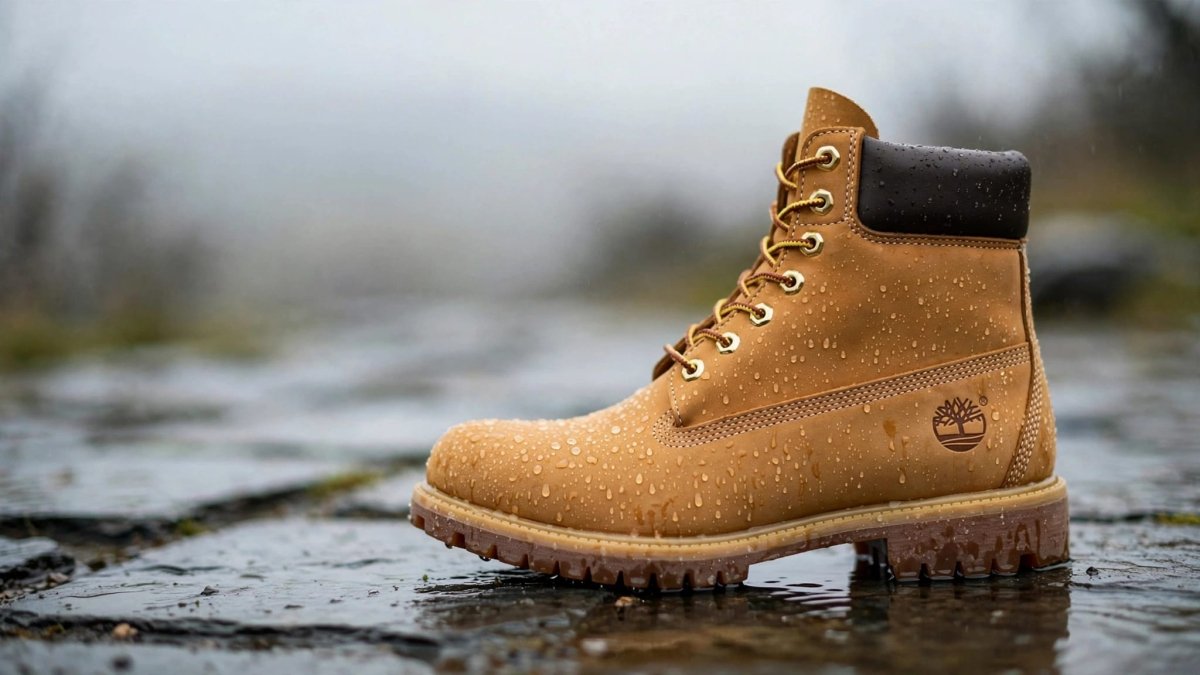
Timberland Premium 6-Inch boots keep water out through waterproof materials and construction designed to protect vulnerable joins. The details depend on the model: the men's wheat 10061, for example, combines direct-attach construction with sealed seams.
For shoppers, that distinction matters. A boot can look ready for rain, but its material and construction determine what protection it offers. Here's how to understand those features and choose a pair for the conditions you expect.
How the Men's 10061 Keeps Water Out
The men's Timberland Premium 6-Inch wheat boot uses direct-attach, seam-sealed construction. Those terms describe two parts of the boot's design that work together to limit water entry.
Direct-attach construction
Direct-attach construction joins the upper, the part that covers your foot, to the sole. That connection matters because the edge between the upper and sole is exposed to water whenever you step into a puddle or walk on wet pavement.
The way a boot is assembled affects that junction. On the 10061, direct attachment is part of the waterproof design, giving shoppers a more useful detail than appearance alone. A thick-looking sole doesn't tell you how well its connection to the upper keeps water out.
Sealed seams
Seams are another place to consider. When sections of a boot are joined, stitching and joins can create potential paths for moisture. Seam sealing helps close those paths.
The 10061's seam-sealed construction complements its direct-attach design. Together, they address two areas exposed to water during ordinary wear: the joins in the boot and the connection near the sole. The description applies to this model, so it's useful to distinguish it from other boots that look similar.
What Waterproof Leather Adds
A boot's upper covers more surface area than its seams, so its material matters too. Waterproof leather helps protect the top and sides of the foot when rain or splashes reach the boot.
The upper covers the exposed parts of your foot
Our women's Timberland Premium 6-Inch wheat boot has a premium waterproof leather upper. That gives you a specific material detail to consider alongside the boot's six-inch height.
The upper meets a different challenge than the sole: rain can land on it, while puddles can splash against it. A waterproof upper is designed for that exposure, making it a practical choice for wet commutes and everyday errands.
Surface moisture and a wet interior differ
A boot can look damp after rain without your socks getting wet. The exterior is the part exposed to the weather, while the interior is where you want to keep moisture out.
That distinction matters when you assess a pair after a walk. An exterior that has changed appearance in the rain doesn't, by itself, tell you that water has reached your foot. Pay attention to how the inside feels as well.
What to Expect in Rain and Puddles
Timberland waterproof boots are useful when your day includes wet sidewalks, rainy commutes, and shallow puddles. Their protection has practical limits, though, especially around the opening at the top.
Rain on the boot
For routine wet weather, the waterproof design addresses moisture that reaches the outside of the boot. The six-inch height also covers more of the ankle than a low shoe, so a splash has more boot to hit before it reaches your sock.
Your clothing matters in heavier rain. Water running down your legs can reach the opening, particularly if your pants are tucked inside. Wearing pant legs over the outside of the boots can help direct rain away from the collar.
Water near the opening
The top of a lace-up boot remains an opening for your foot. If water pours over the collar, the waterproof material below it can't prevent that water from reaching the inside.
Puddle depth matters for the same reason. A six-inch boot offers useful coverage around the ankle, but it isn't a guarantee that you can stand in water up to the top without getting wet. For deep water, choose footwear with more coverage.
Compare Premium Styles and Kids' Boots
The Premium 6-Inch silhouette comes in more than the familiar wheat color. When comparing pairs, look at the model name and the details attached to that particular boot.
The men's 10061 is the wheat option with direct-attach, seam-sealed construction. It suits shoppers who want the classic tan appearance and the construction details described above.
For a darker look, the men's Premium 6-Inch black nubuck boot is another waterproof option. Its black finish works with darker pants, while the nubuck gives it a different appearance than polished leather.
The women's 10361 offers the wheat look with a waterproof leather upper. Choose between the men's and women's versions based on fit and the product details that matter to you, rather than assuming they're identical in every respect.
For children, our kids' Classic 6-Inch wheat boot offers a waterproof option in a similar style. It's a Classic model, so its name and specifications should be considered separately from the adult Premium boots.
Warmth and Waterproofing Do Different Jobs
A dry boot can still feel cold, and a warm boot won't necessarily keep water out. When shopping for wet winter weather, consider both qualities.
Insulation helps retain warmth
The men's 10061 contains 400 grams of PrimaLoft ECO insulation. That specification describes its insulation, not an additional waterproof barrier.
Insulation can make the boot more appealing for cold commutes or time outdoors. Your socks and activity level also affect how warm your feet feel, so the number alone can't predict comfort for every wearer.
The padded collar improves comfort
The 10061 also has a padded collar around the ankle. Its role is comfort: it cushions the area where the top of the boot meets your leg.
A comfortable collar can make a structured boot easier to wear throughout the day. It doesn't turn the top opening into a watertight seal, however. In wet weather, keep that opening in mind when choosing socks and pants.
Find a Fit You Can Wear All Day
Water protection is only useful if you want to wear the boots. A good fit gives your toes room and holds your foot securely without pressure across the top.
Start with your usual footwear as a reference
For the men's 10061, we recommend starting a half size down from your sneaker size. Treat that as a starting point rather than a rule for every foot. Sneaker fit varies, and the socks you plan to wear can change how a boot feels.
Try the boots with the socks you expect to use most often. If you want a pair for colder days, test them with those thicker socks too. Your toes should have room to move without pressing against the front.
Walk, bend, and adjust the laces
Lace both boots and walk around before deciding on the fit. Notice whether your heel feels secure and whether the boot presses on the sides or top of your foot.
Bend your knees and take a few normal steps. The boot should feel supportive without forcing your toes forward. Adjusting the laces can improve the fit around your ankle, but it can't make a boot that's too short or too narrow the right size.
When Another Type of Footwear Makes Sense
Premium 6-Inch boots are a practical choice for everyday rain, but the conditions you face may call for a different design.
For frequent deep puddles or standing water, a taller waterproof boot provides more coverage above the ankle. That extra height gives water farther to travel before it can reach the opening.
Ice presents a separate issue. A waterproof boot helps with moisture, but waterproofing alone doesn't tell you how well a sole will grip a frozen surface. Choose footwear or traction equipment suited to icy conditions when grip is your main concern.
Work requirements deserve separate attention too. If your job calls for a safety toe or another protective feature, shop for a boot that meets that requirement. The Premium 6-Inch boot's waterproof description doesn't establish that it meets a workplace safety standard.
Questions Shoppers Often Ask
Are all six-inch Timberland boots waterproof?
A six-inch height describes the boot's profile, not its water protection. The men's 10061, men's 10073, and women's 10361 discussed here are described as waterproof. A similar height or appearance alone doesn't establish that another model has the same features.
Can you wear waterproof Timberlands in snow?
The men's 10061 combines waterproof construction with insulation, making it an option for cold, wet conditions. Snow can still enter over the top, and slippery surfaces require attention to traction. Match your footwear to the depth and conditions you'll encounter.
Does a padded collar keep water out?
A padded collar makes the ankle area more comfortable. It isn't the same feature as a sealed seam, and water can still enter through the boot's top opening.
Choose the Protection That Fits Your Day
The men's 10061 keeps water out with direct-attach, seam-sealed construction. Other Premium styles offer waterproof materials in different fits and finishes.
Start with the conditions you expect, then choose a pair that fits comfortably with your everyday socks. A well-fitting boot with the right coverage is the one you're more likely to reach for when rain arrives.


