

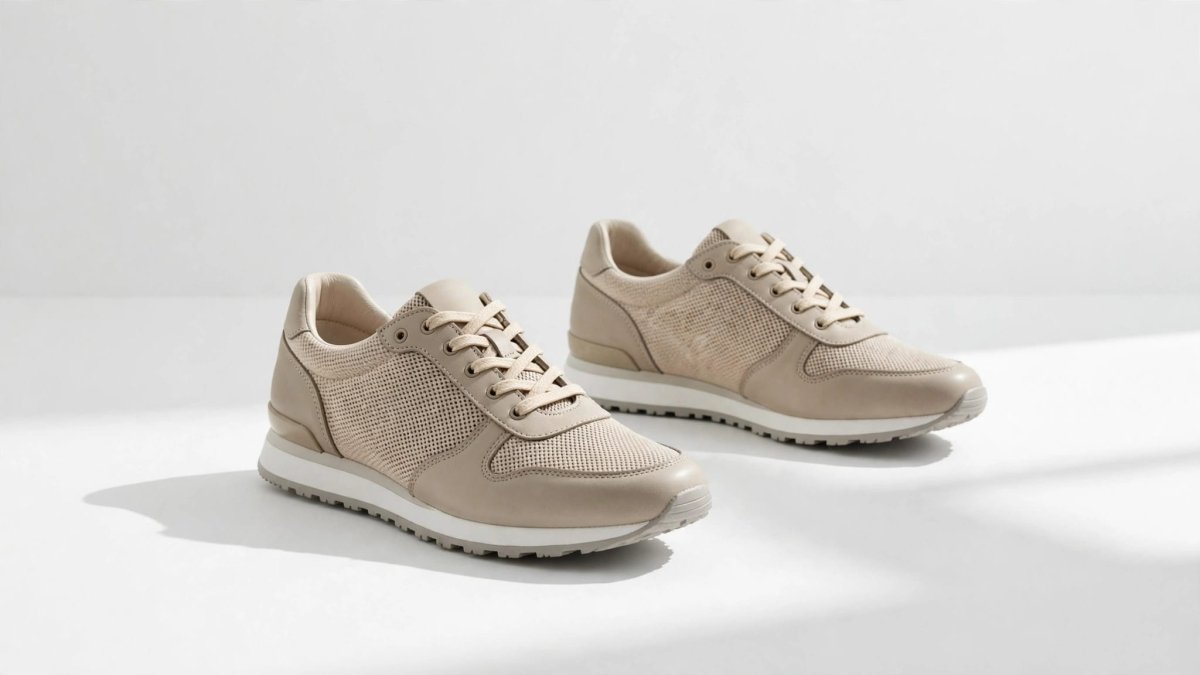
Assess shoe fit on both feet while standing, then walk at your usual pace to see how the shoes move with you. Proper shoe fit involves the whole shoe, including toe space, heel hold, and how comfortably the upper wraps your foot.
A pair can feel comfortable while you're seated yet behave differently once you're moving. At Tip Top Shoes, we recommend treating standing and walking as separate tests before choosing a pair. Start by making your try-on conditions match how you'll wear the shoes.
Key Takeaways
- Try both shoes with the socks and any prescribed orthotics you'll wear with them.
- While standing, assess the toes, sides, instep, and heel separately rather than judging the shoe by length alone.
- Walk normally, turn, and stop before comparing another size or style. Consider the full pattern of fit rather than treating one sensation as a diagnosis.
Set Up a Useful Shoe Try-On
Bring your everyday socks for everyday shoes. For boots, use the socks you expect to wear inside them. Sock thickness changes how much space remains around your foot, so thin fitting socks won't reproduce the feel of thicker winter socks.
If you wear prescribed orthotics, include them during the fitting. They occupy space inside the shoe and can change where your heel sits. Don't stack an insert over the existing footbed unless that setup is appropriate for the insert and shoe.
Try both shoes, because feet aren't always identical in length or shape. Fasten each shoe as you would for regular wear. Leaving laces loose or straps unfastened makes the walking test less useful.
Feet can swell during the day, so an afternoon try-on can help you assess everyday footwear under more representative conditions. If you're comparing pairs at home, use a clean indoor surface.
Finally, treat the size printed inside the shoe as a starting point. The shape and construction of the actual pair matter more than matching a familiar number.
How to Assess Fit While Standing
Stand upright with your weight comfortably distributed across both feet. Because weight-bearing changes how your feet spread, assess each area again after getting out of the chair.
Assess the toe area in three dimensions
Locate your longest toe, which isn't always the big toe. Then consider the space ahead of it, beside it, and above it.
Move your toes gently without curling them underneath. Pay attention to seams or overlays as well as the outer shape. A shoe can offer space at the front while its upper presses against a toenail.
For a pointed dress shoe, distinguish the decorative tip from the part your toes occupy. Empty space in the point doesn't tell you whether the toe area suits your foot.
Separate forefoot width from instep pressure
Notice where the upper contacts your foot. Pressure across the ball of the foot is a different fitting issue from pressure over the instep.
Try a modest lace or strap adjustment, then compare the result. If loosening the closure changes the sensation, you've learned something about the adjustment range. If it doesn't, another width, depth, or shoe shape may offer a better comparison.
Look at both feet rather than assuming the second shoe feels like the first.
Notice where the heel and arch sit
Check whether your heel settles into the back of the shoe without having to force your foot into position.
Also notice where any shaped support meets your arch. Record the location of pressure before walking, then reassess it in motion. That comparison is more useful than judging support by how prominent it feels during the first few seconds.
What to Notice While Walking
A seated try-on can't show how the shoe behaves when your foot bends and your weight moves forward. Walk at your normal pace rather than taking cautious showroom steps.
Walk straight, turn, and stop
Take several passes across the room, then make comfortable turns in both directions. Include a few natural stops.
Notice whether your foot shifts forward when you stop or sideways when you turn. Also pay attention to the heel as you push off. Movement means different things in a lace-up sneaker, a pull-on boot, and an open-backed clog, so compare it within the shoe's design.
If a safe indoor ramp is available, walking down it adds another useful observation: whether your toes move toward the front. Don't substitute an unsafe slope for a normal walking test.
Watch for changes in your stride
Pay attention to what you're doing to keep the shoe on. Gripping with your toes, shortening your steps, or avoiding a normal push-off deserves a closer look.
Then notice any rubbing or concentrated pressure. Identify the location rather than labeling the whole shoe "tight." A seam against the little toe calls for a different comparison than pressure beneath the laces.
After a short walk, remove the shoes and look for localized redness. Skin marks alone don't establish the cause, but they can help you locate an area to reassess.
If you change the way you walk to manage a shoe, repeat the test in another size or shape before deciding.
Don't continue a try-on through pain. For persistent pain or recurring skin damage, seek advice from a podiatrist.
When to Try a Different Size or Shape
Changing the number on the box is only one way to change fit. Width, internal depth, and the shape of the shoe's last, the form around which it's made, also affect the result.
Change one variable at a time
First identify the area you want to improve. If the front feels restricted, compare how your toes sit in another size, width, or toe shape.
Avoid moving automatically to a longer shoe for every fitting problem. Added length changes where the heel and forefoot sit too. Walk again after every change rather than assuming the original issue is solved.
Our selection includes medium, wide, narrow, and extra-wide options across different styles. However, width labels aren't interchangeable across every brand or shoe category. Compare the actual pairs.
Compare styles within a familiar brand
A familiar brand name doesn't guarantee an identical fit across its collection. Closures, linings, and upper construction change how a shoe surrounds your foot.
For example, assess Gabor ivory nappa leather shoes as their own pair rather than carrying over assumptions from another Gabor style.
When comparing candidates, wear a complete pair before making the final choice. Trying one style on each foot can help with an initial comparison, but natural differences between your feet can distort the result.
Keep your socks and fastening method consistent so you're comparing the shoes themselves.
Adjust the Fit Test for Boots and Sandals
The same observations apply across footwear categories, but construction changes what you can see and adjust. Focus on how each design holds your foot during movement.
Pull-on boots need a movement test
With pull-on styles such as Gabor brown nubuck Chelsea boots, assess the entry and the walking fit separately.
Getting your foot through the opening tells you about entry. Walking tells you more about the relationship between your heel, instep, and the boot's interior.
Use your intended socks, then take normal steps and turn. Notice whether you're changing your stride to manage movement inside the boot. Also assess the opening around your ankle or lower leg, since pressure there is separate from the fit around your foot.
Sandals let you see foot placement
With open styles such as Birkenstock Arizona soft-footbed sandals, look at your foot's position on the footbed while standing and walking.
Adjust the straps, then observe whether your foot stays in a comfortable position through turns and stops. Tightening straps changes how the upper holds your foot; it doesn't change the shape of the footbed.
Notice where your toes and heel sit relative to the edges. Also consider whether you grip with your toes to keep the sandal in place.
Assess both feet throughout the test. A clear view of one foot doesn't replace walking in the complete pair.
Frequently Asked Questions About Shoe Fit
Can I judge fit by standing on a removable insole?
A removable insole can offer a rough visual comparison of your foot's outline and the space beneath it. However, it doesn't reproduce the upper, lining, or heel structure.
Use it as an additional observation, not a replacement for wearing the shoe. The complete standing and walking test shows how those parts interact.
How useful are "true to size" customer reviews?
Customer reviews can reveal patterns worth considering, but "true to size" describes another person's comparison with their usual footwear. It doesn't describe your foot shape.
Read comments about specific locations, such as the toe area or instep, more closely than a general size verdict. Then use your own try-on to compare the pair.
What if I have numbness or reduced feeling in my feet?
Comfort alone is an incomplete guide when sensation is reduced. You may not feel rubbing or pressure clearly during a short try-on.
If you have diabetes, neuropathy, poor circulation, or a history of foot ulcers, get individualized footwear guidance from a qualified clinician. New wounds, persistent redness, or swelling also need medical attention.
Do US, UK, and European sizes convert exactly?
Size conversions are useful starting points, but they don't describe width, internal depth, or toe shape. Brands also differ in their size grading.
Use the brand's sizing information to choose an initial size, then assess the actual pair on both feet. A conversion can't replace the standing and walking tests.
Choose the Pair That Works in Motion
Proper shoe fit becomes clearer when you assess individual areas while standing, then observe the complete shoe while walking. Compare sizes and shapes under the same conditions so each change tells you something useful.
Give your natural stride as much attention as the space around your toes. The pair you choose should make sense on both feet during the movements you'll make every day.


