

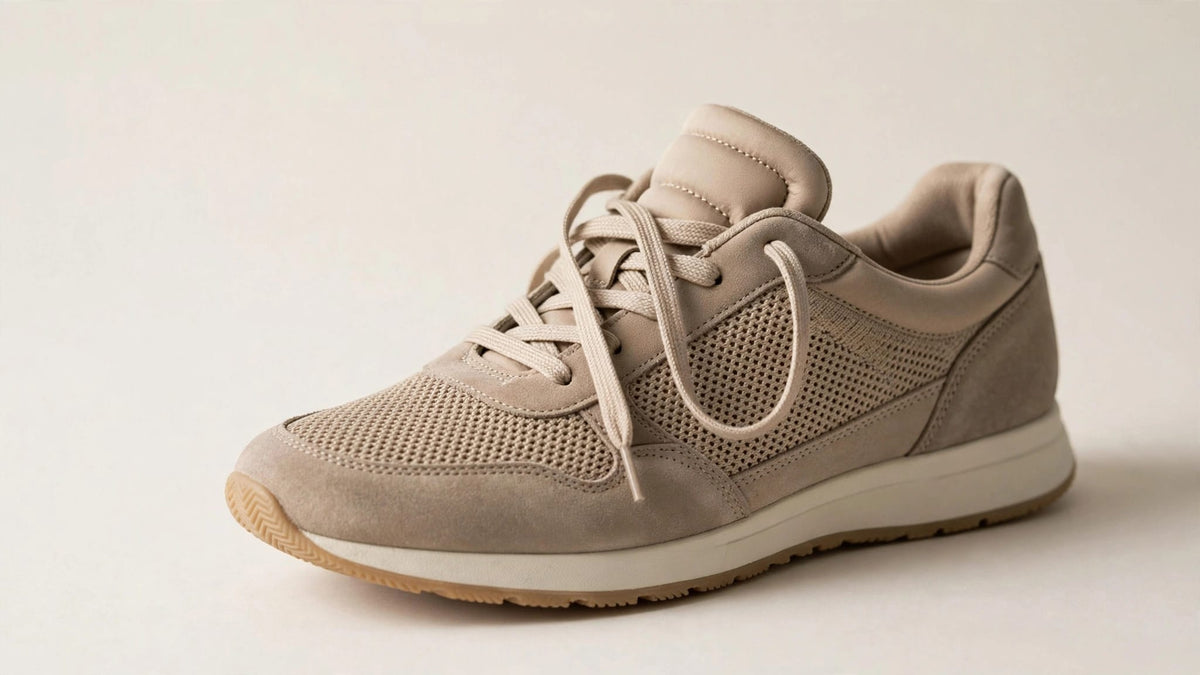
When lacing shoes over a high instep, stop if you feel pain, burning, or tingling. Pulling harder isn't an appropriate response to those symptoms, and you shouldn't continue wearing shoes that cause them.
High instep lacing deserves attention to where discomfort occurs, rather than how firmly you can tie a knot. A precise description helps separate something you notice along the laces from symptoms that need medical attention.
Before making another adjustment, identify the location and character of the discomfort.
Key Takeaways
- Stop wearing the shoes if lacing causes pain, numbness, burning, or tingling.
- Distinguish the top of your midfoot from your toes, ankle, and the arch underneath your foot.
- Record whether discomfort follows a lace crossing, a tongue edge, or a broader area.
- Keep notes about each foot separately, including when symptoms begin and whether they persist after removing your shoes.
The aim is to describe what you're experiencing accurately. A visible mark, a shoe-size label, or the appearance of your arch can't explain persistent pain on its own.
Understand What a High Instep Describes
The instep is on top of your foot
Your instep is the upper surface of your midfoot, between the area behind your toes and the front of your ankle. On many lace-up shoes, the tongue and several lace crossings sit over this region.
A high instep describes the height or prominence of that upper contour. It doesn't describe your entire foot, and it isn't a diagnosis.
When discussing discomfort, point to the actual spot rather than referring to the whole foot. "Across the top of my right midfoot" is more useful than "these shoes hurt."
A high instep and a high arch aren't interchangeable
The arch is underneath your foot. Although arch shape and instep shape are related parts of foot structure, the terms describe different areas.
You can't determine everything about the top of your foot from a wet footprint or a view of your sole. Similarly, the height of your instep doesn't explain every ache in the midfoot.
Keep these distinctions in mind when asking for help. Pain underneath the arch, tenderness beneath a lace crossing, and discomfort at the front of the ankle deserve separate descriptions.
Locate Discomfort Before Retightening
Identify the smallest area you can describe
Notice whether the sensation occupies one point, a narrow line, or a broad patch. Also distinguish between something you feel while sitting and something that begins during walking.
Describe the sensation plainly. Pressure, rubbing, tenderness, burning, and tingling aren't interchangeable words. If you're uncertain, explain what you feel without assigning it a medical name.
Avoid repeatedly pressing a sore area to test it. Instead, note its location and stop the activity that brings on symptoms. Persistent discomfort needs more attention than repeated lace adjustments.
Describe each foot independently
Your left and right foot may have different symptoms, even in the same pair of shoes. Record which side is affected rather than assuming both require the same response.
These details make your description more useful:
| Detail | What to record |
|---|---|
| Location | Top of midfoot, tongue edge, toes, or ankle |
| Sensation | Pressure, rubbing, pain, burning, or tingling |
| Timing | Immediately, during walking, or after removal |
| Side | Left foot, right foot, or both |
Keep the observations separate from conclusions. "Tingling began while walking" is an observation; deciding which structure caused it requires more information.
Understand the Parts Around Your Instep
Distinguish the laces from the tongue
The laces pass through eyelets or other fastening points. The tongue is the panel beneath them. Some tongues are separate along their sides, while others attach to the surrounding upper.
When you remove your shoe, notice where the tongue sat and whether it folded or shifted. Record any visible crease alongside the location of discomfort.
These observations describe the shoe's position during wear. They don't establish the cause of pain. Avoid assuming that every symptom beneath the laces comes from the laces themselves.
Use consistent names for the fastening area
An eyelet is a hole through which a lace passes, sometimes reinforced with metal. Fabric loops and hooks are other fastening points, so not every opening is technically an eyelet.
When describing a location, count fastening rows upward from the toe end. Include the shoe model because row counts vary between designs.
You can also photograph the shoe before removing it, provided doing so doesn't delay taking it off when you're uncomfortable. A photograph records the lace arrangement and tongue position without requiring you to recreate a painful situation.
Record When Symptoms Start and Stop
Timing gives useful context. Note whether discomfort begins as you tie the shoe, when you stand, or only after you've been moving.
Also record whether symptoms disappear after removal or remain while you're barefoot. Don't put the shoe back on repeatedly to see whether the same pain returns.
Keep the surrounding circumstances factual. Record the activity, approximate duration, and whether you wore your usual socks or prescribed orthoses. You don't need to calculate a pressure score or assign a diagnosis.
If you notice swelling, describe whether it's new and whether it affects one foot or both. A sudden change deserves medical attention rather than continued experimentation with laces.
A brief note on your phone is enough: the date, shoe, affected foot, location, and sensation. Add what happened after you stopped wearing the pair. Detailed prose isn't necessary, but a clear timeline can help during a conversation with a clinician.
Keep Shoe-Shopping Conversations Concrete
Shopping discussions are more productive when you bring the actual pair associated with discomfort. A general description such as "sneakers always hurt" leaves out the details that distinguish one experience from another.
Record the brand, model, and size printed inside the shoe. Include the width designation if one appears. These details identify the pair; they don't explain the symptoms.
Bring your usual socks and any prescribed orthoses to an in-person appointment. If a clinician prescribed an orthosis, don't modify it yourself as part of a lacing experiment.
If you're visiting us at 155 W 72nd St in New York, bring the shoes you've been wearing and your notes. Point out the exact location of discomfort rather than relying on a broad label such as "high arches."
Keep separate questions separate, too. A retail conversation about a shoe doesn't replace medical assessment of persistent pain, altered sensation, or swelling. That distinction matters even when the discomfort seems connected to a particular pair.
Know When to Stop Adjusting Your Laces
Pain isn't a useful target for a high instep lacing experiment. Stop wearing the shoes when symptoms appear, rather than testing how long you can tolerate them.
Seek medical advice for recurring pain, unexplained swelling, or numbness that persists after removing your shoes. Symptoms that also occur barefoot deserve attention beyond the fastening arrangement.
Numbness that remains after shoe removal needs medical assessment. Repeatedly relacing the same pair shouldn't delay that assessment.
Seek urgent care for severe pain after an injury, an obvious change in foot shape, or an inability to bear weight. Sudden loss of sensation or a foot that becomes unusually cold or discolored also requires urgent assessment.
If you have diabetes, reduced sensation, or a known circulation problem, follow your clinician's foot-care guidance. Don't rely on pain alone to identify a problem, since reduced sensation can make injuries harder to notice.
Skin damage also changes the situation. An open sore, spreading redness, warmth, or drainage calls for medical advice, not another attempt to tolerate the shoes.
Frequently Asked Questions About High Instep Lacing
Does a lace mark mean something is wrong?
A mark alone doesn't identify its cause or tell you whether an underlying problem exists. Note its location and whether it accompanies pain, altered sensation, swelling, or broken skin.
Don't keep wearing a painful pair while waiting to see whether the mark becomes more pronounced. Seek advice if symptoms recur or the skin becomes damaged.
Should both shoes look identical when tied?
Matching appearance doesn't tell you what either foot is experiencing. Describe symptoms on each side separately, including any differences in location or timing.
If only one foot hurts, don't dismiss that difference because the shoes look symmetrical. New one-sided pain or swelling deserves attention, particularly when it persists after shoe removal.
Can I keep walking if tingling goes away after removal?
Stop the activity when tingling occurs. Its disappearance after removing a shoe doesn't establish the cause or make repeated episodes something to ignore.
If tingling returns, arrange medical advice rather than repeatedly reproducing it. Mention whether you experience it in other shoes, during other activities, or while barefoot.
Is there a universal tightness measurement?
There isn't a single lace-tension number for everyday shoe wear. Counting how many fingers fit beneath a lace doesn't diagnose the cause of discomfort.
Focus on the symptoms you can describe and their timing. Pain, numbness, or burning shouldn't become an acceptable endpoint simply because a knot looks ordinary or matches your other shoe.
Keep Comfort Separate From Tolerance
High instep lacing shouldn't become a test of how much discomfort you can endure. Clear observations are more useful than repeatedly tightening, walking, and waiting for symptoms to return.
Identify the location, describe the sensation, and note what happens after shoe removal. Stop when pain or altered sensation appears, and seek medical help when symptoms persist or recur.


