

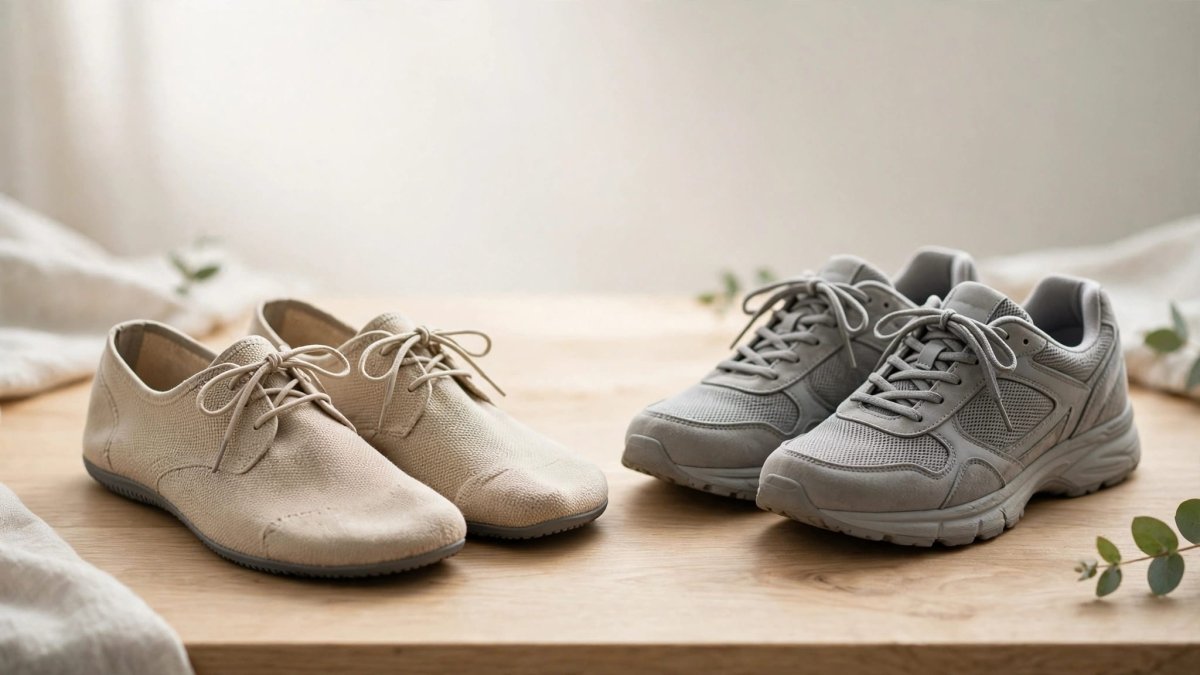
To transition to barefoot shoes, start with short, comfortable periods of wear and build up gradually. Keep your usual shoes available, and pay attention to how your feet and lower legs feel both during and after activity.
A roomy toe box and flexible sole can feel appealing when you're shopping for a new pair. The fit and amount of wear matter more than any promise on the box. Start by understanding what will feel different underfoot.
Key Takeaways
- Choose a shoe that gives your toes room without letting your foot slide around.
- Begin with a short, familiar activity and return to your usual shoes before your feet feel overworked.
- Increase wear gradually, using your comfort during the activity and afterward to guide you.
- Stop if you experience pain, numbness, burning, or worsening rubbing.
- Ask a clinician for guidance before changing footwear if you have reduced sensation, a circulation problem, or a prescribed footwear plan.
What Changes When You Wear Barefoot Shoes
Barefoot shoes generally have a flexible sole, a roomy toe area, and less structure or cushioning than many conventional shoes. Designs vary, though, so examine each pair rather than relying on the label.
A flatter sole can feel different
Many barefoot shoes have zero drop, meaning the heel and forefoot sit at the same height relative to the ground. That's different from a shoe with a raised heel.
The change can feel unfamiliar if you usually wear shoes with a noticeable heel lift. Your calves and feet may respond differently as you walk, so give yourself time to adjust rather than switching every pair at once.
Zero drop doesn't tell you how much cushioning a shoe has. Two flat shoes can feel quite different underfoot, depending on their soles and insoles.
Flexibility and protection vary
A flexible shoe bends more easily as your foot moves. A thinner sole may also allow you to feel more of the surface beneath you, including uneven pavement.
That sensation isn't necessarily a problem, but you may prefer more cushioning or protection for certain activities. Consider where you'll wear the shoes most often, including the flooring at work and the condition of your usual walking route.
Find the Right Fit Before You Begin
A gradual transition won't fix a shoe that squeezes your toes or slips excessively. Try both shoes with the socks you expect to wear, and include any prescribed orthotics you normally use.
Check toe room while standing
Stand with your weight on both feet and look for space ahead of your longest toe. Then notice the room beside and above your toes. You should be able to move them gently without curling them under or pressing against the upper.
A wide-looking toe box doesn't guarantee enough room for every foot. One person may need more width near the little toe, while another needs more depth above the big toe. If the front feels crowded, compare a different size or shape rather than expecting the shoe to stretch into a better fit.
Walk, turn, and stop
Walk at your usual pace in both shoes. Make a few turns and stops, then notice whether your toes move toward the front or your heel shifts excessively.
Pay attention to how you're walking, too. If you grip with your toes to keep the shoes on, shorten your stride, or avoid a normal push-off, try another pair. Our guide to checking shoe fit while standing and walking covers these checks in more detail.
Choose a Shoe for Your Actual Routine
A shoe that fits your foot also needs to suit the activity. For everyday wear, consider whether you'll use it for errands, commuting, or long stretches on your feet. The upper, sole, closure, and amount of cushioning all affect how a pair feels.
Our Lems Women's Kourt Whiteout is one option for shoppers considering a flatter casual sneaker. It has a wide toe box and zero-drop construction, plus a full-grain leather upper and an ultra-thin cork insole.
Try it on as a complete pair and assess the fit for yourself. A feature such as a wide toe box can be useful, but it doesn't establish that the shoe will fit every foot.
If you're accustomed to substantial cushioning or support, you may prefer a less abrupt change. A shoe with a roomy front and some cushioning can be a useful option while you decide how much ground feel you want.
How to Transition to Barefoot Shoes Gradually
Treat your first wears as a chance to gather information, not as a test of endurance. There isn't one transition timeline that suits every person, shoe, or activity.
Start with a familiar, short activity
Wear your new shoes around the house or for a brief walk on a familiar surface. Choose an outing where you can stop or change shoes easily, rather than a long day that leaves you far from home.
Afterward, notice how your feet, calves, and ankles feel. Check again later and the following day. If you feel comfortable during and after the activity, you can gradually add wear. If discomfort appears, reduce the amount of wear or pause before trying again.
Keep the first outing shorter than your usual walk, even if the shoes feel comfortable as soon as you put them on. Standing in a store and spending a full day on your feet place different demands on a shoe.
Keep your regular shoes in rotation
Your familiar shoes give you an easy way to change plans. For example, you might wear the new pair for a short errand and switch back before a longer commute.
Change one part of your routine at a time. If you add more walking in the new shoes, keep the route familiar. Once that feels comfortable, you can consider a different surface or a longer outing. Changing the shoe, distance, and terrain together makes it harder to identify what bothered you.
Adapt the Plan to Walking, Work, and Exercise
The time you spend wearing a shoe matters, but so does what you do in it. Standing, walking, and running place different demands on your feet.
Everyday walking and long days
Start with a route you know rather than a trip that involves hours of sightseeing. Smooth, predictable ground also makes it easier to focus on the shoe's fit.
For work, consider how much standing you do and whether a thin sole feels comfortable on the floor. If your job requires protective footwear, follow those requirements. A casual barefoot-style shoe isn't a substitute for a required safety shoe.
On a busy day, bring your usual pair. Swapping shoes lets you stop the new activity without cutting your day short.
Running and uneven terrain
Being comfortable walking in a new pair doesn't establish that you're ready to run in it. Running introduces a different activity, so approach it separately and begin with an amount that feels manageable.
Trails and rough sidewalks also call for attention to traction and protection. Look at the outsole and consider the conditions before choosing a pair. If the surface or activity leaves you uncomfortable, return to footwear that feels better suited to it.
Recognize Normal Differences and Warning Signs
A new shoe can feel unfamiliar without causing pain. You might notice the sole bending differently or feel more texture beneath your feet. Those observations are useful, but they shouldn't distract you from symptoms that call for a change.
Notice where discomfort occurs
Identify the location and sensation rather than describing the whole shoe as uncomfortable. Pressure across the top of your foot may relate to the upper or lacing, while crowding beside a toe may point to the shape of the front.
After a short walk, remove the shoes and look for localized redness or rubbing. A mark alone doesn't establish the cause, but it can help you identify an area to reassess. Compare both feet because the fit may feel different on each side.
Stop rather than push through symptoms
Pain, numbness, burning, tingling, or worsening rubbing are reasons to stop wearing the shoes. Don't continue walking in the hope that the sensation will become a normal part of the transition.
A shoe should feel comfortable enough to walk in without changing your stride. Our advice on breaking in new shoes without discomfort also applies here: a shoe that already fits can become more familiar with wear, but pain isn't a fitting tool.
If discomfort persists after you remove the shoes or returns each time you wear them, seek advice from a foot-health professional.
When to Get Medical Advice First
Some shoppers need individual guidance before changing their footwear. If you have diabetes, reduced sensation, a known circulation problem, or a foot condition being treated by a clinician, follow your foot-care plan.
Reduced sensation can make it harder to notice pressure or skin damage. Similarly, if you've been prescribed orthotics or supportive footwear, don't set them aside solely to try a minimalist shoe. Discuss the change with the professional who manages your care.
Seek medical advice for an open sore, spreading redness, warmth, or drainage. Severe pain after an injury, an inability to bear weight, sudden loss of sensation, or a foot that becomes unusually cold or discolored calls for urgent assessment.
Frequently Asked Questions
How long does the transition take?
There isn't a universal timeline. Your starting footwear, daily activities, and response to the new shoes all matter. Use comfortable wear during and after an activity to guide your next step, rather than trying to meet a deadline.
Can I wear barefoot shoes all day immediately?
Start with a shorter period instead. An all-day commitment gives you fewer opportunities to change shoes if discomfort develops. Once a short activity feels comfortable during and afterward, you can gradually add wear.
Do I have to give up my cushioned shoes?
No. You can keep different shoes for different activities. A cushioned pair may feel better on a long workday or a walk over rough pavement, while a flexible pair may suit a shorter outing.
Should my toes touch the front?
Your toes shouldn't press against the end when you're standing or walking. If they slide forward when you stop, assess both the length and how securely the shoe holds your foot. A longer size isn't always the answer if the overall shape lets your foot move too much.
Make Comfort Your Guide
A transition to barefoot shoes begins with a pair that fits and a manageable amount of wear. Keep your regular shoes nearby and pay attention to how you feel after each activity.
Above all, give comfort more weight than a target date. The right pace is one that lets you assess the shoes without pushing through symptoms.


