

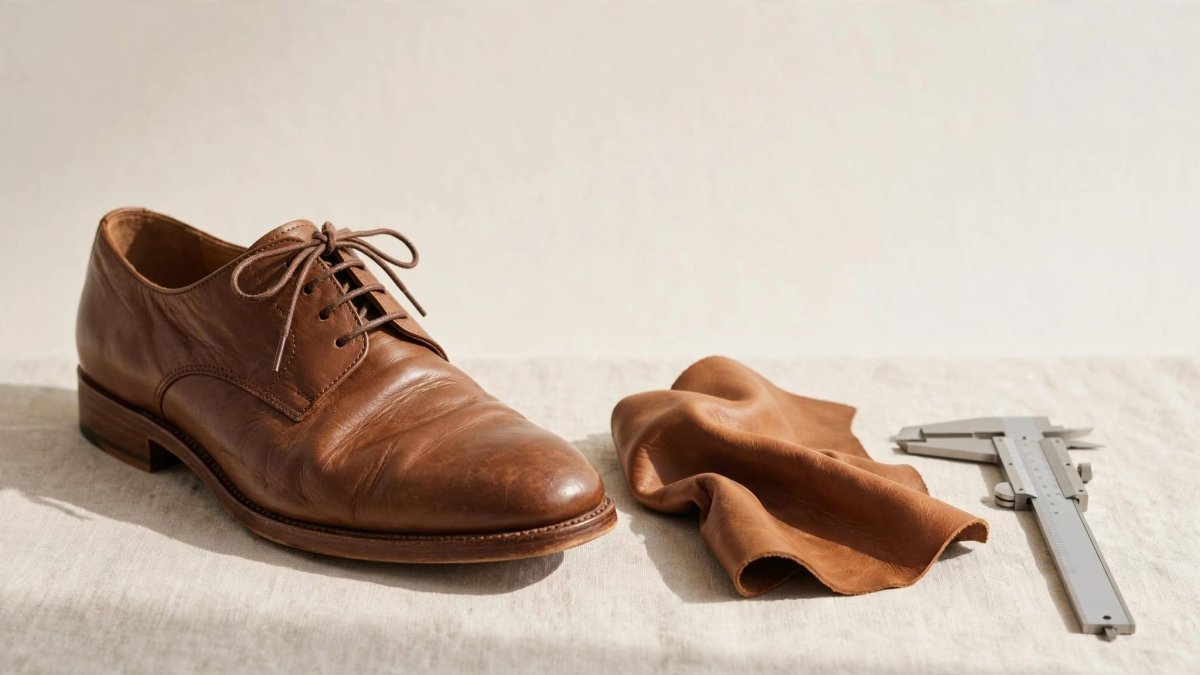
Shoes can stretch slightly with wear, especially across a leather upper, but they won't gain meaningful length. A pair that feels comfortably secure may soften; one that crushes your toes needs a different fit.
At Tip Top Shoes, we recommend choosing shoes for comfort from the start, rather than buying a tight pair and hoping for extra room. The difference comes down to the material, the shoe's construction, and where you feel pressure.
Start by separating normal softening from a sizing problem.
Key Takeaways
- Leather may relax slightly across the forefoot, but it won't turn a short shoe into the right size.
- Smooth leather and nubuck should feel comfortable when new, without painful pressure or compressed toes.
- Assess both shoes while standing and walking, using the socks and inserts you'll wear with them.
- A different width, toe shape, or adjustable closure may solve a fit problem better than a larger size.
How Do Shoes Stretch With Wear?
A shoe can feel more comfortable over time without becoming substantially bigger. Understanding that distinction helps you decide whether a new pair fits.
Softening changes how the upper feels
The upper is the part of the shoe that surrounds the top and sides of your foot. Smooth full-grain leather can become more supple and adapt somewhat to your foot's contours.
That change may reduce the stiffness you notice when bending your foot. Slight relaxation across the forefoot can also make the upper feel less restrictive.
However, material flexibility doesn't erase the limits of the shoe beneath it. Linings, seams, and reinforced areas affect where the upper can move. Two leather shoes can therefore feel different even when their size labels match.
Added length is a different matter
The shoe's sole, toe structure, and overall shape set its usable length. Wearing the shoes won't create meaningful extra space in front of your toes.
If your longest toe touches the end while standing, don't count on break-in to correct it. The same applies if your toes strike the front with each step.
Also, a shoe's last, the form that determines its shape, doesn't become wider through wear. An upper may relax while the underlying footprint remains unsuitable for your foot.
What Leather and Nubuck Can Allow
The material name provides useful information, but it doesn't tell the whole fit story. Construction matters alongside the leather itself.
Smooth and full-grain leather
Smooth full-grain leather often develops a more individual fit as you wear it. That makes it a reasonable choice when you want an upper that can soften without needing to feel loose initially.
For example, our Pikolinos Vallarta leather Mary Janes have calfskin leather uppers and leather linings. Both layers are part of the fit, so judge the complete shoe rather than the outside material alone.
Look for comfortable contact around your foot. A secure leather upper should hold you without forcing your toes together or pressing painfully over the top of your foot.
Nubuck and the limits of surface softness
Nubuck has a brushed surface that feels different from smooth leather. That softer surface doesn't establish how much additional room a particular shoe will provide.
Pay attention to the areas beneath the material. A structured toe, firm heel, or seam across a sensitive spot can affect comfort even when the surrounding leather feels supple.
Likewise, a boot can feel pleasant around the ankle yet remain too narrow across the forefoot. Evaluate each area separately, and don't use the softness of one panel as evidence that the whole shoe fits.
Check Shoe Fit Before Counting on Break-In
Try shoes under the conditions you'll use them. Bring your usual socks and any orthotics or inserts that belong inside the pair.
Evaluate length, width, and depth separately
Stand with your weight on both feet because feet spread slightly under load. Your longest toe should remain clear of the front, and your toes should have room to move without curling.
There's no single ideal gap for every shoe and foot. Our guide to comfortable toe room considers length together with width and toe-box shape.
Next, notice pressure across the ball of your foot and over the instep. A shoe can have adequate length but insufficient width or depth. If loosening the laces doesn't relieve that pressure while preserving a secure fit, try another shape.
Walk in both shoes
A seated try-on doesn't reveal how a shoe behaves under your full weight. Once you're standing, walk at your usual pace and notice how each shoe moves.
Your heel should feel secure without painful pressure. Meanwhile, your forefoot should bend comfortably, and your toes shouldn't slide forward into the end.
Assess both feet rather than judging the pair by whichever foot feels better. Our standing and walking fit guide covers these separate checks. Before deciding, stop walking and reassess any spot that began to rub or squeeze.
Choose the Right Size, Width, or Closure
When a shoe feels tight, the best adjustment depends on where you need space. Moving up a size isn't always the answer.
These common fit patterns point toward different options.
| What you feel | What to try |
|---|---|
| Your longest toe touches the front | A longer size or different toe shape |
| The sides squeeze your forefoot | A wider fitting or broader last |
| Pressure sits over the instep | More depth or an adjustable upper |
| Your foot slides despite enough toe room | A more secure heel or better-adjusted closure |
The goal is balanced space throughout the shoe, rather than extra length alone.
Sizing up can leave your heel loose while the shoe's narrow toe shape continues to squeeze your forefoot.
Adjustable closures give you another way to manage fit. For example, our Gabor ivory nappa leather shoes have a hook-and-loop closure that lets you adjust how securely the upper holds your foot.
Use that adjustment to find comfortable support, rather than fastening the shoe tightly to compensate for excess space elsewhere. Similarly, loosening a closure can't add length or change the sole's outline.
Compare the fit after adjusting both shoes. If one area improves but another becomes unstable, a different model is a better choice.
Break In a Well-Fitting Pair Gently
Break-in should help you become comfortable with a shoe that already fits. It shouldn't require enduring pain or changing how you walk.
Build familiarity without pushing through discomfort
Begin with short, comfortable periods of wear instead of choosing a long outing for a new pair's first use. Notice whether the upper feels easier to bend without developing a concentrated pressure point.
Stop if you feel pinching, burning, numbness, or rubbing that worsens. Those sensations aren't useful milestones in breaking in shoes.
Also, distinguish stiffness from compression. A new sole may feel unfamiliar as you walk, but your toes should still have room. If discomfort persists after removing the shoes, speak with a foot-health professional.
Care for the material appropriately
Good care helps leather remain supple, but care products don't correct a sizing problem. Use products intended for the upper's finish.
Smooth leather and nubuck need different treatment. Conditioner intended for smooth leather can darken nubuck or flatten its brushed surface. Our ECCO leather care guidance explains those differences.
Let damp shoes dry at room temperature rather than beside a heater or radiator. Heat can stiffen leather and weaken adhesives. Give pairs time to air out between wears, and preserve their shape without forcing them beyond their intended dimensions.
Frequently Asked Questions About Shoe Stretch and Fit
Should I buy leather shoes a size smaller?
Choose the size that fits your feet now. Leather's ability to relax slightly doesn't justify starting with cramped toes or painful pressure. A smaller label also changes the shoe's length and where its widest area meets your foot. Aim for a comfortable fit throughout the shoe.
Will shoes stretch enough to accommodate orthotics?
Try shoes with your orthotics in place rather than relying on future stretch. An insert takes up space inside the shoe and changes how your foot sits. You still need comfortable toe room, sufficient depth, and secure heel hold. A shoe that fits without the insert may feel different with it.
Should children's shoes start tight because they'll stretch?
Children need shoes with room for comfortable movement when they put them on. Don't use potential leather relaxation as a substitute for a suitable size or shape. Assess both feet while the child stands and walks. Toes shouldn't curl or press against the front, and the shoes shouldn't squeeze the forefoot.
Choose Comfort Before You Count on Stretch
Shoes may soften and adapt with wear, but the right starting fit matters more than potential stretch. Leather relaxation can improve an already comfortable pair; it won't supply missing length or correct an unsuitable shape.
Choose shoes that give your toes room and hold your feet comfortably while walking. Break-in should make a good fit feel more familiar, without asking you to tolerate pain.


