

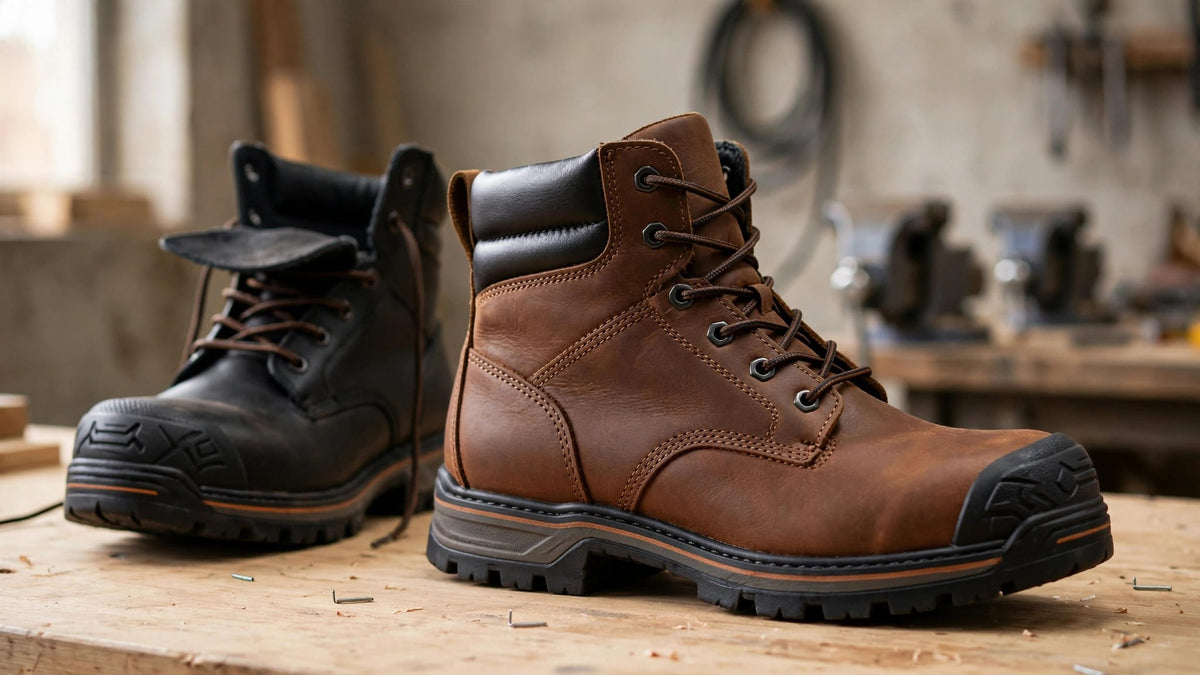
Timberland PRO boots should give your toes room to move while holding your heel securely as you walk. With a steel-toe style, the fit needs to feel comfortable before you buy because the protective cap won't stretch to relieve pressure.
A familiar size is a useful starting point, but socks, boot shape, and your workday all affect the fit. Here's how to assess each part of the boot and choose a pair that feels right.
Why Steel-Toe Boot Fit Matters
A steel toe adds a rigid protective cap around the front of your foot. That structure changes how you should judge a boot: pressure against the cap won't disappear as the leather upper softens.
Your toes need room at the front, sides, and top. At the same time, your foot shouldn't slide forward into the cap every time you take a step. A boot can feel roomy while you're seated but reveal pressure once you stand or walk.
Comfort and protection are separate requirements. Choose footwear that meets your workplace's safety requirements, then find a fit you can wear comfortably. A cushioned footbed can't make up for a toe cap that presses on your foot.
Pay attention to both feet. One may be longer or wider than the other, and the more crowded foot should guide your decision. If a boot pinches on either side, try another size, width, or shape rather than hoping the problem goes away.
Start With Your Work Socks and Inserts
The most useful fitting session starts with the items you'll wear inside your boots. Even a comfortable pair of Timberland PRO boots can feel different when you change the layers underneath.
Wear the Socks You'll Use Most
Bring your usual work socks when you try on boots. Thick socks take up more interior space than thin ones, especially across the toes and top of the foot. A boot that feels comfortable with a thin dress sock may feel restrictive with a heavier work sock.
If you alternate between summer and winter socks, try both. You may find that the thicker pair presses your toes against the cap or leaves too little room over your instep. Our guide to how sock thickness affects shoe fit explains where those differences tend to show up.
Bring Your Orthotics or Insoles
If you wear an orthotic or replacement insole, bring it along and try it in the boot. An insert can change the height of your foot inside the shoe, which affects the room beneath the toe cap and across the instep.
Use the boot's footbed or your insert as intended, rather than stacking inserts without checking how they fit together. If the extra height crowds your toes, choose a boot with enough depth for your setup. The fit you assess should be the fit you'll wear.
Check Toe Room While Standing
Sit down to put on both boots, then stand with your weight on both feet. Your feet spread under load, so standing gives you a more useful sense of the available space.
Look for Length and Height
Your longest toe should stay clear of the front of the boot. It should also be able to rest flat, without curling or pressing against the top of the cap. Wiggle your toes while standing to see whether they have comfortable room to move.
Don't rely only on pressing the outside of the boot with your thumb. A steel cap makes it difficult to feel where your toes end. Instead, notice what your feet feel inside the boot, then walk and check again.
Our advice on finding comfortable toe room covers the difference between space at the front and space around the sides.
Notice Pressure Across the Forefoot
The widest part of your foot should sit comfortably in the widest part of the boot. Your little toe and the joint behind your big toe shouldn't feel squeezed against the sides.
If the length feels right but the sides are tight, a wider fit may help. If pressure comes from the top of the cap, you may need a boot with a different toe-box shape or more depth. Adding length alone doesn't reliably solve either problem.
Walk, Bend, and Check Your Heel
Lace both boots as you would for work. Pull the laces snug enough to hold your foot, but avoid tightening them so much that they press into the top of your foot.
Pay Attention to Heel Movement
Walk around on a clean indoor surface. Your heel should feel held in place rather than lifting excessively or rubbing with each step. Some movement can occur in a new, stiff boot, but persistent rubbing or a heel that feels unsecured deserves attention.
Also notice whether your foot slides forward when you stop or walk downhill. Extra length can make a boot feel roomy while allowing your toes to move into the steel cap. A secure heel and enough toe space need to work together.
Test the Collar and Instep
Bend your knees and, if possible, step up onto a low step. The collar should feel comfortable around your ankle without digging in. Across the instep, the laces and tongue should hold the boot securely without creating a sharp pressure point.
A padded collar can soften contact around the ankle, but it won't correct a boot that's too tight or too loose elsewhere. Give both feet time to settle before deciding.
Decide Whether You Need Length, Width, or a New Shape
A tight boot doesn't always call for a larger size. Identify where the pressure occurs before changing anything.
| What you feel | What to try |
|---|---|
| Your longest toe touches the front | Try a longer size in the same style. |
| The sides squeeze, but length feels right | Try a wider fit or a different toe-box shape. |
| The cap presses on top of your toes | Try a boot with more interior depth or a different shape. |
| Your heel lifts or your foot slides forward | Re-lace the boots and reassess the size and shape. |
The distinction matters because a longer boot may create excess space at the heel without fixing pressure across the forefoot. Likewise, a wider boot won't necessarily give a long toe enough clearance at the front.
Start with the size you usually wear, then compare the next option only when the fit gives you a reason. If neither size feels right, another model may fit your foot better. Avoid choosing a pair solely because the size label matches your sneakers or an older pair of boots.
Compare the Direct Attach Steel-Toe and Soft-Toe Boots
Two Timberland PRO Direct Attach styles in our selection have similar profiles but different toe designs. Both are wheat-colored, waterproof, 6-inch boots, so the model number matters when you shop.
The 65016 Has a Steel Toe
The Timberland PRO 65016 Direct Attach has a steel safety toe, a seam-sealed waterproof leather upper, and a padded collar. It also has 200 grams of insulation and an oil-resistant rubber lug outsole.
Those details make it an option for shoppers who need a steel toe and want a waterproof, insulated boot. During your fitting, pay particular attention to the space around the cap and the feel of the collar. Insulation and your choice of socks can affect how warm the boot feels during a workday.
The 65030 Has a Soft Toe
The Timberland PRO 65030 Direct Attach has a soft toe instead of a steel safety toe. It may suit shoppers who want a waterproof work boot but don't need a protective toe.
A soft toe does not provide the steel-toe protection of the 65016. If your job requires a safety toe, keep that requirement ahead of appearance or initial comfort when comparing the two.
Match the Boot to Your Workday
A fitting session should reflect how you'll use the boots. Someone who stands on a hard floor all day may pay close attention to cushioning underfoot. Someone who regularly bends or climbs may notice the collar and heel hold more.
Consider Warmth and Wet Conditions
Waterproof construction is useful when you work around rain, puddles, or mud. However, water can still enter over the top of a boot, and waterproofing doesn't tell you how the outsole will feel on your work surfaces.
Insulation is another separate consideration. The 65016's 200 grams of insulation can add warmth in cold conditions. If you work indoors or in warmer weather, consider that warmth alongside your usual socks when choosing a boot.
Pay Attention to the Sole and Footbed
The footbed sits directly under your foot, while the midsole sits between it and the outsole. Both contribute to the feel of a boot underfoot. Walk long enough to notice whether the cushioning and support feel comfortable to you.
The 65016 has an oil-resistant lug outsole. Even so, match your footwear to the surfaces and hazards you encounter. A waterproof upper, a protective toe, and an outsole address different parts of the job.
What to Expect During Break-In
New leather boots can feel firmer at first than a pair you've worn for months. With wear, the upper may become more flexible around your foot. The steel cap, however, won't stretch to make room for toes that already press against it.
Don't accept sharp pressure, numbness, or persistent rubbing as the price of breaking in a boot. Those symptoms can point to a fit problem that a softer upper won't fix. Our guide to what to expect from shoe break-in explains why structured areas behave differently from flexible leather.
When trying boots at home, walk on a clean indoor surface first. Spend time standing, turning, and bending in both boots. If a problem keeps returning after you adjust the laces, compare another fit before wearing the pair outdoors.
Choose a Fit That Feels Right From the Start
A well-fitting steel-toe boot gives your toes space without letting your foot slide forward. Check both feet while standing and walking, using the socks and inserts you'll wear at work.
The steel cap sets a firm boundary around the front of the boot. If it presses on your toes, choose a different fit rather than counting on break-in.


