

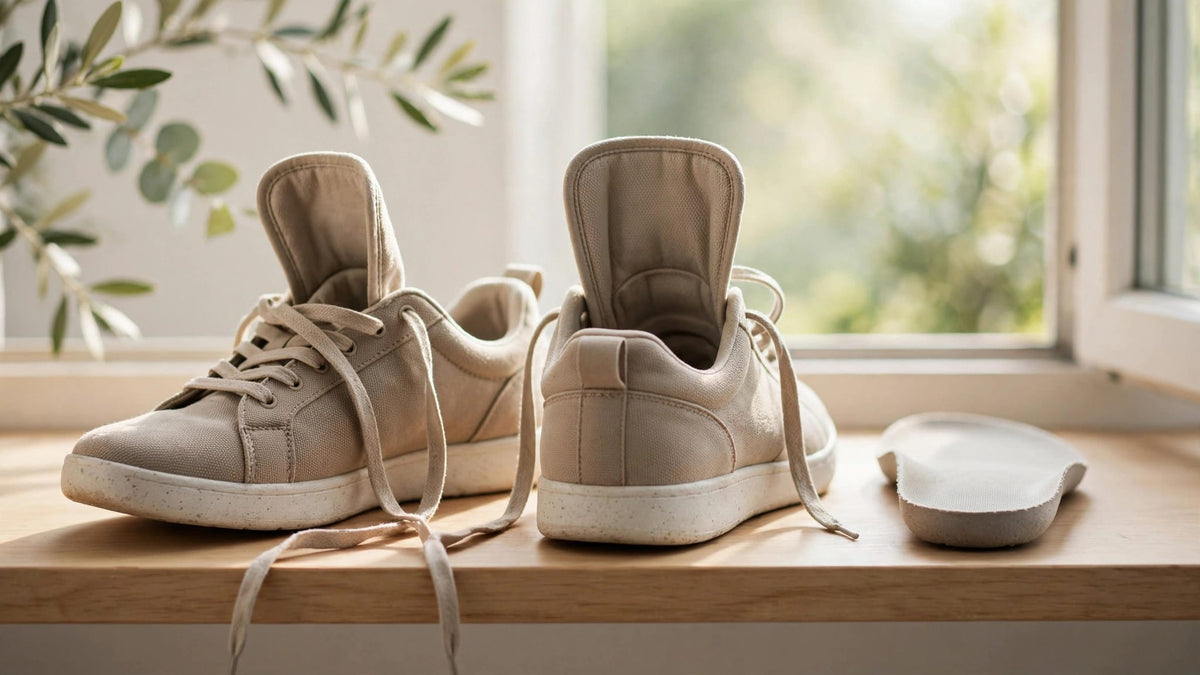
Shoe odor can linger in the lining and footbed, even when a pair looks clean on the outside. To freshen your shoes, clean them in a way that suits their materials and give them time to dry between wears.
A pair you reach for every day may need more attention than one you wear occasionally. Gentle care can help you address the smell without damaging the shoes you like.
Start by looking inside the pair and giving it a chance to air out.
Where Shoe Odor Can Linger
The parts of a shoe that touch your foot deserve attention when you're dealing with a lingering smell. The footbed, lining and area beneath the tongue can retain odor even if the upper and outsole look clean.
Start by opening both shoes. Loosen the laces or straps, lift the tongue and inspect the interior. If the footbed is designed to come out, remove it so you can look underneath. You may notice dirt or a worn surface that wasn't visible while you were wearing the pair.
Also consider how you use the shoes. A walking sneaker worn for long days may need a different care routine than a dress shoe worn for a few hours. Check the material and care instructions before applying water or a cleaning product.
Give Shoes Time to Dry Between Wears
Drying is a useful first step when shoes feel damp after a long day or exposure to wet weather. Give the interior access to air instead of putting the pair straight into a closed closet or bag.
Open Up the Shoes
Loosen the laces, lift the tongue and open any straps. If the footbeds are removable, take them out and place them beside the shoes. This gives the surfaces underneath a chance to dry as well.
Leave the pair in a well-ventilated spot away from direct heat. A shoe that feels dry on the outside may still need time inside, particularly around a padded collar or thick footbed.
If you have another suitable pair, alternate between them. Rotation gives each pair more time to air out before its next wear, while also letting you choose shoes suited to the day's activities.
Handle Wet Shoes Gently
After rain or a spill, wipe away surface water and let the shoes air-dry. Loosely placed paper can help a damp pair hold its shape. Remove or replace the paper if it becomes wet.
Keep shoes away from radiators, heaters and other direct heat sources. Heat can damage or alter some materials, so patience is safer than trying to dry a favorite pair quickly.
Our guide to everyday shoe care covers more ways to look after different materials after wet weather.
Clean Shoes Without Damaging the Material
A cleaning method that works for a fabric sneaker may be unsuitable for a leather dress shoe. Before you start, identify the material of both the upper and the lining. Then follow any care instructions that came with the pair.
Fabric and Washable Shoes
For a washable shoe, remove loose dirt first and follow its cleaning directions. Take out removable laces and footbeds when the instructions recommend it. Clean those parts separately if their care directions allow.
Some fabric shoes can be washed, but others have construction details that make soaking or machine washing unsuitable. When the instructions call for surface cleaning, use a soft cloth and a small amount of water rather than saturating the shoe.
After cleaning, open the pair and let it dry fully before wearing it again. Pay attention to the padded areas, which may take longer to dry than the outer fabric.
Leather, Suede and Other Delicate Finishes
Smooth leather, suede and nubuck call for different treatment. Wipe surface dirt from smooth leather with a soft cloth, then use a care product intended for that finish when needed.
For suede or nubuck, allow the shoe to dry and use a brush made for those materials. Avoid treating suede with polish intended for smooth leather, since it can change the surface.
Sheepskin and wool felt also need gentle handling. Avoid soaking them or placing them beside a heater. If a product is suitable for the material, test it on a hidden area first to see how the color reacts.
Pay Attention to Removable Footbeds
A removable footbed makes it easier to inspect and air out the inside of a shoe. It also lets you assess whether the original insert is still in good condition.
Take the Footbed Out Carefully
Lift the footbed only if it's designed for removal. Some are fixed in place, and pulling at them can damage the lining or adhesive.
Once it's out, look at both sides and the surface beneath it. Follow the shoe or footbed's care directions rather than assuming the insert can be soaked or machine washed. Let it dry fully before returning it to the shoe.
A footbed that has lost its shape or no longer feels comfortable may need replacement. If the shoe itself is unevenly worn, however, a new insert may not restore the original fit.
Recheck Fit With a Replacement
A replacement footbed changes the space inside your shoe. Remove the original first when the shoe is designed for it, rather than automatically stacking one full-length insert on another.
The replacement should lie flat without buckling. Try both shoes with your usual socks and walk around. Your toes should have room, and your heel should remain comfortably seated. If an insert creates discomfort or you have questions about a prescribed orthotic, a podiatrist can help assess the combination.
Choose Shoes That Work for Your Routine
When you're shopping for another pair, consider how often you'll wear it and how easy it will be to care for. The right choice depends on your routine as well as the shoe's shape and feel.
Compare the Construction
Look at the lining, upper and footbed rather than choosing by appearance alone. A removable footbed can be convenient if you want to take it out for drying or eventually compare it with a replacement.
Also consider the setting. An open sandal may suit a warm day, while a closed shoe may be more appropriate for work or wet weather. Neither style replaces a regular care routine.
If you prefer a closed casual shoe, our ECCO Men's Soft 7 leather sneaker is one style to compare with your usual everyday footwear. Try it with the socks you expect to wear and pay attention to the fit across your toes, instep and heel.
Make Room for Everyday Comfort
Shoes should feel comfortable when you try them on. Walk in both shoes, fasten them as you normally would and notice whether any area pinches or rubs. A pair that only feels tolerable with a much thinner sock is worth reconsidering.
If you use an insert, bring it to the fitting. A shoe and insert that work well separately may feel tight together. Make the decision based on the complete combination you'll wear.
Use Shoe-Care Products for Their Intended Purpose
Shoe sprays and cleaners have different jobs. Choose a product for the material and the task rather than assuming every spray treats odor.
For example, Pedag Waterproof Repellant Spray is intended to protect suitable shoes from water, dirt and stains. Its product description lists materials including smooth leather, suede, nubuck and textiles. It isn't described as an odor treatment.
The product directions call for testing colorfastness in a hidden area, spraying from about 12 inches away and allowing the shoes to dry. Follow the directions for any product you use, and avoid applying it to a finish it isn't intended to treat.
A fragrance can also make a shoe smell different without cleaning its surfaces. If the interior needs attention, start with material-appropriate cleaning and drying rather than relying on scent alone.
Know When a Pair Needs More Attention
Some shoes need more than a quick airing. If the interior remains unpleasant after appropriate cleaning and complete drying, inspect the pair again. Look for a worn footbed, damaged lining or areas that still feel damp.
Consider the shoe's overall condition, too. An outsole with uneven wear or a footbed that has lost its shape can change how the pair feels. If the shoes no longer feel supportive or comfortable, replacing them may be the practical choice.
If you also notice persistent foot discomfort, a rash or other skin changes, speak with a healthcare professional. A shoe-care routine can't assess a foot condition.
Frequently Asked Questions
Should I put damp shoes away overnight?
Leave them somewhere ventilated instead. Open the shoes and remove any footbeds designed to come out. Wait until the pair is dry before storing it in an enclosed space.
Can I wash every pair of smelly shoes?
No. Cleaning instructions depend on the materials and construction. Some washable shoes can tolerate more water, while suede, leather, wool felt and sheepskin need gentler care. Follow the directions for your pair.
Do I need to replace shoes that smell?
Not always. Start with cleaning suited to the material, then let the shoes dry completely. If the smell remains and the pair is also worn out or uncomfortable, replacement may make sense.
Keep Your Shoes Comfortable Between Wears
A lingering smell calls for attention to the inside of your shoes as well as the outside. Open the pair, clean it according to its materials and give it time to dry.
When you're shopping for your next pair, consider how you'll wear and care for it. Comfortable fit and accessible care are both worth considering before you bring shoes home.


