

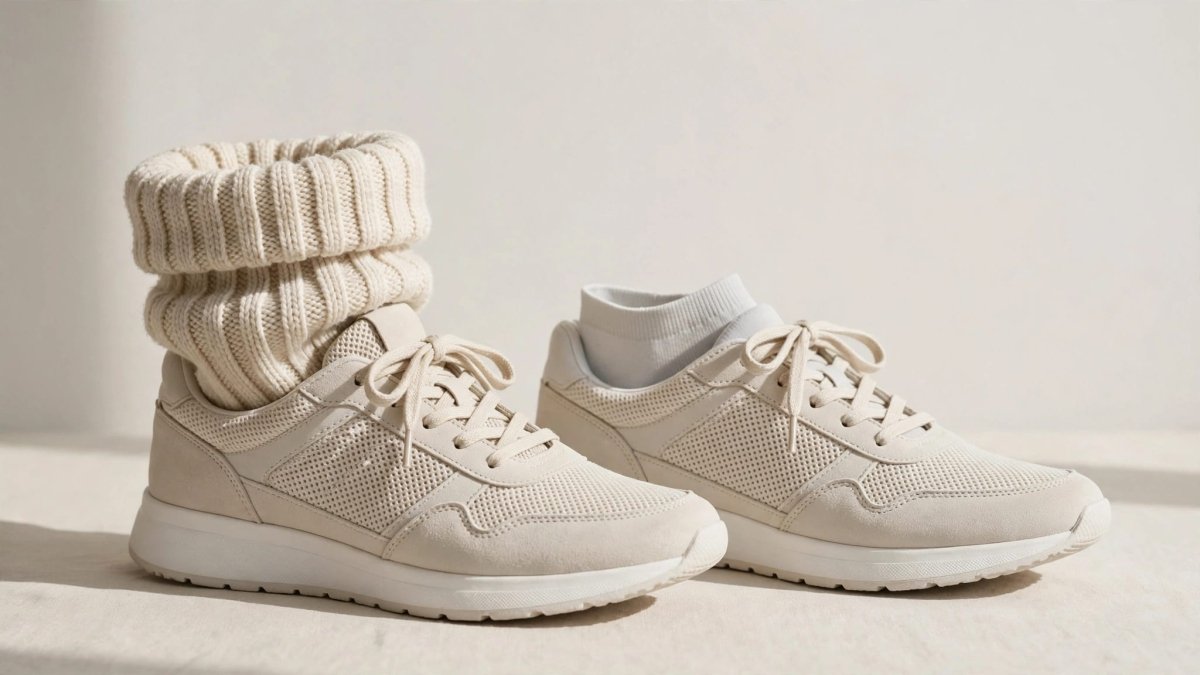
Sock thickness changes shoe fit by taking up more or less space around your foot. A pair that feels comfortable with your everyday socks may feel tight with thicker socks, or less secure with thinner ones.
The effect depends on the shoe's shape and where it fits closely. Before choosing a size, test the whole combination of shoes, socks, and any inserts you plan to wear.
Start by identifying where the fit changes, then compare your options while standing and walking.
Key Takeaways
- Thicker socks can reduce room around your toes, forefoot, and instep.
- Thinner socks can leave more space, which may change how securely your foot sits.
- Try both shoes with your usual socks and any prescribed orthotics.
- A different width, depth, or shoe shape may help more than a longer size.
- Comfort while walking matters as much as the fit you feel while seated.
How Sock Thickness Changes Shoe Fit
A sock sits between your foot and the shoe's lining. When you switch to a thicker pair, that added material occupies some of the space your foot had before. The difference can be noticeable in a close-fitting shoe, even if the sock feels soft.
Where extra material affects fit
Pay attention to the top and sides of your foot, as well as the space around your toes. A shoe can feel comfortable along its length but become snug across the ball of your foot or over your instep when you change socks.
The heel can feel different, too. Extra fabric may make a loose heel feel more secure, but it can also increase pressure around a close-fitting heel collar. Your experience depends on the shoe and your foot, so assess each area instead of assuming the change will be helpful or uncomfortable.
Why thinner socks can change the fit
With less material around your foot, you may notice more room inside the same shoe. That can relieve pressure, but it may also allow your foot to move more as you walk.
If you need to grip with your toes or tighten the laces uncomfortably to keep the shoe in place, try a different fit. A thinner sock shouldn't be the only way to make a tight shoe tolerable.
Choose Socks for the Shoes You'll Wear
The most useful sock for a fitting is the one you expect to wear with that pair. A shoe that works for an occasional outfit may feel different with the socks you reach for most days.
Everyday sneakers and walking shoes
Bring your regular everyday socks when shopping for casual footwear. For example, try the ECCO Men's Soft 7 leather sneaker with the socks you'd normally wear for errands or a day on your feet.
Fasten both shoes as you ordinarily would. If you expect to alternate between two sock styles, test the pair with each one. The goal is to find out whether both combinations feel comfortable without changing your stride.
Dress shoes, boots, and sandals
Dress shoes often have a closer feel than casual footwear. If you plan to wear dress socks, bring a pair such as No Nonsense men's cotton crew dress socks to the fitting.
For boots, use the socks you expect to wear inside them, particularly if your winter socks take up more room than your everyday pair. With pull-on boots, assess the opening separately from the fit once your foot is inside. Getting a boot on comfortably doesn't tell you how well it will hold your foot during a walk.
Some shoppers wear socks with sandals. If you're trying the Birkenstock Arizona Soft Footbed sandal, wear your intended socks and adjust the straps. Your heel and toes should stay comfortably positioned on the footbed as you move.
Check Toe Room, Instep, and Heel Separately
A shoe's size label is a starting point, not a complete description of its interior. Sock thickness can make an existing fit issue easier to notice, so identify the location before changing sizes.
Give your toes space in every direction
Stand with your weight on both feet and find your longest toe, which may not be your big toe. It should stay clear of the shoe's front, and your toes should have room to move without curling.
Also notice the sides and top of the toe box. Your toes may have enough length but still feel squeezed together or pressed against the upper. A shoe with a different toe shape or more depth may offer a better fit than one that's merely longer.
Notice pressure and movement elsewhere
Pressure across the ball of your foot can point to a width or shape issue. Tightness over the instep, the top of your foot behind the toes, may relate to the shoe's depth or closure.
At the heel, look for a comfortable hold while walking. Some movement is possible, but repeated slipping, rubbing, or an altered stride deserves another comparison. Our guide to testing shoe fit while standing and walking covers these areas in more detail.
Test Socks and Shoes Under Real Conditions
A seated fitting gives you a first impression. Standing and moving show how the pair behaves when your feet carry your weight.
Set up both shoes for the test
Put on both shoes with the socks and inserts you intend to use. Feet aren't always identical, so assess each side rather than assuming the more comfortable shoe tells the whole story.
Fasten laces or straps as you would for regular wear. Then stand upright and notice any pressure at the toes, sides, instep, and heel. An afternoon fitting can be useful for everyday footwear because feet may swell during the day.
If you're comparing pairs at home, walk on a clean indoor surface. Keep your socks and fastening method consistent when comparing shoes, so you can judge what changed between the pairs.
Walk, turn, and stop
Take normal steps at your usual pace, then turn and stop. Notice whether your heel stays comfortable and whether your toes slide toward the front. Your forefoot should bend without a concentrated pinch.
Also pay attention to your stride. Shortening your steps or gripping with your toes to keep a shoe on can indicate that the fit needs another look. Don't continue the try-on through pain.
After walking, remove the shoes and look for localized redness. A mark alone doesn't identify the cause, but it can show you where to reassess the fit.
Adjust the Shoe Fit Without Guessing
A sock change is one way to compare fit, but it can't correct every problem. Start with the area that feels uncomfortable, then change one thing at a time.
Compare size, width, and shape
If your longest toe touches the front, try a longer size or a shoe with a different toe shape. If the sides squeeze your forefoot while the length feels adequate, a wider fit may be more useful.
A longer shoe can create extra heel movement without resolving pressure across a narrow forefoot. Similarly, pressure over the instep may call for more internal depth rather than more length.
The shape of a shoe's last, the form around which it's made, also affects fit. Two styles with the same size label can feel different, even within the same brand. Compare the actual pairs with the same socks.
Use closures for adjustment, not compensation
Laces and straps can help hold your foot comfortably. Loosen or tighten them, then walk again to see whether pressure and heel hold improve together.
A closure can't add length or change the outline of the sole. If loosening it relieves your instep but leaves your foot sliding, another shoe shape may be the better choice.
Don't count on wear to fix a painful fit, either. Our guide to whether shoes stretch with wear explains why softening doesn't provide missing length or reliably correct an unsuitable shape.
Account for Insoles and Foot Changes
Socks aren't the only things that affect the space inside a shoe. Inserts and changes in your feet can alter the fit you feel throughout the day.
Bring the inserts you wear
If you use prescribed orthotics or other inserts, bring them to the fitting along with your intended socks. An insert occupies space and may change where your heel sits, so a shoe that fits without one can feel different once it's in place.
Don't automatically stack an insert over the existing footbed. Use the setup appropriate for your insert and shoe, then repeat the standing and walking test. Check toe room and heel hold with the complete combination in place.
Take discomfort seriously
A comfortable shoe shouldn't require you to tolerate pain, numbness, or repeated rubbing. If discomfort persists or skin damage recurs, seek advice from a podiatrist.
People with diabetes, neuropathy, poor circulation, or reduced feeling in their feet may not sense pressure reliably. Individual footwear guidance from a qualified clinician is important in those cases.
Frequently Asked Questions
Do thicker socks mean I need a bigger shoe?
Not necessarily. A thicker sock reduces available space, but the right response depends on where the shoe feels tight. Compare the length, width, depth, and shape before choosing a different size.
Can thicker socks fix shoes that feel loose?
They may fill some extra space and improve the feel of a slightly roomy pair. Walk in the combination to assess heel hold and toe movement. If you still slide or need to grip with your toes, compare another size or style.
Should I buy shoes with room for every sock I own?
Choose a pair that works with the socks you'll wear most often. If you expect to switch between noticeably different socks, try both during the fitting. Each combination should leave comfortable toe room and hold your foot securely.
Find the Fit You'll Wear
Sock thickness changes the space inside your shoes, but comfort depends on the complete fit. Pay attention to your toes, instep, forefoot, and heel instead of relying on the size label alone.
Bring your usual socks and any inserts when you shop. A comfortable fit in motion gives you a better basis for choosing the pair you'll want to wear.


