

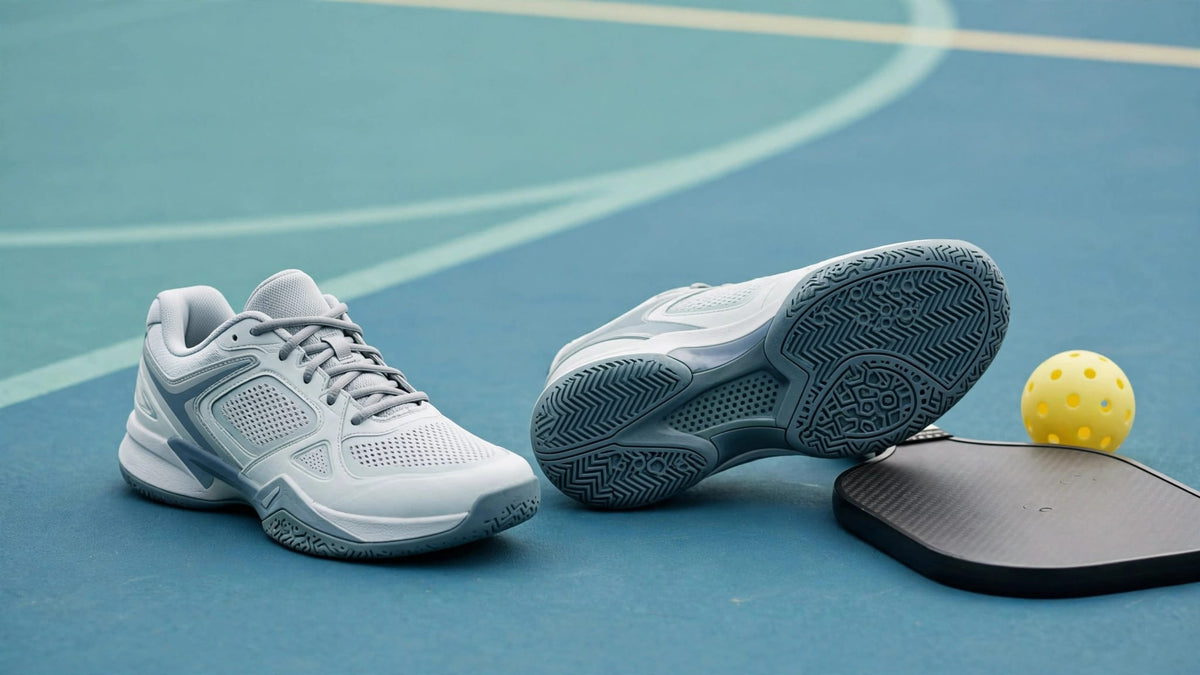
Choose pickleball shoes that feel secure during lateral movement, with a stable base, a comfortable fit, and traction suited to your court. Cushioning matters too, but a soft landing won't make up for a foot that slides inside the shoe.
Pickleball involves quick stops and short shuffles, so a comfortable running shoe may not give you the feel you want on court. Start with the movements you make most often, then compare the whole shoe.
Why Pickleball Calls for Court Shoes
During a rally, you might shuffle along the non-volley zone, stop to return a shot, and push off toward the sideline. Your foot needs to stay comfortably positioned inside the shoe as your weight changes direction.
Court shoes are a useful place to start because they're designed for activities that involve turns and lateral movement. Tennis shoes can also be worth considering for pickleball, especially when their outsole suits your playing surface.
Running shoes, by contrast, are primarily designed around forward movement. A pair may feel excellent on a walk or run but feel less secure during a quick sideways step. The difference isn't always obvious when you're standing still.
Pay attention to the whole construction: the upper around your foot, the base under it, and the outsole in contact with the court. A shoe with a court label is a starting point, not a substitute for trying the fit yourself.
Look for a Stable Base and Secure Upper
A supportive court shoe should feel steady when you shift your weight toward either side. Two parts of the shoe deserve attention: the platform beneath your foot and the upper that holds it in place.
Assess the Sole During Side Steps
Place both feet flat on the floor and make a few controlled side steps. Notice whether you feel centered over the sole or whether your foot seems to spill toward its edge.
A broad-looking base can give you more surface underfoot, but appearance alone doesn't establish how a shoe will feel. Midsole softness, sole shape, and fit also affect your sense of balance. Compare a couple of pairs rather than assuming the widest or firmest sole is right for you.
See How the Upper Holds Your Foot
The upper includes the material around the top and sides of your foot. On a court shoe, it should hold your foot comfortably as you change direction, without pinching across the forefoot or instep.
A structured heel counter, the section at the back of the shoe, can help the heel feel held in place. Laces also let you adjust the fit, but you shouldn't have to pull them painfully tight to keep your foot from moving.
Support features have different purposes across shoe categories. For example, Brooks GuideRails guide foot movement during walking and running. That doesn't mean a shoe with GuideRails is designed for pickleball, so assess court shoes on their own construction and fit.
Get the Fit Right Before Comparing Features
A shoe can have an appealing outsole and cushioning system yet still feel wrong if its shape doesn't match your foot. Try both shoes with the socks you'll wear for pickleball, and give each foot equal attention.
Leave Room for Your Toes
Stand up to assess the length and width. Your toes should have room to move without pressing into the front, sides, or top of the shoe. At the same time, your forefoot shouldn't slide sideways when you shift your weight.
If your toes feel crowded, a longer size isn't always the answer. A different width or toe-box shape may provide more space without leaving excess length in front. Don't count on uncomfortable pressure disappearing after a few games.
Keep Your Heel and Midfoot Secure
Your heel should feel held without rubbing at the collar. The midfoot should also feel secure as you turn, but the laces and upper shouldn't create a pressure point.
A little cushioning around the collar can make contact more comfortable. It doesn't necessarily correct a loose heel, though, and thick padding can take up space inside the shoe. If your foot slides despite comfortable lacing, compare another size or shape.
Our guide to testing shoe fit with turns and stops covers what to notice when you move, including heel hold and forward sliding.
Match the Outsole to Your Court
The outsole is the rubber layer that contacts the playing surface. Its tread and material affect how the shoe feels when you push off, slow down, and turn.
Indoor and Outdoor Surfaces Feel Different
Outdoor pickleball is often played on hard courts, while indoor play can take place on a gym floor or another court surface. Those surfaces don't all feel the same underfoot, so choose with your usual court in mind.
A non-marking outsole is especially useful on indoor floors where facilities may require it. Non-marking describes whether the sole leaves marks; it doesn't tell you exactly how much grip the shoe will provide.
Outdoor hard courts also put wear on outsole rubber. If you play outside regularly, look for a court shoe with durable rubber in the areas that contact the ground most often.
Look at Tread and Wear
Court shoes use different tread patterns, including herringbone designs. Rather than choosing on appearance alone, consider the surface for which the shoe is intended and how steady it feels during controlled movement.
Traction needs balance. You want enough grip to push off and stop with confidence, but the shoe should also let you turn naturally. A dusty, damp, or worn surface can change the way any outsole feels, so keep the playing area in mind as well as the shoe.
Balance Cushioning With Court Feel
Cushioning can make repeated movement on a hard court more comfortable. Look for a feel you enjoy beneath both the heel and the ball of your foot, rather than judging the shoe by pressing a thumb into the foam.
A softer shoe may feel comfortable when you first put it on, but some people find a very soft or tall sole less steady during lateral movement. A firmer shoe may feel more connected to the court, although it can feel too hard for someone who prefers more padding.
Compare both sensations while moving. As you shuffle and stop, notice whether the cushioning feels comfortable and whether you can stay balanced over the sole. A responsive or propulsive foam describes the underfoot feel; it doesn't, by itself, establish how well the upper holds your foot during a side step.
If you wear prescribed orthotics or another insert, bring them to the fitting. An insert takes up room and can change heel hold, toe space, and pressure over the instep.
Compare New Balance FuelCell 996v6 Pickleball Shoes
The FuelCell 996v6 is available in men's and women's pickleball versions. Both have features that are useful to compare, although their listed cushioning and weight don't establish how stable either shoe will feel on your foot.
Men's FuelCell 996v6
The men's New Balance FuelCell 996v6 has FuelCell foam for a responsive feel and a mesh upper. Its NDure upper material and toe guard address wear, while the NDurance rubber outsole is designed for high-wear areas.
The listing describes the outsole as non-marking and gives the shoe's weight as 14.3 ounces. If you're considering this pair, pay particular attention to heel hold and forefoot space during lateral steps.
Women's FuelCell 996v6
The women's New Balance FuelCell 996v6 also combines FuelCell foam with a mesh upper, toe guard, and non-marking NDurance outsole. Its listed weight is 11.4 ounces.
Weight gives you one detail to consider, but it doesn't tell you how the shoe fits or how secure it feels. Compare the shoe's cushioning and flexibility with its hold around your heel and midfoot.
Try Pickleball Shoes With Court Movement in Mind
A short fitting won't reproduce a full match, but it can reveal pressure and slipping that standing alone may miss. Use a clear, firm area and keep your movements controlled.
- Put on both shoes with your usual playing socks. Lace them comfortably, without pulling hard enough to create pressure.
- Stand and check toe room on each foot. Your toes should have space while the rest of your foot feels held.
- Walk at your normal pace, then stop and turn in both directions. Notice heel rubbing or any forward slide.
- Make a few gentle side steps. Your foot should stay comfortably positioned over the sole rather than shifting against the side of the shoe.
- Compare another pair using the same movements. Pay attention to the differences in cushioning, grip, and pressure around your foot.
If a shoe hurts during a short try-on, move on to another option. Likewise, a pair that only feels secure when laced painfully tight isn't a good fit.
You can try shoes with us at Tip Top Shoes, at 155 West 72nd Street in New York City. We also ship online orders to all 50 states.
Know When It's Time to Replace Your Court Shoes
Inspect your shoes as part of your routine, especially if you play frequently. Smooth patches on the outsole, uneven wear, or separation around the sole can change how the shoe performs.
The upper matters too. If material around the forefoot has worn through or the shoe no longer holds your foot as it once did, compare it with a new pair. A shoe can look presentable from above while its tread is worn where you push off.
There's no single replacement schedule that suits every player. Court surface, frequency of play, and movement patterns all affect wear. If you have persistent foot or ankle pain, a podiatrist or other qualified clinician can help assess your needs.
Choose the Pair That Feels Secure in Motion
The right pickleball shoes give your toes room, hold your heel and midfoot comfortably, and feel steady when you move sideways. Cushioning and outsole design add to that experience, but neither replaces a good fit.
Compare complete shoes rather than choosing by foam name or weight alone. A controlled try-on can help you find the pair that feels comfortable and secure on court.


