

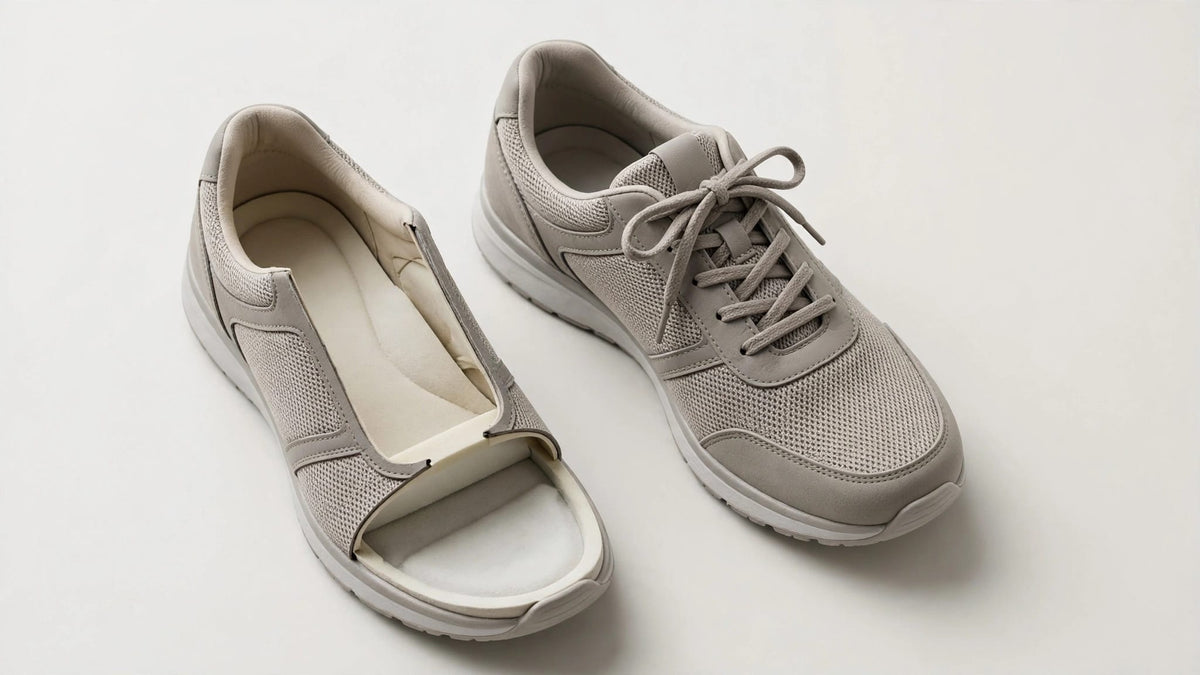
Your toes should have room to move without pressing against the front of your shoes. When you stand and walk, the longest toe should stay clear of the shoe's end, and the toe box should feel comfortable across its width.
There isn't one ideal gap for every foot and shoe. Toe room in shoes depends on your foot shape, the shoe's design, and how you'll wear it. Use a fit check that accounts for all three.
How to tell if everyday shoes have enough toe room
A shoe can feel fine while you're sitting, then pinch once you stand. Check the fit with your full weight on both feet, since feet spread slightly under load. Your longest toe may be your big toe, but for some people it's the second toe.
Check length while standing
With the shoes on, stand upright and make sure no toe touches the front. Walk a few steps, then stop and check again. Your toes shouldn't slide forward and hit the shoe when you move.
The fit should leave room for natural movement, not so much space that your foot shifts inside the shoe. If your toes curl, feel compressed, or meet the front with each step, try a different size or shape.
Check width and toe shape
Length is only part of the fit. Your toes also need space to spread without being squeezed together. A shoe may be long enough but still too narrow if the sides press on your toes or forefoot.
Compare the shoe's shape with your foot. A tapered toe box may suit someone with a narrow forefoot, while a broader shape may feel better on a foot that spreads more. Sizing up can add length without solving a width problem.
Why the right amount varies
Shoe sizes don't describe every detail of fit. Two shoes in the same size can differ in toe-box shape, materials, and internal volume. A flexible upper may feel different from a firm one, even if both shoes have similar-looking toes.
Your feet can also change through the day. Many people find their feet feel larger later on, especially after time spent standing or walking. That's why a pair that feels comfortable first thing in the morning may feel tight by afternoon.
Socks matter, too. Try shoes with the type of socks you expect to wear. Thick socks can take up space, while thin socks may make a shoe feel roomier. If you use an orthotic or insole, test the shoes with it in place.
How to check shoe fit when shopping
Try on both shoes and stand in them. One foot may be longer or wider, so choose a fit that works for the larger foot. Walk around on a level surface and pay attention to pressure at the toes, sides, and top of the forefoot.
If you're shopping online, use the brand's size chart as a starting point, not a guarantee of fit. Measure both feet while standing and compare the longer foot with the chart. Then consider the shoe's stated width and intended use.
Match the shoe to the activity
Everyday shoes should feel comfortable during the movements you'll make in them. For a walking shoe, check that the toes remain clear of the front as you roll through a step. In a casual shoe worn for short periods, the same basic fit still applies: toes shouldn't feel trapped or pushed together.
A shoe's appearance can make its toe area look roomier than it is. Focus on how your foot feels inside rather than the shape of the upper from the outside.
Don't rely on breaking in
Some materials soften with wear, but a shoe that presses on your toes or forces them together is unlikely to become a good fit. Don't count on a painful fit improving after several days. Instead, try another size, width, or style.
A shoe can be long enough and still be too tight if its toe box doesn't match your foot.
Signs your shoes may be too tight or too loose
A proper fit should feel secure at the heel and comfortable around the toes. Watch for rubbing, pinching, numbness, or toes that feel crowded during ordinary walking. Those are signs to reassess the size or shoe shape rather than ignore the discomfort.
Too much room can cause trouble as well. If your foot slides forward, your toes may repeatedly strike the front. If your heel lifts or your foot shifts side to side, the shoe may be too large or too wide. Changing the lacing may help with some movement, but it won't correct a poor overall fit.
Persistent pain, swelling, numbness, or changes in how your toes sit deserve medical attention. People with diabetes or reduced foot sensation should take foot discomfort seriously and seek guidance from a healthcare professional.
Key Takeaways
- Your longest toe shouldn't press against the front when you stand or walk.
- Check toe-box width as well as shoe length.
- Try both shoes with your usual socks and any insoles you wear.
- Don't expect a painful, cramped fit to become comfortable after breaking in.
FAQ
Should my toes touch the front of my shoes?
No. They should remain clear of the front when you stand and walk. Repeated contact can make the shoe feel uncomfortable and may irritate your toes.
Is extra room always better?
No. Your toes need space, but your foot shouldn't slide around. A shoe that's too long or wide can let your foot move forward with each step.
Should I size up if my toes feel cramped?
Not automatically. If the shoe feels short, a larger size may help. If the sides squeeze your foot, try a wider fit or a different toe-box shape instead.
Find a Fit That Feels Right
Comfortable toe room means your toes can rest naturally without touching the front or pressing against each other. Check the fit standing and walking, and pay attention to both length and width. The right everyday shoe should feel comfortable from the first steps, without needing to tolerate pinching or crowding.


