

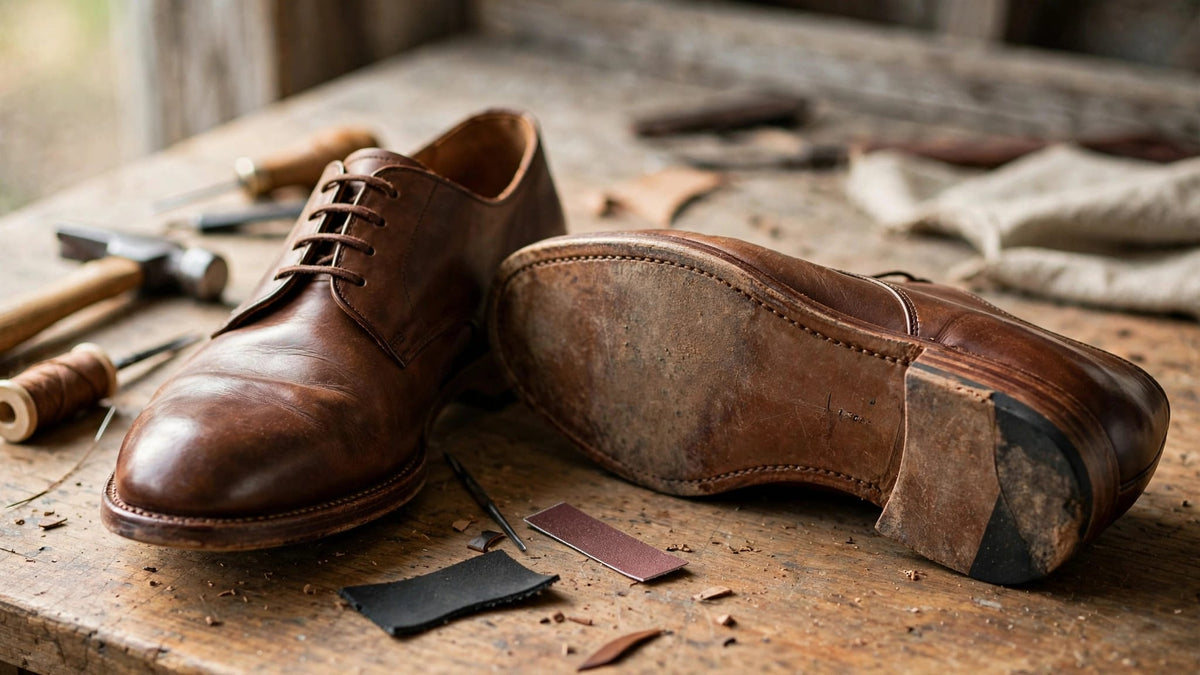
Many shoes can be repaired, and some can be resoled when the bottom wears out. The right choice depends on how the shoe is made and whether its upper, footbed, and other components are still in good condition.
A smooth heel or loose sole doesn't always mean you need a new pair. Start by identifying which part has worn out and how the damage affects the way your shoes feel.
Signs Your Shoes May Need Repair
Regular inspection can help you catch damage before it spreads. Look at both shoes, including the bottoms and the areas where the soles meet the uppers.
Worn tread and uneven heels
Turn your shoes over and compare the tread on each sole. Smooth patches under the heel or ball of the foot show where the outsole has worn down. That wear matters most when you need dependable grip on surfaces such as wet sidewalks.
Next, place both shoes on a flat surface and look at them from behind. A heel that's noticeably more worn on one side may make the shoe sit unevenly. A cobbler may be able to replace the heel or repair the worn area, depending on its construction.
Don't keep wearing shoes that slip on the surfaces you use. If the tread is smooth and the sole has become thin, have the pair assessed before wear reaches the layers above it.
Separation, cracks, and holes
Look along the edge where the outsole meets the upper. A small gap can grow as dirt and moisture enter. Cracks across the bottom or a soft, thin spot under the ball of your foot also deserve attention.
A hole in the outsole needs more than a cosmetic fix. Continued wear can damage the material underneath, making the repair more involved. Take the shoes out of rotation and let a repair professional assess the affected layers.
Know Which Part of the Shoe Has Worn Out
Shoe resoling addresses the outside bottom of a shoe. Other comfort problems can start inside it, so identifying the affected part will help you choose the right repair.
The outsole and heel
The outsole contacts the ground and provides the tread you see when you turn a shoe over. On some shoes, a cobbler can replace the outsole. On others, a worn heel can be repaired without replacing the entire bottom.
The condition of the material above the outsole matters, too. If wear has reached a supporting layer, the job may involve more than attaching a new sole.
The insole and midsole
The insole is the layer under your foot. Some shoes have a removable insert that you can take out and replace when it wears down. The midsole sits beneath that interior layer and contributes to the shoe's underfoot feel.
A fresh insert can improve comfort when the insert itself is the problem. It won't restore worn tread or repair a separating outsole. Our guide to insoles, midsoles, and outsoles explains how these parts work together.
How Shoe Construction Affects Resoling
The way a sole attaches to the upper influences the repair options. Even a shoe designed for resoling needs an upper and supporting structure that are in good enough condition for the work.
Goodyear-welted shoes and boots
A Goodyear welt is a strip attached around the bottom edge of a shoe or boot. The outsole attaches through this construction, allowing a cobbler to remove and replace it when the condition of the pair permits.
For shoppers who want a repairable boot, our Red Wing Blacksmith 3343 has Goodyear-welt construction and a Vibram 430 Mini-lug outsole. We also carry the Red Wing Blacksmith 3345, a black leather option with the same type of welted construction.
A welt offers a route to resoling, but the leather upper and other components still need attention. Tears at attachment points or extensive deterioration can limit what a cobbler can do.
Glued and molded soles
Many casual shoes and sneakers have soles bonded to their uppers with adhesive. Others have molded components shaped for a particular design. Some can be repaired, but the options depend on the materials and the way the sole was attached.
A separated edge may be suitable for professional reattachment even when a full resole isn't practical. Meanwhile, a shoe with worn tread, compressed cushioning, and a damaged upper may need more work than a sole repair can address.
Visible stitching alone doesn't establish that a shoe has a Goodyear welt. If repairability matters when you're shopping, look for a construction description rather than judging by appearance.
Repairs That Don't Require a Full Resole
A worn outsole is only one reason to visit a shoe repair shop. Other components may need attention while the rest of the pair remains comfortable and sound.
Heels, sole edges, and loose parts
A cobbler may be able to replace a worn heel piece, reattach a loose sole edge, or address a damaged sole edge. These repairs can be useful when most of the outsole still has adequate thickness and tread.
The earlier you address a loose section, the less chance it has to catch and pull farther away. Avoid relying on household glue for a structural repair. It can make later work more difficult and may leave an uncomfortable hard spot.
Sole protectors are another option for some shoes with suitable soles. They add a layer over part of the bottom, but they aren't a substitute for rebuilding material that has already worn through.
Uppers, straps, and closures
The upper is the part that covers and holds your foot. Depending on the damage and material, a repair professional may be able to address a loose seam, damaged strap, worn lining, or broken fastening.
Surface scuffs are different from tears. Cleaning and conditioning may improve the appearance of suitable leather, but those steps won't rebuild torn material. Likewise, a repair to a buckle or strap must hold your foot securely, especially on a sandal that depends on the strap for fit.
What About Birkenstock Sandals and Clogs?
Birkenstock sandals and clogs have several distinct components, including an outsole and a contoured footbed. Their condition needs to be considered together, rather than judging the pair by the tread alone.
Birkenstock says repairs are possible in many cases. A worn sole, cracked cork edge, damaged strap, or badly compressed footbed can warrant a professional assessment. The extent of the damage affects which work is appropriate.
For example, a sole that has started to separate may need a different repair from a footbed that no longer feels supportive. Keep the pair dry and out of use if the structure has begun to come apart.
Care also matters between repairs. Our Birkenstock footbed care guide covers cleaning and the signs that a cork footbed needs more attention.
When to Repair Shoes and When to Replace Them
Start with the part that needs work, then consider the condition of the whole shoe. A repair makes sense to consider when the upper fits well, the shoe feels stable, and the damage is limited to a component that can be fixed.
For example, a worn heel on an otherwise sound leather boot may be a suitable repair. A removable insole that has flattened can also be replaced without changing the outsole, provided the shoe underneath remains in good shape.
Replacement deserves consideration when several parts have failed at once. A sole repair won't compensate for an upper that no longer holds your foot securely or cushioning that no longer feels adequate for your use.
Fit matters as much as appearance. If your feet have changed or the pair has always rubbed, a new sole won't correct the original fit problem. Our guide to when to replace shoes covers more signs that a pair no longer meets your needs.
Compare the repair quote with the cost of a suitable replacement, but consider the condition of the whole shoe as well. A repair has more value when the remaining components are likely to give you comfortable wear afterward.
What to Bring to a Cobbler
Bring both shoes, even if only one appears damaged. Comparing the pair helps a repair professional see differences in heel wear, shape, and sole condition.
Point out where you notice a problem and describe how you use the shoes. A pair worn on wet city sidewalks has different traction needs from shoes worn mainly indoors. Mention changes in comfort, any loose areas, and repairs the shoes have had before.
Clear photos can also show the top, sides, heels, and bottoms when you're arranging an assessment. Include a close view of any hole, separation, or cracked material.
Discuss the repair that addresses your main concern. If you like the way your shoes feel, ask about the replacement sole material and tread. A new bottom can change the shoe's feel, flexibility, and grip, so the repair should suit how you plan to wear it.
Help Your Shoes Last Between Repairs
Let damp shoes air-dry fully before wearing them again. Keep them away from direct heat, which can damage some materials. If the insoles are removable, taking them out can help the interior dry.
Rotate frequently worn pairs when you can. A shoehorn also helps protect the back of the shoe when you put it on, while suitable shoe trees can help leather shoes maintain their shape.
Clean and condition the upper according to its material. Smooth leather, suede, and fabric need different care, and cleaning won't repair structural damage. Our shoe care tips for longer wear offer more ways to protect a favorite pair.
Give a Good Pair a Closer Look
A worn sole doesn't automatically mean a shoe has reached the end of its life. Examine the outsole, upper, and footbed together to see where the problem starts.
When the shoe still fits and its structure is sound, repair or resoling may let you keep wearing it. Addressing damage early gives a cobbler more material to work with.


