

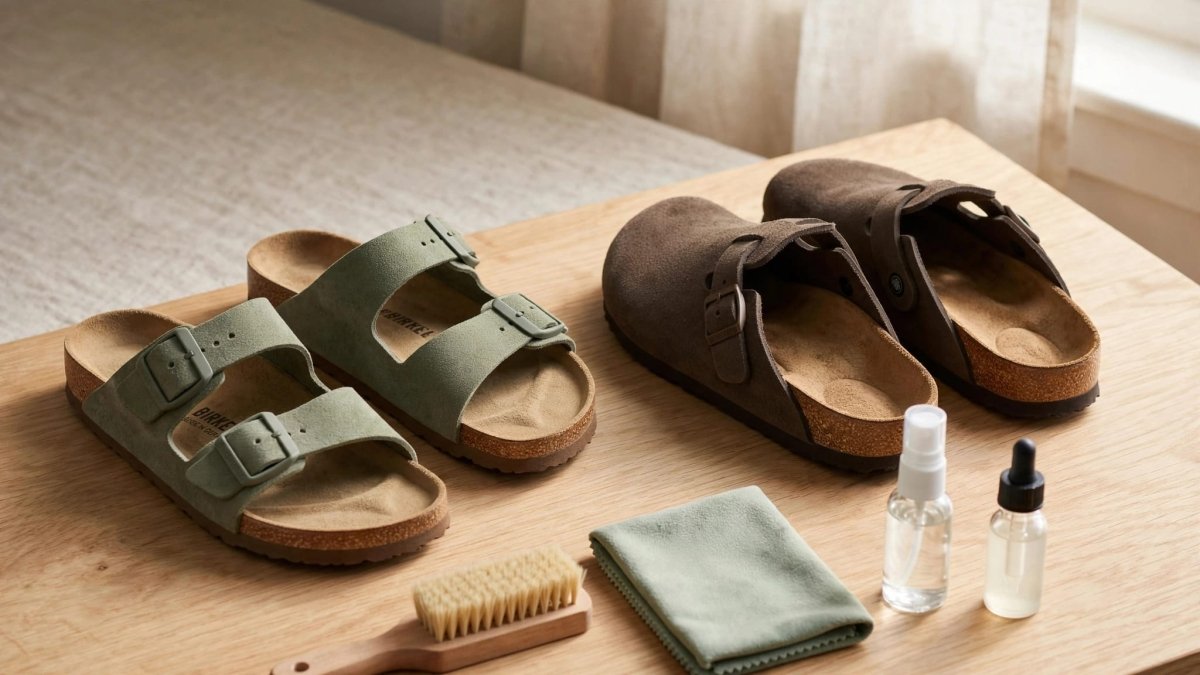
Birkenstock shoes become more comfortable with wear, but the footbed also collects sweat, dust, and skin oils. Good Birkenstock footbed care keeps that familiar cork-latex shape cleaner while helping your sandals and clogs stay wearable for longer.
The right method depends on the materials. Suede, leather, Birkibuc, EVA, cork, and synthetic linings each need different treatment. Use too much water or heat, and a quick cleaning job can create a bigger problem. These steps show how to clean, dry, protect, and store your Birkenstocks without damaging their structure.
Key Takeaways for Birkenstock Footbed Care
- Brush suede and nubuck footbeds before applying cleaner.
- Use Birkenstock Cleaner & Refresher on suitable footbeds, then wipe away excess moisture.
- Keep cork-footbed shoes away from soaking, radiators, fireplaces, hot cars, and prolonged direct sunlight.
- Apply Cork Sealer only to dry, exposed cork edges, using a thin coat.
- Clean EVA with mild soap and warm water, following the product's regional care guidance.
- Treat suede, oiled leather, smooth leather, Birkibuc, and other uppers according to their material.
- Air-dry shoes slowly at room temperature before wearing them again.
Why the Footbed Needs Regular Care
The footbed has direct contact with your feet, so it absorbs moisture during normal wear. Barefoot use, summer heat, and repeated daily wear can leave the suede lining discolored or odorous.
A light cleaning routine prevents buildup from becoming difficult to remove. It also gives you a chance to check the cork edge, upper material, and sole before small issues become more noticeable.
Cork, suede, and EVA each behave differently
Many classic Birkenstock models use a cork-latex footbed with a suede lining. The cork provides the molded foundation, while the suede lining sits against your foot. For example, the women's taupe Arizona Soft Footbed sandals combine a contoured cork-latex footbed with a soft suede lining and EVA sole.
EVA models need a different approach because the material is synthetic and water-resistant. However, a cork-footbed sandal should not be treated like a washable rubber shoe. Soaking can affect the footbed, lining, and cork.
Cleaning also helps you inspect the shoe
Once dirt covers the footbed, it becomes harder to see drying cork, loose edges, or worn suede. Clean shoes make these changes easier to spot.
Look at the heel and toe areas first. Those sections often show the most wear because they receive repeated pressure. Check the cork edge for pale, dry-looking areas, then inspect the outsole for uneven wear.
How to Clean a Birkenstock Footbed
Start with dry tools and a light touch. Heavy scrubbing can flatten the suede surface or spread dirt deeper into the lining.
Birkenstock's care products are designed for its materials. The Birkenstock Deluxe Shoe Care Kit includes a 59 ml Cleaner & Refresher, a 59 ml Water & Stain Repellent, a 44 ml Cork Sealer, and a suede and nubuck brush.
Cleaning suede and nubuck footbeds
Remove loose dirt with a Nubuck/Suede brush. Work gently across the footbed, especially around the heel and toe areas. Brushing first keeps loose grit from turning into wet mud when cleaner is applied.
Next, spray Birkenstock Cleaner & Refresher across the footbed according to the product directions. Wipe away excess moisture and loosened dirt with a clean cloth. Avoid saturating the footbed.
Let the shoe dry at room temperature. Once dry, brush the suede lightly again to restore its texture. A footbed may not return to its original color after heavy wear, but regular cleaning can reduce surface buildup.
The black suede Boston is a good example of a style that benefits from this routine. Its suede upper, suede footbed lining, and cork footbed all need controlled moisture and gentle brushing. You can see the material details on these women's black suede Boston clogs.
Cleaning EVA footbeds
Birkenstock's Australian care guidance recommends mild soap and warm water for EVA. Use a soft brush for marks, rinse away soap, and let the shoes air-dry.
Avoid harsh chemicals, abrasive pads, and high heat. Even when the material can handle water, aggressive cleaning can dull the finish or damage nearby components.
Check the care instructions for your specific model before using this method. EVA sandals and cork-footbed sandals should not receive the same cleaning routine.
Dealing with odor and moisture
Footbed odor usually develops when moisture remains in the lining after wear. Air your shoes out after use instead of placing them immediately in a closed closet or bag.
If the footbed is damp, remove loose dirt and allow it to dry naturally. Do not cover the odor with fragrance sprays or household cleaners. Those products may leave residue against your skin and can affect the lining.
Rotating between pairs also gives each footbed more time to dry. This is especially useful when you wear sandals or clogs without socks during warm weather.
How to Protect the Cork Edge
Cork is durable, but exposed edges need protection as the factory coating wears down. A dry, rough, or pale-looking edge may need a fresh layer of cork sealer.
The sealer belongs on the cork edge, not across the suede footbed. Keeping the application narrow helps protect the cork without creating a stiff or glossy patch on other materials.
When to apply Cork Sealer
Birkenstock recommends Cork Sealer when exposed cork looks dry. The product helps protect the cork and reduce further drying.
Inspect the full perimeter of the sandal or clog. Pay close attention to the front edge, heel edge, and areas where the cork rubs against clothing or hard surfaces. If the coating remains intact and the cork looks smooth, extra product may not be necessary.
Never apply sealer to wet cork. Clean and dry the shoe first, then use the product on the dry edge.
Applying a thin coat
Shake the Cork Sealer well. Apply a thin layer to dry cork edges, including areas that look brittle or dry. Keep the coat even and avoid flooding the edge with product.
Birkenstock's product directions call for overnight drying before wear. Place the shoes in a ventilated room at normal temperature. Do not speed up drying with a radiator, hair dryer, fireplace, or direct sun.
A thin coat is easier to control than a heavy one. If the edge still looks dry after the product has dried, follow the product directions before deciding whether another light application is appropriate.
Match Care to the Upper Material
Footbed cleaning and upper cleaning are separate jobs. A product that works for suede may not suit oiled leather, smooth leather, Birkibuc, or another synthetic finish.
Before cleaning, identify the upper material. The Birkenstock Arizona materials guide explains the differences between leather, suede, Birkibuc, and EVA, along with material-specific care points.
Suede, nubuck, and Birkibuc
Brush dry suede and nubuck gently with a suitable brush. If the upper needs additional protection, Birkenstock recommends Water & Stain Repellent for suede and nubuck.
Apply protection evenly and allow the shoe to dry naturally. Test any product according to its instructions, since treatments can change the appearance of some finishes.
Birkibuc has a brushed, leather-like surface and can usually be wiped with a damp cloth. Keep moisture controlled, especially near cork and suede components.
Oiled leather and smooth leather
Oiled leather develops changes in color and surface character with wear. Remove dust with a clean cloth, then use a leather product only when the material needs conditioning.
The men's cognac Boston clogs use an oiled leather upper with a suede footbed lining. Wipe the leather upper separately from the footbed, and keep conditioner away from the suede.
For smooth leather, a lint-free cloth usually handles light dirt. Polish only when the surface calls for it, and avoid applying leather products to cork, suede, or EVA.
The men's black oiled nubuck Arizona sandals also require material-specific care. Nubuck should be brushed and protected as nubuck, not treated like smooth leather.
Drying and Storage Mistakes to Avoid
Water is not always the main problem. Fast drying can cause more damage than careful cleaning, especially when cork, leather, and adhesive areas are involved.
Birkenstock advises slow air-drying away from direct heat and prolonged sunlight. That includes campfires, fireplaces, indoor radiators, and hot cars.
Let wet shoes dry slowly
If your Birkenstocks get wet, remove surface moisture with a cloth and leave them at room temperature. Keep the straps open so air can reach the interior.
Never place wet sandals against a radiator or leave them in a sunny car. High heat can affect leather, cork, adhesives, and the shape of the shoe.
Wait until the entire shoe feels dry before applying sealer, water repellent, or leather care products. Products applied over trapped moisture can lock that moisture into the material.
Store them in a cool, dry place
Store Birkenstocks away from damp bathrooms, heaters, and direct window light. Avoid compressing soft suede uppers under heavy items.
A breathable storage location works better than a sealed plastic bag. If you need to transport the shoes, let them dry fully before placing them in a case or luggage compartment.
When Cleaning Is Not Enough
Cleaning can refresh surface dirt, but it cannot restore every worn component. A badly compressed footbed, cracked cork edge, separated sole, or damaged strap may need professional assessment.
Birkenstock says repairs are possible in many cases. The company recommends emailing photos of the product and damage before contacting repair service, and repair work must be paid for in advance.
Know when to seek repair help
Contact a repair service when the cork has major cracks, the sole has separated, or the footbed no longer provides its usual support. Continued wear can make the damage worse.
Don't apply household glue to a structural problem. It can complicate a later repair and may create a hard spot under the foot.
The men's Boston clogs with contoured footbeds show why material condition matters. Their cork-latex footbed, suede lining, and suede leather upper each require a different evaluation when wear becomes advanced.
Take clear photos before asking for help
Photograph the top, side, heel, outsole, cork edge, and damaged area in good light. Include the full pair if both shoes show wear.
Describe when the problem started and whether the shoes became wet, overheated, or exposed to a cleaning product. Clear information helps a repair service decide whether the issue may be repairable.
Frequently Asked Questions
Can you wash Birkenstocks with water?
Avoid soaking cork-footbed Birkenstocks. Use controlled cleaning suited to the material. EVA models may be cleaned with mild soap and warm water under Birkenstock's regional EVA care guidance, then rinsed and air-dried.
How do you clean a smelly Birkenstock footbed?
Brush away dry dirt, use the recommended Cleaner & Refresher on a suitable footbed, and wipe away excess moisture. Let the shoes dry fully at room temperature. Regular airing after wear also helps reduce moisture buildup.
Can you put Birkenstocks in a dryer?
No. A dryer creates concentrated heat that can affect cork, leather, suede, adhesives, and the shoe's shape. Air-dry Birkenstocks slowly and keep them away from radiators, fireplaces, and hot cars.
How often should you use cork sealer?
Use it when the exposed cork looks dry or brittle, rather than applying it on a fixed schedule. Apply a thin coat to dry cork edges and let the shoes dry overnight before wearing them.
Conclusion
Good Birkenstock footbed care depends on restraint. Brush suede gently, keep cork away from soaking and high heat, clean EVA according to its material guidance, and use the right product for each upper.
A few minutes of care after regular wear can keep the footbed cleaner and make damage easier to spot. When cleaning no longer solves the problem, photos and professional repair advice are safer than improvised fixes.


