

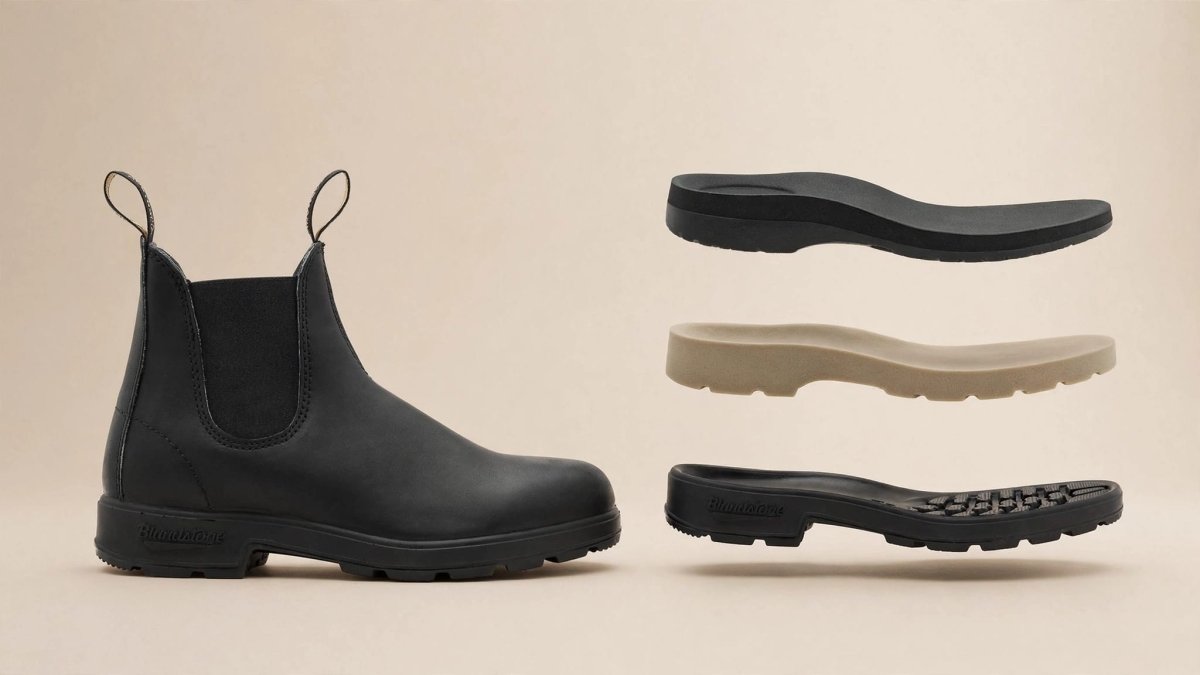
The insole, midsole, and outsole affect comfort in different ways, as the Blundstone 510 illustrates. Its removable footbed provides shaped support, its polyurethane midsole adds cushioning, and its TPU outsole meets the ground.
For shoe shoppers, understanding those differences makes product descriptions more useful. Start with the construction, then consider how each part suits your feet and daily activities.
Key Takeaways
- A removable footbed gives you options for adjusting support and replacing a worn insert, provided the replacement fits the shoe.
- Midsole materials differ across models. Blundstone uses polyurethane in the 510, while the Haflinger GZL44 has a cork and latex midsole.
- Outsole material deserves attention alongside cushioning. The Mephisto Match uses latex foam rubber, while the Blundstone 510 uses TPU.
Comfort depends on how these features work together. A supportive insert still needs enough room inside the shoe, and a cushioned construction still needs a suitable ground-contact surface.
Insole, Midsole, and Outsole: A Practical Comparison
The Blundstone Men's 510 boots provide a concrete example because their construction identifies all three components separately.
Here's how those parts compare within this model.
| Component | Blundstone 510 construction | What it contributes |
|---|---|---|
| Footbed, often called an insole | Removable, shaped comfort footbed | Support beneath the foot and an option for replacement |
| Midsole | Polyurethane | Cushioning within the sole construction |
| Outsole | TPU, or thermoplastic polyurethane | A durable ground-contact surface |
The 510 also includes PORON XRD material in the heel-strike area and a steel shank for torsional stability. Those additional features show why the three main sole terms don't describe everything underneath your feet.
When comparing shoes, read the complete construction description. Two models can mention cushioning yet achieve a different feel through their shape, materials, and supporting components.
The Insole: Focus on Shape and Available Space
A removable footbed gives you options
The Blundstone 510's shaped footbed lifts out of the boot. That makes it useful for shoppers who want the option of a different insert.
However, removable doesn't mean universally compatible. A thicker replacement can crowd your toes or raise your heel within the boot. Its shape also needs to sit properly inside the shoe.
Bring your usual orthotics or inserts when trying on footwear. Wear the socks you expect to use, too. Otherwise, you're judging a combination that won't match everyday wear.
If the original footbed is removable, replacing it usually preserves more space than stacking another full-length insert on top. The finished fit should feel secure without pressure across the top of your foot.
Structured support differs from extra softness
An insert can offer more than a padded surface. The Pedag Men's Viva Sport insoles, for example, use a semi-rigid polypropylene footbed with heat-moldable construction.
Their design includes longitudinal arch and metatarsal support, plus a soft heel cushion. That combines a defined supporting shape with cushioning in a particular area.
This distinction matters when shopping. If you want a more structured feel, a soft, flat insert may not deliver it. Conversely, a pronounced arch contour can feel intrusive when it doesn't suit your foot.
Judge support by its placement and your comfort during walking. More noticeable pressure doesn't automatically mean better support.
The Midsole: Compare Materials and Overall Feel
Polyurethane in the Blundstone 510
The Blundstone 510 places a polyurethane midsole above its TPU outsole. It also includes the separate PORON XRD heel-strike feature, so the material description extends beyond one layer.
This is a useful reminder when comparing cushioning claims. The midsole material tells you part of the story, but the finished boot's geometry and other components also affect how it feels.
During a fitting, walk rather than judging the boot only while seated. Notice how your heel settles and whether the sole bends comfortably as you step forward.
A comfortable first impression matters, but excessive softness isn't a requirement. You should also feel secure when changing direction.
Cork and latex in the Haflinger GZL44
The Haflinger Women's GZL44 wool clogs offer a different construction. Their wool-covered cork and latex midsole adapts to the contours of the foot.
Below it, a rubber traction sole includes a rocker heel. Together, those details describe both the shaped platform beneath the foot and the surface contacting the floor.
For shoppers comparing these clogs with a cushioned boot, the relevant difference is the whole construction. Cork and latex, polyurethane, and heel cushioning aren't interchangeable descriptions.
Pay attention to where the contour meets your arch and how your heel sits. A material name alone can't tell you whether that particular shape suits your foot.
The Outsole: Look Beyond the Tread Pattern
Mephisto Match uses latex foam rubber
The Mephisto Men's Match walking shoes combine a latex foam rubber outsole with Mephisto's Air-Bag shock-absorption feature.
The outsole material and cushioning feature describe different parts of the walking experience. One concerns the ground-contact construction; the other addresses impact cushioning within the shoe.
The Match also has speed lacing and a padded tongue and collar. Those features matter because a secure fit helps keep the foot positioned within the shoe while walking.
When evaluating a walking shoe, consider the sole alongside heel hold and forefoot room. An appealing outsole description doesn't compensate for toes that feel compressed or a heel that slips repeatedly.
Blundstone 510 uses a separate TPU outsole
The Blundstone 510's TPU outsole sits beneath its polyurethane midsole. Although the material names sound similar, the product identifies them as separate components.
That distinction helps you interpret a specification accurately. A reference to polyurethane cushioning doesn't automatically describe the material touching the pavement.
Also, resistance to oil or other substances doesn't establish slip resistance on every contaminated surface. Workplace footwear needs to meet the requirements of the actual job.
A rugged-looking sole or an oil-resistant material description doesn't, by itself, establish suitability for a particular workplace floor.
For everyday shopping, match the shoe's intended use to your activities rather than relying on appearance alone.
How to Choose the Right Construction for Your Day
Walking and standing require a complete fit
For walking-heavy days, assess cushioning while moving. Take several normal steps, turn, and notice whether your heel remains secure.
For standing, spend time with your weight evenly distributed across both feet. A shoe that feels pleasant during a few steps may place uncomfortable pressure beneath the arch when you're stationary.
The Mephisto Match combines outsole construction, shock absorption, and adjustable lacing. The Haflinger GZL44 takes a different approach with its contoured cork and latex midsole.
Those are useful starting points, not reasons to ignore fit. Choose the construction that feels comfortable during the movements you'll repeat throughout the day.
Orthotic users need room as well as removability
If you wear an orthotic, prioritize a removable footbed and enough interior depth. The Blundstone 510 provides the removable-footbed feature, but the finished combination still needs to fit your foot.
After inserting your orthotic, notice whether your heel sits securely and whether your toes retain room. Pressure over the instep can indicate that the combination occupies too much space.
Also, distinguish an insert adjustment from a sizing problem. A shoe that's too short or too narrow needs a better-fitting size or shape.
For persistent pain, numbness, or a prescribed orthotic that creates pressure, seek guidance from a qualified foot-care professional.
When an Insole Replacement Isn't Enough
A replacement insert makes sense when the insert itself is worn and the rest of the shoe remains sound. It can also change the underfoot contour when the shoe has room for the new shape.
However, a new footbed won't rebuild a damaged sole. Visible separation, substantial outsole wear, or a shoe that has developed an uneven stance calls for attention beyond an insert.
Inspect both shoes together. Compare the heels, look at the ground-contact surfaces, and place the shoes on a flat surface to identify obvious differences.
Creasing alone doesn't establish that a midsole has failed. Consider changes in comfort alongside visible damage and the shoe's overall condition.
Replace the component that needs attention, rather than assuming an insole can solve every comfort problem. Depending on construction and damage, the appropriate next step may be professional repair or replacement footwear.
Frequently Asked Questions
Is a footbed the same as an insole?
In the Blundstone 510 and Pedag Viva Sport descriptions, "footbed" refers to the shaped component beneath the foot. Shoppers commonly encounter "insole" for this type of insert. However, construction language varies, so the useful details are whether the component is removable, how it's shaped, and what materials it contains.
Can I put an insole on top of the original one?
Stacking full-length inserts takes up interior space and can raise your heel or crowd your toes. When the original insert is removable, replacing it generally gives the new insert more room. Keep the combination only if your heel stays secure and the shoe remains comfortable across the forefoot and instep.
Does a thicker midsole mean better support?
Thickness alone doesn't establish support. Compare the contour, stability, and finished fit as well as cushioning. The models discussed here use different approaches, including polyurethane, cork and latex, and separate heel-cushioning features. Their material descriptions help narrow your choices, but walking in the shoe reveals whether its construction suits you.
Choose the Whole Shoe, Not One Layer
The most useful distinction between an insole, midsole, and outsole is how each component contributes to the finished shoe. The Blundstone, Haflinger, and Mephisto examples show why a single cushioning claim doesn't describe the complete fit.
When comparing our shoes, start with construction and fit together. Consider the footbed's shape, the cushioning beneath it, and the ground-contact sole, then judge the complete shoe during the activities you expect it to handle.


