

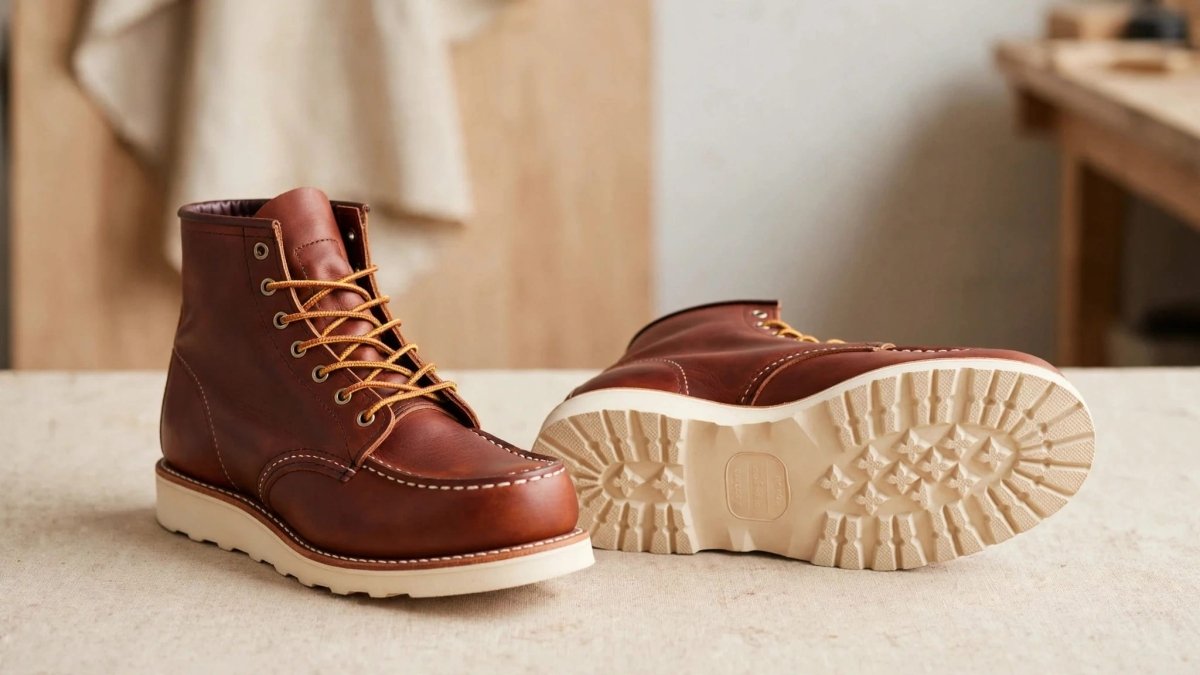
The Red Wing Classic Moc is a leather boot recognized by its moc-toe outline and contrasting Traction Tred rubber sole. The toe gives the boot its distinctive look, while the sole is the layer that meets the ground.
For shoppers, the details matter because Classic Moc models differ in leather, fit and construction. Start with the features they share, then compare the individual boots.
The Parts of a Red Wing Classic Moc
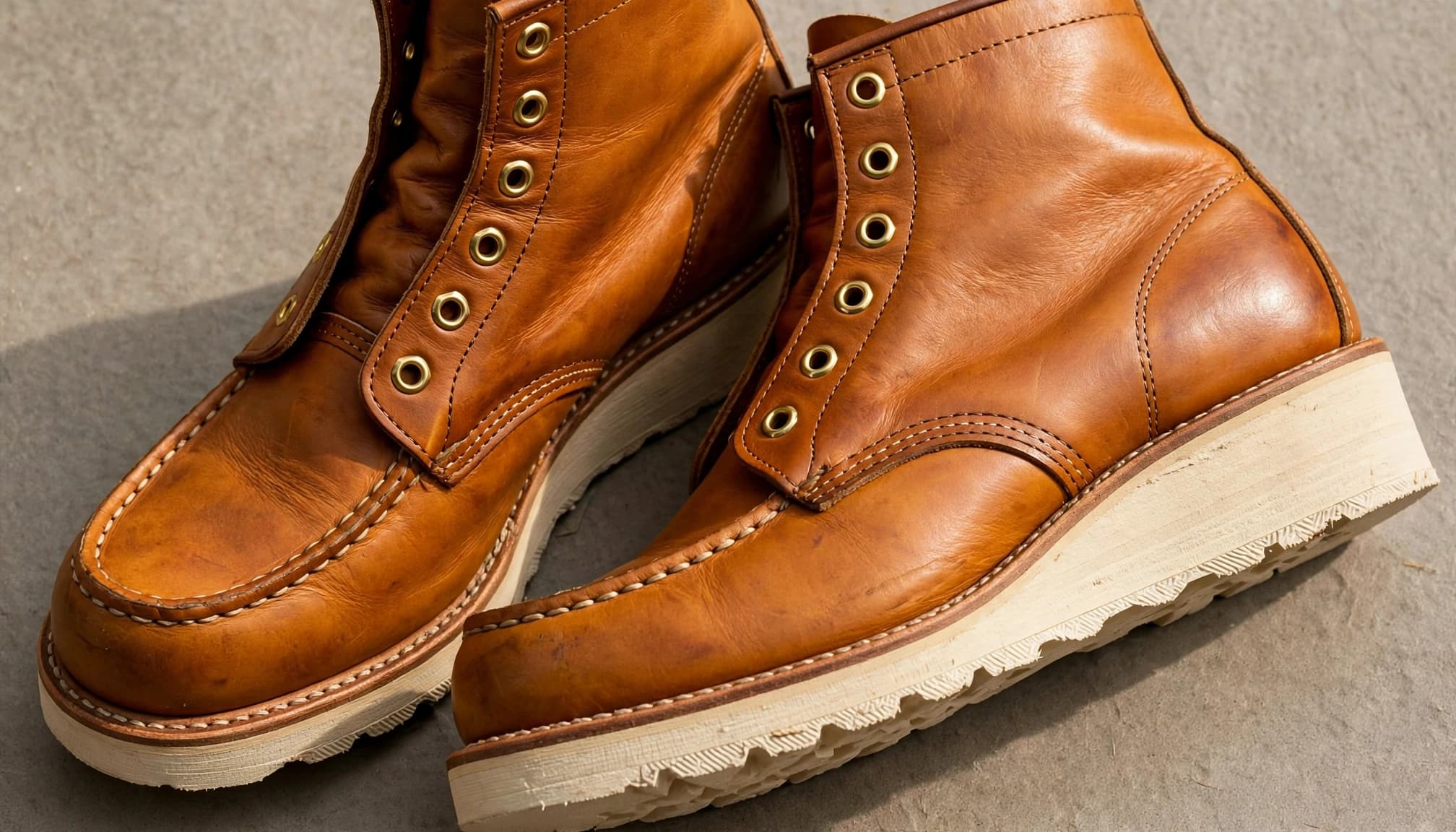
A six-inch Classic Moc has a leather upper that covers the foot and ankle, laces along the front and a sole underneath. Two details make the silhouette easy to recognize: the raised outline around the toe and the light-colored sole on many versions.
The upper and toe
The upper is the part of the boot above the sole. On a moc toe, a curved line of stitching is visible around the top of the forefoot. That outline gives the front of the boot a different appearance than a plain round toe.
The laces let you adjust the fit across the instep and ankle. The leather and hardware vary by model, so two Classic Mocs can look different even when their overall shapes are similar.
The sole and welt
The outsole is the bottom layer that contacts the ground. Red Wing calls the rubber outsole on these models Traction Tred.
You'll also see a rim around the bottom of the upper. This is where welt construction comes into the picture, although the exact construction varies by style.
What the Moc Toe Looks Like
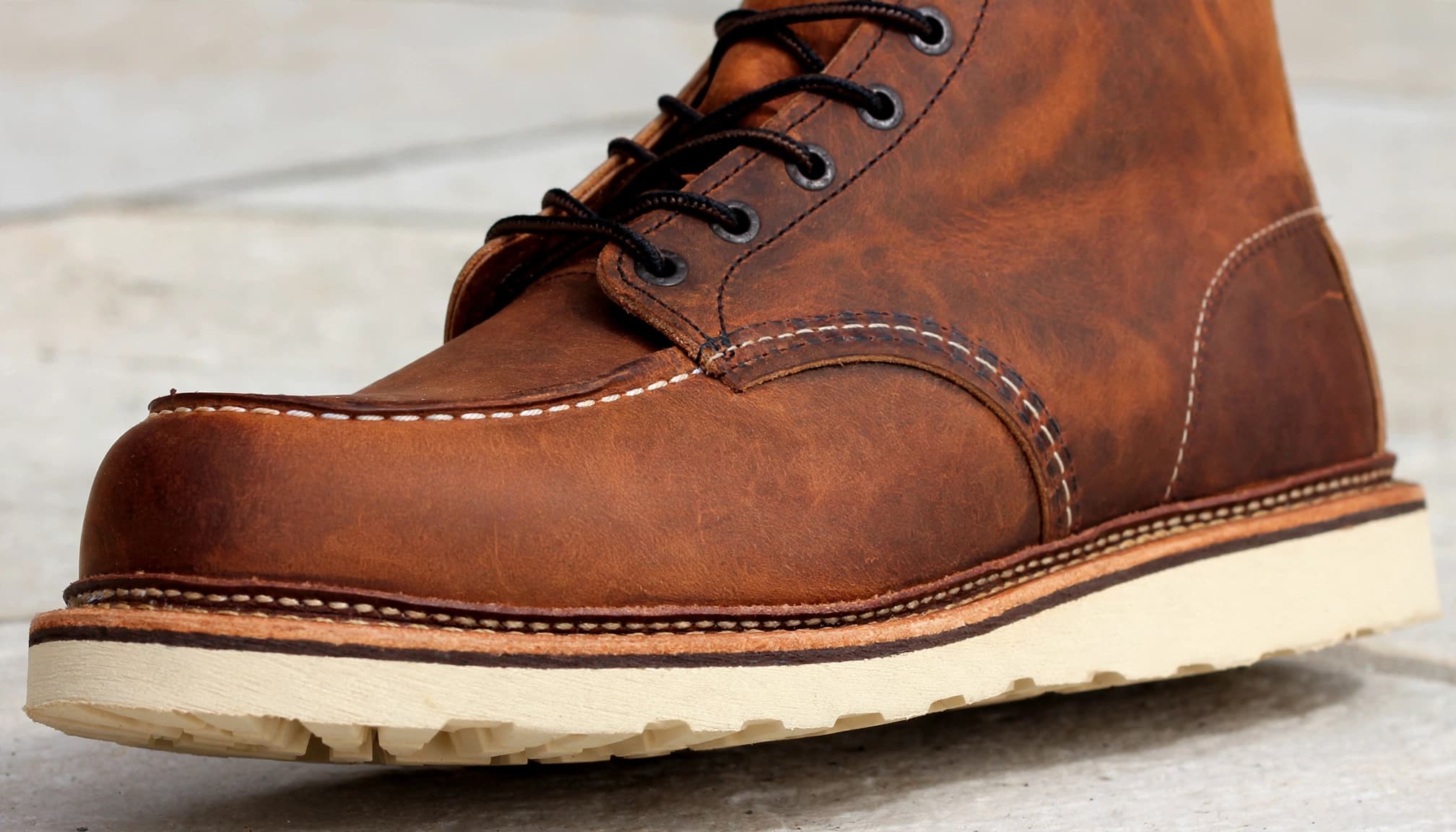
The Classic Moc's toe has a rounded front and a visible, raised outline across the top. That detail gives the boot a casual workwear appearance. It's easy to spot even under jeans or work pants.
A moc toe is a design description, so it doesn't tell you everything about the space inside the boot. Your toes still need enough room at the front and sides. The shape that fits you will depend on your foot as well as the boot's last, the form used to shape it.
Structured toes and safety toes
The Classic Moc 8809 has a structured toe, according to its product description. That term describes a reinforced toe shape. It doesn't mean the boot has a steel safety toe.
If you need protective footwear for a job, choose a boot with the required safety rating. A moc-toe outline alone doesn't indicate that a boot meets a workplace standard.
Moc toe versus cap toe
A cap-toe boot has a different visual treatment at the front. For example, the Red Wing Iron Ranger 8085 has a reinforced toe cap and a Vibram outsole. Its appearance is distinct from the Classic Moc's outlined toe and Traction Tred sole.
Understanding the Traction Tred Sole
Traction Tred is Red Wing's name for the rubber outsole used on the Classic Moc models discussed here. On many versions, its pale color contrasts with the leather upper and creates a recognizable profile.
The sole extends across the bottom of the boot rather than appearing as a separate, pronounced heel. That gives the Classic Moc a different silhouette from many traditional heeled boots.
The 8809 outsole
The Classic Moc 8809 pairs Tidal Blue roughout leather with a black Traction Tred rubber outsole. The darker sole gives the boot a less contrasting appearance than the white outsole associated with other versions.
Its product description also lists a Goodyear welt and says the boot is fully rebuildable. Those are separate details from the outsole name: Traction Tred identifies the bottom sole, while the welt describes part of the boot's construction.
The 8849 outsole
The 8849 listing describes a white Traction Tred rubber outsole. Against a dark upper, the lighter sole makes the shape of the boot more prominent.
Sole color is worth considering alongside leather color. Both remain visible when you wear the boots, and the combination can make an otherwise similar six-inch moc look quite different.
Welt Construction and Repair
A welt is a strip around the edge of a boot that forms part of the connection between the upper and the sole. Welted construction is worth considering if you want footwear that can be repaired rather than replaced when the bottom wears down.
The details differ among Classic Moc styles. The 8809 is listed with black Goodyear-welted construction and is described as fully rebuildable. Our 8849 listing uses the term "Norwegian-like welt" and also mentions triple stitching.
What a rebuildable boot offers
A rebuildable boot can receive more extensive repairs than a simple sole replacement when its construction and condition allow. On a Goodyear-welted boot, a cobbler can replace the outsole without treating the entire upper as disposable.
That doesn't mean every repair is suitable for every pair. The condition of the upper and other components matters, especially after long wear.
When to consider a repair
Pay attention to uneven wear or damage around the bottom edge of a boot. A cobbler can assess the pair and explain which repairs make sense.
Regular care also protects the leather above the sole. Resoling addresses the bottom of the boot, but it can't restore leather that has deteriorated beyond repair.
Comparing Classic Moc Models
The 1907, 8809 and 8849 share the Classic Moc name, but they offer different looks and listed details. Each is a six-inch style.
Classic Moc 1907
The Classic Moc 1907 in Copper Rough & Tough is the choice here for shoppers who want a warm, brown leather boot. Its color works well with denim, canvas pants and other casual clothes.
The 1907 has the familiar outlined toe and light sole that many people associate with the Classic Moc. Its leather gives it a less uniform appearance than a polished dress boot.
Classic Moc 8809
The Classic Moc 8809 in Tidal Blue takes a different approach with blue roughout leather and a black outsole. Roughout has a textured surface, so it looks and requires care different from smooth leather.
This model is made on Red Wing's No. 23 last. It has seven eyelets, nickel hardware, a partially gusseted tongue and a structured toe. Our listing describes it as made in the USA.
Classic Moc 8849
Our Classic Moc 8849 listing describes a white Traction Tred sole and a removable footbed. The listing title identifies Black Prairie leather, while the description also refers to Copper Rough & Tough leather.
The removable footbed is a useful detail for shoppers who want some room to adjust the feel underfoot. Any replacement should fit inside the boot without crowding your toes or changing the fit at the heel.
How Should a Red Wing Classic Moc Fit?
Start with the socks you expect to wear most often. Lace both boots, stand up and walk around. A boot can feel different once your foot is bearing weight, so assess the fit while standing as well as sitting.
Allow room for your toes without choosing a boot so long that your foot moves excessively. The widest part of your foot should sit comfortably in the widest part of the boot. Pressure on the sides of your toes is a sign to reconsider the fit.
Length, width and heel hold
A secure fit should hold your foot at the instep without forcing you to overtighten the laces. Some initial heel movement can occur in a new leather boot, but persistent rubbing or a heel that lifts excessively deserves attention.
Our 8849 listing notes that the style fits about half a size larger. Treat that as a starting point rather than a rule for every Classic Moc. Different lasts, footbeds and foot shapes can change how a boot feels.
Trying boots with an insert
If you plan to wear an orthotic or another insert, try it with the boot. An insert takes up space and can make the toe or instep feel tighter.
Don't rely on leather to stretch enough to fix a poor fit. A boot should feel secure and have adequate room before you begin breaking it in.
Breaking In Your Boots
Leather boots can feel firm when new. Give them time to adapt to your feet by wearing them for shorter periods at first, then increasing wear as they become more comfortable.
Lace the boots securely, but leave enough room across the instep. If one area feels uncomfortable, adjusting the tension along the laces can make a difference without changing the size.
Know the difference between firmness and pain
New leather may feel stiff, but sharp pain, numbness or persistent pinching isn't a fit goal. Take the boots off if you feel those symptoms.
A rubbing spot can have several causes, including the wrong size, a loose heel or socks that bunch. Address the cause before committing to a long day in the boots.
Let leather dry between wears
Moisture can build up inside footwear during a long day. Giving boots time to air out between wears helps them dry.
If the leather gets wet, let it dry at room temperature. Avoid placing the boots against a heater or using high heat, which can dry the leather too quickly.
Caring for Different Leathers
Choose your care routine for the leather on your pair. Copper Rough & Tough and Tidal Blue roughout have different surfaces, so they shouldn't automatically receive the same treatment.
For routine cleaning, remove loose dirt with a soft brush or cloth. Pay attention to the area around the sole edge, where dirt can collect. Let the boots dry before brushing away dried mud.
Smooth and oil-tanned leather
Leather conditioners add oils or moisture back to leather, but too much product can change its appearance. Apply a small amount of a suitable conditioner when the leather needs it, rather than after every wear.
Conditioner can darken leather. If appearance matters to you, test a small, discreet area first and allow it to dry before treating the rest of the boot.
Roughout leather
Roughout's textured surface needs a different approach. A suede or roughout brush can lift loose dirt without flattening the texture as much as a heavy application of conditioner might.
Use products intended for roughout when you want to treat that leather. Expect the surface to develop marks with wear, especially around areas that make frequent contact with clothing or other objects.
Choosing the Right Classic Moc
Choose the 1907 if you prefer the warm look of brown leather. The 8809 is a choice if you want blue roughout, a dark sole and the listed rebuildable construction. The 8849 offers a contrasting white outsole and a removable footbed.
Fit should carry as much weight as appearance. If you live near New York City, you can visit us at 155 West 72nd Street to try footwear in person. We also ship to all 50 states.
Whichever model you choose, consider the clothes you'll wear with it and the care its leather needs. A boot that fits your wardrobe and your foot is easier to wear regularly.
A Classic Moc That Fits Your Routine
The Red Wing Classic Moc combines a recognizable toe outline with a Traction Tred rubber outsole. Leather, sole color and construction details give each model its own character.
Focus on fit first, then choose the leather and look you prefer. With sensible care and timely repairs, a well-chosen pair can remain part of your wardrobe for years.


