

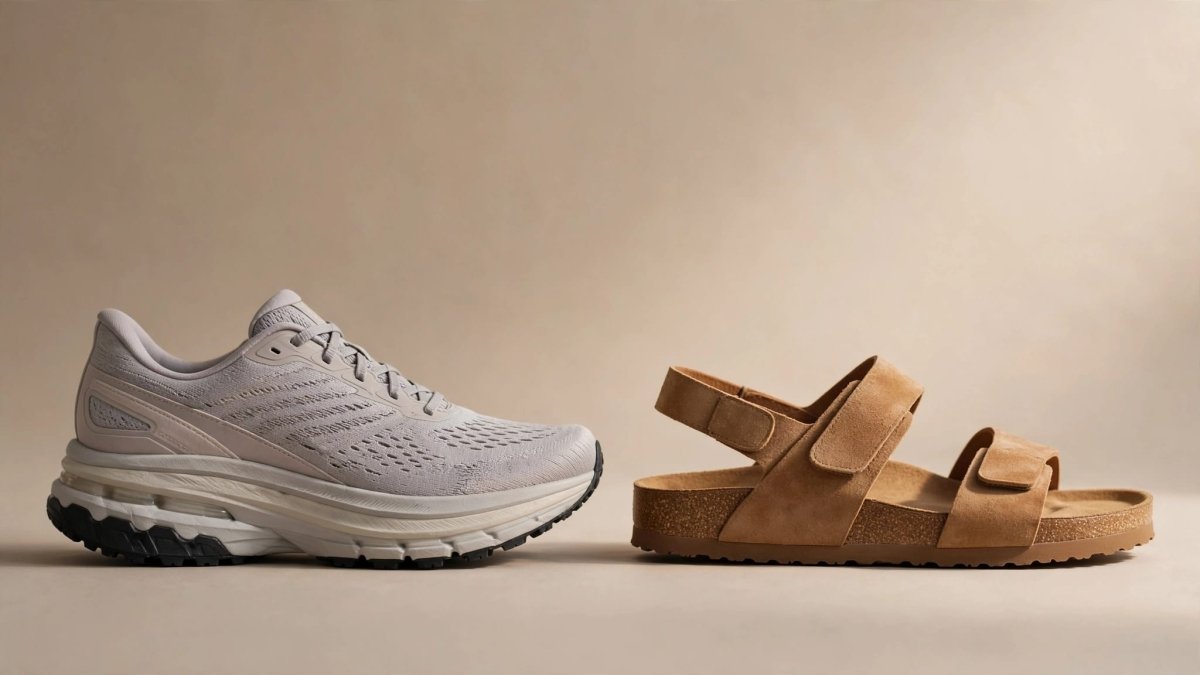
Shoe stack height is one of several details you may encounter when comparing footwear. It helps to consider it alongside the shoe's materials, fit and intended use.
The feel underfoot depends on more than one specification. A sandal with a shaped footbed and a cushioned running shoe can offer comfort in different ways. Start by looking at the construction of each pair.
What to Consider Alongside Shoe Stack Height
A shoe has several layers and features that affect how it feels when you wear it. The outsole is the part that contacts the ground. The midsole sits above it, while the insole or footbed is the surface beneath your foot.
These components vary across styles. A running shoe may have a foam midsole and rubber outsole, while a sandal may have a molded footbed. Dress shoes and boots often use different materials again, depending on their design.
When comparing shoes, consider how the whole pair feels. The shape around your toes, the security of the heel and the flexibility of the sole all matter during a day on your feet.
How Shoe Materials Affect the Feel Underfoot
Materials can make two shoes feel different even when they look similar. Foam, cork and rubber each have their own characteristics, and brands combine them in different ways.
Foam cushioning in sneakers
Many sneakers use foam in the midsole. EVA, short for ethylene-vinyl acetate, is one material used in footwear cushioning. Its feel depends on the shoe's construction, so one EVA shoe won't necessarily feel like another.
The women's Hoka Bondi 7 has a full-length compression-molded EVA midsole and a memory foam collar. It's an option to consider if you like a cushioned sneaker with padding around the ankle.
Molded footbeds in sandals
A molded footbed has a defined shape beneath the foot. Depending on the design, you may feel contours around your heel and arch rather than a flat surface.
The Birkenstock Arizona EVA sandal uses a molded EVA footbed and has two adjustable straps. Its flexible construction offers a different feel from a traditional cork-footbed sandal. Try the straps at a setting that holds your foot securely without pressing on it.
Heel Height, Platform Height and Stack Height
Heel height and platform height are useful details when shopping for sandals, boots or dress shoes. They describe different aspects of a shoe, so neither should be treated as a stack-height measurement.
For example, the Naot Krista sandal has an approximately 1.5-inch heel and a 0.75-inch platform. It also has an adjustable instep strap and a suede-covered cork and latex footbed.
Those dimensions help describe the sandal's shape. They don't tell you everything about its fit, though. The straps and footbed deserve attention too, especially if you plan to walk in the sandals for extended periods.
Choosing Shoes for Your Routine
Your usual activities are a useful starting point when comparing footwear. A pair for a short commute may have different demands than shoes you plan to wear throughout a workday.
Sneakers for walking and standing
For regular walks or long periods on your feet, look for a sneaker that fits securely and feels comfortable at your normal pace. Walk around in both shoes and pay attention to pressure at the toes, instep and heel.
Also consider the outsole. A tread suited to dry pavement may feel different on wet surfaces. If you use removable insoles, try the shoes with those insoles in place, because they can change the space available inside.
Sandals for everyday wear
With sandals, footbed shape and strap placement are especially noticeable. Your foot should sit comfortably within the footbed, and the straps should hold it without rubbing or pinching.
Adjustable straps can help you change the fit across the top of your foot. A backstrap adds another point of contact, while a slide is easier to put on and take off. Choose the design that feels secure for the walking you plan to do.
How to Assess Fit When You Try Shoes On
Shoe stack height is only one detail to consider while shopping. To judge a pair, put on both shoes and stand with your weight evenly distributed. Your toes need room to move, and the widest part of each foot should sit comfortably in the shoe.
Walk at your usual pace rather than judging the fit while seated. Notice whether your heel slips, the upper presses on your foot or a seam rubs. A secure fit shouldn't require you to grip with your toes to keep the shoe on.
Bring the socks or insoles you expect to wear with the pair. If you shop in person, take enough time to compare more than one style. Comfort is personal, and a shoe that suits someone else's foot may not suit yours.
If you have persistent foot pain or a condition that affects your walking, a podiatrist can help you choose appropriate footwear.
Find the Feel That Works for You
The right shoe is a combination of fit, construction and purpose. Look beyond a single number and pay attention to how the entire pair feels when you stand and walk.
For help comparing styles in person, visit us at 155 West 72nd Street in New York City.


