

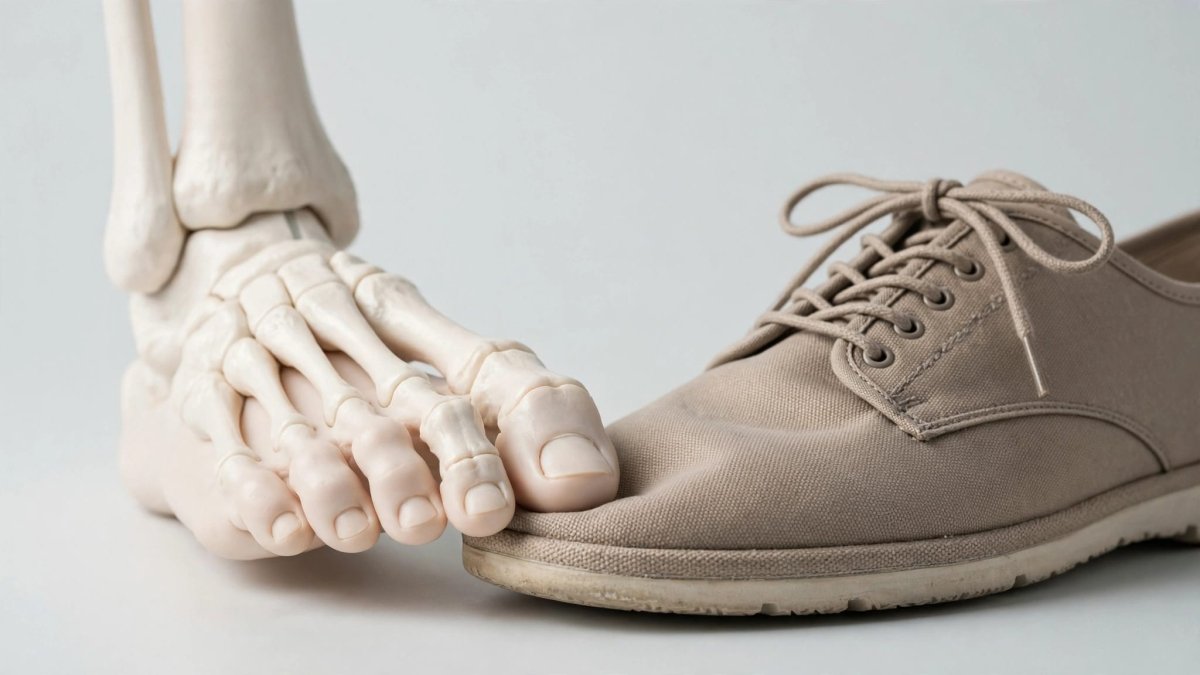
Numb toes in shoes can have several causes, and the sensation alone can't tell you which one applies. A pair that feels tight or presses on one area deserves a fit assessment, but persistent or recurring numbness also needs medical attention.
Start by taking the shoes off and noticing what happens afterward. If you're shopping for another pair, look for comfortable space and a secure fit rather than a promise that a shoe will resolve the symptom.
Key Takeaways
- Stop wearing the shoes when numbness or tingling begins. Note which toes are affected and whether the sensation changes after removal.
- Assess shoe length, width, depth, and closure separately. A longer size doesn't always address pressure at the sides or top of the foot.
- Try both shoes while standing and walking, with your usual socks and any prescribed orthotics.
- Seek medical advice if numbness persists or returns. Sudden loss of sensation, unusual coldness, or discoloration calls for urgent assessment.
What Numb Toes in Shoes Can Tell You
The timing and location of numbness can help you describe the problem, but they don't establish its cause. A shoe that feels uncomfortable is worth reassessing even if you can't yet explain the sensation.
Notice when the sensation begins
Pay attention to whether you notice numbness as soon as you put on the shoes or only after walking. Also note whether it affects one foot or both, and whether the same thing happens in other pairs or while you're barefoot.
If the feeling changes after you remove a shoe, that information is useful to share with a clinician. However, a change after removal doesn't prove what caused it. Don't put the pair back on repeatedly to see if you can make the sensation return.
Identify the area as precisely as you can
"A numb foot" gives less information than "numbness in the smaller toes of my left foot." If you also notice pressure, identify where it sits: across the ball of the foot, at the end of the toes, or over the top of the foot.
A visible mark may help you locate an area to reassess. On its own, though, it can't diagnose the problem. Keep observations separate from conclusions about what the shoe or your foot is doing.
Where to Look for Shoe Fit Problems
A shoe can be comfortable in one area and restrictive in another. Look at the space around your toes as well as the way the upper and closure hold your foot.
Toe-box length, width, and depth
The toe box is the front part of the shoe that surrounds your toes. While standing, your longest toe should clear the front, and your toes should be able to move without curling underneath.
Width matters across the sides of the forefoot. Depth matters above the toes, where an upper or seam may press against a nail even when there's space at the front. A pointed shoe can have empty space in its decorative tip while still feeling narrow where your toes sit.
Don't assume a larger number will solve every concern. Extra length can leave the heel loose while the front remains too narrow for your foot.
Pressure over the instep and along seams
The instep is the top of your foot between the toes and ankle. Notice whether pressure sits beneath the laces, at the edge of the tongue, or across a broader area. A boot can feel comfortable around the ankle while still being narrow across the forefoot.
An adjustable closure lets you compare how the upper feels at different settings. It can't add length or change the sole's shape, though. If the shoe needs to be uncomfortably tight to stay on, compare a different shape instead.
Our guide to high-instep lacing covers ways to describe pressure around the top of the foot.
How to Test Shoe Fit Before You Buy
A seated try-on doesn't show how shoes behave under your full weight. Test each pair while standing and moving, and stop if you experience pain or altered sensation.
Bring the items you'll wear with the shoes
Wear your usual socks for an everyday shoe or the socks you expect to use with a particular boot. Thicker socks take up more room, so a pair that feels spacious with thin fitting socks may feel different at home.
If you use prescribed orthotics, bring them to the fitting. Inserts occupy space inside the shoe and can change the room available above your toes and across the instep. Don't modify a prescribed orthotic yourself to make it fit a particular pair.
Try both shoes. Feet don't always feel the same inside a pair, so pay attention to each side rather than judging by the more comfortable one.
Stand, walk, turn, and stop
Stand with your weight on both feet and assess the front, sides, top, and heel. Your toes should have room to move, while the heel should feel secure without painful pressure.
Next, walk at your normal pace and make a few comfortable turns and stops. Notice whether your toes slide toward the front or whether you grip with them to keep the shoe on. Shortening your stride or avoiding a normal push-off are also reasons to compare another pair.
After a short walk, remove the shoes and look for localized redness. A mark alone doesn't identify a cause, but it can help you locate an area to reassess. Our standing and walking fit guide offers more ways to evaluate the whole pair.
What to Do When Numbness Starts
Stop the activity and remove the shoes rather than walking farther to see whether the sensation improves. If you're trying on a new pair, set it aside. Pain, tingling, and numbness aren't signs that you need to break a shoe in.
Make a brief note of the shoe, the affected foot, and which toes feel different. Include when the sensation started and what happened after removal. If there's also rubbing or swelling, describe where you noticed it.
Don't keep adjusting the same pair and reproducing the symptom. If numbness remains after removal or keeps returning, seek medical advice. The same applies if it occurs in several pairs or while you're barefoot.
If you have reduced sensation, comfort during a short try-on may not reveal rubbing or pressure. A qualified clinician can offer individualized footwear guidance rather than relying on feel alone.
How to Choose a Different Size or Shape
Once you're comfortable again, use what you noticed to make a focused comparison. Change one fit feature at a time, then assess the whole shoe rather than only the spot that concerned you.
Compare width, length, and depth separately
If your longest toe touches the front, try a longer size or a different toe shape. If the sides feel restrictive, compare a wider fitting or a style with a broader forefoot. Pressure above the toes or instep may call for more internal depth.
Each change affects the rest of the fit. A longer shoe, for example, may provide more space at the front but allow your heel to slip. Walk in both shoes before deciding, and check that your foot doesn't slide forward when you stop.
Width labels can also vary across brands and styles. Compare the actual pairs rather than assuming every shoe with the same label will feel identical.
Don't rely on break-in to create room
Leather can relax somewhat with wear, and a new sole may become more familiar as it flexes. Neither change makes a short shoe longer or guarantees that a narrow shape will suit your foot.
Choose a pair that feels comfortable during the fitting. If you start wearing it for short periods, stop when you notice pinching, worsening rubbing, or altered sensation.
Our advice on shoe stretching and proper fit explains why the starting fit matters more than a hoped-for change.
Shoe Styles to Compare for Everyday Wear
Different constructions give you different ways to assess fit. These styles are options to try, not treatments for numbness. Choose according to how each pair feels on both feet while you stand and walk.
Adjustable sandals and walking shoes
The Birkenstock Milano oiled leather sandal has adjustable straps and a contoured footbed. Its open design lets you see where your toes and heel sit relative to the edges. Check their position while standing, then walk and turn without gripping the sandal with your toes.
For a closed walking shoe, the Mephisto Match in tan leather has speed lacing and a padded tongue and collar. Adjust the laces for a secure feel without uncomfortable pressure, then compare the toe room in motion.
Stretch uppers and closed-toe fit
The ECCO Felicia stretch slip-on has a textile and leather upper with a wedge sole. A flexible upper may feel different from a structured one, but it doesn't remove the need to assess length, width, and depth.
In any slip-on, notice whether your heel stays comfortably in place as you walk. If you have to curl your toes to hold the shoe on, compare another size or style.
When to Get Medical Help
Arrange medical advice for numbness that persists after you remove your shoes or returns during wear. Mention whether it affects one foot or both and whether you notice it barefoot. Your notes can help a clinician understand the pattern without assuming the footwear is the only factor.
Seek urgent assessment for sudden loss of sensation or a foot that becomes unusually cold or discolored. Severe pain after an injury, an obvious change in foot shape, or an inability to bear weight also needs urgent care.
An open sore, spreading redness, warmth, or drainage calls for medical advice. Don't continue wearing a pair that rubs damaged skin while waiting for the area to worsen.
Frequently Asked Questions
Can I keep wearing shoes if the numbness goes away?
Stop wearing them when the sensation occurs. Improvement after removal is useful information, but it doesn't establish the cause. If numbness returns, seek medical advice rather than repeatedly testing the pair.
Should I buy a bigger size?
A longer size may help when your longest toe touches the front. If the length is adequate but the sides or top feel restrictive, compare width, depth, and toe shape as well. The heel should remain secure in any size you try.
Can thicker socks change the fit?
Yes. Thicker socks occupy more space inside a shoe, so they can change how the upper feels around your foot. Try the pair with the socks you intend to wear, particularly when shopping for boots.
Choose a Comfortable Fit and Take Numbness Seriously
Numbness is a reason to stop and pay attention, not a sensation to tolerate until a shoe feels broken in. If it persists or returns, seek medical advice.
For your next fitting, focus on space and security together. Your toes need room to move, and your feet should stay comfortably positioned as you walk.


