

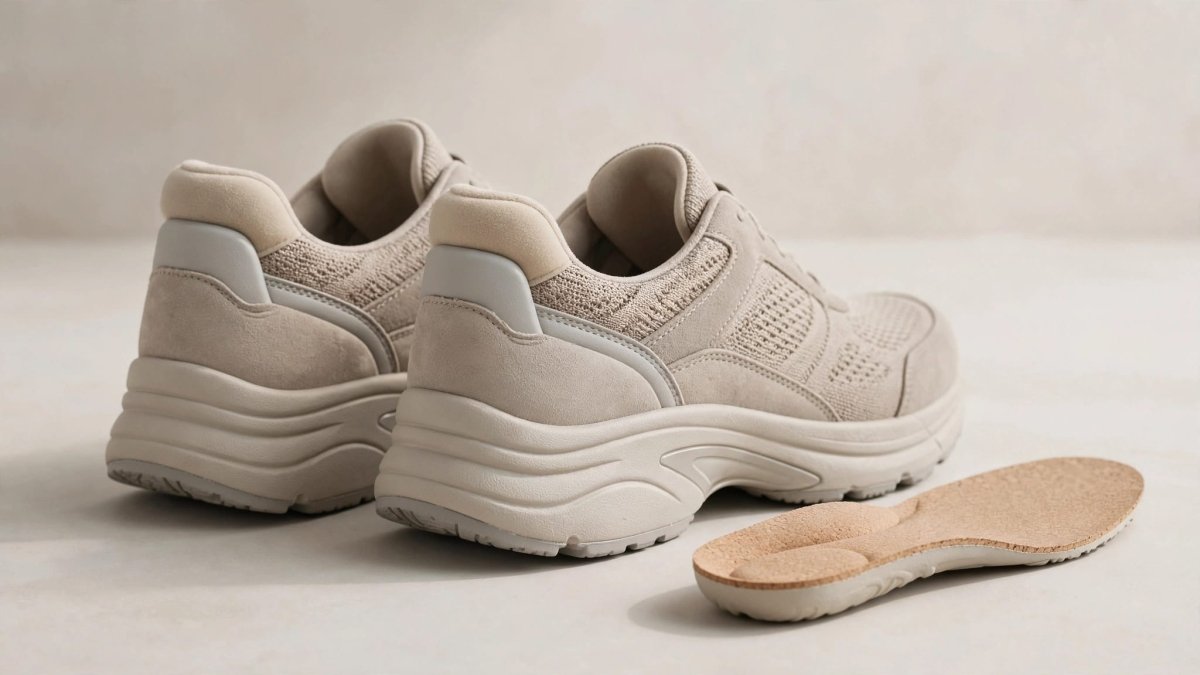
The best shoes for plantar fasciitis fit securely, cushion your heel, and support your arch without causing pressure. They should also feel comfortable when you walk, not just when you're standing in front of a mirror.
Fit comes first: a shoe with a thick sole or a supportive label won't help if it squeezes your toes or shifts under your heel. A careful try-on can help you find a pair that suits your feet and your daily routine.
Key Takeaways
- Look for a stable heel, comfortable arch support, and cushioning that feels good under your full weight.
- Try both shoes with your usual socks and any orthotics you plan to wear.
- Walk, turn, and stop before deciding. Don't buy a pair that makes you change your stride.
- Seek medical advice if heel pain persists, worsens, or affects your walking.
What Heel Pain Can Feel Like
Plantar fasciitis involves pain associated with the band of tissue along the bottom of the foot, called the plantar fascia. A common symptom is pain near the heel when you take your first steps in the morning or stand up after resting.
Discomfort can ease as you move, although it may return after prolonged standing or activity. The experience varies, and heel pain can have other causes, including injuries and nerve problems.
Shoes may make daily movement more comfortable, but they don't establish a diagnosis or guarantee relief. If you have recurring pain, pay attention to when it appears and where you feel it. Those details can help a clinician assess the problem.
Features to Look for in Shoes for Plantar Fasciitis
Start with the whole shoe rather than a single feature. A cushioned sole, for example, still needs a shape and upper that hold your foot comfortably.
Arch support that fits your foot
Arch support should meet the curve of your foot without pressing sharply into it. If the raised area feels too far forward or creates a sore spot when you stand, try a different shape.
More pronounced support isn't automatically better. Some people prefer a contoured footbed, while others feel more comfortable with a gentler shape. Your foot's width and the position of your arch both affect how support feels.
Cushioning with a stable base
Heel cushioning can soften the feeling of contact with the ground. However, a shoe that feels plush when you press the sole with your hand may feel unstable when you walk.
Look for a base that feels steady beneath you, especially around the heel. A firm heel counter, the structured section at the back of the shoe, may help hold the heel in place. At the front, the shoe should allow a comfortable push-off without forcing your foot into an awkward movement.
A secure fit without pressure
Laces or adjustable straps can help hold your foot in position. They shouldn't need to be pulled painfully tight to stop your heel from slipping.
Also consider the shoe's shape at the toe and instep. A secure heel doesn't require cramped toes, and a roomy forefoot shouldn't leave your foot sliding around.
Get the Fit Right Before You Buy
A shoe can feel pleasant while you're seated and still cause trouble once your feet carry your weight. Try both shoes because your feet may differ in length or shape.
Prepare for a realistic try-on
Wear the socks you'll normally use with the shoes. If you have prescribed orthotics, bring them along: they take up space and can change where your heel sits.
An afternoon fitting can be useful because feet may swell during the day. Fasten both shoes as you would for regular wear, then stand with your weight on both feet.
Your longest toe should clear the front of the shoe. There should also be room for your toes to move without curling or pressing against the sides. The size on the box is a starting point; the shape of the pair matters too.
Assess pressure in each area
Notice where the shaped support touches your arch before you walk. Then reassess that spot in motion. A footbed can feel different once your weight shifts forward.
Check for pressure across the ball of your foot and over the instep. If a shoe is long enough but squeezes at the sides, a wider or differently shaped style may work better than simply going up a size.
Test the Shoes While Walking
Walk at your normal pace, take several passes across the room, and make comfortable turns in both directions. Add a few natural stops. On a clean indoor surface, you can use the same approach when comparing shoes at home.
Notice whether your foot slides toward the front when you stop or shifts sideways during a turn. Your heel should feel secure, though the amount of movement will differ between a lace-up sneaker and an open-backed sandal.
Pay attention to your stride as well. If you're gripping with your toes, shortening your steps, or avoiding a normal push-off to keep the shoe on, try another fit. Stop the test if the shoe hurts.
After walking, take the shoes off and look for areas of rubbing or localized redness. A mark alone doesn't explain the cause, but it can help you identify where to reassess the fit.
Compare Shoe Styles for Your Routine
The right style depends partly on where you'll wear it. A pair for city walks has different demands than a sandal you slip on for short trips around the house.
Walking and everyday sneakers
Sneakers are a useful starting point when you want a closed shoe with an adjustable fit. Compare how each pair feels around the heel and arch, then walk on a firm surface if possible.
For a casual option, our ECCO Soft 7 women's sneaker is listed at $159.95. Its everyday styling may suit shoppers who want a sneaker with casual outfits. As with any shoe, assess its support and fit on your own feet rather than relying on its appearance.
Sandals with shaped footbeds
A contoured sandal can be an option when you prefer an open shoe. However, an open back can allow more heel movement, so notice whether you have to grip with your toes to keep it on.
Our Birkenstock Arizona patent sandal is listed at $117.95. Its adjustable straps and shaped footbed offer a different fit from a sneaker. If a contoured footbed feels unfamiliar, start with a short wear and stop if it creates pain.
Dress shoes and work footwear
For work, focus on the conditions you'll encounter most often. Standing on a hard floor all day calls for a different try-on than sitting at a desk with occasional walks.
A closed shoe with an adjustable fastening may offer a more secure fit than a loose slip-on. If your workplace requires protective footwear, make sure your choice meets those requirements as well as your comfort needs.
Decide Whether to Add an Insole
An insole can add a shaped surface to a shoe you already own. It can't compensate for a shoe that's too narrow, worn out, or unstable.
Match the insert to the shoe
Start with a shoe that has enough interior space. If its original footbed is removable, take it out before placing a full-length replacement inside. The new insole should lie flat and follow the shape of the shoe.
Then try the pair on again. Your toes should have room, and the insert shouldn't raise your heel so much that it slips out. Don't stack insoles unless that arrangement is appropriate for both the insert and the shoe.
Our guide to Aetrex arch support shoes and insoles offers more detail on comparing built-in support with removable options.
Choose the feel, not just the label
The Aetrex men's L420 Sport Posted Insole has a rearfoot-posted design and a neutral forefoot. A posted insert can feel more noticeable underfoot than a neutral one, so assess it while walking rather than choosing it on its description alone.
A product's support claims don't guarantee a medical result. If an insert causes new pressure or makes pain worse, stop using it. For a prescribed orthotic, follow your clinician's guidance rather than modifying it yourself.
Ease Into a New Pair
Start with a short, comfortable period of wear before taking new shoes on a long outing. That gives you a chance to notice rubbing or pressure without spending the day in a poor fit.
Some materials may feel less stiff with use, but breaking in shouldn't require you to endure pain. Pinching, burning, numbness, or worsening rubbing are reasons to stop and reassess the pair.
Also look at the shoes you wear most often. Uneven wear, a compressed footbed, or a heel that no longer feels secure can make an old favorite less comfortable. There isn't one replacement schedule that fits every shoe and wearer, so judge the pair by its condition and how it feels.
When to Get Help for Heel Pain
A new pair of shoes is only one part of addressing persistent heel pain. A podiatrist or another qualified clinician can assess your symptoms and discuss treatment options, including stretching or an orthotic when appropriate.
Arrange an assessment if pain continues, worsens, or changes the way you walk. Mention whether it occurs barefoot, after rest, or during a particular activity. Recurrent numbness, tingling, swelling, or skin damage also deserves attention.
Seek prompt medical care for severe pain after an injury, an inability to bear weight, or a hot, swollen foot accompanied by fever. Those symptoms need assessment rather than another shoe adjustment.
Frequently Asked Questions
Are soft shoes always better for heel pain?
No single level of softness suits everyone. Cushioning may feel comfortable under the heel, but the shoe should also feel steady and hold your foot securely. Compare the complete fit while walking.
Should I wear supportive shoes at home?
If hard floors aggravate your heel, a comfortable, supportive indoor shoe may be worth trying. Choose one that stays on without toe gripping and gives your foot enough room. Stop wearing it if it increases discomfort.
Can insoles replace a supportive shoe?
An insole changes the surface beneath your foot, but it doesn't repair a worn sole or fix a shoe that's the wrong shape. The shoe and insert need to fit together without crowding your foot.
Choose Comfort You Can Walk In
The right shoe for heel pain combines comfortable support with a secure fit. Test both feet while standing and walking, and pay attention to pressure before committing to a pair.
If you'd like to compare styles in person, visit us at 155 West 72nd Street in New York City. Bring your usual socks and any orthotics you wear so you can assess the fit you need.


