

A shoe size on the box is only a starting point. Your foot length, width, the shoe's shape, and the time of day can all affect how a pair feels.
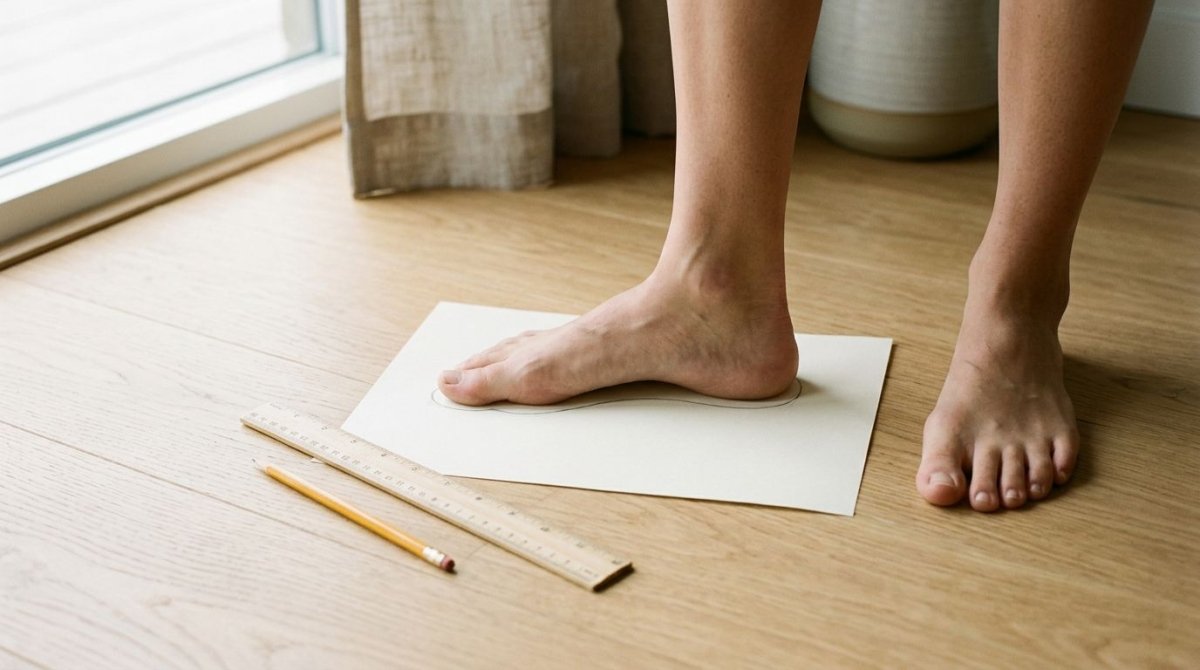
To measure feet at home, you need paper, a pencil, and a ruler or tape measure. Measure both feet while standing, then compare the longer foot's length and width with the size chart for the shoe you want. The steps below can help you shop with more confidence.
Key Takeaways
- Measure both feet while standing, with the socks you plan to wear.
- Record each foot's length and width, then use the larger measurements when comparing sizes.
- Use the specific brand's chart. Shoe sizes can vary by brand and style.
- Treat your measurements as a guide, then check the fit by standing and walking in the shoes.
What You'll Need to Measure Your Feet
Gather a sheet of paper large enough to fit your foot, a pencil, and a ruler or measuring tape. A hard, level floor and a wall help keep your heel in a consistent position. If you plan to wear socks with the shoes, wear a similar pair while measuring.
Measure later in the day if you can. Feet can change in size during the day, and a measurement taken after you've been up and moving may better reflect how shoes need to fit during regular wear.
Avoid measuring on carpet, which can shift under your foot. If someone can mark around your foot for you, ask them to help. It's easier to keep the pencil straight when you don't have to bend down as far.
How to Measure Feet at Home
Measure each foot while standing
Place the paper on the floor with one edge against the wall. Stand on it with your heel lightly touching the wall and your weight distributed evenly. Keep your toes relaxed and pointing forward.
Ask someone to mark the tip of your longest toe. If you're measuring alone, make the mark carefully without shifting your stance. Repeat the process with the other foot. Your longest toe may not be your big toe, so mark the toe that reaches farthest.
Measure length and width
Use the ruler to measure from the paper's wall edge to the toe mark. Record the result in inches or centimeters, and note which foot it belongs to.
To find the width, measure across the broadest part of the forefoot, near the base of the toes. Keep the tape flat against the paper or measure between the two widest points on a tracing. Repeat for the other foot. Write down both measurements rather than relying on memory.
A foot tracing can help you locate the widest point, but the length measurement should come from a standing position. Your foot spreads under your body weight.
Record and Interpret Your Measurements
Use the larger foot as your starting point
It's common for one foot to measure longer or wider than the other. Compare both sets of numbers and use the larger foot's measurements as your starting point when shopping. A shoe that fits the smaller foot may feel tight on the larger one.
Keep the left and right measurements separate in your notes. This is helpful if the difference is noticeable, or if you measure again later and want to see whether anything has changed.
Understand what the numbers tell you
Length and width describe different parts of fit. A shoe may have enough room at the toe but feel tight across the forefoot. Another may feel comfortable in width but leave too little space in front of the longest toe.
Your measurements don't determine a universal shoe size. They give you useful information to compare with a brand's sizing chart and to assess the fit in person. If the length seems right but the shoe squeezes the sides of your feet, look for a width option or a different shape.
Compare Measurements With a Shoe Size Chart
Use the chart for the brand and shoe
Shoe sizing can vary between brands, and a size in one style may not fit exactly like the same size in another. Find the chart for the shoe you're considering and match your foot length to its stated range. If the chart includes width measurements, use those as well.
Check whether the chart lists foot length or the shoe's internal length. Those are not interchangeable. A shoe needs some space beyond your foot, so don't assume that a shoe with the same length measurement as your foot will fit comfortably.
Treat a size conversion as an estimate
US, UK, and EU size labels don't convert perfectly across every brand. A conversion chart can narrow your options, but the product's own size guidance is a better reference when it's available.
If your foot falls between two sizes, consider the shoe's shape and how you'll wear it. A closed-toe shoe with a firm upper may feel different from an open sandal. Use the chart to choose a likely starting size, then judge the actual fit on your feet.
Check the Fit After You Put the Shoes On
Try them on with your usual socks
Put on the socks you expect to wear with the shoes. Stand up and check that your toes can move without pressing against the front or sides. There should be a little room in front of the longest toe, but your foot shouldn't slide around.
Walk a few steps on a clean, level surface. Notice whether your heel stays secure and whether the shoe rubs, pinches, or feels unstable. A shoe that feels comfortable only while seated may feel different once you stand.
Check both feet and the shoe's shape
Test each shoe on the foot it will be worn on. Don't assume both sides fit the same because your feet differ. Pay attention to the widest part of your foot, the toe box, and any seams or edges that press against your skin.
A measurement can help you choose a starting size, but it can't account for every design detail. A pointed toe, structured upper, adjustable strap, or soft lining can change how a shoe feels. If the shoe causes pain or pressure while you try it, a different size or shape may be a better choice.
Common Measuring Mistakes to Avoid
Measuring only one foot or while seated
Using only one foot can lead you to overlook a difference that matters. Measure both, and compare them before choosing a size. Also, take the measurements while standing. Sitting removes body weight from your feet and can change how much space they take up.
Tilting the pencil or using soft flooring
When marking the longest toe, keep the pencil upright and close to the toe. Angling it outward can make the mark too far from your foot and produce an inflated length. A hard floor also helps keep the paper flat and stable.
Don't pull a measuring tape tightly around the foot. For width, it should lie across the broadest area without compressing the skin. If your result seems surprising, repeat the measurement before using it to shop.
Ignoring socks, time of day, or style
Barefoot measurements may not reflect how a shoe fits with thicker socks. Likewise, a morning measurement may not represent your foot later in the day. Match the measuring conditions as closely as possible to the way and time you'll wear the shoes.
Finally, don't assume one size works for every type of footwear. A sneaker, sandal, slipper, and boot can have different shapes and fitting needs. Use measurements to guide your choice, then assess the specific shoe.
Choosing Shoes After Measuring
Measurements are most useful when you connect them to the type of shoe you're buying. For example, a child's sneaker and an adult sandal have different designs, so use the product's sizing guidance and try-on fit rather than relying on one number for every pair.
Browse Kids' Grade School Samba OG sneakers as one example of a closed-toe style. For an open sandal, see Birkenstock women's Arizona soft-footbed sandals in mink suede. A slipper has a different construction again, as shown by women's Birkenstock Zermatt wool-felt slippers.
When comparing options, focus on the size chart for the particular product and how the shoe feels when you stand and walk. If you shop in person, bring your measurements along. They can help narrow down sizes, while a proper try-on confirms whether the shoe works for your foot.
Frequently Asked Questions
How often should I measure my feet?
Measure again when your current shoes start fitting differently, when you shop for a new type of shoe, or when a significant change in your feet affects comfort. Children's feet grow, so measure them regularly before buying new shoes.
Should I measure my feet with socks on?
Wear socks similar to the ones you'll use with the shoes. For sandals or shoes usually worn without socks, measure barefoot. The aim is to match the conditions in which you expect to wear the pair.
What if my feet are different sizes?
Use the larger foot's measurements as your starting point. When trying shoes, make sure the larger foot has enough room and the smaller foot still feels secure. If the difference makes it hard to find a comfortable fit, a shoe-fitting specialist can help.
Can I measure my feet with a phone app?
Some apps estimate foot size from a photo, but the result depends on how the photo is taken and how the app interprets it. A paper, pencil, and ruler provide a simple way to record length and width at home. Use any estimate alongside the shoe's own sizing guidance.
Get a More Reliable Starting Size
A careful home measurement can help you narrow down your options, especially when you measure both feet and record width as well as length. Still, the number on a size chart is only a starting point. Check the shoe's own guidance, then stand and walk in it to make sure the fit feels comfortable and secure.


