

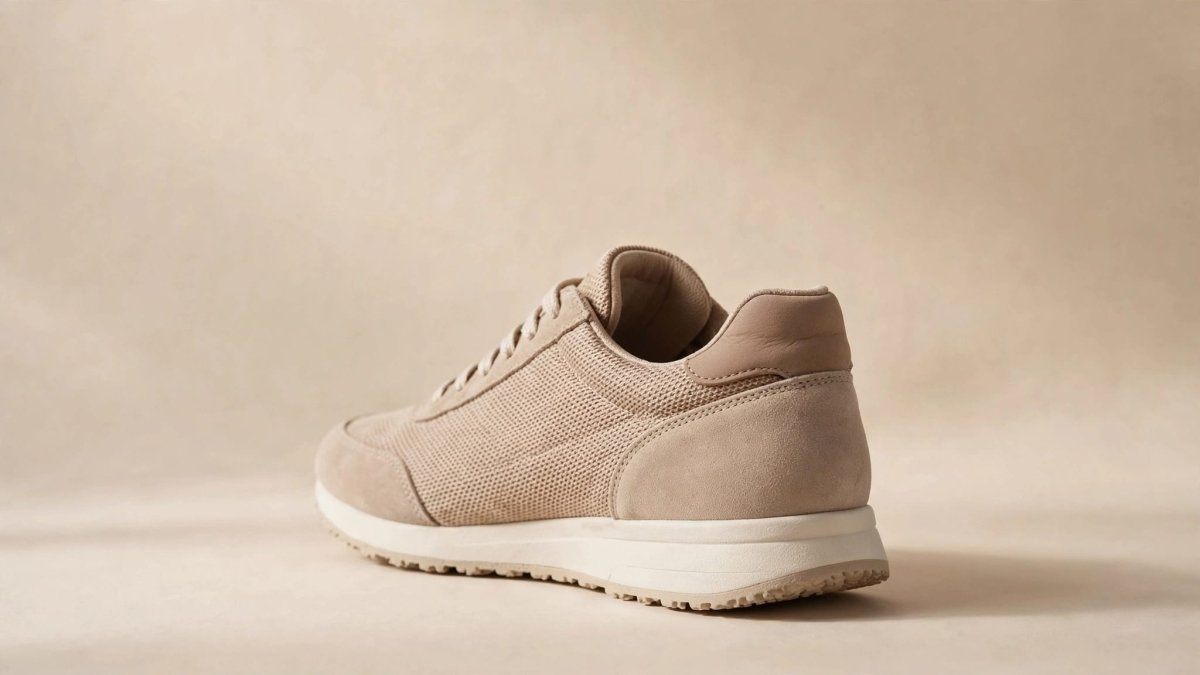
A shoe that lifts at the back with every step can distract you from the rest of the fit. Heel slippage often comes down to how the shoe's shape, closure, and your foot work together, but the sensation alone doesn't identify the cause.
A few simple fit checks can show whether the movement is minor or persistent. Look for what happens when you stand, walk, and use the shoe's closure, then compare those observations with the shoe's design.
Key Takeaways
- Heel slippage describes movement at the back of the shoe, but it doesn't reveal the reason by itself.
- Check each shoe while standing and walking, and notice whether the movement continues or creates rubbing.
- Closures and removable insoles can affect how a shoe fits, but neither feature guarantees a secure heel.
- If the shoe keeps lifting or causes discomfort, a professional fitting can help assess the fit.
Why Do Shoes Slip at the Heel?
A shoe holds the heel through its overall fit and construction. If the back of the foot rises as the shoe moves, the shoe and foot aren't staying in sync through that part of the step. However, that observation doesn't point to one definite cause.
Heel slippage can feel different from one pair to another. A small amount of movement may be easy to miss while standing, then become obvious after a few steps. In other cases, repeated lifting or rubbing makes the shoe uncomfortable quickly.
Notice the pattern, not just the sensation
Pay attention to when the heel moves. Does it lift with every step, only at a particular point in your stride, or mainly when you walk faster? Does the shoe settle back into place, or does it keep shifting?
These details give you a clearer picture of the fit than the phrase "it slips" alone. They also help you describe the problem if you ask a shoe-fitting professional for advice.
Separate movement from discomfort
Movement and discomfort aren't the same thing. A heel that lifts slightly may not rub, while a shoe with less visible movement could still irritate the skin. Look for signs such as a hot spot, redness, or soreness after wearing the shoes.
If the shoe causes pain or repeated rubbing, don't assume you'll get used to it. Comfort should be assessed along with how securely the shoe stays on your foot.
What to Notice While Walking
Shoes can feel different when you're seated or standing still than they do in motion. A short walk gives you a better chance to notice whether the heel stays in place and whether the fit changes as you move.
Test both shoes
Try on both shoes, since your feet may not feel identical. Stand naturally first, then walk at a normal pace. Notice whether one heel lifts more than the other or whether the movement feels similar on both sides.
If possible, try a few turns and changes of direction. These movements can make a loose or shifting fit easier to notice. Keep your attention on the heel, but also note pressure at the sides, toes, and top of the foot. A shoe should feel comfortable as a whole, not only secure at the back.
Check after several minutes
The first few steps may not tell you everything. Walk long enough to see whether the shoe remains comfortable or begins rubbing as your foot moves. Notice whether the heel lift stays consistent or becomes more obvious over time.
Try the shoes with the socks or hosiery you expect to wear with them. This helps you assess the actual combination rather than a different setup. A brief, repeatable check is more useful than a quick impression from standing at a mirror.
Fit Checks to Make Before Choosing
Use the same basic checks across the pairs you're comparing. That makes it easier to judge which shoe feels more secure, instead of relying on memory or appearance alone.
Check how the shoe sits at rest
When you put the shoes on, notice how the heel rests inside the back of each shoe. The shoe shouldn't feel as if it's being held on only by your toes, and the back shouldn't press painfully against the heel. Also pay attention to whether your foot sits evenly in the shoe.
Then walk and see whether that initial feeling changes. A shoe that feels secure at first but repeatedly lifts during ordinary steps may not be the right fit for you. Don't judge it solely by the size printed inside, since comfort and movement are the practical tests.
Compare pairs on your feet
If you're deciding between styles, wear each pair for a similar amount of time and repeat the same walk. Compare heel movement, comfort, and how the shoe feels across the whole foot. A difference you notice consistently is more useful than a vague preference after trying on several pairs in quick succession.
At Tip Top Shoes, we carry footwear in a range of styles and constructions. When choosing, focus on the specific pair's fit rather than assuming that every shoe in a category will feel alike.
How Shoe Design Can Affect Heel Hold
A shoe's design shapes the way it closes around the foot. Different features can change how adjustable or supportive the fit feels, although no single detail guarantees that the heel won't move.
Consider the closure
A shoe with an adjustable closure gives you a way to customize how it sits. A strap or fastening can help hold the shoe in place, but it still needs to feel comfortable when secured. If tightening it causes pressure elsewhere, the adjustment may not solve the fit issue.
For example, the Gabor 64.620.22 adjustable-closure shoes have a Velcro closure described as customizable for enhanced stability. The listing also specifies a 15 mm heel. Those details help you understand the shoe's design, but the fit on your foot remains the deciding factor.
Look at removable insole details
Some shoes have removable insoles, which may be relevant when you're assessing the shoe's interior and fit options. The feature itself doesn't establish whether a shoe will stop heel movement, so consider it alongside the way the shoe feels when worn.
The Gabor 31.710.18 Chelsea boots with removable insoles are listed with a removable insole and a 45 mm heel. These are concrete product details, not a promise that the boots will suit every foot or prevent slipping.
What Product Details Can Tell You
Product descriptions can help you compare construction features before trying on a pair. Look for information about closures, removable components, and heel height. These details can narrow your choices, but they can't replace a fit check.
A description that calls out an adjustable fastening tells you there's a way to change the closure. A removable insole indicates that the interior component can be taken out. Neither detail says exactly how the shoe will fit your heel, since individual comfort depends on wearing the shoe.
Heel height is another useful point of comparison, but it shouldn't be treated as a measure of heel security. The Gabor listings show two different heel heights, 15 mm and 45 mm, along with different shoe styles and fit features. Compare these specifications with the feel of each pair rather than drawing a conclusion from one number.
When Heel Slippage Persists
If a shoe continues to lift after you've checked its fit in motion, the most useful next step is an in-person assessment. A shoe-fitting professional can look at how your foot sits in that specific design and help you compare alternatives.
Bring the shoes or wear them for the fitting, and explain when the movement happens. Mention any rubbing or soreness as well. These observations are more useful than a general description alone, and they keep the focus on the pair you're trying to wear.
Stop wearing shoes that cause significant pain, blisters, or skin irritation. Persistent discomfort deserves attention, particularly if it affects how you walk. A professional can help assess footwear fit, while a healthcare provider can address ongoing foot pain or skin problems.
Frequently Asked Questions
Is some heel movement normal?
A small amount of movement can be hard to judge without trying the shoes on and walking in them. Focus on whether the heel lifts repeatedly, rubs, or makes the shoe uncomfortable. There isn't a single movement measurement that fits every shoe style.
Can an adjustable closure help?
It can give you more control over how the shoe closes around your foot. However, a closure doesn't guarantee a secure fit. Check whether the shoe feels comfortable when fastened and whether the heel stays in place as you walk.
Does a removable insole prevent slipping?
A removable insole is a construction feature, not a promise that heel slippage will stop. Assess the shoe as a whole and pay attention to its fit in motion.
Should I keep wearing shoes that rub?
Repeated rubbing can lead to irritation or blisters. If a shoe causes ongoing discomfort, stop wearing it until you can assess the fit or ask a professional for help.
Choose for a Secure, Comfortable Fit
Heel slippage is a useful sign to pay attention to, but it doesn't diagnose the reason your shoes move. Check how each pair feels while standing and walking, and consider its closure and construction without treating those details as guarantees.
The right choice is the pair that stays comfortable and secure during ordinary movement. If heel lift or rubbing continues, an in-person fit assessment can help you find a better match.


