

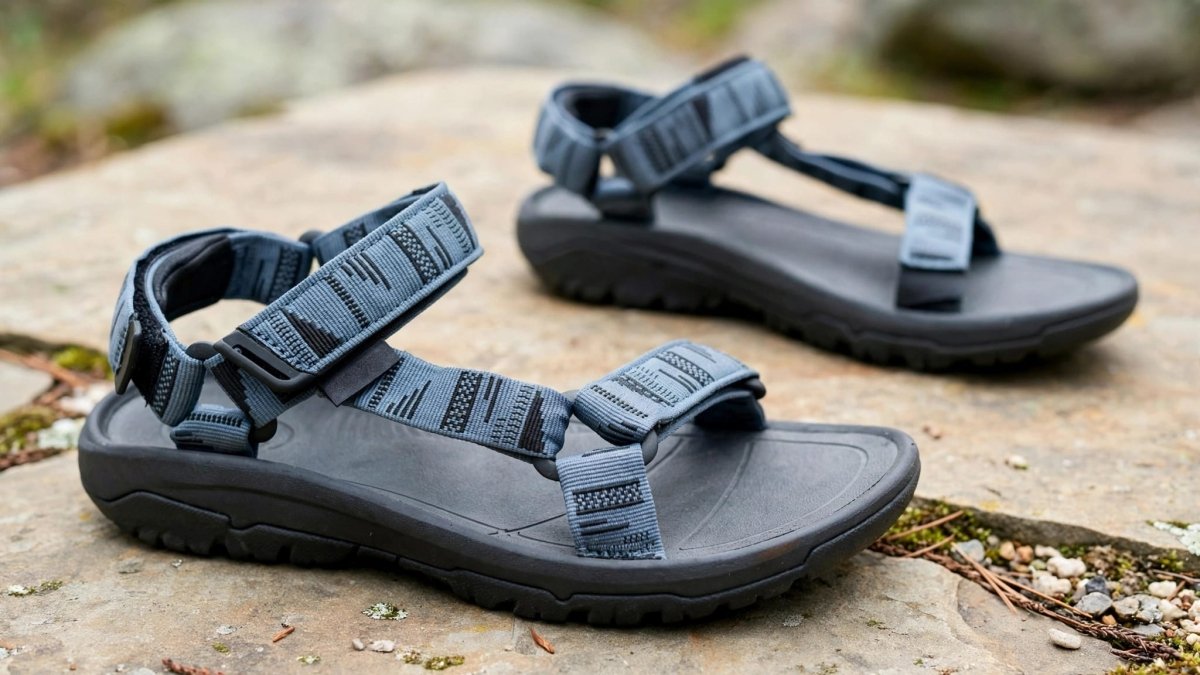
A secure sandal should stay in place as you walk without pinching or rubbing. If your foot slides, your heel lifts, or a strap leaves a sore spot, the fit may need attention.
Teva sandal straps are part of a fit system that works with the footbed and sole. Start by identifying where the sandal feels unstable, then decide whether the issue comes from sizing, foot shape, or the sandal's design.
Key Takeaways
- A good fit holds your foot comfortably without squeezing it.
- Heel lift, side-to-side movement, and repeated rubbing can point to a fit problem.
- Check that your foot sits within the footbed and that the sandal feels stable while walking.
- Tightness alone doesn't make a sandal secure. Pressure, numbness, or pain are signs to stop wearing it.
- If the sandal still slips or rubs, a different size or style may suit your foot better.
What a Secure Sandal Fit Feels Like
Your foot stays in place
With a suitable fit, your foot remains centered on the footbed as you walk. Your heel shouldn't repeatedly lift out of position, and your toes shouldn't creep over the front edge. A little movement is normal as you step, but the sandal shouldn't feel as if you're gripping with your toes to keep it on.
Walk a few steps on a level surface when assessing the fit. Notice whether your foot shifts forward, sideways, or toward the edge. Those patterns help identify where the fit feels unstable.
The sandal feels supportive, not restrictive
Secure doesn't mean tight. The straps should feel comfortable across the foot, without digging in or creating a concentrated pressure point. You should be able to walk without curling your toes, bracing your foot, or changing your stride to keep the sandal in place.
A sandal that stays on only because you're tensing your toes isn't fitting securely.
How Teva Sandal Straps Should Sit
Look for even, comfortable contact
Teva sandal straps should make comfortable contact with your foot rather than cutting into one spot. Pay attention to the top of the foot, the area around the ankle, and the space between the toes if the design has a toe post. A spot that feels fine while standing may become irritating after several minutes of walking.
Strap placement differs across sandal styles, so there isn't one layout that suits every foot. The important test is how the sandal feels on your own foot and whether its design keeps your foot comfortably positioned.
Check for gaps and pressure together
A strap that feels loose in one area and tight in another can make the sandal feel unstable. A visible gap may allow your foot to shift, while a tight spot can cause rubbing. Check the whole foot rather than judging fit by one strap alone.
If the sandal's structure doesn't sit comfortably against your foot, tightening pressure isn't a reliable solution. A different style may provide a better match for your foot shape.
Find the Source of Heel or Forefoot Slip
Notice where movement begins
If your heel lifts, consider whether the sandal feels too long, whether your foot is moving forward, or whether the rear of the design doesn't sit securely against your foot. If your foot slides toward the front, the fit may be too roomy or the footbed may not suit your proportions.
Side-to-side movement points to a different issue. Your foot may be narrower than the sandal's shape, or the straps may not rest comfortably across your foot. Identify the direction of movement before deciding whether the sandal is the right fit.
Pay attention to how you walk
A sandal can feel stable while standing and loose once you start walking. Take a few normal steps and notice whether you have to hold the shoe on with your toes. Also watch for repeated heel lift, sliding, or a feeling that the sandal twists underfoot.
If the movement continues at a comfortable pace, don't assume you'll get used to it. A sandal that shifts with each step can lead to friction and make walking tiring.
Avoid Pressure and Rubbing
Treat irritation as fit feedback
A red mark, hot spot, or stinging sensation can mean the sandal is rubbing. Take the sandal off and check where the discomfort begins. A small area of repeated friction can become a blister, especially during longer walks or in warm weather.
New footwear may feel unfamiliar, but sharp pain or increasing irritation shouldn't be dismissed as a normal break-in period. If a sandal hurts during a short indoor try-on, it's unlikely to become comfortable through longer wear.
Don't trade comfort for a tighter feel
A sandal may feel more secure when it presses firmly against the foot, but that pressure can create new problems. Watch for tingling, numbness, deep indentations, or discomfort that persists after removing the sandal. Those are signs that the fit isn't comfortable.
If you feel pressure in one place and looseness in another, reassess the overall fit. Changing to a different size or design may be more appropriate than relying on tension to hold the sandal in place.
Start With the Right Size and Footbed
Check your foot's position on the sole
Your foot should sit comfortably within the footbed, with enough room that your toes and heel don't extend beyond its edges. If your toes reach the front edge or your heel hangs off the back, the sandal may be too short. If there's excessive space and your foot shifts, the size or shape may be too large.
Don't use the strap feel as the only measure of size. A sandal can feel close around the foot and still have the wrong length or footbed shape.
Compare both feet
Many people have one foot that's slightly longer or wider than the other. Try the sandal on both feet and judge the fit by the foot that needs more room. Check that neither side feels cramped and that both feet remain stable while walking.
If you're between sizes, compare how each option feels across the full footbed. The more secure choice is the one that holds your foot comfortably without crowding the toes or leaving too much room for movement.
Consider Foot Shape and Changes Through the Day
Foot width and volume affect stability
Two people who wear the same length may need different sandal shapes. A narrower foot can shift in a roomy design, while a wider or higher-volume foot may feel squeezed by straps that sit too close. The shape and placement of the straps matter along with the length of the footbed.
When a sandal doesn't rest comfortably across your foot, try a style with a different layout. A suitable design should feel stable without forcing your foot into an uncomfortable position.
Reassess the fit after walking
Feet can change in size during the day, especially after standing or walking for a long time. A sandal that feels comfortable in the morning may feel tighter later. Try it at a time when your feet resemble the conditions in which you plan to wear it.
If the fit becomes painful or unstable after a short walk, take that seriously. Comfort should hold up during ordinary movement, not only during a brief standing check.
Match the Fit to Your Plans
Choose stability for longer walks
For a short trip, you might not notice a small fit issue. On a longer walk, repeated sliding or rubbing can quickly become distracting. Try the sandal while walking at your usual pace, and notice whether it stays in place without effort.
For uneven surfaces or frequent stops, a secure fit matters even more. If you feel unsure of your footing or need to grip with your toes, choose a sandal that feels more stable.
Account for socks and conditions
If you plan to wear sandals with socks, assess the fit that way. Socks can change how your foot sits in the sandal and may increase pressure in some areas. Likewise, heat and activity can affect comfort over time.
Consider where you'll wear the sandal, too. A fit that feels fine indoors may not feel as good during a warm day outside or a longer outing. Try to assess it under conditions close to your intended use.
When a Different Sandal May Be the Answer
Don't force a poor match
If the footbed feels too narrow, too long, or awkwardly shaped, the straps may not solve the problem. Likewise, repeated heel lift or sliding can persist when the sandal doesn't match your foot's proportions. A different size or style may offer a more comfortable fit.
Stop wearing the sandal if it causes pain, numbness, or recurring skin irritation. Persistent discomfort deserves attention, especially if it continues after you switch footwear.
Shop by fit, not by the label
Sizing can vary between styles, so the number printed on the sandal isn't a guarantee of comfort. Compare how each option holds your foot, where the straps meet it, and whether the footbed gives your toes and heel enough room.
At Tip Top Shoes, we carry Teva among our footwear brands. When comparing options, focus on the sandal's feel and construction rather than assuming every style will fit the same way.
Frequently Asked Questions
Should Teva sandal straps feel tight?
They should feel secure and comfortable, not painfully tight. If pressure builds, the straps leave deep marks, or your foot feels numb, the fit isn't comfortable.
Why does my heel lift when I walk?
Heel lift can come from excess length, a mismatch between the sandal's shape and your foot, or movement toward the front of the footbed. Check where your foot shifts and whether the sandal remains stable during a normal walk.
Can a sandal feel secure but still be the wrong size?
Yes. A close-feeling strap doesn't prove the footbed fits. Check that your heel and toes sit comfortably within the sole and that your foot doesn't slide or feel cramped.
What if one foot fits better than the other?
Fit both feet and base your choice on the foot that needs more space. If either foot feels squeezed or unstable, try another size or style rather than accepting discomfort.
Choose a Fit That Holds Without Pinching
A secure sandal stays in place through ordinary walking, while its straps and footbed feel comfortable across the whole foot. Heel lift, sliding, pressure, and rubbing each offer clues about what isn't working.
When Teva sandal straps don't feel right, assess the full fit rather than focusing on tightness alone. The best match is stable without making you tense your feet or tolerate pain.


