

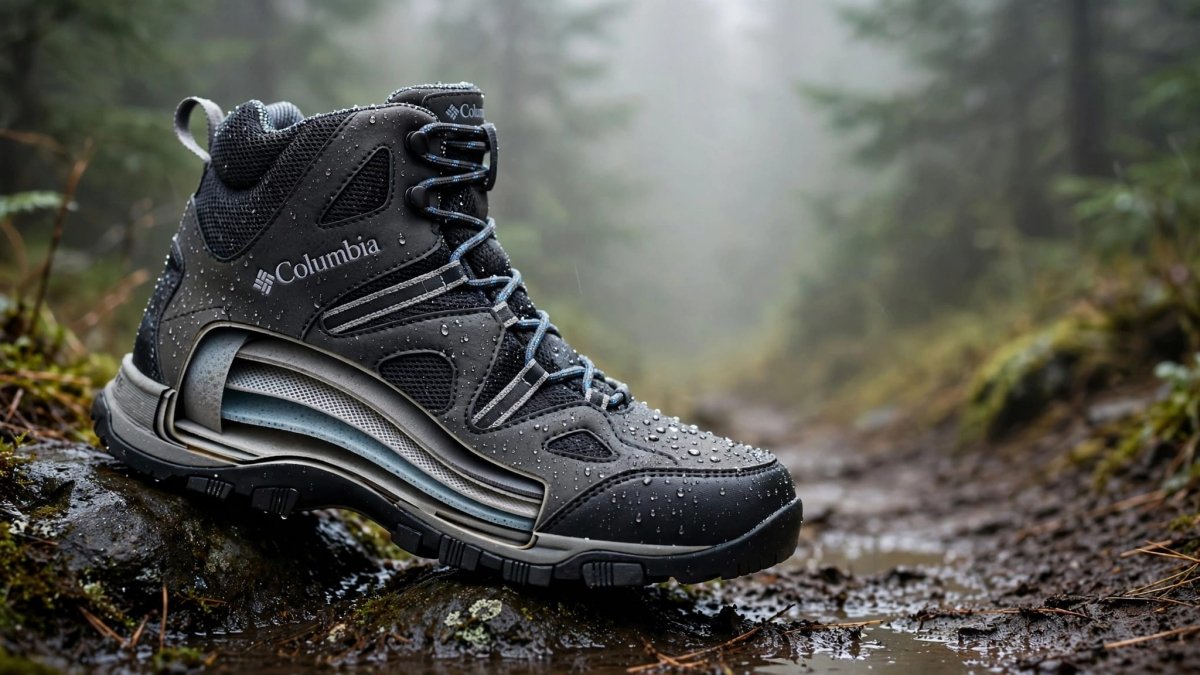
Wet pavement and muddy trails can make a comfortable shoe feel unsuitable in minutes. Columbia Omni-Tech footwear is designed to help keep water out while allowing excess heat and moisture to escape, but the details vary by shoe and boot.
The technology is a waterproof-breathable construction, not a single feature shared in exactly the same way across every model. Knowing what the product descriptions do and don't say can help you choose the right pair for daily wear, hikes, or cold-weather use.
What Omni-Tech is designed to do
Columbia describes Omni-Tech as multilayered waterproof-breathable protection. Its purpose is to resist water and wind while releasing excess heat, helping feet stay drier during activity.
"Waterproof" and "breathable" describe two different tasks. The construction needs to limit liquid water entering from outside, while allowing some moisture vapor produced by warm feet to move outward. That balance can reduce the damp, clammy feeling that builds up inside footwear during a long walk.
Waterproof protection is a system
Omni-Tech isn't the whole shoe. The upper, closure, seams, tongue, and sole all affect how well a particular design handles wet conditions. A waterproof layer can't compensate for an opening or construction detail that lets water reach the inside.
That's why it's useful to look beyond the technology name. Columbia's product descriptions also identify upper materials and, on some models, seam-sealing details. Those specifics tell you more about how the protection is built into an individual shoe.
Breathability has practical limits
Breathable doesn't mean air flows freely through the shoe. It refers to the construction's ability to release some internal moisture as vapor while restricting liquid water from entering. How comfortable that feels depends on the activity, temperature, socks, fit, and how much your feet sweat.
For a short commute in light rain, the balance may feel different than during a fast hike. In either case, a waterproof shoe can feel warm if you wear it in dry, mild weather or pair it with thick socks.
How the layered construction handles water and heat
Columbia's description focuses on the overall function of Omni-Tech's multiple layers. The layers work together to provide water resistance and breathability; Columbia's public product details don't spell out a specific membrane material or technical rating for each model.
A useful way to understand the idea is to separate the two directions of movement. Rain and splashes press against the outside, while heat and water vapor build up inside as your feet move. The waterproof-breathable construction is intended to resist the first and release some of the second.
Seams matter as much as materials
Even a water-resistant upper has joined sections. If those joins aren't protected, they can become weak points in wet conditions. Columbia identifies the Newton Ridge Plus II Waterproof Hiking Boot as seam-sealed, with a PU-coated leather, suede, and mesh upper. See the Newton Ridge Plus II waterproof boot for its model-specific construction.
The word "seam-sealed" is worth noticing, but don't assume it applies to every Columbia shoe with Omni-Tech. Product descriptions differ, and a detail listed for one model shouldn't be carried over to another.
The opening still shapes your protection
The waterproof construction covers the shoe itself, not the entire lower leg. If water reaches the opening at the collar, the shoe's protective layers can't keep it from entering over the top. This matters when choosing between a low shoe and a higher boot for wet trails or slushy sidewalks.
A boot collar can offer more coverage than a low-cut shoe, but it doesn't turn the footwear into a fully sealed wader. Consider the depth of puddles and snow you expect to encounter, along with the shoe's height and intended use.
Omni-Tech construction varies by Columbia model
The technology name helps identify a product's waterproof-breathable approach. It doesn't mean all uppers, seam treatments, cushioning, or traction patterns are identical. Compare the specific model descriptions before deciding which design fits your routine.
Newton Ridge Plus II hiking boot
The Men's Newton Ridge Plus II combines Omni-Tech waterproof-breathable protection with a seam-sealed construction. Columbia lists a PU-coated leather, suede, and mesh upper. That makes its construction details particularly relevant to shoppers who want a hiking boot and are comparing how the upper is put together.
The boot's combination of materials differs from an all-mesh shoe or a textile winter boot. The listed details can help you judge whether its upper and boot height suit your use, but the technology name alone doesn't tell you the fit or feel. Those depend on the whole design and your foot.
Transverse Hike shoe and boot
Columbia's Men's Transverse Hike Waterproof Shoe listing describes a leather-and-mesh upper and Omni-Tech multilayered protection. It doesn't explicitly identify this shoe as seam-sealed in the available product details. You can compare the specifications on the Transverse Hike waterproof shoe page.
The Women's Transverse Hike Waterproof Boot in wide sizing offers a boot-height option. Its listing gives a weight of 11.2 ounces, or 318 grams, per shoe, and a 4 mm lug height. These measurable details can help when comparing weight and outsole design, while fit and intended use remain important.
Omni-Tech, Omni-Heat, TechLite, and Omni-Grip aren't interchangeable
Columbia uses several technology names across its footwear. They refer to different functions, so a shoe with more than one of them may combine waterproofing with warmth, cushioning, or traction.
- Omni-Tech refers to waterproof-breathable protection.
- Omni-Heat is a thermal-reflective lining associated with warmth.
- TechLite identifies midsole cushioning.
- Omni-Grip identifies outsole traction.
These features can appear together, but they don't do the same job. A cushioned midsole doesn't make a shoe waterproof, and a grippy outsole doesn't add insulation. Check the feature list for the specific pair instead of treating the names as synonyms.
The Fairbanks is one example of features combined in a winter boot. Tip Top Shoes' listing for the Columbia Fairbanks Omni-Heat waterproof boots describes Omni-Tech, Omni-Heat, 200 grams of insulation, and a Cordura textile upper. The insulation and reflective lining address warmth; Omni-Tech addresses water protection.
How to choose Omni-Tech footwear for your plans
Start with where you'll wear the shoes most often. A low waterproof shoe may suit rainy commutes and easier walks, while a hiking boot can provide more coverage around the ankle. For winter use, insulation and lining details matter alongside waterproofing.
Then compare the individual product descriptions. Look at the upper materials, whether the model is described as seam-sealed, its height, and any fit or sizing options. If two shoes both list Omni-Tech, those differences may matter more to your decision than the shared technology name.
Consider the conditions you expect, too. For shallow puddles and rain, a low shoe may be practical. For wet trails or snow, a taller boot may offer more coverage. However, neither shoe height nor waterproof construction guarantees comfort if the fit is wrong.
Finally, think about warmth. A waterproof-breathable shoe may suit cool, wet weather, but an insulated boot is a different choice for cold days. The Fairbanks listing, for example, pairs its waterproofing with insulation and Omni-Heat. Those added warmth features can be useful in winter, but may feel too warm in mild weather.
What product descriptions can tell you
A product listing can identify the intended waterproof technology, upper materials, construction details, and other named features. These specifics give you a better basis for comparison than relying on "waterproof" as the only deciding factor.
At the same time, the descriptions don't provide every technical measurement. For example, Columbia's listings describe Omni-Tech as multilayered waterproof-breathable protection, but don't give a breathability rating or explain the membrane material. Avoid assuming that a technology name guarantees identical performance across different models.
Seam information is another example. The Newton Ridge Plus II is described as seam-sealed, while the Transverse Hike product details identify Omni-Tech without explicitly stating that construction detail. A separate Tip Top Shoes post describes the Fairbanks as having a breathable, seam-sealed bootie. That description applies to the Fairbanks model discussed in the Fairbanks boot overview, not automatically to every Omni-Tech shoe.
Compare model-specific details. Omni-Tech tells you the general waterproof-breathable approach, while upper materials, seam construction, height, and insulation help distinguish one pair from another.
Key takeaways
- Omni-Tech is Columbia's multilayered waterproof-breathable construction.
- Columbia uses the technology across different footwear designs, but the materials and construction details vary.
- Seam-sealing details are model-specific, so look for them in the product description.
- Omni-Heat, TechLite, and Omni-Grip refer to warmth, cushioning, and traction, not the same waterproof function.
- Choose based on your usual conditions, desired coverage, warmth, and fit.
Frequently asked questions
Is Columbia Omni-Tech footwear waterproof?
Columbia describes Omni-Tech as waterproof-breathable protection designed to resist water and wind while releasing excess heat. The details differ by model, so check the individual product description for upper materials and construction.
Does every Omni-Tech shoe have sealed seams?
No. Seam-sealing information varies by model. Columbia explicitly describes the Newton Ridge Plus II as seam-sealed, while the retrieved Transverse Hike shoe details don't explicitly use that term.
Is Omni-Tech the same as Omni-Heat?
No. Omni-Tech refers to waterproof-breathable protection. Omni-Heat refers to thermal-reflective lining used for warmth. Some footwear, including the Fairbanks, lists both technologies.
What do TechLite and Omni-Grip do?
TechLite is Columbia's name for midsole cushioning, while Omni-Grip describes outsole traction. Neither name refers to the waterproof barrier.
Should I choose an Omni-Tech shoe or boot?
Choose a shoe for lower-profile coverage and a boot when you want more height around the ankle. Also consider insulation for cold conditions, the specific upper construction, and how the fit feels on your foot.
Choose by construction, not just the label
Omni-Tech describes a useful combination of water resistance and breathability, but it doesn't make every Columbia shoe identical. Compare the model's upper, seam details, height, and warmth features to find a pair suited to your everyday routes or outdoor plans.


