

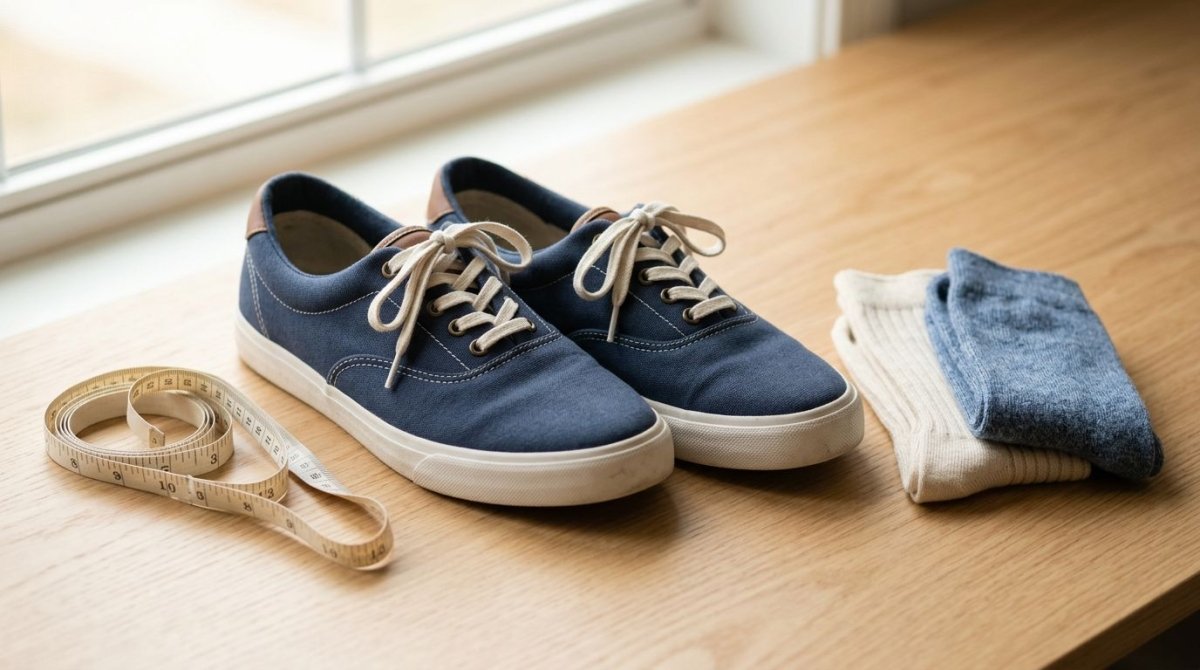
If you find one foot bigger than the other, you're not alone in needing to think about fit one shoe at a time. The best starting point is to size for the larger foot, then check that the smaller foot stays secure and comfortable.
A small difference can be a normal part of how your feet are shaped. The challenge is finding a pair that feels right on both sides, without squeezing the larger foot or letting the smaller one slide. A careful measurement and a side-by-side try-on make the choice much clearer.
Key Takeaways
- Measure both feet while standing, and use the larger measurement when choosing a size.
- Try on both shoes with the socks you plan to wear. Walk around and notice pressure, slipping, or toe contact.
- Look for fit features you can adjust, such as laces or straps, when one shoe needs a little more hold.
- Don't assume the same size will fit equally well across every brand or style.
- If one foot changes size suddenly or becomes painful or swollen, seek medical advice.
Why One Foot May Be Bigger
Feet aren't perfectly symmetrical. One may be longer, wider, higher through the instep, or shaped differently around the toes. The difference might be small enough to go unnoticed in some shoes, but uncomfortable in a close-fitting pair.
Natural differences and daily changes
A lasting size difference can reflect the way your feet developed. The larger foot may be the one you use more during certain movements, but there isn't one explanation that applies to everyone. Foot shape also affects how a shoe feels: two feet of equal length can still need different amounts of room.
Feet can change over time, too. Activity and time spent standing can cause them to feel fuller later in the day. That's one reason a pair that seems fine in the morning may feel tight after hours on your feet.
When a change deserves attention
A small, long-standing difference is different from a sudden change. New swelling, pain, warmth, redness, or a noticeable size change in one foot can have a medical cause. If those symptoms appear, speak with a healthcare professional rather than trying to solve the issue with a different shoe size.
Measure Both Feet Before Shopping
Shoe size is a useful starting point, but it doesn't tell you everything about shape or fit. Measuring each foot gives you a better basis for comparing pairs.
Take measurements while standing
Place a sheet of paper on a hard floor with one edge against a wall. Stand on it with your heel lightly touching the wall, then mark the end of your longest toe. Measure from the wall edge to the mark. Repeat for the other foot, and measure both feet again to catch any marking errors.
Measure late in the day if you can, when your feet may be fuller after walking or standing. Wear the socks you expect to use with the shoes. A thin dress sock and a thicker casual sock can change how a close-fitting shoe feels.
Check width and shape, not length alone
Note where each foot is widest, and whether one has a higher instep or a different toe shape. A shoe can have enough length but still press across the ball of the foot or top of the instep.
Use the larger foot's measurements as your starting point, not the average of both feet. Then try the pair on. Brand sizing varies, so measurements help narrow the options but don't replace a real fit check.
Try Both Shoes on Together
A single shoe can feel fine in isolation, while the pair reveals a problem. Try on both shoes at the same time and stand up before judging the fit.
Check the fit while standing and walking
Make sure your toes can lie naturally without pressing against the front or crowding together. Walk several steps on a firm surface. Notice whether the larger foot feels pinched, whether the smaller heel lifts, or whether either foot slides forward.
Also pay attention to pressure over the top of the foot and around the ball. A shoe that feels comfortable when seated may feel different once your weight is on it. If discomfort starts during a short try-on, it's unlikely to improve with a full day of wear.
Try the socks you'll actually wear
Socks take up space inside a shoe, and seams or thicker fabric can create pressure. Try the pair with your everyday socks, or with the hosiery you'll wear for a dress shoe.
If you use an insert, include it during the try-on. An insert changes the available room, so testing shoes without it can give a misleading impression. Compare both shoes after walking, rather than deciding based only on how the larger foot feels.
Fit the Pair to Two Different Feet
Sizing for the larger foot usually protects against painful pressure. The other shoe still needs to hold the smaller foot securely, so consider both sides when deciding whether a pair works.
Look for adjustability
Laces, hook-and-loop straps, and buckles let you adjust how firmly a shoe holds each foot. You can tighten the shoe on the smaller side and allow more room on the larger side, within the design's limits.
For slip-on styles, focus on whether the smaller foot stays in place without requiring your toes to grip the shoe. A loose heel or repeated forward sliding can make a pair tiring to wear. If the shoe can't hold the smaller foot securely, it may not be the right shape for you.
Be cautious with padding and inserts
A thin insert or heel grip can sometimes improve hold in a shoe that's slightly roomy. However, adding material also takes space away from the foot. If the larger side already feels snug, an insert may worsen pressure rather than help.
Avoid treating a painful shoe as a fit problem you can solve with repeated adjustments. If the toes are cramped or the shoe presses firmly across the forefoot, try a different size or shape instead.
Choose a Style That Matches Your Needs
The right shoe depends on where you'll wear it and what each foot needs. A pair that works for a short outing may not feel suitable for a long day on your feet.
Compare closure and toe shapes
Lace-up sneakers allow different tension on each foot. A strap or buckle can also offer some adjustment, while a fixed slip-on gives you fewer ways to change the hold. Look at the shoe's shape around the toes as well as its listed size.
A rounded or roomier front may feel better if one foot needs more space across the toes. However, extra room in the front won't correct a shoe that slips at the heel or presses at the instep.
Consider the job the shoe needs to do
For walking, prioritize a stable, comfortable fit during movement. For sandals, check that both feet sit within the footbed and that straps don't rub or leave one side unsecured. With boots, try them with the socks you plan to wear, since thicker socks can change the fit.
Slippers need attention, too. A relaxed style should still stay on the foot during normal walking around the home. Choose based on the activity, not just the size label.
Product Pages to Compare
Product pages can help you compare styles and decide which pairs to try. They don't guarantee that a particular shoe will fit two different feet, so use the same side-by-side fitting checks with every style.
Sneakers, shoes, and boots
For a sneaker option, see the men's adidas Handball Spezial sneakers. For a shoe with a different profile, compare Gabor ivory leather shoes. A boot option is the Gabor brown nubuck Chelsea boot.
Sandals and slippers
An open sandal lets you assess strap placement and footbed coverage. The Birkenstock Arizona soft-footbed sandals are one style to compare. For indoor footwear, look at the Birkenstock Zermatt shearling slippers.
Frequently Asked Questions
Should I buy shoes for the larger foot?
Use the larger foot as your starting point, since sizing to the smaller foot can leave the other one cramped. Then check that the smaller foot stays secure and doesn't slide.
Should I buy two different sizes?
Some people find that one standard pair can't comfortably fit both feet. If that's your situation, ask the retailer whether buying mismatched sizes is an option. Don't assume a shoe will stretch enough to solve a tight fit.
Is it normal for one foot to be wider?
Feet can differ in width as well as length. If one side feels tight across the ball or toes despite having enough length, try a different shape or width rather than automatically choosing a longer shoe.
What if one foot suddenly becomes larger?
A new size difference, especially with pain or swelling, is different from a stable difference you've had for years. Contact a healthcare professional for advice instead of relying on shoe changes alone.
Find a Pair That Works on Both Sides
When one foot is bigger, start with its measurements, then judge the complete pair on both feet. Comfort depends on length, width, shape, and how securely each shoe holds you as you walk.
A good fit should feel comfortable without asking either foot to compensate. Give both sides equal attention, and choose the pair that feels right in motion.


