

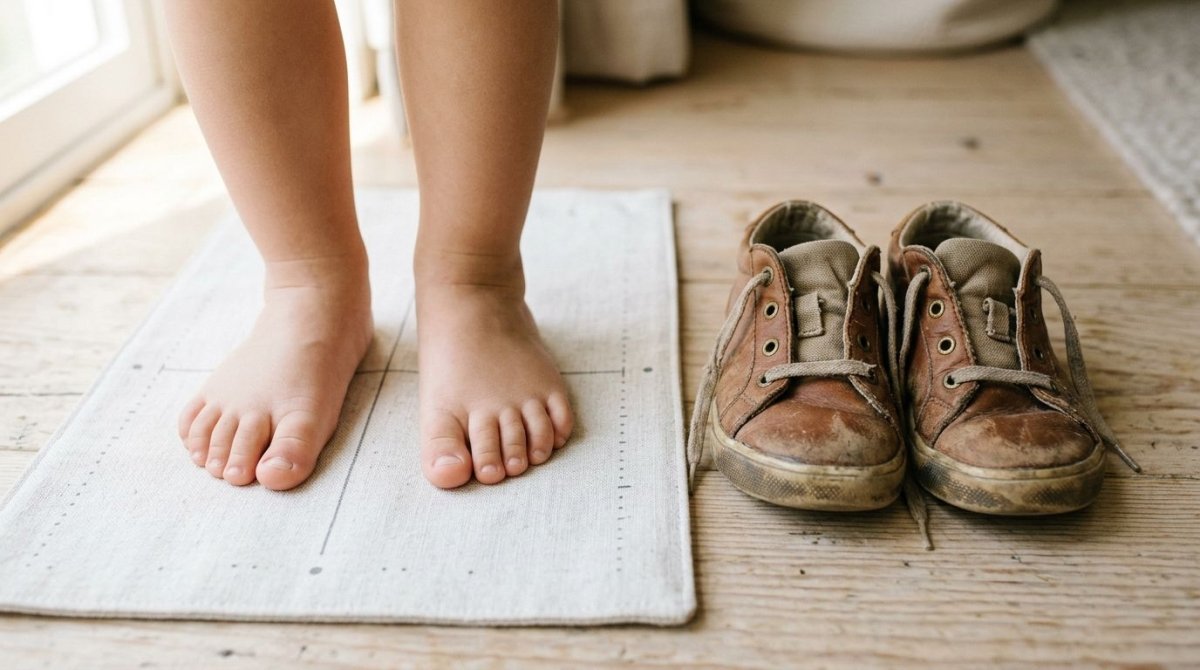
How often you need to measure children's feet depends on their growth and current footwear, rather than one universal timetable. Children grow at different speeds, so a calendar reminder alone can't tell you whether their shoes still suit them.
The useful distinction is between foot size and shoe fit. Measurements help with choosing footwear, but the shape and construction of each pair matter too. Start by understanding what a measurement can tell you.
How Often Should You Measure Children's Feet?
There's no single interval that works for every growing child. Foot growth varies, and a child's previous pattern doesn't predict exactly when their next size change will happen.
A measurement records their foot size at that moment. It doesn't establish how long their current shoes will last or when they'll need another pair.
Meanwhile, the shoes themselves can change through wear. A stretched upper or worn closure can affect how securely footwear stays on, even without a change in foot length.
For that reason, measuring frequency and replacement frequency are separate decisions. Your child may need different footwear because a pair has worn out, rather than because they've grown into another size.
Why a Shoe Size Doesn't Tell the Whole Story
Length is only part of fit
Two children with the same foot length can need different shoes. Width, toe shape, and the height of the instep all affect how footwear feels.
Similarly, two shoes carrying the same size label can have different internal shapes. A narrow toe box and a rounded toe box won't accommodate every foot equally.
This is why a measurement is a starting point, rather than a guarantee of comfort. The shoe's construction matters alongside the number printed inside it.
Size labels need context
Our footwear selection includes US infant and toddler sizes, US grade-school sizes, and European sizes. These systems use different numbering conventions, so the numbers aren't interchangeable.
Brand and style differences also matter. A familiar size in one model doesn't establish the fit of another.
Buying oversized shoes to postpone the next purchase can create another problem: excess movement inside the shoe. Growing room still needs to work with a secure, comfortable fit today.
Toddler Shoes: Construction Matters Alongside Size
For children taking their first steps, shoe design deserves attention alongside sizing. Materials, sole construction, and closures affect how a shoe bends and stays on the foot.
Camper Peu Cami for early walkers
Our Camper Peu Cami toddler shoes use navy full-grain leather, elastic zigzag laces, and a stitched outsole.
The Peu design follows the natural curve of small feet. Camper's First Walkers range combines flexibility with a sturdy construction for children beginning to walk.
These are useful details when choosing early footwear because they describe how the shoe is built. However, they don't establish which size an individual child needs or how long that size will remain suitable.
Naturino Cocoon as another toddler option
Our brown Naturino Cocoon toddler shoes offer another style within the toddler selection.
Age-category labels help organize footwear, but they aren't individual sizing recommendations. Children of similar ages can have different foot dimensions and proportions.
As a result, choosing between toddler styles involves more than selecting the expected age range. The individual shoe and your child's current needs remain the deciding factors.
Seasonal Footwear Brings Different Fit Considerations
A pair kept for occasional or seasonal use can look almost new after a child has outgrown it. The condition of the outside doesn't establish whether the size remains suitable.
Our Keen Seacamp II preschool sandals, available in Magnet Print/Evening Primrose, are one example of footwear that may sit between periods of use.
Seasonal shoes also differ from everyday closed shoes in their construction. Open sections and different fastening arrangements change where the shoe contacts the foot.
Consequently, success with one style doesn't establish the fit of another. A comfortable sneaker size doesn't automatically settle the choice of a sandal, boot, or dress shoe.
Key Takeaways
- Children's growth varies, so there isn't one measuring timetable that suits everyone.
- Foot length alone doesn't describe width, instep height, or overall shoe fit.
- Toddler and preschool labels identify categories, not an individual child's size.
- Shoes can become unsuitable through wear as well as growth.
Frequently Asked Questions
Does a different measurement always mean buying new shoes?
No. A measurement and a purchasing decision answer different questions. One describes the foot; the other concerns whether a particular pair remains suitable.
Small differences can also result from how a measurement was taken. A different reading alone doesn't establish that every pair needs replacing.
Equally, an unchanged measurement doesn't make worn-out footwear suitable. The condition of the shoe remains part of the decision.
When does foot discomfort need professional attention?
Persistent pain, swelling, or a limp deserves attention from a pediatrician or podiatrist. These symptoms shouldn't be treated as an ordinary part of growing.
Shoes can cause discomfort, but they aren't the only possible explanation. A child who repeatedly avoids walking or complains about the same painful area needs more than a different size.
Professional assessment can identify whether footwear is contributing or another issue needs treatment.
Keep the Focus on Your Child's Current Needs
Measuring children's feet helps you make informed shoe choices, but no measurement predicts an exact replacement date. Current comfort and suitability matter more than assuming every child follows the same growth schedule.
Keep size labels in context, consider each shoe's construction, and take persistent discomfort seriously. The goal is footwear that works for your child now.


