

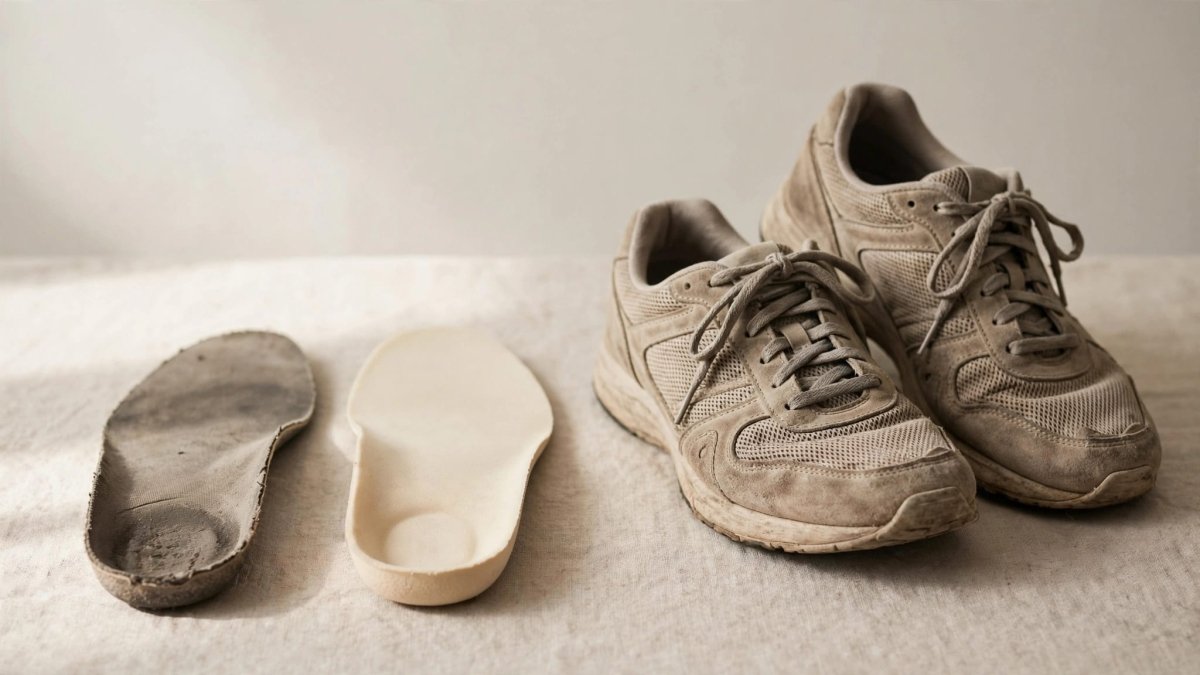
You should replace shoe insoles when they develop flattened cushioning, damaged surfaces, or a distorted shape that affects comfort. Visible wear and changes in fit are more useful signals than the purchase date alone.
However, a dirty footbed may need cleaning, while a worn-out shoe may need more than a new insert. Start by separating those problems before buying a replacement.
Key Takeaways
- Replace insoles with holes, crumbling material, lasting compression, or a shape that no longer sits flat.
- Clean and dry dirty footbeds before deciding whether they need replacing.
- Match replacement inserts to the shoe's interior space, and inspect the outsole before spending money on new insoles.
Signs It's Time to Replace Shoe Insoles
Daily walking, long standing shifts, and moisture all affect insoles. However, surface appearance doesn't always reveal how well the cushioning holds up.
Flattened cushioning and damaged materials
Remove the insoles if they're designed to come out, then examine both sides. Look for worn-through heel areas, splitting foam, curled edges, or layers that have separated.
Compare the left and right inserts, too. Uneven compression can leave one foot sitting differently inside its shoe. A permanent hollow under the heel or forefoot deserves attention, especially when that area feels noticeably harder during walking.
A worn Mephisto footbed may be replaceable without retiring an otherwise sound shoe. Our guide to Mephisto shoe comfort and care covers footbed maintenance alongside outsole inspection.
Changes in comfort or position
An insert that bunches, slides, or no longer lies flat needs attention. First, remove any grit underneath and reposition it. If it still shifts or curls, replacement makes sense.
New discomfort also deserves attention, but it doesn't prove the insole caused the problem. Tight uppers, worn shoe cushioning, and changes in your feet can produce similar symptoms.
Persistent pain, numbness, or skin damage calls for a podiatrist's assessment rather than repeated experiments with inserts.
When Cleaning Is Enough
Dirt and discoloration don't automatically mean a footbed has failed. Separate surface buildup from damage before throwing away an otherwise usable insert.
Airing and washing removable footbeds
Take removable footbeds out after damp wear so both the inserts and shoe interiors can dry. Let them air at room temperature, away from radiators and other direct heat.
Wash only footbeds designed for washing. Finn Comfort's care guidance allows mild soap and warm water at 86°F (30°C) for its footbeds. That method doesn't apply to every foam, leather, or cork construction.
Let cleaned inserts dry completely before returning them to the shoes. Cleaning can remove buildup, but it won't rebuild compressed cushioning.
Caring for integrated sandal footbeds
Some footbeds form part of the shoe's construction rather than lifting out like sneaker inserts. Our Birkenstock Arizona soft-footbed sandals, for example, need a different approach from shoes with loose replacement insoles.
Suede footbeds can darken with wear without needing replacement. Gentle brushing helps remove surface dirt, while exposed cork needs appropriate protection.
Our Birkenstock footbed care guide explains cleaning and cork care. Don't pull at an attached footbed or soak the sandal to remove stains.
Choose an Insole That Fits the Shoe
A replacement changes how your foot sits inside the shoe. More padding can crowd your toes or push your heel above the heel counter.
When replacing a full-length removable footbed, take the old one out before fitting the new insert. Don't automatically stack them. Some specialized inserts work differently, so the shoe and insert must suit that arrangement.
Match the replacement's width and length to the shoe's interior. It should lie flat without buckling at the toes or lifting along the sides. Trim only inserts designed for trimming.
Then try both shoes with your usual socks and walk for several minutes. Your heel should feel secure, and your toes should have room to move.
Our guidance on Aetrex arch support and fit explains why a thick orthotic may need more interior space. Bring prescribed orthotics when shopping for shoes, since they affect the complete fit.
Know When the Shoe Needs Repair or Replacement
Before buying inserts, inspect the shoe underneath and around them. Look for worn tread, a visibly leaning heel, sole separation, or an upper that no longer holds your foot securely.
A fresh insole can't restore outsole traction or repair a damaged shoe structure.
Also distinguish the removable insole from the midsole beneath it. If the shoe's underlying cushioning has compressed, replacing the top insert won't restore the original cushioning system.
When the footbed alone has worn out, replacement can be worthwhile. When several parts have deteriorated, repair or a different pair deserves consideration.
Frequently Asked Questions
Should you replace both insoles together?
For a matching pair of everyday replacement insoles, replacing both keeps their thickness and cushioning consistent. Even if one looks worse, inspect its partner for compression. Custom orthotics may require different adjustments, so a clinician should guide changes to prescribed devices.
Does odor mean insoles need replacing?
Odor alone doesn't establish that cushioning has failed. Start with cleaning suitable materials, drying shoes fully, and wearing clean socks. If odor persists in a removable insert despite appropriate care, replacement is reasonable. Still, the shoe lining may also retain odor.
Keep the Focus on Condition and Fit
The clearest reason to replace an insole is a lasting change in its material, shape, or comfort. Cleaning helps with surface buildup, while structural wear calls for a different response.
Choose an insert that fits the available space, then judge the whole shoe while walking. A replacement is worthwhile when it improves a shoe that still supports and holds your foot properly.


