

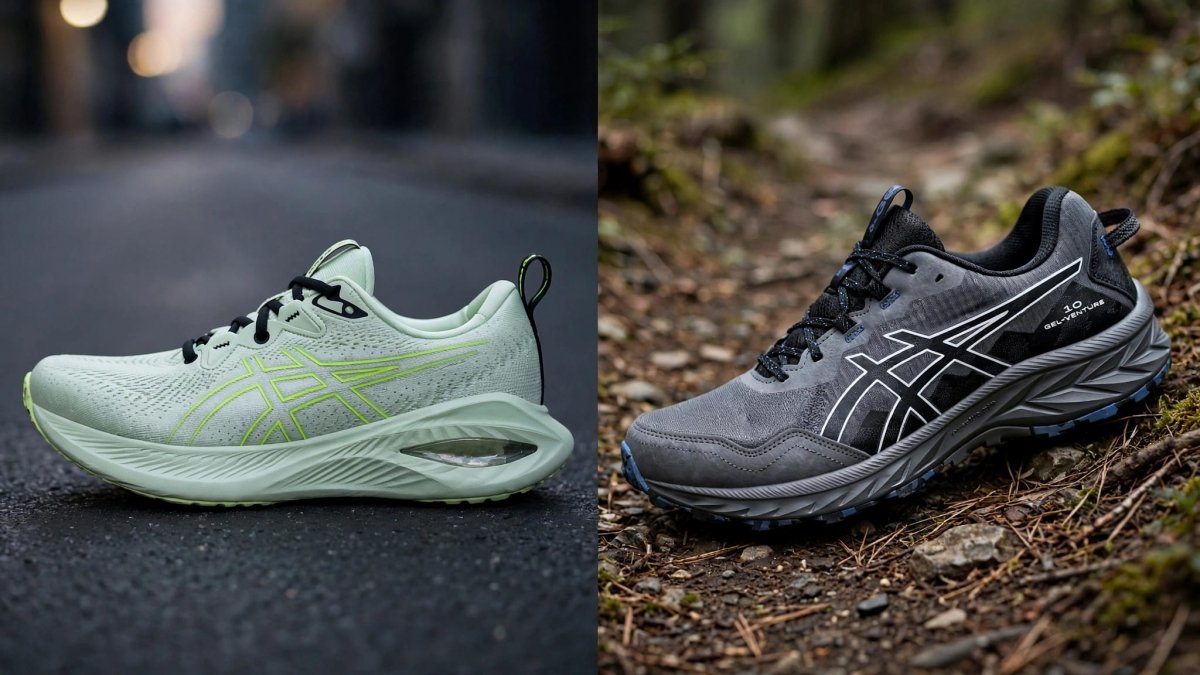
ASICS GEL cushioning helps absorb impact, but the foam, outsole, and support around it determine how a shoe handles pavement or trails. For shoppers, matching the shoe to your surface matters more than choosing by the GEL name alone.
Road shoes emphasize comfort through repeated strides on predictable ground, while trail shoes add features for uneven footing. Start with the complete cushioning system, then consider the protection and grip your route requires.
What ASICS GEL cushioning does underfoot
GEL is one component of a shoe's cushioning system. It works alongside midsole foam, rather than replacing the foam beneath your foot.
GEL addresses impact
According to ASICS' explanation of GEL technology, the material helps disperse vertical impact and reduce vibration. Its general description distinguishes rearfoot cushioning, which supports heel-to-toe transitions, from forefoot cushioning, which addresses shock during forward movement.
Those functions don't establish where GEL sits in every shoe. Placement depends on the model, so a shared GEL name doesn't mean two pairs have identical construction.
That distinction matters when comparing road and trail footwear. Neither the model name nor a visible cushioning detail tells you how the entire shoe will feel.
Foam shapes the broader ride
Midsole foam supplies much of the material between your foot and the ground. Its composition, thickness, and geometry help determine whether a shoe feels soft, firm, flexible, or supportive.
ASICS uses named foam technologies, including FF BLAST PLUS, alongside GEL or PureGEL in certain models. However, two shoes using the same foam can still feel different because their platforms and outsoles differ.
A shopper should therefore separate two questions: how the shoe cushions impact, and how securely it supports the foot. A soft landing doesn't automatically provide the footing needed on loose ground.
How road shoes shape the cushioning experience
Road running produces repeated landings on relatively consistent surfaces. Cushioning and support can therefore take different forms without the added demands of rocks, roots, or loose soil.
GEL-NIMBUS 28 emphasizes neutral cushioning
The ASICS GEL-NIMBUS 28 road shoe combines FF BLAST PLUS foam with PureGEL technology. ASICS classifies it as a maximum-cushion, neutral running shoe intended for longer-distance comfort.
The cited men's version costs $170, has an 8 mm heel-to-toe drop, and lists a weight of 281 g, or 9.9 oz. Those figures describe that version, rather than every size or women's equivalent.
Its buying appeal is cushioning without a dedicated stability designation. However, maximum cushioning is a category description, not a promise that every wearer will prefer its feel.
GEL-KAYANO 32 adds a stability focus
Our women's ASICS GEL-KAYANO 32 offers another road-shoe approach. It pairs FF BLAST PLUS foam with ASICS' 4D GUIDANCE SYSTEM for adaptive stability.
The listing also highlights a higher midsole stack and a reinforced tongue wing for a secure fit around the arch. These features address support and comfort beyond impact absorption alone.
For shoppers, this creates a useful distinction within road footwear. You can prioritize neutral cushioning or choose a model that adds stability features. The shared brand family doesn't make those experiences interchangeable.
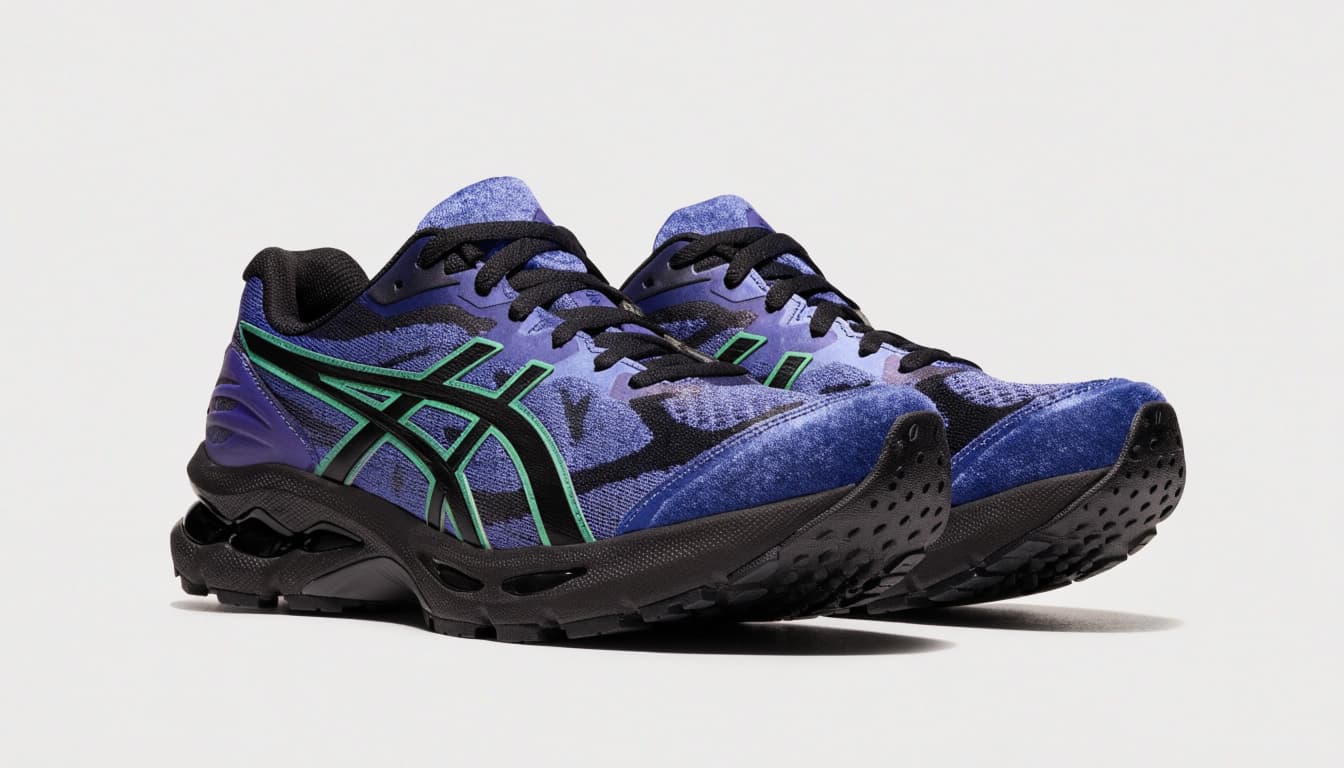
What changes when the shoe is built for trails
Trail cushioning has to work with changing ground conditions. A comfortable midsole remains important, but traction and protection become part of the underfoot experience.
GEL-TRABUCO 13 combines foam with rock protection
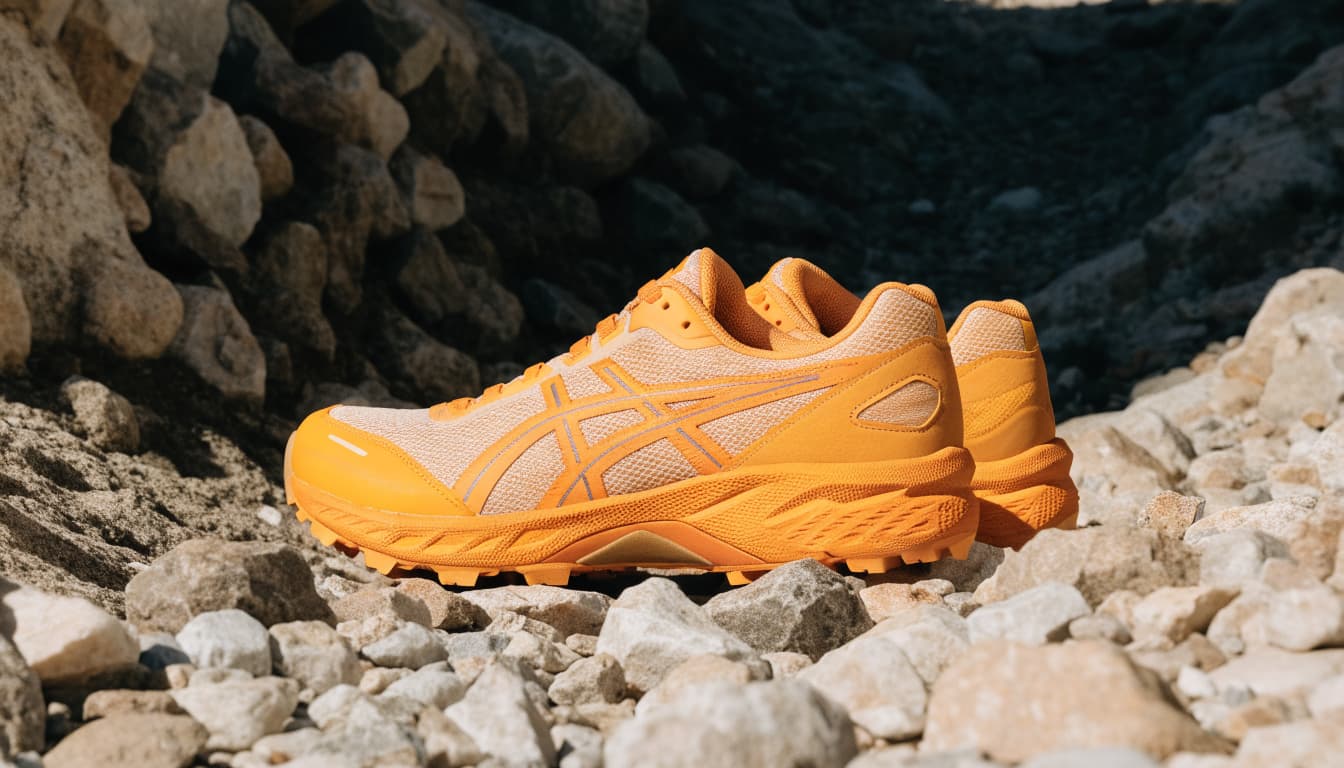
The ASICS GEL-TRABUCO 13 trail shoe uses FF BLAST PLUS midsole cushioning and a flexible rock-protection plate.
The plate addresses a different problem than cushioning alone: concentrated pressure beneath the foot from uneven terrain. A rounded landing on pavement and a landing over a projecting stone place different demands on a shoe.
This construction gives shoppers a concrete reason to choose trail footwear when routes include rough ground. Underfoot comfort involves both cushioning the landing and managing what lies beneath it.
ASICSGRIP handles the contact with the ground
ASICS also equips the GEL-TRABUCO 13 with a revamped ASICSGRIP outsole for traction across varying off-road surfaces.
The outsole matters because midsole softness can't compensate for inadequate grip. On loose or irregular ground, the shoe needs to maintain contact while the surface changes beneath it.
That combination can feel different from a road shoe even when both use FF BLAST PLUS foam. The outsole and protective construction contribute to the overall ride.
A rock-protection plate addresses pressure from uneven ground; cushioning addresses impact. One feature doesn't replace the other.
Road and trail cushioning compared
These two models show how ASICS builds different shoes around distinct surface demands.
| Feature | GEL-NIMBUS 28 | GEL-TRABUCO 13 |
|---|---|---|
| Intended use | Road running and longer-distance comfort | Trail running |
| Listed cushioning | FF BLAST PLUS and PureGEL | FF BLAST PLUS |
| Design emphasis | Maximum cushioning with neutral support | Cushioning with off-road protection |
| Other highlighted features | Lightweight, soft cushioning | Flexible rock-protection plate and ASICSGRIP outsole |
The strongest comparison is between complete shoes. A cushioning technology name alone doesn't describe the upper, protective elements, or ground contact.
Also, these are model-specific examples. The GEL-TRABUCO 13's features shouldn't become assumptions about every ASICS trail shoe, and the GEL-NIMBUS 28 doesn't describe every road model.
For shopping purposes, compare shoes intended for the same job first. Then decide which cushioning and support characteristics suit your feet.
Choose according to the ground you use most
Your usual route should lead the decision. A shoe's category matters most when its features address conditions you regularly encounter.
Pavement-heavy routes favor road designs
For sidewalks, paved paths, and road running, begin with road models. Their intended surface matches the ground beneath most of your steps.
Next, distinguish cushioning preference from support preference. The GEL-NIMBUS 28 is a neutral, maximum-cushion option; the GEL-KAYANO 32 puts more emphasis on adaptive stability.
Neither description means every shopper needs that particular design. Pay attention to whether your foot feels comfortably supported throughout the stride, rather than judging the shoe by heel softness alone.
For walking, the same surface-first approach is useful. A paved daily route places different demands on footwear than a rough woodland path.
Uneven routes make protection more relevant
When rocks, roots, or loose ground are regular features, prioritize trail-specific traction and underfoot protection. The GEL-TRABUCO 13 illustrates that combination.
For mixed routes, consider which section places the greatest demand on your footwear. A short paved approach doesn't remove the need for grip during a rough trail section.
However, a smooth, firm park path doesn't automatically require the same construction as a rocky route. Choose around the conditions you encounter repeatedly, rather than an occasional outing that barely resembles your normal use.
This approach also helps keep the purchase focused. You can assess features against a real need instead of collecting technologies.
Fit determines whether cushioning feels comfortable
Even an appropriate cushioning system can feel wrong in a poorly fitting shoe. Heel movement, toe pressure, or an unstable fit can outweigh an initially soft step.
Try both shoes with the socks you'll use for the activity. Your toes should have room to move without your foot sliding forward, and your heel should feel secure.
For trail use, pay particular attention to forward movement inside the shoe. Descending uneven ground can push the foot toward the front, so a secure fit matters beyond standing comfort.
Meanwhile, don't use tight lacing to compensate for a poor match through the midfoot. The upper should hold your foot without uncomfortable pressure.
Judge comfort while moving, rather than pressing a thumb into the foam. Walk enough to notice the transition through a step, the support beneath your arch, and any rubbing around the heel.
Fit also helps distinguish models whose specification lists appear similar. A familiar foam name doesn't guarantee the same shape or feel.
Key takeaways for shoe shoppers
- ASICS GEL cushioning addresses impact, while foam and shoe geometry shape the broader underfoot feel.
- Road models offer different support choices, including the neutral GEL-NIMBUS 28 and stability-focused GEL-KAYANO 32.
- The GEL-TRABUCO 13 adds a flexible rock-protection plate and ASICSGRIP outsole for off-road use.
- Choose for your usual surface, then assess fit and comfort while moving.
Frequently asked questions
Does GEL mean an ASICS shoe is waterproof?
GEL identifies cushioning technology, not waterproof construction. Water protection depends on the upper and any waterproof components included in the particular shoe.
Likewise, a trail designation describes intended use rather than guaranteeing dry feet. Cushioning, traction, and water protection are separate features.
Can you use road running shoes for walking?
Road running shoes can be suitable for walking on pavement when the fit and support feel comfortable. You don't need to run to appreciate cushioning underfoot.
However, a running-shoe label doesn't guarantee a comfortable walking experience. The shoe still needs to suit your foot shape and walking stride without pressure or slipping.
Does a higher price mean more GEL cushioning?
Price alone doesn't tell you the amount or position of GEL. A shoe's cost also reflects its wider construction, materials, and feature set.
For example, the GEL-NIMBUS 28's $170 listing describes a complete maximum-cushion road shoe. Treat that price as the cost of the model, rather than a measure of one cushioning ingredient.
Choose the whole shoe, not just the GEL name
ASICS GEL cushioning is one part of a larger system. Road comfort depends on the balance of cushioning, support, and fit, while trail use adds demands for traction and protection.
Start with the surface you use most. Then compare the complete shoe around that need, because a soft landing and secure footing depend on more than the name printed on the upper.


