

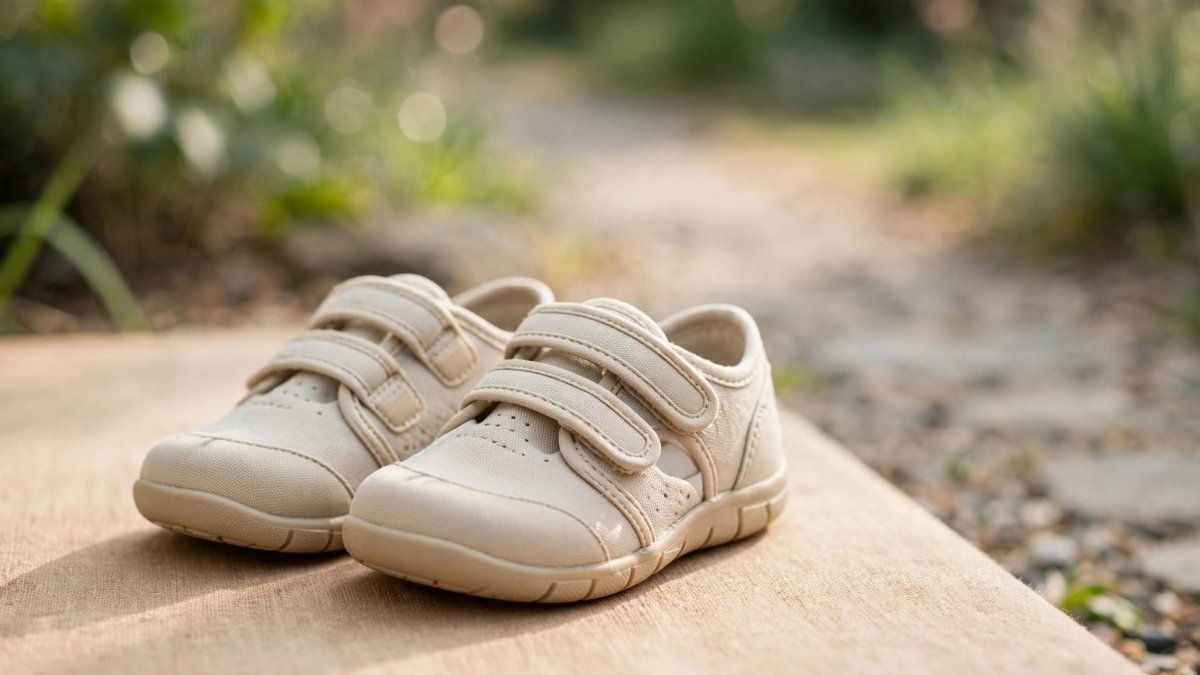
The best first walking shoes fit your toddler's feet now, bend easily at the forefoot, and stay secure without squeezing. Look for a lightweight pair with room for toes to move and a sole suited to the surfaces your child walks on.
Your child doesn't need shoes to learn to walk. Protection and fit matter when it's time to head outdoors. Here's how to find a pair that works for your child.
Key Takeaways
- Choose a flexible, lightweight shoe with a roomy toe area and an adjustable fastening.
- Measure both feet, then judge the fit of the actual shoes while your child stands and moves.
- Leave growing room without buying shoes so large that your child's feet slide.
- Replace shoes when they no longer fit or when wear affects how they function.
When Do Toddlers Need Their First Walking Shoes?
Shoes become useful when your child starts walking on surfaces where their feet need protection, such as sidewalks, playgrounds, or cold ground. Before that, soft footwear may be useful for warmth, but a child doesn't need a structured shoe just because they're pulling up or cruising along furniture.
At home, barefoot time on a clean, safe surface lets your toddler move without a shoe getting in the way. Socks can provide warmth, though slippery socks aren't a good match for slick floors. Outside, choose footwear appropriate for the temperature and terrain.
You don't have to buy a pair on a particular birthday. Children begin walking at different times, and the right moment to shop depends on how your child moves and where they spend time. A toddler taking a few steps across the living room may need different protection than one walking to the playground.
What to Look for in First Walking Shoes
A shoe's shape and construction matter as much as its size label. When comparing pairs, start with how the shoe moves and how it holds your child's foot.
Flexible soles and manageable weight
Pick up each shoe and bend it gently. The sole should flex around the ball of the foot, where toes bend during a step. A sole that's difficult to bend can restrict that movement. Avoid judging flexibility by the upper alone: soft leather or fabric doesn't mean the sole bends easily.
Look for a lightweight shoe with a sole that provides grip without feeling excessively bulky. Your toddler should be able to lift their feet and move comfortably in the pair. A heavily padded shoe isn't automatically a better choice, especially if its bulk makes walking awkward.
Roomy toes and secure fastenings
The front of the shoe should follow the shape of your child's foot and leave space for toes to lie flat and move. A rounded toe box often provides more usable space than a sharply tapered one, but the actual fit depends on the child's foot.
Hook-and-loop straps, adjustable laces, and other secure fastenings help hold the shoe in place. Look for an opening wide enough to get the foot in without a struggle. Once fastened, the shoe shouldn't pinch across the top or require extreme tightening to keep the heel in place.
Measure Both Feet Before Choosing a Size
A measurement gives you a starting point, not a guarantee that every shoe with the same label will fit. Take it while your child is standing, since the foot spreads under their weight.
Find the longer foot
Place your child's foot on paper on a firm, level surface. With your child standing, mark the back of the heel and the end of the longest toe. Repeat for the other foot, keeping the pencil upright and making sure your child's toes aren't curled.
Measure between the marks and use the longer foot as your starting point. Our guide to measuring children's feet offers more detail on taking measurements and understanding what they can tell you.
If your child won't stand still, try again when they're comfortable. A rushed tracing with a lifted heel or curled toes can give you an unreliable starting measurement.
Account for width and instep height
Length is only one part of the fit. Two toddlers with the same foot length can need different shoes because their feet differ in width, toe shape, or instep height.
Size systems also differ. A European size number isn't interchangeable with a US toddler size, and brands don't all use identical shapes. Use the measurement to choose an initial size, then assess both shoes on your child's feet. If the length seems right but the sides squeeze, a different shoe shape may work better than a longer size.
Test the Fit While Your Toddler Stands and Walks
Try shoes with the socks your child will normally wear. Put on both shoes, fasten them, and let your toddler stand before assessing the fit. Feet can sit differently once they bear weight.
Check the toes, sides, and heel
There should be space beyond the longest toe for growth and movement. Your child's toes should also lie flat, with room at the sides and top. Feel around the front of the shoe gently; if your child curls their toes, wait until they relax before judging the space.
Check the widest part of the foot and the area over the instep. The upper shouldn't press tightly or leave your child trying to pull the shoe off. At the heel, look for a reasonably secure hold rather than a shoe that slips substantially with each step.
Avoid buying an oversized pair to postpone the next purchase. Too much length or volume can let the foot slide forward and make the shoe harder to manage.
Watch the shoes in motion
Give your toddler time to walk, turn, and crouch on a safe surface. Some children need a moment to get used to unfamiliar shoes, but the pair should allow comfortable movement during the fitting.
Notice whether a heel repeatedly slips, a strap comes loose, or your child seems unable to move naturally. Compare another size or shape if something looks uncomfortable. Our guide to testing shoe fit while standing and walking explains why both checks matter.
Don't count on a tight shoe stretching into the correct size. Even if an upper softens, that won't reliably create the missing length or change a toe box that presses on the foot.
Compare First-Walker Styles
Product details can help you narrow your choices, but no model fits every toddler. These two styles in our selection give you a starting point for comparing construction.
Camper Peu Cami
Our Camper Peu Cami toddler shoe comes in navy full-grain leather with elastic laces and a stitched outsole. Camper describes its First Walkers range as flexible yet sturdy, with a shape that follows the natural curve of small feet.
The elastic laces offer a different look and fastening experience than a single strap. During a fitting, pay attention to how easily your child's foot enters and whether the shoe stays comfortably in place.
Naturino Cocoon
The Naturino Cocoon VL in brown is another option in our toddler selection. Compare its shape and fit with the Camper pair rather than assuming that the same size will feel identical in both.
A first-walker label can help you find the right category, but it doesn't tell you whether a shoe has enough width or depth for your child. The standing and walking tests remain the deciding factors.
Match the Shoe to Your Toddler's Routine
The right everyday shoe is one your child can wear comfortably for the activities ahead. Consider where they'll walk and how often you'll need to put their shoes on and take them off.
Everyday play and daycare
For daily outings, look for a flexible closed shoe with a fastening you can adjust. If your toddler wants to help with dressing, let them practice opening and closing the strap during the fitting. Also notice whether the opening gives you enough room to position their foot without pushing.
For daycare, a simple fastening can make shoe changes easier. Whatever style you choose, the closure needs to stay secure after your child walks and plays. Ease of use shouldn't come at the expense of fit.
Rain, cold, and special occasions
A waterproof boot can be useful in wet weather. Our Hunter First Classic toddler rain boots are one option for rainy outings. Try boots with the socks your child will wear, and remember that a boot may fit differently from an everyday sneaker.
The same applies to sandals and dress shoes. Open areas, different closures, and different toe shapes change how a shoe sits on the foot. A size that works in one pair is a starting point for another, not a guarantee.
Know When It's Time for a New Pair
Toddlers grow at different rates, so there isn't one replacement schedule that works for every child. Check the fit regularly, and pay attention to changes in your child's comfort as well as the condition of the shoes.
Look for signs of an outgrown fit
Reassess the shoes if toes approach the front, the sides feel tight, or the fastening becomes difficult to close. Your child may also resist wearing a pair that previously felt comfortable. Try the shoes on while they're standing, then watch them walk.
A fresh measurement can help you select another size, but a changed measurement alone doesn't tell you whether every pair needs replacing. Judge each shoe on its present fit.
Inspect wear as well as size
A shoe can still have enough length but no longer stay secure. Worn soles, stretched uppers, damaged linings, and fastenings that no longer hold can all make a pair less suitable.
Seasonal shoes deserve the same attention. Rain boots that look nearly new after months in a closet may no longer fit. Try them on before the next wet-weather outing rather than relying on their appearance.
Frequently Asked Questions
Do toddlers need ankle support in their first shoes?
A first walking shoe doesn't need to rise above the ankle to fit securely. A well-fitting low-cut shoe with an adjustable fastening can stay in place. Choose the height that suits the occasion, then assess the heel and overall fit.
Should first walking shoes have arch support?
Choose a comfortable shoe that fits your child's foot rather than assuming a first pair needs a built-in arch support. If you have concerns about your toddler's feet or walking, discuss them with a pediatrician or podiatrist.
What if my toddler keeps taking their shoes off?
Check for pressure around the toes, sides, and instep, and make sure the fastening isn't too tight. Some children also need time to get used to wearing shoes. Persistent pain, swelling, limping, or repeated avoidance of walking deserves professional attention.
Choose for the Feet Your Child Has Now
The best first pair gives your toddler room to move and protection where they need it. Size labels and attractive styles help narrow the choice, but comfortable fit in motion is what counts.
Bring your child to our store at 155 West 72nd Street in New York City to compare shoes in person. You can also shop our toddler selection online and try each pair with the socks your child will wear.


