

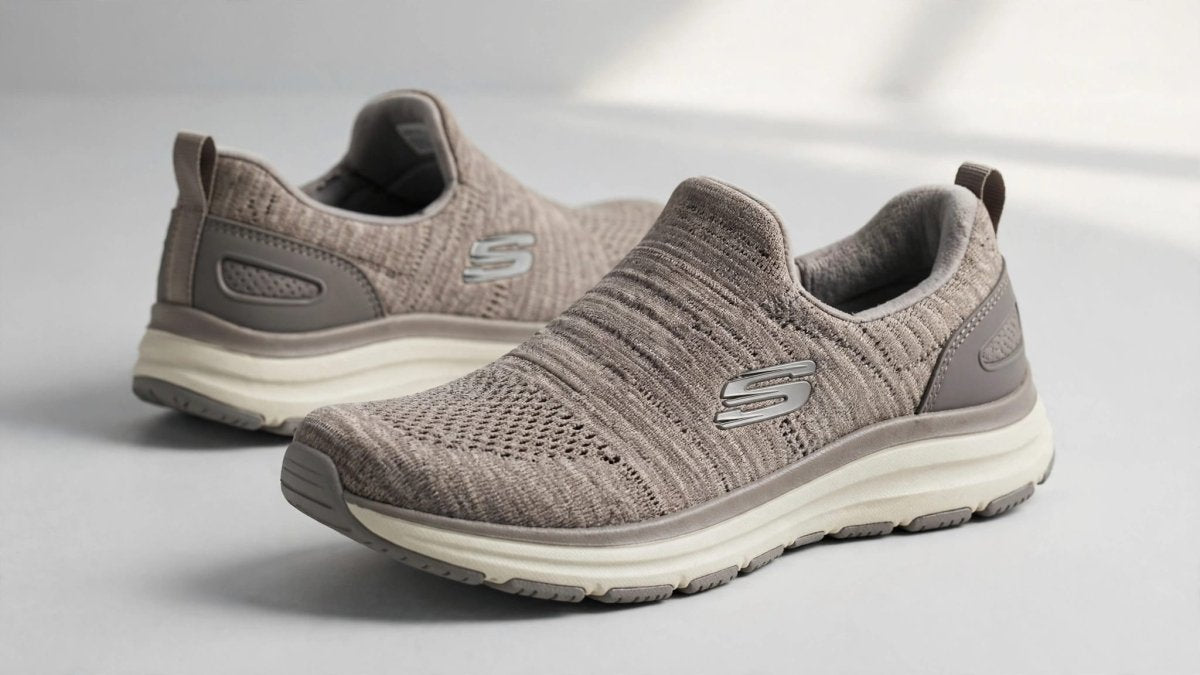
Skechers Hands Free Slip-ins combine a structured heel panel with a cushioned Heel Pillow to help your foot enter easily and stay seated. The panel guides entry, while the pillow rests against the back of your heel for a closer fit.
That combination appeals to shoppers who want less bending and fewer adjustments when putting shoes on. However, the shoe's length, width, and upper still determine how well it fits your foot.
Start with what each part of the heel design does, then consider the differences between individual styles.
Key Takeaways
- The molded heel panel keeps the back of the shoe open and helps guide your foot inside.
- The Heel Pillow cushions against your heel and helps reduce unwanted slipping once you're walking.
- Cushioning, upper materials, and width options vary by model, so hands-free entry is only one part of choosing a comfortable shoe.
How Skechers Hands Free Slip-ins Secure Your Heel
Easy entry and secure heel hold require different features. Skechers combines both at the back of the shoe, where a conventional soft collar can fold under your foot.
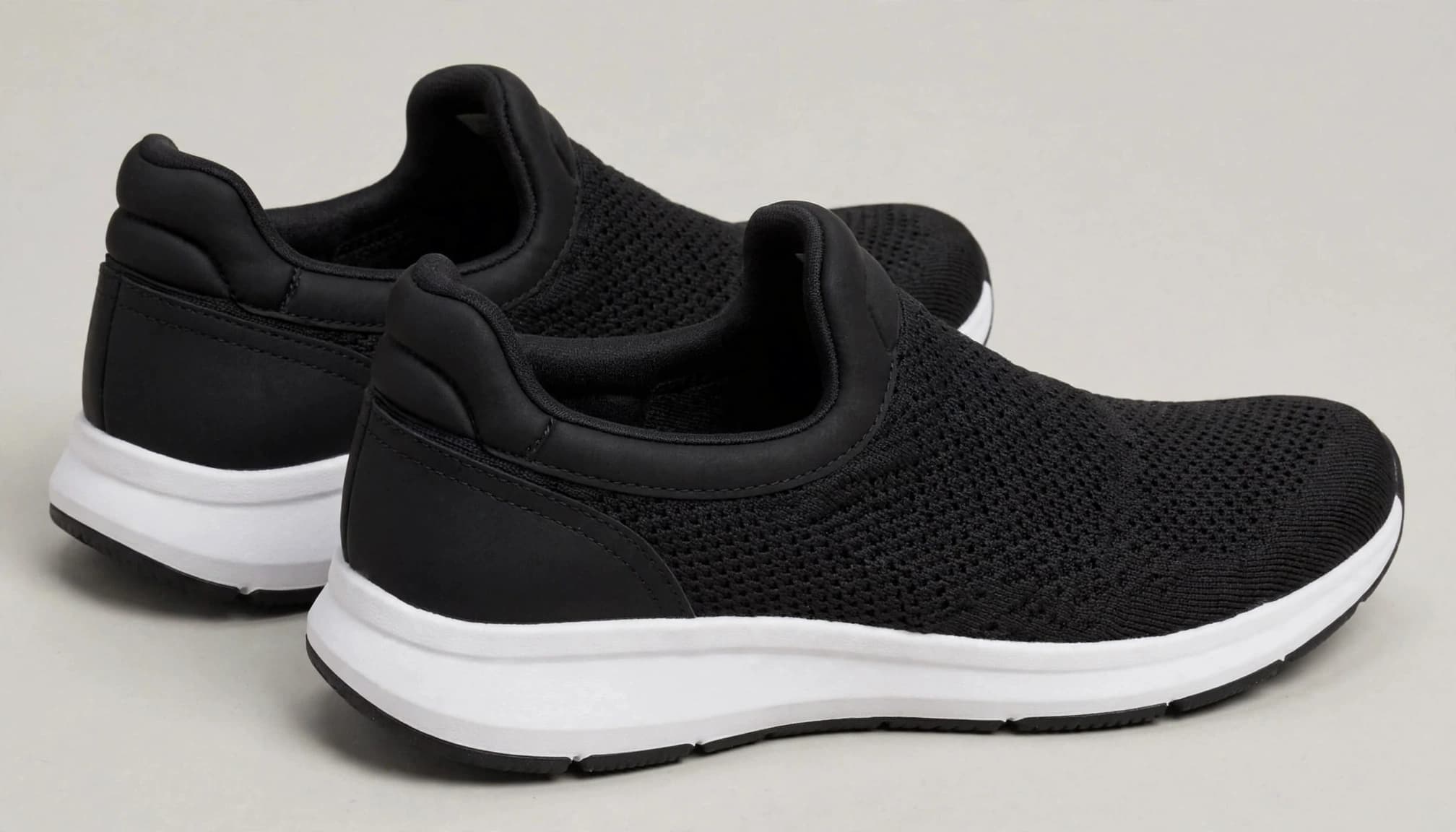
The molded heel panel guides entry
The molded panel retains its shape, keeping the heel opening upright as your foot enters. Its curved structure performs a job similar to a shoehorn: it guides your heel past the collar without requiring you to pull the back open.
That structure also helps the heel return to its supportive shape after entry. You shouldn't need to flatten the back of the shoe to get inside.
This distinction matters when comparing Slip-ins with ordinary slip-on sneakers. A stretchy opening can make a shoe easy to pull on, but hands-free entry also needs a heel structure that resists collapsing.
The Heel Pillow helps retain the foot
Inside the back of the shoe, the Heel Pillow creates a soft contact point against your heel. Skechers designs this cushion to help hold the foot securely and limit unwanted movement.
Once your heel settles into position, the pillow should feel comfortably snug. It shouldn't create a hard pressure point or force your toes forward.
A shoe can be easy to enter yet feel loose while walking. Judge heel hold after your foot is seated, not during the step-in motion.
The panel and pillow work together, but each handles a different part of the experience.
Three Slip-ins Models With Different Comfort Features
The heel concept carries across these styles, while the materials and cushioning give each shoe its own character. All three examples below use fixed stretch laces.
GO WALK Flex Lily Rose
The GO WALK Flex Lily Rose, style 125525 in black, combines a mesh-and-synthetic upper with a molded heel panel and Heel Pillow.
Underfoot, it pairs an Air-Cooled Memory Foam insole with ULTRA GO cushioning and Flex Pillars. This gives shoppers a walking-focused option with several comfort features beyond hands-free entry.
Skechers lists this version as machine washable and made with 100% vegan materials. Its listed heel height is 1¼ inches.
Summits High Range
The Summits High Range, style 232457 in black/charcoal, features breathable mesh, a molded heel counter, and the Heel Pillow.
Its Air-Cooled Memory Foam insole sits above a lightweight, shock-absorbing midsole. A flexible traction outsole completes the athletic construction.
Skechers lists this model as machine washable, with a 1¼-inch heel. It offers another way to get the same heel-retention concept without choosing the GO WALK Flex platform.
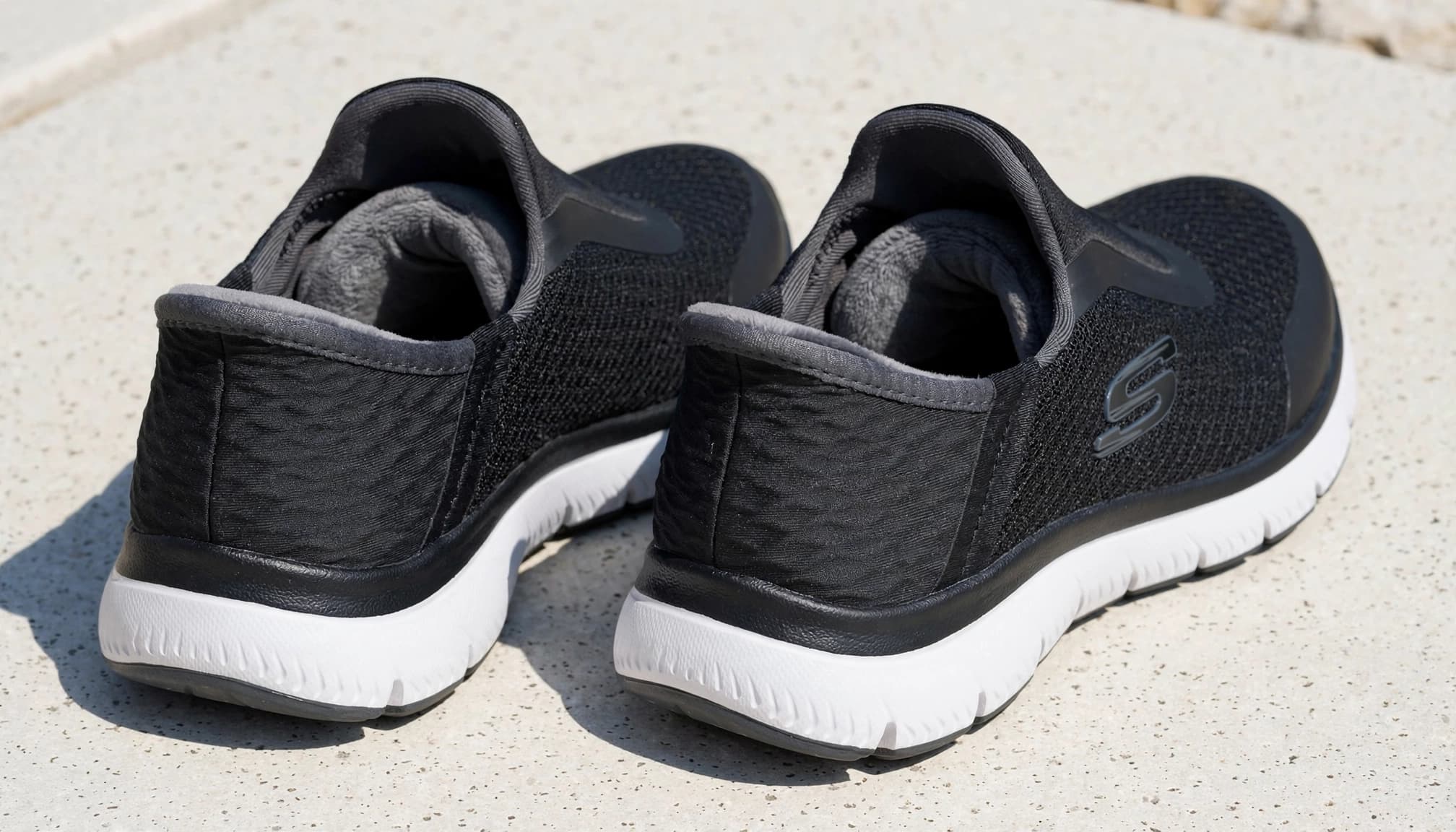
GO WALK Now Khloe
The GO WALK Now Khloe, style 125643 in navy/white, combines engineered mesh with the molded heel panel and Heel Pillow.
Its cushioning package differs: an Air-Cooled Goga Mat insole works with ULTRA LIGHT and Soft Stride cushioning. The cited navy/white version also has a flexible traction outsole and a listed 1½-inch heel.
Skechers describes this version as machine washable and made with 100% vegan materials.
Choose Length and Width Before Judging Heel Hold
At our store, we encourage shoppers to consider the whole fit, even when one feature catches their attention. A padded heel can't compensate for a shoe that leaves too much space elsewhere.
Assess length with your heel seated
Try the shoes with the socks you expect to wear. First, let your heel settle fully into the back. Then assess toe room while standing and walking.
Your toes need space without hitting the front. Meanwhile, your foot shouldn't slide forward every time you stop or change direction.
Avoid choosing extra length solely to make entry easier. That additional space can leave the shoe loose once your foot is inside.
Walk several steps at your normal pace and turn around. Pay attention to whether the heel remains comfortably seated, rather than judging fit from a stationary position alone.
Match the upper to your foot's width
The upper also helps hold your foot in place. If it feels loose across the middle, your heel may move even when the shoe's length seems reasonable.
Conversely, pressure across the forefoot or instep can make a hands-free shoe uncomfortable despite a snug heel. Stretch laces provide give, but fixed stretch laces don't offer the same adjustment as traditional tied laces.
Skechers offers wide widths in many Hands Free Slip-ins styles. A suitable width can provide forefoot room without requiring unnecessary extra length.
Judge both shoes on your feet. Differences between your left and right foot can make one side feel more secure than the other.
Heel Hold and Underfoot Cushioning Do Different Jobs
The Heel Pillow addresses contact at the back of your foot. The insole and midsole affect the cushioning beneath it. Those sensations deserve separate attention during a fitting.
For example, a soft insole may feel appealing immediately, while the heel still lifts as you walk. In that situation, softness hasn't resolved the fit issue.
Likewise, a securely seated heel doesn't tell you whether the cushioning suits your walking preferences. Spend time noticing pressure beneath the heel and forefoot, along with how easily the shoe bends during your stride.
Air-Cooled Memory Foam and Air-Cooled Goga Mat identify different insole technologies within the models above. ULTRA GO, ULTRA LIGHT, and Soft Stride describe other parts of their cushioning packages.
These names help distinguish product construction. They don't establish which shoe will feel most comfortable on your foot.
Also, cushioning isn't the same as arch support. If you're shopping for a particular support need, judge the shape and feel beneath your arch separately. Heel security, underfoot softness, and support should all suit you.
Everyday Convenience, Use, and Care
Hands-free entry can simplify getting dressed when reaching your shoes is awkward. It also removes a repeated task for anyone who prefers shoes that don't require tying each time.
However, putting on shoes while standing still requires balance. Sit down if that gives you a steadier position, and avoid forcing your foot into an unstable shoe.
Allow the molded heel to guide entry rather than treating the shoe as a backless slipper. Walking with your heel resting on the collar defeats the intended fit.
The three versions highlighted above are listed as machine washable. Follow the care instructions supplied with the pair, since its upper, lining, and cushioning form a complete construction.
Between wears, let damp shoes dry before putting them away. Also, pay attention to changes in the heel lining or collar that affect comfort.
Finally, distinguish a traction outsole from a work-specific slip-resistant rating. The Summits High Range and GO WALK Now Khloe listings describe traction outsoles. That description alone doesn't establish suitability for a workplace with defined footwear requirements.
Choose footwear for the surfaces and activities involved, alongside the convenience of stepping in.
Frequently Asked Questions
Should the Heel Pillow feel tight?
It should feel snug enough to help retain your heel without digging in. Persistent rubbing, pressure, or a foot pushed toward the front indicates an unsuitable fit. A secure shoe should remain comfortable during walking, not only while you're standing still.
Are Hands Free Slip-ins the same as ordinary slip-ons?
Hands Free Slip-ins use a molded heel structure designed for entry without pulling the shoe open by hand. They also incorporate the Heel Pillow to help retain the foot. Ordinary slip-ons can rely on elastic panels or a flexible opening without that particular combination.
Can I use my own insoles?
An insole change affects the space inside a shoe. A thicker insert can raise your heel relative to the pillow and collar, while a thinner one can leave extra room. If you wear prescribed orthotics, assess the complete fit with those orthotics in place.
Are these shoes suitable after surgery?
Hands-free entry may reduce the need to bend toward your feet, but that convenience doesn't establish postoperative suitability. Surgery can change your footwear needs, swelling, and balance. Follow your treating clinician's guidance about shoe construction and support during recovery.
Will the Heel Pillow eliminate heel slipping?
The pillow is designed to reduce unwanted heel movement. Length, width, instep volume, and heel shape still affect retention. If your heel repeatedly lifts or rubs during a fitting, choose a better-fitting size, width, or model rather than relying on the pillow alone.
Choose the Fit That Stays Comfortable in Motion
Skechers Hands Free Slip-ins pair a shape-retaining heel panel with a cushioned Heel Pillow. Together, they make entry easier and help keep your heel seated.
The strongest buying decision comes from assessing the whole fit: comfortable toe room, an upper that holds your foot, and cushioning that suits your stride.
Choose the pair that feels secure when you walk and turn, with no need to grip with your toes or tolerate pressure at the heel.


