

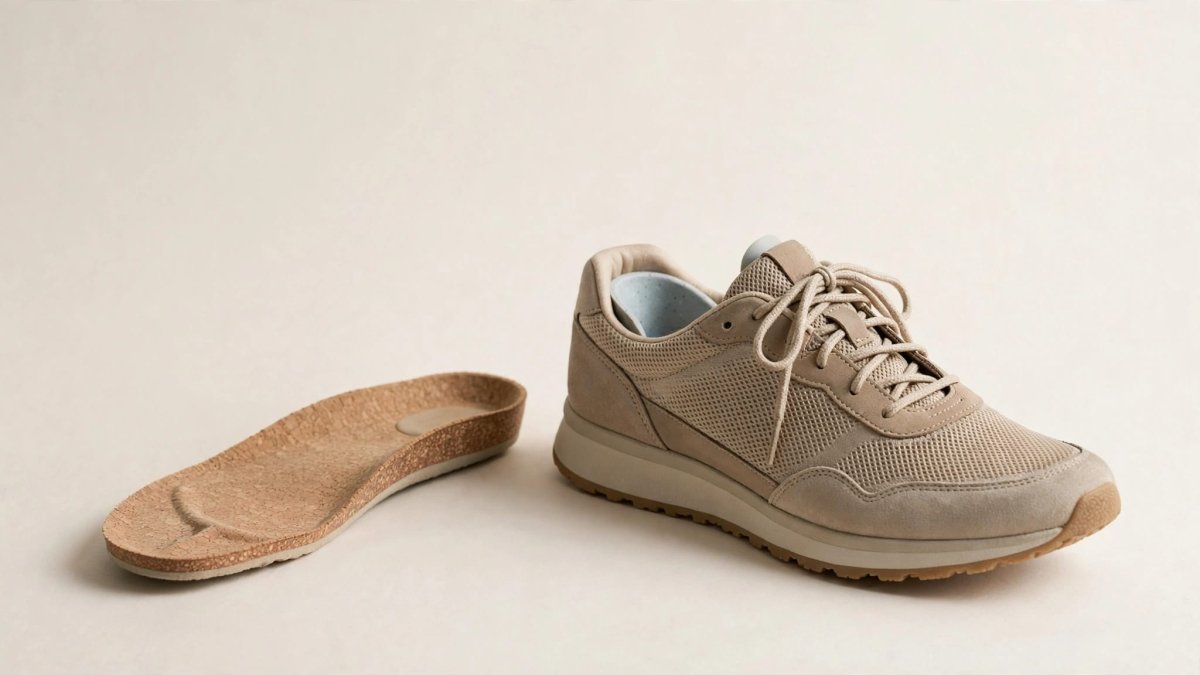
The best shoes for orthotics have enough interior space for your insert while holding your heel comfortably in place. Start with a removable footbed, then assess the shoe with your custom orthotic inside.
An insert can raise your foot within a shoe, changing how the heel and upper fit. Sufficient depth matters as much as support. Bring your orthotics when you shop, and judge each pair while standing and walking.
Key Takeaways
- Remove the original footbed before trying a full-length orthotic, unless your clinician has given you different instructions.
- Look for enough depth around the heel and instep, as well as room for your toes.
- Choose a shoe that holds your heel without squeezing your forefoot or requiring painfully tight laces.
- Test both shoes with your usual socks and orthotics. A removable footbed creates options, but it doesn't guarantee a fit.
Start With the Existing Footbed
A shoe's original footbed takes up space that your custom orthotic may need. Taking it out gives the insert a better chance of sitting low and flat inside the shoe.
Replace Rather Than Stack
For most full-length custom orthotics, remove the shoe's removable footbed before placing the insert inside. Stacking both can leave less room above your foot and lift your heel closer to the top of the shoe.
A thicker orthotic can also press your instep against the upper. If the shoe feels comfortable before you insert the device but crowded afterward, compare a deeper style rather than trying to tolerate the pressure.
Our guide to Aetrex arch support and removable footbeds explains how replacement insoles affect the space inside a shoe.
Match the Insert to the Interior
Seat the back of the orthotic against the back of the shoe. A full-length insert should lie flat without buckling at the toe or tilting at the sides. Its heel cup should sit securely within the shoe.
If you have a shorter orthotic or received instructions about using it with a footbed, follow your clinician's guidance. Don't cut, heat, or otherwise change a custom device to force it into a shoe.
Look for Heel Hold With the Orthotic In Place
A shoe can grip your heel well with its original footbed and feel loose after you insert an orthotic. That's why the finished setup matters more than the first impression of the empty shoe.
Notice Where Your Heel Sits
Stand up after fastening the shoe. Your heel should feel settled inside the back of the shoe, with the upper comfortably surrounding it. If the orthotic raises your foot too high, the shoe may feel shallow around the heel.
Walk at your normal pace and pay attention as you push off. Some movement can occur during walking, but repeated lifting, rubbing, or a feeling that the shoe is coming off calls for another adjustment or another style.
Distinguish the Shoe From the Insert
The orthotic's heel cup supports your foot within the device. The shoe's heel area holds the combination around your foot. Both need to work together.
If the insert rocks, slides, or doesn't sit flat, the shoe and orthotic may be mismatched. In that case, tightening the closure won't correct the way the insert sits.
Balance Shoe Depth, Width, and Length
Finding shoes for orthotics takes more than choosing a larger size. Length, width, and interior depth solve different fit problems, and changing one can affect the others.
Give the Top of Your Foot Space
Depth is the space between the bottom of the shoe and the upper. An orthotic occupies some of it, so a shoe that feels roomy without the insert may feel tight over your instep once you add it.
Look for an upper that doesn't press down when you stand. An adjustable closure can help accommodate your instep, but it can't add depth to a shoe with a shallow interior. If loosening the laces relieves pressure but makes your heel slide, try a different shoe shape.
Keep the Forefoot Roomy Without Going Too Long
Your toes need room to move, and the sides of the shoe shouldn't squeeze the widest part of your foot. A wider fitting or a broader toe shape may help when pressure is mainly across the forefoot.
Sizing up solely to gain width can leave too much length and make heel hold worse. Compare width options or another style before moving to a longer size. The goal is enough space in front while your heel remains comfortably seated in back.
Choose a Closure You Can Adjust
Laces and straps help hold the upper against your foot after the orthotic is in place. They also let you adjust the fit on days when your feet feel different.
Lace-Up Shoes Offer Flexibility
A lace-up shoe lets you adjust the tension across the top of your foot. Begin with enough room at the forefoot, then fasten the shoe so the midfoot feels secure without pressure.
If the heel still slips when the laces feel comfortably snug, consider a different shape or depth. Pulling them tighter can create pressure over the instep without fixing excess space at the back.
Straps Can Work for Casual Styles
An adjustable strap is useful when you want a shoe with a less athletic look. A Mary Jane style, for example, can hold the upper across your instep while allowing you to alter the closure.
As with laces, the strap should feel secure rather than restrictive. If you need to pull it uncomfortably tight to keep your heel in place, the shoe may not match your foot and orthotic.
Test Both Shoes While Standing and Walking
Bring both custom orthotics and the socks you'll normally wear. For boots, use your usual boot socks. Sock thickness changes the available space, so a thin fitting sock can give you a misleading impression.
Remove the original footbeds when appropriate, insert your orthotics, and fasten both shoes. Try each side because your feet may differ in shape or size. An afternoon fitting can be useful for everyday shoes, since feet can swell during the day.
Stand with your weight on both feet. Notice the toe box, the sides of your forefoot, the pressure over your instep, and the position of each heel. Your arch should meet the support without a sharp or unexpected pressure point.
Then walk several passes at your normal pace. Turn in both directions and come to a natural stop. Pay attention to whether your heel lifts, your foot slides forward, or the insert moves underfoot.
A shoe that feels soft when you're seated may behave differently as your foot bends. Assess the whole fit in motion before deciding between sizes or styles.
Shoes With Removable Footbeds to Compare
A replaceable footbed is a useful starting feature when you're shopping for custom orthotics. These styles offer different closures and shapes, but each still needs an in-person fit test with your own inserts.
For Medium-to-Wide Feet
The Hartjes Phil shoe has a replaceable cork footbed. Hartjes describes its European H last as suitable for medium-to-wide feet and a range of instep heights.
That makes it a style to compare if you need more room through the shoe. Still, the shape of your orthotic and the height of your heel inside the shoe determine whether the combination works for you.
For an Adjustable Casual Shoe
The Mephisto Mobils Fabienne is a Mary Jane with a removable footbed and an adjustable hook-and-loop strap. Try it with your orthotic in place to see whether the strap holds your foot without pressing over the instep.
The Finn Comfort Denia also has a removable footbed and an adjustable strap. Its removable cork footbed creates space to try a replacement insert, though the orthotic must still sit properly within the shoe.
Solve the Fit Problem Before Buying
When a pair feels off, identify the location of the problem before changing size or style. That makes it easier to choose a useful next comparison.
If your toes feel squeezed but the heel is secure, try a broader toe shape or a wider fitting. If pressure is concentrated over the instep, compare a deeper shoe or adjust the closure. Keep enough tension to hold your foot in place.
If your heel slips while the forefoot fits well, look for a shoe that fits more closely around the back or holds your foot lower. A shorter size isn't the answer if it crowds your toes. Walk again after each change to see whether the adjustment solves one problem without creating another.
For an orthotic that shifts or buckles, compare the insert's shape with the shoe interior. A different shoe may give it a flatter, more stable base. Don't add extra padding or alter the orthotic without considering how that change affects the prescribed fit.
Frequently Asked Questions
Should I buy a larger shoe for custom orthotics?
Not automatically. Start with your usual size and test it with the orthotic installed. If you need more space, a deeper shoe, wider fitting, or different toe shape may solve the problem without adding unnecessary length. Choose a size that gives your toes room while keeping your heel secure.
Can I put custom orthotics over the shoe's original insole?
A full-length orthotic generally replaces a removable insole. Using both can raise your foot and crowd the shoe. Some shorter devices have different fitting requirements, so follow the instructions that came with your orthotic rather than assuming every insert uses the same setup.
What if my orthotics cause pain in a new shoe?
Stop wearing the combination if it causes new or worsening pain. First, note whether the pressure comes from the shoe, the insert, or both. If discomfort continues or affects your walking, speak with the clinician who provided the orthotics or another qualified healthcare professional.
Find the Fit That Holds Up While You Walk
A removable footbed gives your orthotic a place to start. Heel hold depends on how the entire shoe fits once the insert is inside.
Compare depth, width, and closure with your usual socks. Then walk in both shoes before choosing the pair that feels secure without pressure.


