

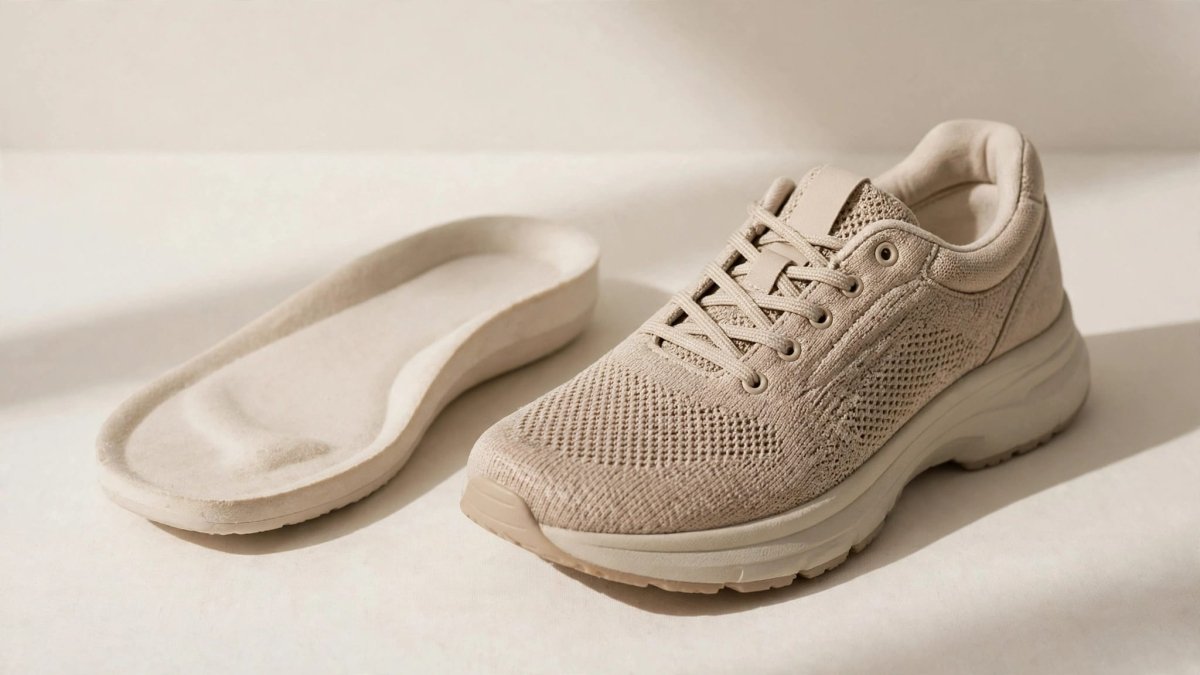
The best shoes for high arches provide comfortable support without pushing hard into the underside of your foot. Look for gentle arch contact, cushioning where you need it, and enough room throughout the shoe.
A high arch doesn't mean you need the tallest or firmest support available. The shape and placement of a footbed matter, as does the way the shoe fits when you're walking.
Start by comparing how different shoes feel under your whole foot, not just under the arch.
Key Takeaways
- Choose a footbed that feels comfortable under your arch without creating a sharp pressure point.
- Give equal attention to cushioning at the heel and forefoot, plus room over the instep.
- A removable footbed lets you try another insole, provided the shoe has enough interior space.
- Walk in both shoes before deciding, and stop if you feel pain or notice your stride changing.
- High arches alone don't tell you which shoe or insole will fit best.
How High Arches Affect Shoe Fit
A high arch describes the shape of the underside of your foot. It doesn't tell you exactly how much support you need or how your foot moves when you walk. Two people with similar-looking arches can prefer different footbeds.
Pressure Under the Arch
A contoured insole can contact the arch and help spread pressure across the foot. However, if its raised area sits in the wrong place or feels too firm, you may notice a concentrated lump underfoot.
That sensation can become more bothersome as you walk. Instead of judging support by height, look for contact that feels comfortable when you stand and remains comfortable as your foot moves.
Space Over the Instep
Some people with high arches also have a high instep, the raised area on top of the foot. A shoe can feel roomy at the toes yet press uncomfortably beneath the laces.
Adjustable laces can help you vary the tension over that area. However, loosening them won't create more depth in a shoe that's too shallow. If pressure remains, compare a deeper style rather than relying on break-in.
Balance Arch Support With Cushioning
Support and cushioning do different jobs. A shaped footbed changes where the shoe contacts your foot, while cushioning softens the surface beneath it. Consider both when you shop.
Choose Comfortable Contact
A shoe doesn't have to fill every bit of space beneath your arch. Some people prefer a noticeable contour; others find a gentler shape more comfortable.
Pay attention to where the raised part meets your foot. If it presses near the heel or feels too far forward, another footbed shape may work better. A support feature can be well made and still be a poor match for your foot.
Compare Cushioning Underfoot
Walk on a firm surface to assess cushioning at the heel and ball of your foot. A soft midsole may feel pleasant, but softness alone won't tell you whether the shoe feels stable or whether the arch fits.
Also consider the sole's shape. Some shoes have a rocker profile that encourages a rolling motion through the step. Try one alongside a flatter shoe to decide which movement feels more natural to you.
Get the Width, Depth, and Heel Fit Right
Even shoes for high arches with a comfortable footbed can feel wrong if another part of the fit is off. Assess the upper and the sole separately.
Give Your Forefoot Room
While standing, your toes should have room to move without pressing against the front or sides. Look at the shape of the toe box as well as the size on the label.
If the shoe squeezes across the ball of your foot, a wider fitting or a different shape may help. Going up in length alone can leave the heel loose without solving the width problem.
Hold the Heel Without Squeezing
Your heel should feel secure as you walk, while the upper holds your midfoot without digging in. Some movement can occur in a new shoe, but repeated slipping or rubbing deserves attention.
If tightening the laces stops the slip but creates pressure over your instep, try another shape. A well-fitting heel and adequate depth should work together without forcing you to choose between them.
Try On Shoes the Way You'll Wear Them
A useful try-on includes the socks and any orthotics you plan to wear with the shoes. These details affect the space inside, especially around the toes and instep.
Start Standing, Then Walk
Try both shoes and stand with your weight on your feet. Notice the arch, toes, heel, and top of the foot. Then walk at a normal pace, turn, and stop.
As you move, notice whether the arch contour stays comfortable or becomes more pronounced. Your toes shouldn't grip to keep the shoe on, and your heel shouldn't rub with each step. If possible, compare two styles during the same visit so the differences are easier to feel.
Treat Discomfort as Useful Information
Locate the pressure rather than deciding that the entire shoe is simply too tight. A lump under the arch points toward a footbed mismatch. Pressure beneath the laces may call for more depth or a different closure.
A brief adjustment period can help you become familiar with a shoe, but don't expect sharp pressure or pain to disappear with wear. Stop the try-on if it hurts and compare another pair.
Decide Between a Built-In Footbed and an Insole
A shoe with a comfortable footbed is a straightforward choice when you like the fit as it comes. A removable insert gives you another option if you want to adjust the support later.
Start With a Neutral Option
For medium and high arches, Aetrex describes its L400 family as a neutral design with cushioning and arch contact rather than a posted support structure. The women's L400W Sport Neutral includes rearfoot cushioning and a neutral forefoot.
If pressure under the ball of your foot is also a concern, the women's L405W Sport Neutral adds forefoot support. Our guide to Aetrex insoles for medium and high arches compares these designs in more detail.
The placement of a metatarsal feature matters, so assess how it feels while walking. More contour isn't automatically more comfortable.
Allow Space for the Insert
When a shoe has a removable footbed, take it out before fitting a replacement insole. The new insert should lie flat and fit the shoe's shape without buckling.
Then reassess the entire fit. A thicker insole can reduce space over your instep, crowd your toes, or raise your heel enough to cause slipping. Slim casual shoes and dress shoes may have less room for an insert than a deeper sneaker.
If you use prescribed orthotics, bring them when shopping and try them in both shoes.
Shoes to Compare for High Arches
These styles offer different combinations of cushioning, shaped footbeds, and room for an orthotic. Each is worth trying for its construction, though comfort depends on your foot and the fit.
Cushioned Walking and Casual Sneakers
The Brooks Ghost Max 3 has a broad base, substantial cushioning, and a rocker-shaped sole. The men's style is intended for walking and running and can accommodate orthotics. Its listed heel-to-toe drop is 6 mm. Try it if you want a cushioned athletic shoe, then assess the arch feel and rolling motion for yourself.
For a leather casual sneaker, the Ara Alexandria combines HighSoft cushioning with a removable cushioned insole. Its laces let you adjust the upper, while the removable insole gives you flexibility if the original contour doesn't suit you.
Removable Footbeds With Defined Support
The Dansko Harlyn has a removable footbed with Dansko Natural Arch technology. Its lightweight EVA midsole includes a nylon shank, and the style accommodates most standard and custom orthotics. Compare the original footbed with your own insert if you already use one.
The Taos Plim Soul Lux is a leather sneaker with a removable footbed, a deep heel cup, and cushioning at the forefoot. It has both arch and metatarsal support, so pay attention to both contours during your walk. The shoe is also described as orthotic-friendly.
Match the Shoe to Your Routine
Choose for the activity you'll do most often. A sneaker that feels good during a short errand may feel different after a longer walk or several hours on your feet.
For everyday pavement walking, compare cushioning and heel hold over a normal stride. If you run, assess the shoe at a comfortable running pace when you can. The amount of motion and impact differs from standing still.
Casual shoes and work shoes deserve the same fit standards as athletic styles. A dressier profile may have a shallower interior or a firmer footbed, so make sure it leaves enough room for your foot and any insert. The right-looking shoe should also feel comfortable for the length of time you plan to wear it.
Frequently Asked Questions
Do High Arches Always Need Firm Arch Support?
No. High arches don't automatically require a rigid or highly raised footbed. Some people prefer a gentle contour, while others like more contact. Use comfort during standing and walking to compare options.
Can an Insole Cause Arch Pain?
An insole can create pressure if its contour is too prominent, sits in the wrong place, or makes the shoe too tight. Remove it and reassess the fit if it causes new or worsening discomfort. Don't stack a replacement insert on top of the original footbed unless both fit comfortably.
When Should I See a Podiatrist?
Seek professional advice if pain persists, worsens, or changes the way you walk. Numbness, recurring skin damage, or a noticeable change in foot shape also deserves assessment. A clinician can help identify the cause and discuss whether an orthotic is appropriate.
Choose the Fit That Feels Right in Motion
The right shoes for high arches should feel comfortable across your whole foot. Arch contact can be helpful, but a raised contour shouldn't leave you walking around a pressure point.
Compare cushioning, instep space, and heel hold along with the footbed. Comfort while moving is a better guide than the height of the support alone.
Visit us at Tip Top Shoes on West 72nd Street in New York City to compare styles and find a fit for your routine.


