

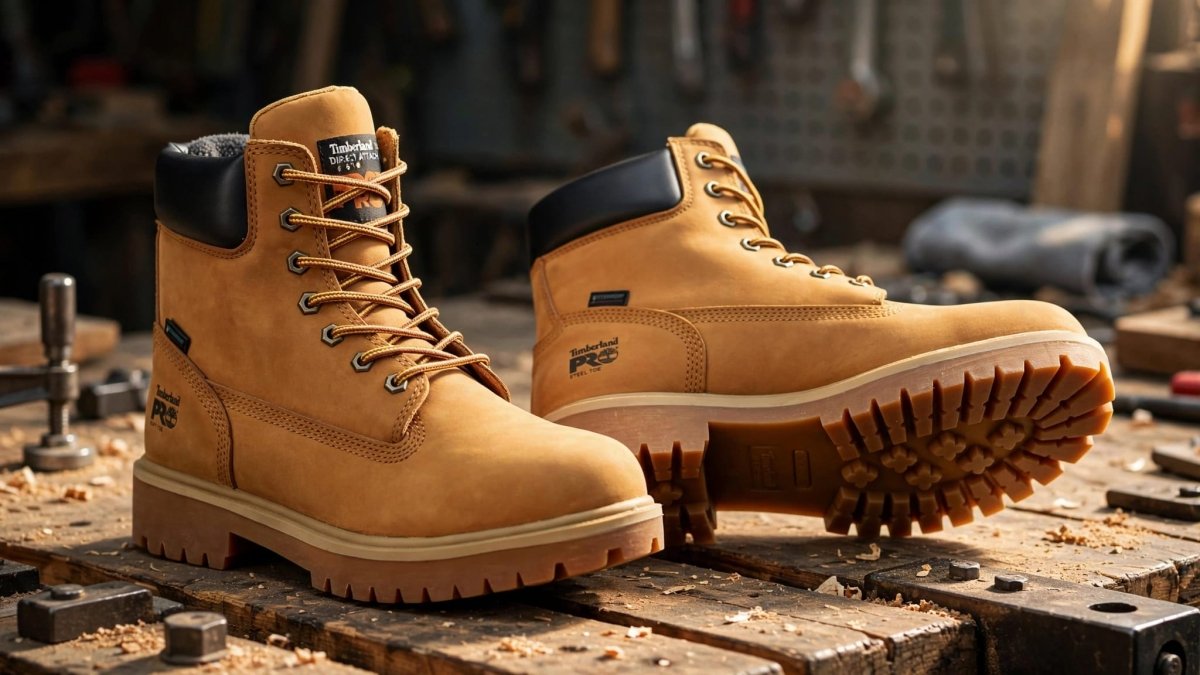
Timberland anti-fatigue technology is one feature you may encounter while shopping for work boots. To find a pair that fits your day, consider the whole boot, including its toe protection, fit, and construction.
A comfortable pair should feel secure as you move and suit the conditions you work in. Start with the features your job requires, then compare how each boot feels on your feet.
Key Takeaways
- A soft toe and a steel toe meet different needs. Choose the protection your workplace requires.
- Waterproof construction helps with wet conditions, but it doesn't replace the need for suitable traction.
- Fit matters even when a boot has a comfortable footbed. Try both boots with your usual work socks.
- The Timberland PRO Direct Attach 65030 and 65016 are two waterproof, 6-inch options with different toe designs.
How Boot Construction Affects Comfort
When shopping for Timberland anti-fatigue technology, it's useful to consider the rest of the boot, too. The footbed is the surface directly under your foot, while the midsole sits between the footbed and outsole. Both are part of how a boot feels when you stand and walk.
The upper also affects comfort. Leather needs to fit around your foot without pinching, and the collar should feel comfortable around your ankle. A secure lace-up fit helps hold your heel in place without excessive pressure across the top of your foot.
Outsoles add another part to the decision. A sole suited to the surfaces you walk on can help you feel steadier, whether you spend your day indoors or outdoors.
Two Timberland PRO Work Boots to Compare
These two Timberland PRO Direct Attach boots offer a choice between a soft toe and a steel toe. Both have a 6-inch height and waterproof construction.
65030: A Soft-Toe Work Boot
The Timberland PRO 65030 Direct Attach is a wheat-colored, waterproof boot with a soft toe. It's an option for shoppers who want work-boot coverage but don't need a protective safety toe for their job.
Soft-toe boots give your toes room inside the upper, but they don't provide the protective cap found in a steel-toe design. That distinction matters if you work around heavy equipment or materials.
65016: A Steel-Toe Work Boot
The Timberland PRO 65016 Direct Attach has a steel toe and a waterproof wheat-colored design. We list it at $179.95.
A steel toe is worth considering when your job calls for protective footwear. If your workplace requires a particular safety standard, choose a boot that meets that requirement. A boot's comfort features and its protective-toe rating address separate needs.
How to Get the Right Work Boot Fit
Your boot needs enough room for your feet to move naturally, but it shouldn't slide around as you walk. Wear the socks you use at work when trying on a pair, since sock thickness changes the space inside the boot.
Give Your Toes Room
Stand up in both boots and move your toes. They shouldn't press against the front or feel squeezed across the sides. This is especially important with a steel toe, because the protective cap won't stretch to accommodate pressure.
If the length feels right but the sides feel tight, a wider fit may be more comfortable than a longer boot. Too much extra length can let your foot slide forward.
Walk Before You Decide
Lace both boots as you would for work, then walk around. Your heel should feel secure, and the upper shouldn't pinch across your instep. Pay attention to the ankle collar as you bend your knees or climb a step.
A little movement in a new boot can feel different as the upper breaks in. Sharp pressure, toe contact, or persistent rubbing are signs that the fit needs attention rather than problems to ignore.
Match Your Boots to Your Workday
The right work boot depends on what you do for most of the day. Someone standing on a warehouse floor may value a different feel underfoot than someone climbing ladders or working outside.
For wet conditions, waterproof construction is a useful feature. However, water can still enter over the top of a boot, so consider the depth of puddles and the height of the shaft. In cold conditions, insulation and the thickness of your socks also affect warmth and fit.
Traction deserves attention on wet, oily, or uneven surfaces. Choose an outsole suited to the conditions you encounter, and remember that a waterproof boot isn't automatically slip-resistant for every surface.
Caring for Waterproof Work Boots
Remove loose dirt with a soft brush after use. If your boots get wet, let them dry at room temperature rather than placing them against a heater. Direct heat can dry out leather.
Use a cleaner and leather-care product appropriate for the boot's material. Regular care helps keep the leather in good condition, while keeping the inside dry makes the boots more comfortable to put on for the next shift.
Frequently Asked Questions
Is a soft-toe boot suitable for work?
A soft-toe boot can suit jobs that don't require protective toe caps. It may offer the coverage and waterproofing you want, but it doesn't replace a safety toe where one is required.
Can I use a different insole in my work boots?
An insole can change how a boot fits underfoot. If you use one, try the boots with it in place and make sure your toes still have room and your heel remains secure.
Find the Right Boot for Your Day
Timberland work boots come with different combinations of protection and construction. Start with the features your job requires, then choose a pair that feels comfortable when you stand and walk.
At Tip Top Shoes, we know that fit is personal. The right choice is the boot that gives your feet room and suits the work you do.


