

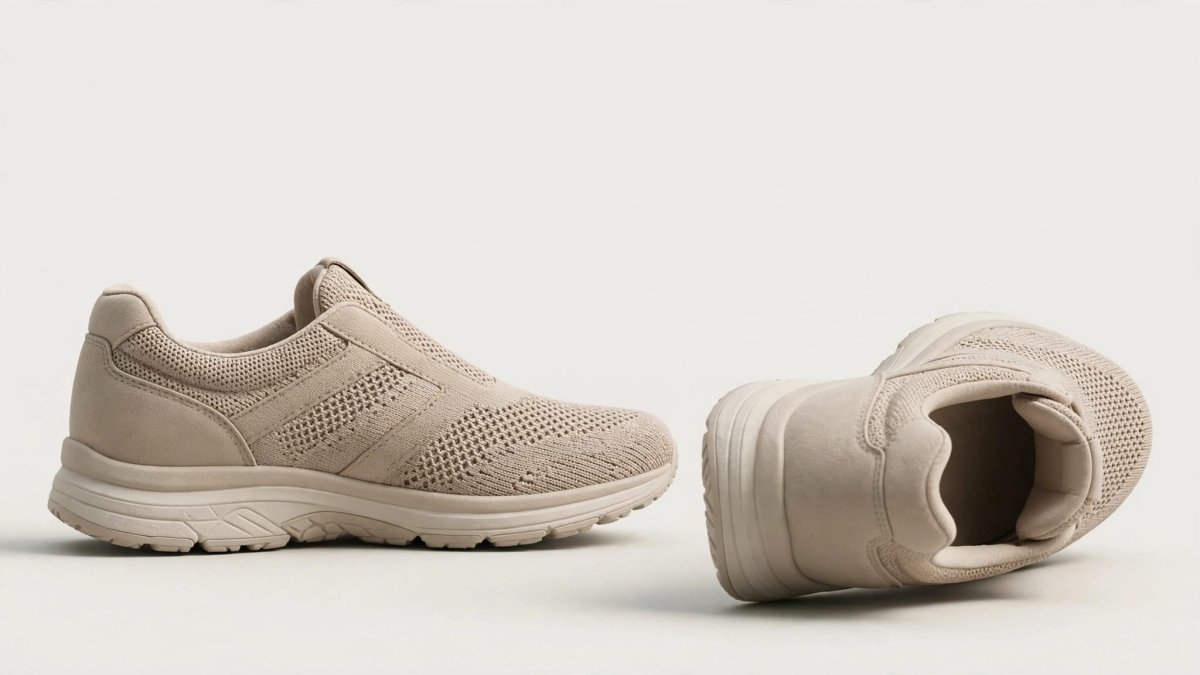
A shoe heel counter is one term you may encounter while shopping for footwear. To judge how a shoe fits, pay close attention to how its heel area feels when you stand and walk.
Your heel should feel secure without pressure, while your toes have room to move. A few fit checks can help you compare shoes without relying on a size label alone.
Key Takeaways for Finding a Comfortable Fit
- A good fit lets you walk without persistent heel rubbing, pinching, or excessive slipping.
- Heel cushioning, a padded collar, and an insole's heel cup are different features. Each can affect how a shoe feels.
- Laces, straps, socks, and insoles can change the fit, but they won't fix every shoe that's the wrong shape or size.
- Try on both shoes and walk in them before deciding. Fit can differ between your left and right foot.
How the Heel Area Should Feel
The back of a shoe should feel comfortable as soon as you put it on. Look for contact around your heel without a hard edge pressing into your skin.
Secure Without Squeezing
A shoe that holds your heel comfortably shouldn't require you to curl your toes to keep it on. When you walk, your foot and shoe should move together without persistent rubbing at the back.
Pay attention to pressure on the sides of your heel, too. A shoe can feel secure at first but become uncomfortable if the heel area presses against a sensitive spot. If you feel a sharp edge or pinching, try another size or style rather than counting on the shoe to change.
Room for Natural Movement
Some heel movement can occur as your foot bends during a step. A small amount of lift isn't automatically a poor fit, particularly in a new boot with a stiff sole. However, repeated sliding that causes friction is a reason to try a different fit.
Check the rest of the shoe at the same time. If your toes hit the front or the sides squeeze your foot, a snug heel alone doesn't make the shoe a good match.
How to Test Shoe Fit While Walking
Try shoes with the socks or hosiery you expect to wear with them. If you use an insole or orthotic, bring it along so you can assess the space it takes up.
Start With Both Shoes On
Feet aren't always identical, so put on both shoes and fasten them comfortably. Stand up to assess the length and width, since your feet spread under your weight. Your toes should have room to move without pressing against the front or sides.
Then notice how the shoe feels around your heel and across the top of your foot. You shouldn't need to tighten the closure so much that it creates pressure just to keep the shoe on.
Walk at Your Usual Pace
Take several laps on a firm, clean surface. Turn, stop, and walk at the pace you'd normally use. If you're trying shoes at home, keep them clean and wear them indoors while you assess the fit.
Notice whether your heel rubs, rises substantially, or feels pressed against the back. Also pay attention to the ball of your foot and your toes. A shoe that's comfortable for a few steps should continue to feel comfortable as you move around.
If you can, try shoes later in the day, when your feet may be a little larger than they are in the morning. This can make tight spots easier to notice.
What to Do When Your Heel Slips
Heel slipping can have more than one cause. The shoe may be too long, too roomy around the heel, or difficult to secure over your instep. Start with the simplest adjustments before deciding whether another shoe would fit better.
Adjust the Closure First
On lace-up shoes, tighten the laces gradually across the foot instead of pulling only the top pair of eyelets tight. Your foot should feel held in place without pressure across the instep.
Some athletic shoes have an extra pair of eyelets near the ankle. A heel-lock lacing method uses these eyelets to help secure the shoe:
- Lace the shoe normally until you reach the second-to-last pair of eyelets.
- Thread each lace into the top eyelet on the same side, leaving a small loop.
- Cross the laces and pass each one through the opposite loop.
- Pull gently to snug the shoe, then tie your usual bow.
Walk again after adjusting the laces. Loosen them if you feel pressure or numbness.
Change the Fit, Not Just the Size
If the shoe feels loose throughout, another size may help. If the forefoot fits well but the heel remains roomy, a different shoe shape may be a better option.
A thicker sock or a heel grip can reduce a small amount of extra space. Neither should crowd your toes or create a new pressure point. Avoid choosing a shoe that's too short just to stop your heel moving.
Choosing Between Shoe Styles
Different styles hold the foot in different ways. A lace-up walking shoe gives you more room to adjust the closure than a pump, while a boot may feel different around the ankle.
Walking Shoes and Sneakers
Laces let you adjust the fit across the top of your foot. Look for enough room in the forefoot and a comfortable feel around the heel when you walk.
For example, our Mephisto Match walking shoe has speed lacing and a padded tongue and collar. Those features can help you adjust the closure and add cushioning around the opening. Your own walking test will tell you how the shoe fits your foot.
Boots, Pumps, and Sandals
Boots can feel different from low shoes because they cover more of the foot and ankle. Our Blundstone 510 boot, for example, has a removable shaped footbed and PORON XRD cushioning in the heel strike zone. Try it with the socks you plan to wear, and walk long enough to notice any rubbing.
Pumps often have less adjustment than lace-up shoes, so pay close attention to heel movement. Sandals with an adjustable backstrap offer a different way to secure the foot. In either style, the strap or upper should hold comfortably without cutting into your skin.
Heel Cushioning, Collars, and Heel Cups
Several shoe features can affect what you feel around or under your heel. Knowing the difference makes product descriptions easier to interpret.
Heel cushioning sits under the foot and softens the feel of contact with the ground. A cushioned heel can feel pleasant without changing the amount of room at the back of the shoe. If a shoe slips, extra softness underneath won't necessarily solve it.
A padded collar is the cushioned area around the shoe's opening. It can make contact around your ankle more comfortable, but thick padding may also take up space. Notice whether it sits comfortably when your foot moves.
A heel cup is the shaped area of a footbed or insole beneath the heel. For example, Superfeet Berry insoles have a deep heel cup and full-length foam. The cup is part of the insole, while cushioning and the collar are separate features of the shoe.
When comparing products, look at how these features work together on your foot. More padding doesn't automatically mean a better fit, and a comfortable shoe doesn't need every feature to feel right.
How Insoles Affect Shoe Fit
An insole changes the surface under your foot and takes up room inside the shoe. That can improve comfort for some wearers, but it can also make a shoe feel tighter or change where the collar touches the ankle.
Match the Insole to the Shoe
If the original footbed is removable, take it out before adding a full-length replacement. Placing one full-length insole on top of another can leave too little room for your foot.
Our Pedag Viva Sport insoles have a soft heel cushion and support for the longitudinal and metatarsal arches. They offer a different underfoot feel from the shoe's original insole. Try the combination on both feet and walk before deciding whether it works for you.
Recheck the Whole Fit
After adding an insole, notice whether your heel feels higher in the shoe. Make sure your toes still have space and that the top of your foot isn't pressed against the upper.
An insole can change how a shoe feels underfoot, but it can't reliably correct a shoe that's much too long or the wrong shape for your heel. Persistent pain, numbness, or repeated blisters are reasons to speak with a qualified foot care professional.
Frequently Asked Questions
Should My Heel Move at All in a Shoe?
A little movement can be normal as the shoe bends with your foot. What matters is how the movement feels over several steps. If your heel repeatedly slides against the shoe or you have to grip with your toes to keep it on, try adjusting the closure or choosing another fit.
Will a Shoe That Rubs at the Heel Break In?
Some materials soften with wear, but a shoe that causes sharp pressure or rubbing during a try-on is a poor choice to count on. Look for a pair that feels comfortable when you first walk in it. A different size, sock, or style may resolve the problem without a break-in period.
Can a Heel Grip Fix a Loose Shoe?
A heel grip may help with a small amount of extra room. It won't make every oversized shoe fit, and it can introduce pressure of its own. After adding one, walk in both shoes and make sure your toes still have enough space.
Should I Size Down to Stop Heel Slipping?
Only if the shorter shoe also fits the rest of your foot. Your toes shouldn't touch the front or feel crowded. If a smaller size solves the slipping but pinches elsewhere, try a different shoe shape or an adjustable closure instead.
Find a Fit That Feels Good in Motion
The best way to assess a shoe is to wear it as you intend to use it. A secure heel matters, and so do comfortable toes and enough room across the foot.
Give yourself time to walk in both shoes and notice any pressure. Comfort during movement is a better guide than a snug feeling while you're standing still.
You can try shoes with us at Tip Top Shoes, 155 West 72nd Street in New York City.


