

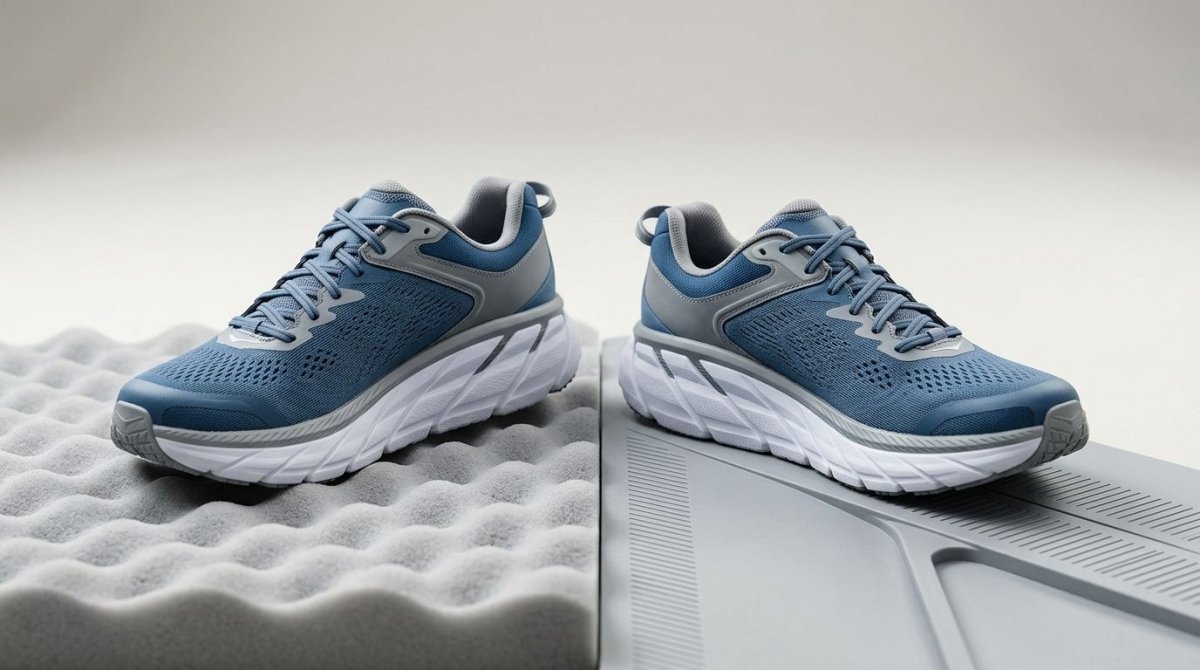
Soft foam can feel great for a few steps in a store, yet still feel wrong after a long walk or run. Understanding Hoka cushioning stability starts with separating two features that buyers often group together.
Cushioning softens the ride and reduces harsh ground feel. Stability helps the shoe guide your foot through each step. You may want one, the other, or both.
Start with how and where you'll wear the shoes, then match the design to your stride and comfort needs.
Hoka Cushioning Stability: Two Separate Jobs
New buyers often treat cushioning and stability as opposite choices. They are separate tools. A soft shoe can be neutral, while a guidance-focused shoe can still feel plush underfoot.
Hoka cushioning stability is not a single score printed on a box. The right balance depends on your foot, pace, activity, and the surfaces you cover most.
Cushioning absorbs impact underfoot
Cushioning comes mainly from the midsole, the foam layer between your foot and the outsole. More foam often creates a softer landing and can make pavement feel less punishing during long walks, standing shifts, and easy runs.
However, a thick midsole doesn't always feel pillowy. Foam density, stack height, and shoe geometry change the sensation. Some shoes feel soft and springy, while others feel protective but firmer and more planted.
Cushioning also affects fatigue. If your feet feel beaten up after a day on concrete, a more protective midsole may help you stay comfortable longer.
Stability limits unwanted movement
Stability features help keep the foot centered over the platform during the stride. They can include a wider base, raised sidewalls around the heel, firmer foam in targeted areas, and a structured upper.
A stable shoe should feel secure, not restrictive. Your heel should stay settled, and your foot shouldn't slide toward either edge of the midsole when you turn corners or walk downhill.
Some inward foot roll is normal. A stability shoe becomes useful when your foot repeatedly collapses inward, your ankles feel unsteady, or a neutral shoe feels sloppy beneath you.
The two features often overlap
A wide platform can make a highly cushioned shoe feel more stable. Likewise, a stability shoe with a supportive frame can still offer generous impact protection.
Your first impression matters, but test the shoe while moving. Stand still, walk briskly, and take a few turns before deciding that a pair feels right.
How Hoka Midsole Design Changes the Ride
Hoka uses midsole shape as much as foam volume to create its distinctive feel. That is why two models with similar-looking soles can ride very differently.
Stack height and foam change ground feel
Stack height measures how much material sits between your foot and the ground. A higher stack usually offers more protection from hard surfaces, although it also places your foot farther from the ground.
That extra height can feel smooth and forgiving on city sidewalks. Yet a very tall shoe may feel less natural during quick lateral movements, gym sessions, or uneven trails.
The women's Hoka Solimar 2 Black/White takes a more approachable approach. Its balanced midsole, compression-molded EVA foam, plush heel, and zonal rubber pods suit walking, errands, and general training without the bulk of a max-cushion model.
Heel-to-toe offset also matters. It is the height difference between the heel and forefoot, not a measure of cushioning or stability. A lower offset can feel more level, while a higher offset can place more of the initial landing under the heel.
Meta-Rocker helps the shoe roll forward
Many Hoka shoes use Meta-Rocker geometry, a curved sole shape that encourages a smooth heel-to-toe transition. Instead of flexing sharply at the forefoot, the shoe helps carry you into the next step.
That rolling sensation can reduce the feeling of pushing off from a flat sole. It often works well for walkers and runners who want an easy, consistent stride.
A high stack height adds material underfoot, but a broad base and secure upper decide whether that height feels steady.
Meta-Rocker is not a stability feature by itself. A shoe can roll smoothly and still be neutral, so check the platform and support system before assuming it will control foot motion.
What Makes a Hoka Shoe Feel Stable
Stability comes from several parts working together. The midsole gets the most attention, yet the upper, heel counter, and outsole shape matter just as much.
A broad base creates a steadier landing
A platform that extends beyond the foot gives the shoe a more secure foundation. This is especially helpful on tall models because it reduces the sense of tipping over the edge of the foam.
Raised midsole sidewalls can also cradle the heel and midfoot. Hoka calls this style of design an Active Foot Frame on certain models. Instead of placing the foot on top of the foam, the shoe seats it slightly within the midsole.
The upper finishes the job. A breathable mesh shoe with poor heel lockdown can feel less stable than a softer shoe with a secure lacing system.
Support frames guide the foot without a hard post
Older stability shoes often relied on a dense medial post under the arch. Many newer designs use shaped frames and firmer foam placement to create guidance that feels less abrupt.
The Hoka Gaviota 6 uses H-Frame technology to add support for overpronation without a rigid medial post. That frame helps guide both sides of the foot, which can feel more even than a single hard section under the arch. For a cross-brand comparison, our Brooks stability shoes guide explains how GuideRails support takes a similar frame-based approach.
Other Hoka stability styles may use a J-Frame or related midsole geometry. The goal is controlled movement, not a locked-in stride. If the arch area feels sharp or pushes against your foot, try another model or width.
Stable doesn't mean stiff
A supportive shoe should still bend where your toes bend. It should also let your foot move naturally through the stride.
Too much structure can feel tiring if you don't need it. For that reason, a neutral shoe with a broad platform often works better for shoppers who want a steady feel but don't need added motion guidance.
Choosing Hoka Cushioning Stability for Your Stride
Start with the activity that takes up most of your week. A shoe for five miles of walking each day has different demands than a shoe for treadmill intervals or a hospital shift.
Tip Top's Hoka shoe comparison for walking and running lists several useful starting points for new buyers.
| Model | Category | Best starting use | Listed price |
|---|---|---|---|
| Bondi 9 | Neutral | Walking and everyday running with more cushioning | $175 |
| Clifton 10 | Neutral | Balanced walking and daily miles | $155 |
| Gaviota 6 | Stable | Added built-in guidance and cushioning | $180 |
| Arahi 8 | Stable | A lower-priced stability option | $150 |
The table shows why "more cushioned" and "more stable" aren't interchangeable. Bondi 9 and Clifton 10 are neutral models, but their rides suit different preferences.
Choose neutral cushioning for a natural ride
A neutral Hoka works well when your current shoes wear evenly, your ankles feel secure, and you prefer the shoe to follow your natural motion. The Bondi line appeals to shoppers seeking substantial underfoot protection for long walking days.
The Clifton line gives many buyers a lighter, more balanced option. It is often a better fit for someone who wants cushioning without the larger feel of a max-cushion shoe.
Choose added guidance when neutral shoes feel loose
A stability model makes sense when your foot rolls inward heavily, your heel shifts inside neutral shoes, or you consistently feel more secure with structured support. The Gaviota offers a more cushioned stable ride, while the Arahi gives shoppers another support-focused option.
Pain alone doesn't identify the right category. If pain persists, or if you use custom orthotics, speak with a podiatrist or qualified clinician before making footwear changes.
Match the Shoe to Your Daily Routine
Your favorite Hoka for a morning walk may not be the best pair for a strength class, travel day, or long shift. Consider the motions your day requires, not only your mileage.
Walking and training need a balanced platform
For errands, casual walks, and gym sessions, a shoe should feel stable during stops, turns, and side-to-side movement. A lower, balanced profile can feel more predictable than an ultra-soft, high-stack option.
The Solimar 2 is designed as a versatile trainer, with an adjustable eyestay that helps you fine-tune midfoot hold. Its extra rubber in high-wear zones also suits repeated contact with pavement and indoor floors.
If you mainly walk on sidewalks, prioritize a secure heel and enough forefoot room. Toes need space to spread as your feet warm up through the day.
Recovery-style comfort has a different purpose
Some Hoka designs put comfort first for easy days and casual wear. The men's Hoka Restore TC in Dune has a 5 mm offset, a molded sockliner, a soft stretch upper, and Hubble Heel Geometry.
That combination suits shoppers who want a lighter, sock-like feel for relaxed walking and post-workout wear. At 321 grams, it is also lighter than many heavily built comfort shoes.
Still, casual comfort doesn't automatically equal running support. Use the shoe's intended activity as a guide, especially if your routine includes speedwork, long runs, or frequent lateral movement.
Fit Is the Final Stability Feature
Even the right model category will disappoint if the fit is off. A stable platform can't help much when your heel lifts or your foot slides across the insole.
Check length, width, and heel lockdown
Try shoes later in the day when feet are more likely to be slightly swollen. Leave about a thumb's width between your longest toe and the end of the shoe. Your longest toe may not be your big toe.
The midfoot should feel held without pressure across the top of the foot. Meanwhile, your heel should stay in place as you walk. Re-lace the shoe before sizing up, since a better lockdown often fixes minor heel movement.
Hoka offers different widths in select models, although availability varies by style and color. A wide foot needs adequate base width and upper volume, not extra length.
Test the pair under real movement
Walk on a firm surface and take several turns. Pay attention to heel lift, arch pressure, toe crowding, and whether the shoe rocks you forward comfortably.
If you need a leather option for a work wardrobe, test fit with the same care. The women's Hoka Bondi SR in black leather has a different upper feel than a mesh running shoe, so the instep and heel fit may change.
Wear new shoes indoors for a short time before taking them outside. Small pressure points usually become obvious quickly.
Find the Ride That Feels Secure
Cushioning protects your feet from hard ground, while stability helps your stride feel centered and controlled. The best choice depends on your daily movement, not the height of the midsole alone.
Use neutral cushioning when you want a natural, protected ride. Choose added guidance when your foot needs more structure. Above all, prioritize secure fit and comfortable movement over a label on the shoe box.


