

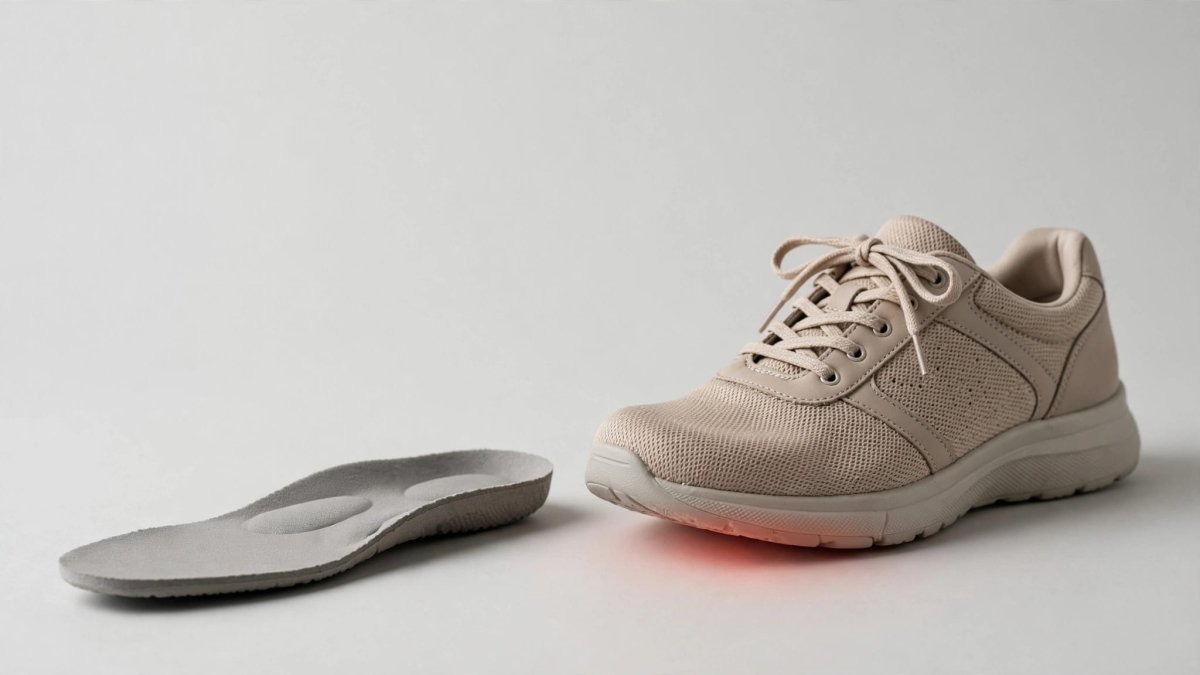
Burning feet in shoes can make an ordinary walk or workday uncomfortable. The sensation alone doesn't establish its cause, but noticing when and where it happens can help you describe the problem and compare footwear.
For shoe shoppers, the useful starting point is how a pair feels across the toes, over the top of the foot, and underfoot. Materials and adjustable features matter too.
Here's how to compare those details without assuming a new shoe will solve the problem.
What to notice when your feet burn in shoes
Pay attention to the pattern before you shop. A burning feeling might show up in one pair, in several pairs, or even after you take your shoes off. It may be concentrated under the ball of the foot, across the toes, or over a larger area.
Those details can help you describe what you're feeling to a healthcare professional. They're also useful when you visit a shoe store: knowing that a sensation is strongest under the forefoot gives you a clearer starting point than asking for a generally comfortable shoe.
Notice how long you've been wearing the shoes when the feeling appears. Also note whether it occurs during a particular activity, such as walking, standing, or sitting. If your feet feel different in the morning and evening, compare shoes at both times rather than relying on one brief impression.
A change of shoes isn't a diagnosis. Even if one pair feels better than another, persistent or recurring burning deserves medical attention.
Compare the shape and space inside a shoe
Two shoes with the same size label can feel different on your feet. The shape of the front, the height of the upper, and the space around the heel all affect your experience of a pair.
Look at the toe box
The toe box is the front part of a shoe that surrounds your toes. Some styles have a rounded outline, while others taper toward the front. Depth matters alongside width: a shoe can look broad when viewed from above but feel different over the tops of your toes.
When you try on a pair, stand and notice where your toes sit. Move them, walk, and pay attention to any contact with the front or sides. Compare that feeling with another shape rather than judging by appearance alone.
If the shoe feels different on each foot, take both impressions into account. Your more noticeable areas of discomfort can help guide which styles you compare next.
Notice the instep and heel
The instep is the top of your foot, between your ankle and toes. A shoe's tongue, upper, and closure all sit near this area, so they are worth paying attention to if you feel discomfort there.
At the back, notice how the heel feels when you walk and turn. A padded collar might feel appealing, but the shape beneath the padding matters too. Try both shoes and take a few laps around the store to assess the full fit.
Consider how the shoe adjusts
A closure can change how a shoe feels across the top of your foot. Laces, buckles, and hook-and-loop straps each give you a different way to adjust a pair.
Laces and straps
Lace-up shoes let you adjust the closure along the top of the foot. The Mephisto Match men's walking shoe, for example, has speed lacing, a padded tongue and collar, and Air-Bag shock absorption.
When comparing lace-up styles, try adjusting the laces before deciding how the upper feels. Pay attention to the tongue as well: its position and padding can change the sensation across your instep.
Buckles and slip-on styles
A buckle gives you another way to adjust part of a shoe. Our Birkenstock Boston soft-footbed clog has an adjustable strap and a contoured footbed.
Try a clog while standing and walking, not only while seated. Notice how the footbed feels beneath your foot and how the strap sits across the top. A style with an open back will feel different from a closed shoe, so your preference matters as much as its listed features.
Compare cushioning and footbed shape
Cushioning is one part of an underfoot feel. Its thickness, firmness, and placement can vary between shoes, as can the shape of the footbed. A plush first impression doesn't tell you how a pair will feel throughout the day.
The New Balance MW928 men's walking shoe includes ABZORB cushioning and is designed for walking. Compare it with a shoe that has a different footbed or sole to identify the feel you prefer.
Pay attention to where you feel contact under your heel, arch, and forefoot. A contoured footbed has a more defined shape than a relatively flat one. Some people prefer that contact; others prefer a different profile.
The activity matters, too. A shoe you're considering for a walking commute may feel different from one you wear while standing at work. Tell us how you plan to use the pair so we can help you compare relevant styles.
Look at the upper, lining, and intended use
The upper is the part of a shoe that covers the foot. It can be made from leather, mesh, suede, or a combination of materials. The lining sits inside and is another surface you'll feel during wear.
Airflow and weather protection
Mesh panels, perforations, and other construction details are worth considering when you prefer a more open-feeling shoe. Waterproof styles have a different purpose: they are designed to keep water out.
Our ECCO Turn GORE-TEX shoe has waterproof construction and a removable leather-covered inlay sole. The listing also describes its ECFS feature as increasing air circulation.
Consider where you'll wear the shoe most often. A waterproof option may be useful for wet commutes, while an open style may appeal for warm-weather errands. Neither feature establishes that a shoe will address a burning sensation.
The feel of the lining
Run your hand inside a shoe and notice the lining, seams, and edges. Then try it with the socks you expect to wear. A material that feels pleasant to your hand may feel different once your foot is inside.
If a spot catches your attention during the try-on, compare it with another pair. Make a note of the location so you can describe it clearly when asking for help.
Understand what a removable insole changes
Some shoes have a removable insole, also called an inlay or footbed. Taking it out lets you see the shoe's interior and compare it with an insert you already use.
An insert changes the surface beneath your foot and takes up space inside the shoe. Therefore, evaluate the shoe and insert together rather than treating them as separate purchases. If you use an orthotic or another prescribed device, bring it along when trying shoes.
Superfeet Carbon Grey insoles have an ultra-thin profile, according to the product listing. A lower-profile insert is one option to compare when you want a different underfoot surface, though the resulting fit will depend on the shoe and your foot.
Don't assume that an additional insert is appropriate for every pair. If the original insole comes out, compare the manufacturer's footbed with the insert rather than automatically stacking them. If an insert feels uncomfortable or you have questions about a prescribed device, ask the clinician who recommended it.
How to try on shoes when comfort is a concern
A useful try-on gives you more information than a size label or a product description. Bring the socks and any inserts you expect to wear, then give each pair enough attention to compare its features.
- Start with both feet. Put on the pair and notice where each foot contacts the shoe, including the front, sides, and top.
- Adjust the closure. Set the laces or straps as you would for normal wear, then notice how the shoe feels while standing.
- Walk and turn. Pay attention to the heel, the bend of the shoe, and the surface under your forefoot.
- Compare another style. Try a different toe shape, footbed, or upper so you can describe which details you prefer.
You don't have to reach a verdict after a few steps. If you shop in person, tell us where you feel discomfort and what activities the shoes are for. We can help you compare the construction and feel of different pairs.
For online shopping, use the product description to identify features you want to try, such as a removable insole or adjustable strap. Once the shoes arrive, try them with your usual socks and walk indoors while you assess them.
When to seek medical care
Contact a healthcare professional if burning continues, returns, or occurs even when you aren't wearing the shoes. Also seek advice if the sensation comes with numbness, weakness, a rash, a wound, or a change in your ability to walk.
Get urgent medical attention for a foot that suddenly becomes pale or blue, cold, or severely painful. Rapidly spreading redness, swelling, or fever also warrants prompt care.
A shoe fitting can help you compare footwear. It can't determine the cause of a symptom or replace a medical assessment. If you have an open wound or reduced sensation, ask a healthcare professional for guidance rather than relying on how a shoe feels alone.
Frequently asked questions
Can a shoe's size label tell me how it will feel?
A size label is a starting point, but it doesn't describe every part of a shoe's shape. Compare the toe box, instep, heel, and footbed while wearing the pair.
Should I choose more cushioning for burning feet?
Cushioning is a preference to assess, not a proven answer to the sensation. Compare different underfoot feels and seek medical advice if the burning persists.
Are removable insoles useful when shopping?
They can make it easier to compare the original footbed with an insert you already wear. Bring that insert when trying shoes and assess the complete combination.
Choose shoes by how they feel on your feet
Burning feet in shoes deserve attention, especially when the feeling persists or appears beyond one pair. A careful comparison can help you describe what you notice, even though it can't identify the cause.
Focus on the features you can assess: the shoe's shape, adjustable closure, materials, and underfoot feel. If the sensation continues, a medical assessment is the next step.


