

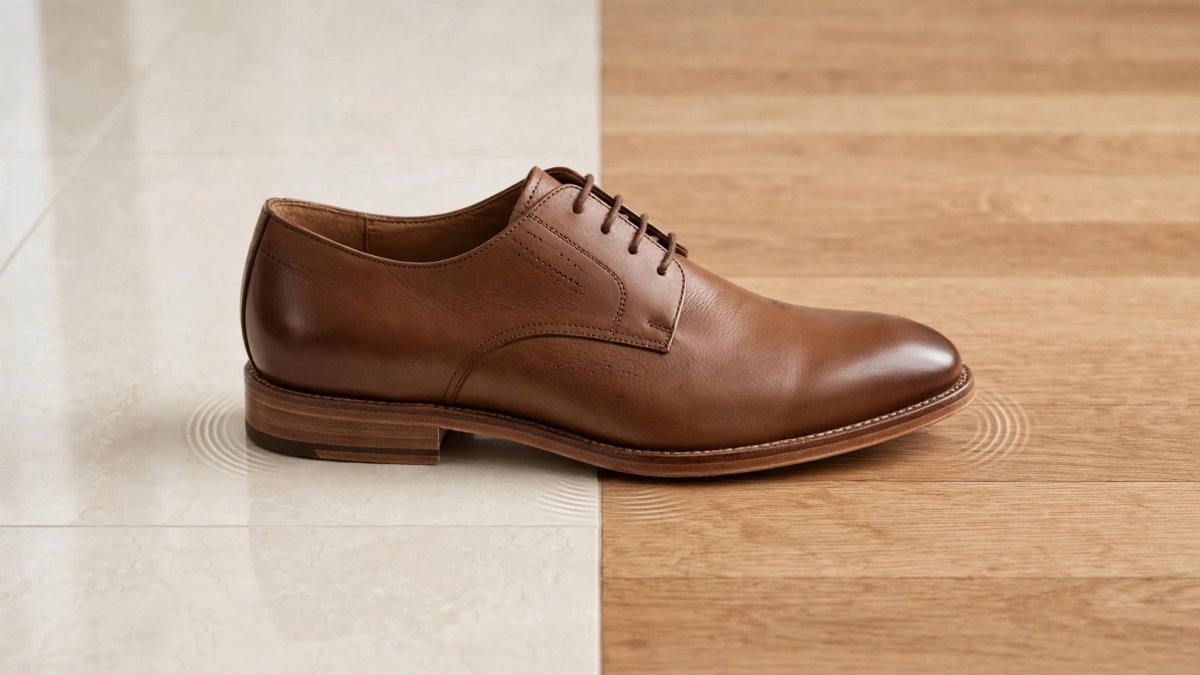
Shoes can squeak on one floor and stay quiet on another, or make noise wherever you walk. The sound alone doesn't identify its cause, so start by comparing the shoes on more than one surface.
If you're shopping for a new pair, the same approach can help you avoid an unwelcome surprise after you get home. A short walking test also gives you useful information about comfort and fit.
Key Takeaways
- Compare each shoe on two safe surfaces before deciding what needs attention.
- Note whether the sound occurs during walking or when you flex a shoe in your hands.
- Keep traction and comfort ahead of noise reduction. Avoid changing a sole with oil, abrasives, or other untested treatments.
- A cobbler can assess visible damage, while an exchange may be the simplest choice for a new pair that bothers you.
What a Squeak Can Tell You
A squeak is a clue to investigate, rather than a diagnosis. Its timing and location can help you describe the problem and choose a next step.
Notice where the sound occurs
Walk across a clean, dry floor at your usual pace. Then repeat on another safe surface. If the shoes are noisy in one place but quiet in the other, you have a useful detail to report, but that comparison alone doesn't identify a faulty part.
Also notice whether the sound comes with every step or only when you turn, lift your heel, or shift your weight. Keep your movements natural rather than sliding your feet to reproduce the noise.
Compare the left and right shoe
Walk slowly enough to hear whether one shoe is louder. You can also stand safely and shift your weight onto one foot at a time.
One noisy shoe doesn't necessarily mean the other fits better or has a different defect. It does give you a place to focus when looking for visible wear or describing the problem to a repair professional.
How to Test Shoes Squeaking at Home
Use a repeatable test before applying any product or changing the shoe. A few observations can save you from treating the wrong area.
Walk on two surfaces
Choose two stable, dry surfaces where you can walk without slipping. A carpeted room and a hard indoor floor offer a useful comparison. Walk several normal steps on each, wearing the socks you usually use with the shoes.
Pay attention to the whole step, including when your heel lands and when your foot lifts. If the sound is intermittent, repeat the same short walk rather than trying more forceful movements.
Inspect and flex each shoe
Take the shoes off and look at the outsole, heel, edges, and upper. Note any visible gap, loose section, crack, or object caught in the tread. Don't pull at a loose area or cut away material.
Next, gently bend each shoe in your hands within its normal range of movement. If you hear a similar noise away from the floor, include that detail when discussing the pair with a cobbler. The test doesn't establish which component needs attention.
Match Your Observation to a Next Step
These observations help you decide what to do without guessing at a diagnosis.
| What you notice | A practical next step |
|---|---|
| Noise occurs on one surface | Repeat the walk on a second safe surface and note the difference. |
| One shoe is louder | Inspect that shoe and describe the difference to a cobbler or retailer. |
| The shoe makes noise when flexed by hand | Mention that the sound also occurs away from the floor. |
| The sole or heel has a visible gap | Stop wearing the pair and seek a repair assessment. |
| A new pair is noisy and uncomfortable | Compare another size, shape, or pair rather than waiting through discomfort. |
The most useful result is a clear description of when and where you hear the sound. That gives a retailer or repair professional more to work with than the word "squeaky" alone.
Check Fit Without Blaming It for the Noise
A shoe can make noise and still feel comfortable. On the other hand, a noisy pair may also have a separate fit problem. Assess comfort on its own terms rather than assuming one observation explains the other.
Walk in the socks and inserts you use
Try both shoes with your usual socks and any inserts you plan to wear. Stand, walk, and pay attention to whether your toes have room and your heel feels secure. Your foot shouldn't slide toward the front with each step.
Our guide to testing shoe fit while standing and walking covers what to notice, including toe movement, pressure, and changes in your stride. If you're gripping with your toes to keep a shoe on, compare a different shape or size.
Treat discomfort as a separate concern
Pinching, burning, numbness, and increasing rubbing aren't problems to tolerate while waiting for a shoe to break in. Stop the try-on if those sensations appear.
Leather may become more supple with wear, but a shoe won't gain meaningful length at the toe. For persistent pain or recurring skin damage, seek advice from a podiatrist rather than relying on a different lacing pattern or a longer break-in period.
Care for the Shoes Without Compromising Grip
Good shoe care helps protect the materials, but a care product isn't automatically a remedy for noise. Keep the outsole's intended traction in mind before putting anything on the bottom of a shoe.
Clean and dry according to the material
Remove loose dirt gently and follow care directions suited to the shoe. Smooth leather, nubuck, and fabric don't all respond well to the same treatment.
If shoes are damp, let them air-dry at room temperature, away from a radiator or other direct heat. For a pair with removable insoles, you can take them out and allow the components to dry separately. Return them once both the shoes and insoles are dry.
Use protection products for their intended purpose
A water-repellent product can be useful for protecting suitable uppers. For example, Pedag Waterproof Repellant Spray is listed for materials including smooth leather, nubuck, suede, and textiles. Its directions call for spraying from 12 inches away, allowing the shoes to dry, and testing colorfastness on a hidden area first.
Use it in a well-ventilated space. It's a protection product, not a treatment to apply to the outsole in pursuit of quieter steps.
When to Repair, Exchange, or Replace a Pair
Your next move depends on the shoe's condition and how much the noise affects your day. Keep your observations focused on what you can see and hear.
Ask a cobbler about visible damage
A loose heel, a separating edge, or a cracked sole deserves attention before further wear. A cobbler can examine the area and discuss whether repair is practical for that shoe.
Bring both shoes and describe the surface, the timing of the sound, and whether one side is louder. If you heard the noise while flexing the shoe by hand, mention that too. Avoid applying glue yourself before an assessment, since it can make the area harder to inspect.
Consider an exchange for new shoes
If a new pair makes a sound you find distracting, an exchange may be more useful than experimenting with treatments. Keep the shoes in their existing condition while you consider that option.
When comparing a replacement, walk in both shoes on an available store surface. A quieter try-on is useful information, although it can't predict how the pair will sound on every floor. Choose a comfortable fit and suitable traction alongside the sound you hear.
How to Shop for Shoes With Everyday Surfaces in Mind
The floor you use most is a practical starting point. Shoes for a day on indoor tile may need to meet different demands than a pair you mainly wear outside.
Compare the complete shoe
Look beyond the outsole name or a soft first impression. Walk in the pair and assess heel hold, toe space, cushioning, and how securely you move. The upper and closure should hold your foot without painful pressure.
If you need footwear for a workplace, consider the conditions of that job as well as comfort. A shoe that feels pleasant on a dry shop floor may not meet a workplace's requirements for wet or oily areas.
Give both feet a fair test
Try the left and right shoes, since your feet may feel different in the same size. Wear the socks and inserts you'll use most often, then take several normal steps rather than judging the pair while seated.
You can visit us at Tip Top Shoes on West 72nd Street in New York to compare fit in person. Bring your usual inserts if you wear them, and mention any sound or pressure you notice during the try-on.
Frequently Asked Questions
Does a squeak mean my shoes are defective?
Not necessarily. A sound alone doesn't identify a defect. Look for visible damage and note when you hear the noise. A cobbler can assess a pair with a loose or damaged component.
Should I put powder or oil on the soles?
Avoid applying powder, oil, or other untested substances to the outsole. Changes to the sole surface can affect your footing, and a quieter shoe isn't worth a loss of traction.
Should I keep wearing new shoes until they get quieter?
Choose shoes that feel comfortable now. Short periods of wear can help you get familiar with a new pair, but stop if you experience pain, numbness, or worsening rubbing. For a distracting noise, consider an exchange while the shoes remain in their existing condition.
Can a quiet try-on guarantee quiet shoes?
No. A store test tells you what you hear on that surface during that walk. It can't establish how the same pair will sound in every setting, so use the test alongside your assessment of fit and intended use.
Choose a Safe Next Step
When shoes squeak, start with observation. Compare both feet, note the surface and timing, and look for visible damage before treating the shoe.
If the pair is new and the sound bothers you, compare another pair. If you see damage, seek a repair assessment. In either case, keep comfort and secure footing at the center of your decision.


