

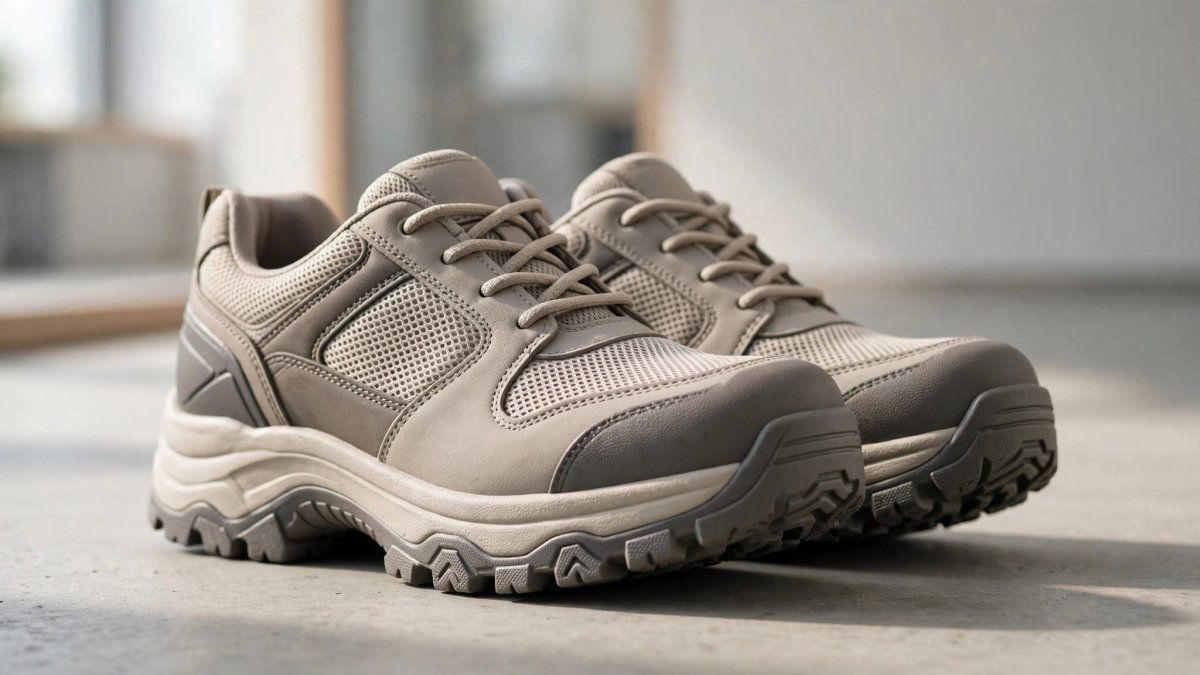
The best shoes for standing on concrete fit securely, cushion your feet, and suit the demands of your workplace. Comfort over a long shift depends on how those features work together, rather than on the softest sole alone.
A shoe that feels pleasant for a few minutes may pinch after your feet swell or feel unstable when you turn. Start with fit, then compare cushioning, support, and traction for the work you do.
Key Takeaways
- Leave room for your toes while keeping the midfoot and heel secure.
- Choose cushioning that feels comfortable and stable when you stand and walk.
- Match the outsole and any protective features to your workplace.
- Try shoes with your usual work socks and any insoles you plan to wear.
- Replace a pair when its fit, cushioning, or tread no longer supports your workday.
Start With Fit: Length, Width, and Heel Hold
Fit is the foundation of a comfortable work shoe. Concrete leaves little room for a shoe that rubs, squeezes, or lets your foot move around with every step. Try both shoes because your feet may differ in size.
Give Your Toes Space
Stand up when assessing length and width. Your toes should be able to move naturally, and the front of the shoe shouldn't press against them. The widest part of your foot should sit comfortably in the widest part of the shoe.
Pay attention to height as well as width. A low toe box can press on the tops of your toes even when the shoe is long enough. Seams and stiff overlays can also create pressure points that become distracting during a shift.
If you need more forefoot room, look for a style built with a wider shape rather than relying on the upper to stretch. The Hartjes Phil walking shoe, for example, is designed to accommodate medium to wide feet and a range of instep heights.
Keep the Midfoot and Heel Secure
Your midfoot should feel held without tight laces or pressure across the top of your foot. If you have to pull the laces hard to stop your foot sliding forward, try a different shape or width.
In a lace-up shoe, look for a secure heel without rubbing at the collar. Clogs can fit differently, so assess them while walking as well as standing. A little heel movement may be part of the design, but the shoe shouldn't feel as though it will come off.
Balance Cushioning With Support
Cushioning can make a hard floor feel more comfortable, but a thick sole isn't automatically the right choice. Your foot also needs a steady base, particularly if you turn, carry items, or move between workstations.
Choose Cushioning You Can Stand On
The midsole sits between the footbed and the outsole and contributes much of the shoe's cushioning. Compare how it feels under both your heel and the ball of your foot. A shoe that feels soft at the heel may still feel firm where you put pressure at the front.
Stand still for a few minutes, then walk at your normal pace. If the sole feels so soft that your foot shifts or you have to work to stay balanced, try a firmer option. On the other hand, a hard, thin sole may leave the floor feeling unforgiving.
Find an Arch Shape That Feels Natural
Arch support should make contact comfortably rather than press sharply into your foot. A pronounced contour isn't better for everyone, and an arch that sits in the wrong place can make a good-looking shoe unpleasant to wear.
Look at the whole footbed, including the heel cup and forefoot. Some people prefer a shaped surface; others feel better with a flatter one. If you already wear prescribed orthotics, bring them when you shop so you can assess the shoe and insert together.
Compare Shoe Styles for Your Workday
The right style depends partly on how much you move and what your workplace allows. A walking shoe offers different adjustments than a clog, while a work boot may be necessary where protective footwear is required.
Lace-Up Walking Shoes and Sneakers
Lace-up shoes let you adjust the fit across the top of your foot. That can be helpful if your feet swell during a long day or if you need a secure fit while walking between stations.
Look for a stable heel, enough forefoot room, and a sole that bends comfortably as you walk. Mesh panels can offer more ventilation, while leather uppers can be easier to wipe clean. Neither material replaces the need for a good fit or appropriate workplace protection.
Clogs and Other Work Shoes
Clogs can appeal to people who prefer a structured footbed and an easy-on design. Their fit varies, though, and a firm, shaped sole takes some getting used to if you normally wear flexible sneakers.
Our Dansko Professional leather clog has a contoured midsole, a roomy toe box, and a rocker-shaped bottom. The curved sole encourages a rolling motion as you walk. Try that movement for yourself, because some people prefer it while others feel steadier in a flatter shoe.
Closed-back work shoes and boots can also be useful when your job calls for more coverage or a secure fastening. Choose them for the protection and fit your work requires, not for appearance alone.
Match the Outsole to Your Workplace
Concrete can be dry, dusty, wet, or exposed to spills. A sole that feels secure on a clean shop floor may behave differently on a greasy kitchen floor. Your footwear needs to suit the actual conditions you encounter.
For workplaces with liquids, look for a shoe described as slip-resistant and pay attention to the conditions covered by its rating. Slip-resistant doesn't mean slip-proof, and no tread can guarantee grip on every surface.
The Birkenstock Professional work clog has a polyurethane construction and an outsole described as oil- and grease-resistant. Its product description also lists an SRB slip-resistance category. That is useful information for comparing work shoes, but the shoe still needs to fit your foot and meet your workplace's rules.
Cleaning needs matter, too. A wipe-clean upper may be practical around spills, while a more breathable upper may feel better in a dry setting. If your employer requires a protective toe or another safety feature, choose footwear that meets that requirement. A comfortable walking shoe or clog doesn't automatically provide that protection.
Try Shoes Under Work-Like Conditions
A useful fitting gives you more information than a few steps on carpet. Set aside enough time to compare both shoes while standing and moving.
- Bring the socks you normally wear at work. Their thickness changes the space inside the shoe.
- Add any prescribed orthotics or usual insoles before judging the fit. Remove the original footbed if the shoe and insert are designed for that arrangement.
- Stand with your weight evenly distributed. Notice pressure at your toes, instep, arch, and heel.
- Walk, turn, and stop at your usual pace. Your foot should feel secure without being squeezed.
- Compare another size, width, or style if you notice rubbing or have to tighten the shoe excessively.
If possible, try shoes later in the day, when your feet may be closer to their workday size. A pair should feel comfortable at the fitting rather than require you to tolerate painful pressure while waiting for it to break in.
Our store at 155 West 72nd Street in New York City gives you a place to compare shoes in person. Bring your work socks and inserts to make the fitting more useful.
Decide Whether You Need Removable Insoles
A removable footbed gives you options. You can replace a worn insert or make room for a separate insole that feels better under your foot. However, adding an insert also takes up space, so the shoe must still fit comfortably around your toes and instep.
If an insole makes your heel sit too high or pushes your toes against the upper, the combination isn't a good fit. Avoid stacking an insert on top of the existing footbed when it crowds your foot.
More arch contour or a thicker pad doesn't guarantee greater comfort. Choose an insole that supports your foot without sharp pressure, and stop using it if it causes new or worsening discomfort. A podiatrist can help if you have persistent pain or need guidance about prescribed support.
Know When Your Work Shoes Need Replacing
Shoes can look presentable on top while the sole or footbed has worn down. Inspect the tread for smooth patches, especially if grip is important at work. Also notice whether the cushioning feels flattened or the shoe leans to one side when placed on a level surface.
There isn't one replacement schedule that fits every worker. Hours worn, walking distance, body weight, and floor conditions all affect wear. A pair used for long shifts may need attention sooner than the same pair worn occasionally.
If the upper is sound but the removable footbed has lost its shape, a replacement footbed may help. When the outsole is worn smooth or the shoe no longer feels stable, replacing the whole pair is the better option.
Frequently Asked Questions
Are Soft Shoes Best for Standing on Concrete?
Softness can feel pleasant, but it should come with a stable fit. If a cushioned shoe lets your foot roll or shift uncomfortably, compare a firmer sole. The best choice is one you can stand and walk in comfortably.
Are Running Shoes Good for Standing All Day?
Some running shoes can work well because they offer cushioning and adjustable laces. However, designs vary in width, sole shape, and stability. A running shoe also may not meet a workplace's slip-resistance or protective-toe requirements.
How Much Arch Support Do I Need?
Choose the amount that feels comfortable under your foot. The support shouldn't feel like a hard lump or cause pressure. If foot pain persists, a podiatrist can assess your needs rather than relying on a shoe label alone.
Should I Size Up for a Long Shift?
Size up only if the larger size fits your foot better. Extra length can let your foot slide, while a wider size or a different shoe shape may provide room without sacrificing heel hold.
Choose Comfort That Lasts Through Your Shift
Shoes for a concrete floor need more than a soft first impression. Fit and stability give cushioning a chance to work without adding pressure or unwanted movement.
Start with the conditions you face at work, then try on shoes with your usual socks and inserts. A pair that feels secure while you stand, turn, and walk is a stronger choice for your day.


