

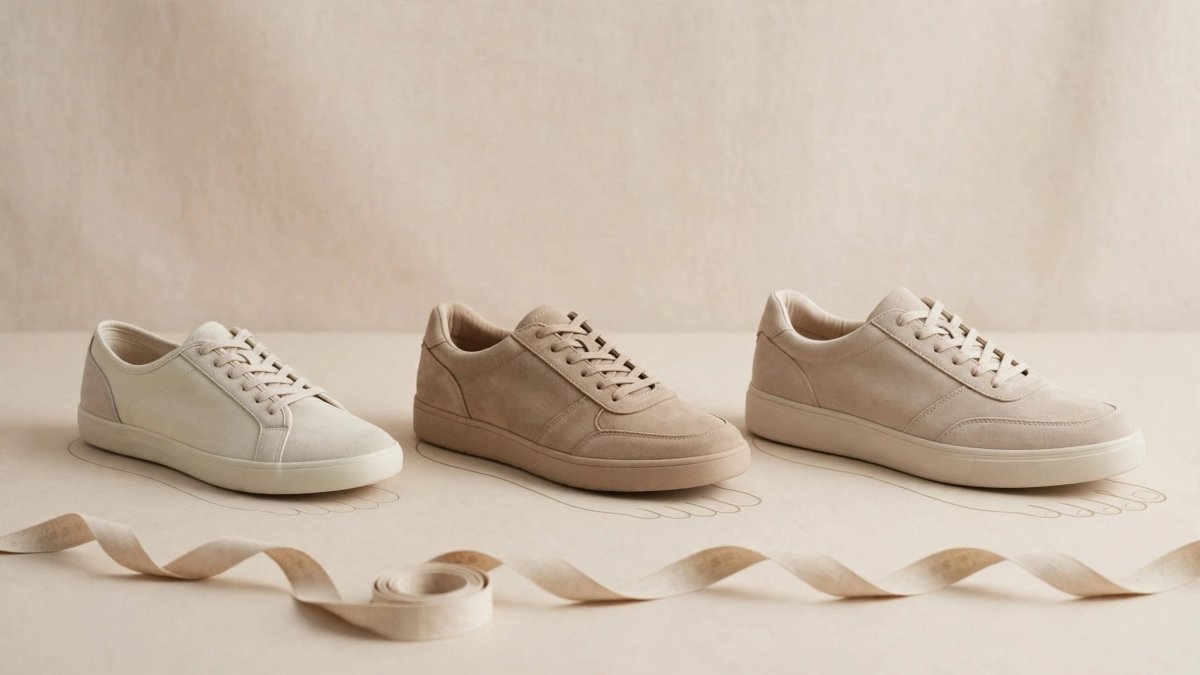
Shoe sizes vary between brands because the number on the box tells you only part of the fit story. Width, space over your instep, and how a shoe holds your foot also affect how that size feels.
You can manage shoe size differences by combining your measurements with information about the exact model. Treat your usual size as a starting point, then compare the details that matter for your feet.
Key Takeaways
- Your usual size helps narrow the options, but it doesn't guarantee the same fit in every shoe.
- Length, width, and room inside the shoe deserve separate attention when you compare models.
- Product details and customer reviews help you identify useful differences, while a try-on shows how those differences feel on your feet.
Why Shoe Size Differences Need a Model-by-Model Approach
Two shoes can display the same size and still feel different. That doesn't automatically mean either label is wrong. It means the printed size doesn't describe everything you experience when wearing the shoe.
The useful comparison is between specific models, rather than entire brands.
Length doesn't describe the whole fit
A shoe can offer enough length while feeling restrictive across the forefoot or over the instep, the upper part of your foot. Meanwhile, another model can feel roomy in those areas without offering the length you need.
Separating those observations makes your next choice more precise. Instead of describing a shoe only as "too small," identify where it feels restrictive.
That distinction matters when deciding whether to try another size, another width, or a different style.
Width deserves its own attention
Our shoe selection includes width descriptions such as narrow, medium, wide, and extra wide. Those options give you another way to compare shoes beyond the size number.
However, a width description still doesn't capture your entire experience. A shopper with a relatively narrow heel can have different priorities than someone seeking more room across the front.
Keep notes about both areas. "Enough forefoot room, loose around the heel" is more useful than a size number alone when choosing your next pair.
Start With Measurements You Can Use
Your measurements give you a consistent reference when browsing unfamiliar shoes. Record both feet separately so you don't lose a difference between them.
For a simple at-home measurement, use paper, a pencil, and a ruler on a firm, level surface.
- Stand on the paper with your weight supported naturally, and have someone mark your heel and longest toe.
- Measure the distance between those marks, keeping the ruler straight.
- Record the width across the broadest part of your forefoot.
- Repeat for the other foot, and label each measurement clearly.
Keep the original measurements in centimeters or inches rather than reducing everything to one remembered shoe size. Foot length and a size label describe different things, so record them separately. If the two measurements differ, sizing for the larger foot keeps the bigger side from pressing at the toe, while the smaller shoe still needs to hold securely.
Also note which shoes you currently wear comfortably, including their model, labeled size, and width. A useful record combines measurements with actual fit observations.
Avoid measuring the outside of an old shoe as a substitute. Its exterior doesn't tell you how much usable room your foot has inside.
For help comparing measurements with shoes, visit our store at 155 West 72nd Street in New York City. Bring the socks and any orthotics you plan to wear.
Read Product Details That Affect Your Choice
A product name can reveal more than its appearance. Details such as an open back, adjustable straps, or a specified footbed help you decide what to pay attention to during a try-on.
Use those details to compare the shoe with your needs, rather than assuming every style from one brand will feel alike.
Sandals make positioning easier to observe
Our Birkenstock Arizona Birko-Flor sandals are a two-strap style. When comparing sandals, look at where your foot rests on the footbed and how the straps sit across it.
Strap adjustment and size selection address different parts of that experience. Consider them separately instead of treating an adjustment as proof that the overall size works.
One customer on this Arizona listing reported discomfort around the instep and stopped wearing the sandals after about two hours. That's an individual experience, not a sizing verdict for everyone who wears Arizona sandals.
Clogs call for a different comparison
Our Birkenstock Boston Soft Footbed clogs have a closed front and an open back. Those features give you different contact points to assess than an open-toe sandal.
Pay attention to the enclosed front and the space over your foot, alongside the labeled size. Also note the Soft Footbed designation when comparing this listing with another Boston version.
The shared brand name doesn't replace those model details. Record the exact version you choose so a future purchase starts with a useful reference.
Read Fit Reviews Without Turning Them Into Rules
Customer reviews help most when they describe the fit, rather than simply awarding stars. Comments about forefoot room, instep pressure, or heel movement give you something concrete to compare.
However, every review describes one person's experience with one pair.
Separate length comments from width comments
Our product reviews include separate fit and width ratings. Read both because a shopper can report a familiar size while describing a narrower or roomier feel.
One listing includes a review describing the shoe as small and narrow, while another reviewer selected true to size and true to width. Those reports can coexist because the buyers experienced the shoe differently.
Look for descriptions that match your own fitting concerns. A comment about forefoot pressure is more relevant to that concern than a general statement about comfort.
Give detailed patterns more weight
Several similar comments offer more direction than one unexplained recommendation to size up. Even then, apply that information to the model under discussion.
Also separate sizing feedback from other complaints. A review about squeaking, delivery, or appearance doesn't establish whether you need another size.
"True to size" describes a reviewer's comparison with their usual size. It doesn't provide a measurement of the shoe.
Use reviews to identify what deserves attention during your try-on, rather than turning one customer's purchase into a brand-wide rule.
Compare Shoes With the Setup You'll Wear
A useful try-on includes the socks and any orthotics you intend to use. Otherwise, you're comparing a different setup from the one you'll wear day to day.
Try both shoes and spend time standing and walking indoors. Focus on what you feel during movement, not only the impression you get while seated.
Describe each observation precisely. Note whether pressure appears across the front, over the instep, or at a particular edge. Separately, record any movement around the heel or sliding within the shoe.
If you're comparing two sizes, repeat the same short walk in each. That gives you a clearer comparison than trying one pair while seated and another while standing.
Don't let a familiar number outweigh a better-fitting alternative. Equally, don't assume the larger option solves every concern.
For online purchases, keep the shoes clean while assessing them indoors. Retain the packaging while making your decision, and avoid outdoor wear during the comparison.
Persistent pain, numbness, or a recurring pressure injury deserves advice from a qualified healthcare professional.
Where Insoles Fit Into the Decision
An insole adds another component inside the shoe, so include it when comparing fit. The original shoe and the shoe with an insert are different setups.
Our Pedag Viva full-length insoles include a semi-rigid longitudinal arch support and a heel pad. Those features make the insole part of the comfort and support discussion.
However, an insole's labeled size doesn't establish which shoe size you should buy. Treat the insert and the footwear as separate products that need to work together.
If you already wear an insert, bring that exact one to your try-on. Pay attention to how the combined setup feels around the heel, instep, and forefoot.
Keep support and sizing as separate questions. Choose an insole for an identified need rather than assuming it will resolve every fit concern in a shoe you otherwise wouldn't choose.
Frequently Asked Questions About Shoe Sizing
Should I order my usual size in an unfamiliar brand?
Use it to begin your comparison, alongside your measurements and the exact model's sizing information. A comfortable pair you already own is helpful context, but it doesn't establish the fit of every shoe carrying the same number.
Record the width and model name of that comfortable pair, too.
Should I automatically choose the larger size between two options?
Automatic rounding removes useful information from the decision. Compare where each option feels different, including length, forefoot room, and space over the instep.
If both options have the same uncomfortable contact point, another model or width deserves consideration. A larger number alone doesn't explain whether the fit suits you.
Does an expensive shoe have more dependable sizing?
Price alone doesn't tell you how a shoe will fit your foot. Product details, measurements, and the experience of wearing that model are more useful for choosing a size.
Our customer reviews sometimes praise quality and comfort while still reporting different fit experiences. Keep those judgments separate when comparing products, and avoid treating a positive overall review as a size recommendation.
Choose the Shoe That Fits Your Feet
Shoe size differences become easier to handle when you keep useful records and compare specific models. The strongest reference combines measurements and fit observations, rather than relying on one familiar number.
Start with your usual size, then assess the exact shoe with your everyday socks and inserts. Choose the pair that works for your feet, even when its label differs from the shoes already in your closet.


