

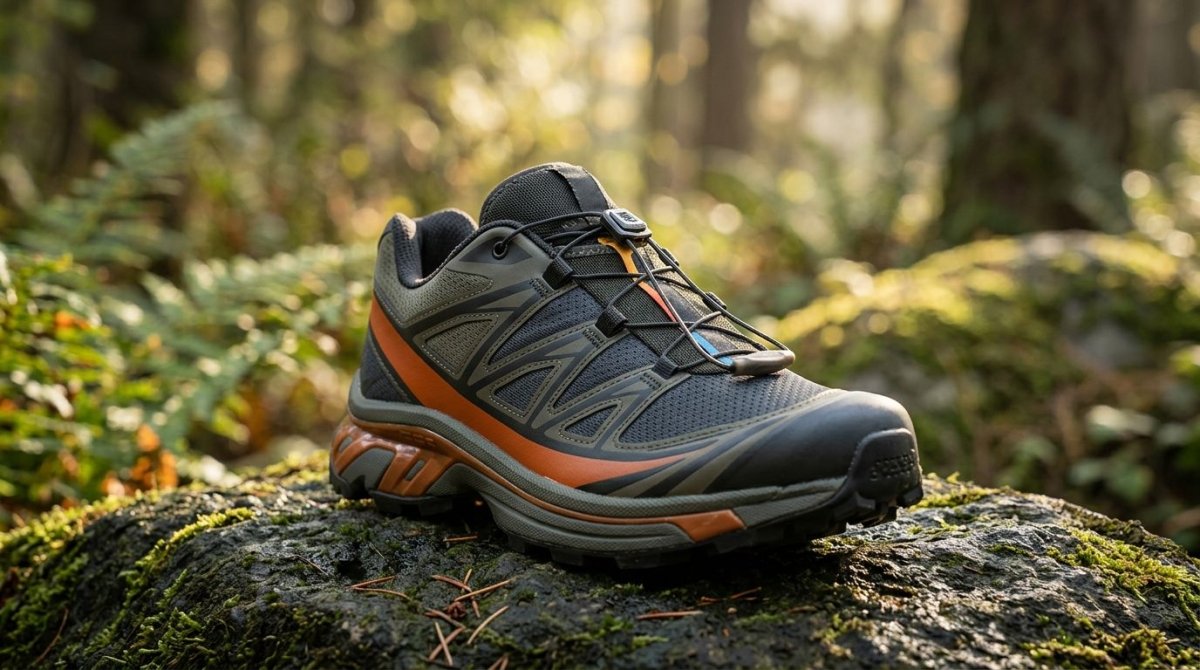
To adjust Salomon Quicklace, loosen the cord, seat your heel, then take up slack before sliding the lock toward the tongue. The right tension holds your midfoot securely while leaving your toes room to move.
Pulling harder won't fix every fit problem. A secure trail shoe needs balanced tension, suitable sizing, and enough space for your socks and insoles.
Start with the system fully released so you can feel where the shoe needs adjustment.
Key Takeaways
- Tighten Quicklace gradually, distributing tension across the shoe rather than pulling only at the top.
- Aim for a secure heel and midfoot without squeezing your forefoot or pressing painfully across your instep.
- Tuck the loose cord into the tongue's lace pocket before moving, then reassess the fit after warming up.
How Salomon Quicklace Holds Your Foot
Quicklace uses a thin, low-stretch cord and a sliding lock instead of conventional laces tied in a bow. Pulling the cord takes up slack; positioning the lock keeps the chosen tension in place.
Because the cord runs through several guides, tension can feel uneven when slack remains near the toes. Working that slack upward helps the upper close more evenly around your foot.
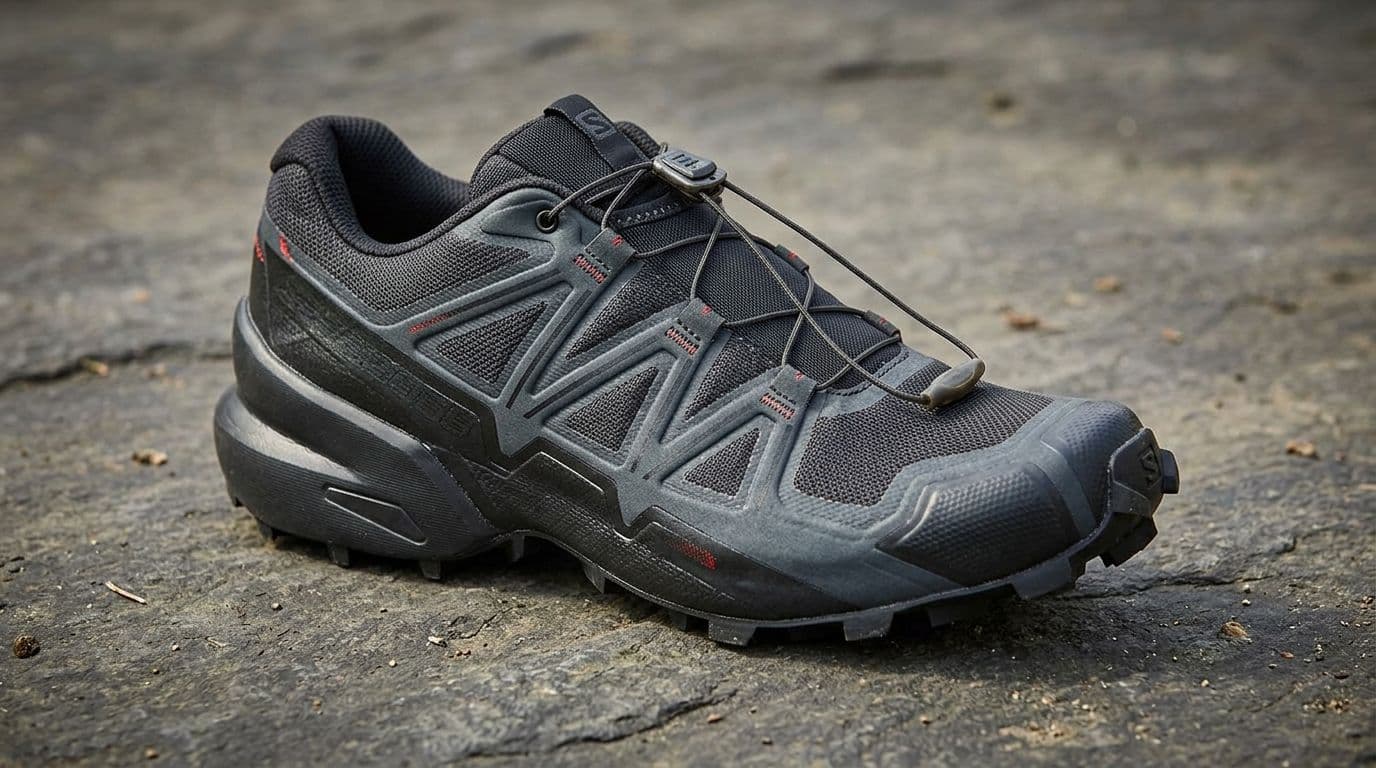
The closure works alongside the shoe's shape and upper construction. On the Speedcross 6, Salomon's SensiFit construction helps hold the foot within the shoe.
For example, our women's Salomon Speedcross 6 has a snug, supportive fit and regular width. Quicklace adjusts how closely that upper wraps your foot, but it can't create extra width or shorten an oversized shoe.
Adjust Quicklace in Five Steps
Use the socks and insoles you'll wear on the trail. Otherwise, your first adjustment may feel different once you change them.
- Release the tension completely. Operate the cord lock's release and slide the lock away from the tongue. Gently open the upper until your foot enters without forcing it against tight cords.
- Settle your heel at the back. Place your foot inside, then lightly tap your heel against the floor while seated. Smooth the tongue so no fold sits beneath the lacing.
- Distribute slack through the guides. Starting near the toes, gently work loose cord upward toward the instep. Keep the forefoot comfortable rather than cinching every crossing as tightly as possible.
- Set the lock gradually. Pull the lace loop to take up remaining slack, then slide the lock toward the tongue. Stop when your midfoot feels held without pressure across the top of your foot.
- Stow the loose cord. Tuck the loop and loose lace into the tongue's lace pocket. Keep everything contained so it can't catch on vegetation or the opposite shoe.
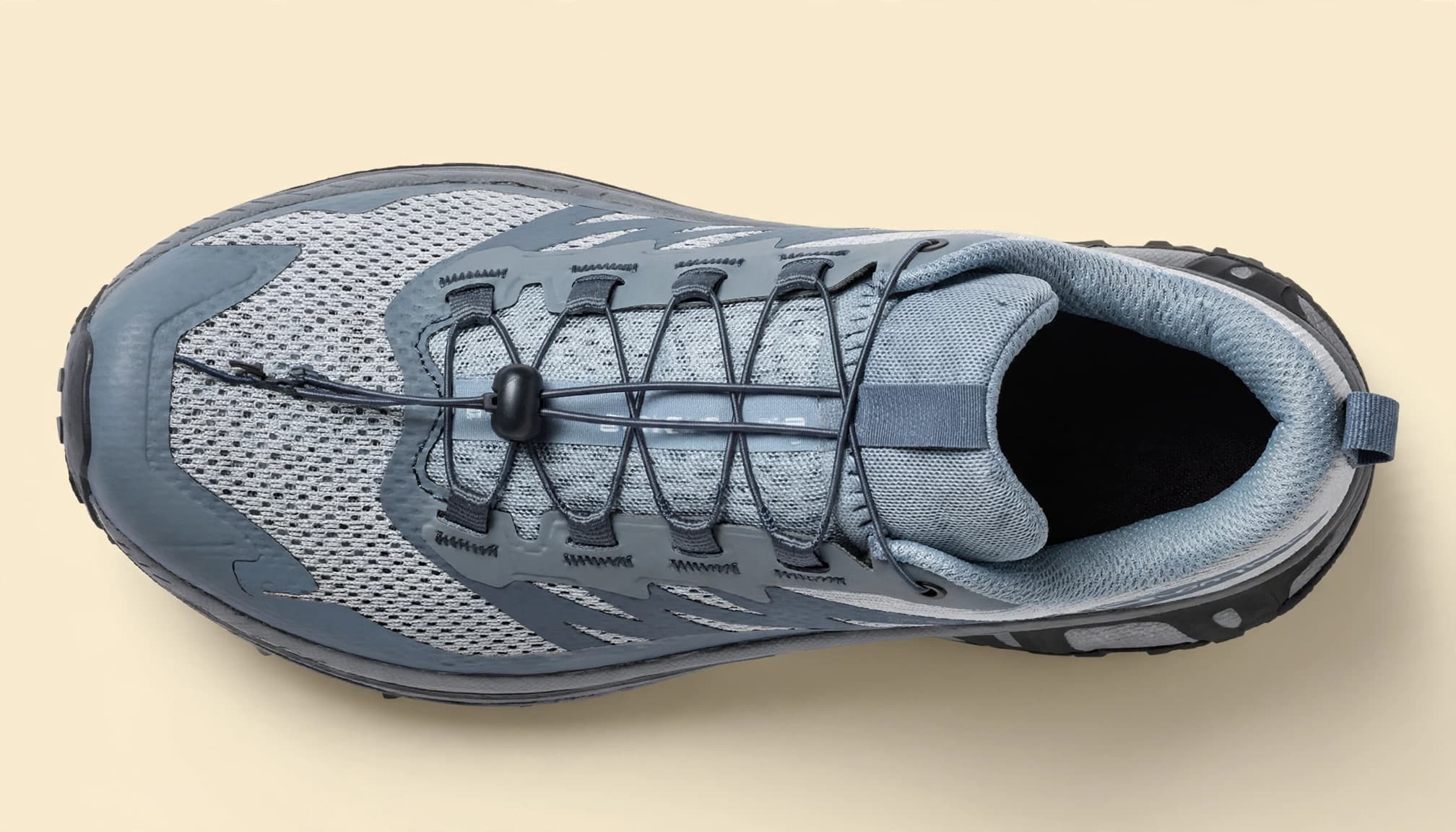
Next, walk around and flex your feet. If pressure concentrates beneath one crossing, release the system and redistribute tension rather than tightening again.
Adjust each shoe separately. Your feet don't need identical lace tension, even when both shoes are the same size.
Judge the Fit Before Heading Onto Trails
Keep Your Heel Stable Without Crushing the Instep
Your heel should feel settled when you walk uphill or rise onto your toes. Repeated lifting and rubbing suggest that the fit needs attention.
First, reseat your heel and remove remaining slack. Then increase tension slightly across the midfoot.
If heel movement continues while the instep already feels compressed, tighter lacing isn't the answer. The shoe may have too much internal volume or an unsuitable heel shape for your foot.
A small amount of movement differs from repeated slipping. Judge the fit while walking, rather than expecting the shoe to immobilize your foot.
Leave Space for Your Toes on Descents
Your toes need room when your foot shifts forward downhill. As a starting point, allow roughly a thumbnail's width ahead of your longest toe while standing.
Next, use a gentle indoor slope or carefully step down a stair while holding a rail. Your toes shouldn't strike the front.
Also notice side pressure. A forefoot that feels pinched before exercise won't gain usable width through a different Quicklace setting. Try a better-fitting size or shape instead.
Fix Pressure, Slipping, and Uneven Tension
Relieve Pressure Across the Top of Your Foot
Pain beneath the cord often comes from excessive tension, a folded tongue, or insufficient space above the foot. Release the lock first, then flatten the tongue and reset the closure more gently.
If one crossing feels tighter than its neighbors, move slack through the guides before securing the lock. Pulling only on the exposed loop can leave an already-tight section under pressure.
Numbness, tingling, or burning means you should stop and loosen the shoe. If symptoms continue after removing it, seek medical advice.
A closure that stops heel slip only by causing instep pain points to a fit mismatch, not a need for more tension.
Respond to Movement Without Overtightening
If your foot slides forward, start by checking whether your heel was seated before tightening. Also consider whether slippery socks or an oversized shoe contribute to the movement.
When the whole shoe feels loose, take up a little more slack and test again. However, if only the forefoot needs extra space, release the system and redistribute tension before resetting it.
Quicklace offers less independent adjustment between lacing zones than conventional laces. If you regularly need a tightly held heel and an unusually loose forefoot, a different shoe shape may suit you better.
Account for Socks, Insoles, and Foot Swelling
Match the Fit to Your Trail Socks
Thicker socks occupy more space, so they can increase pressure beneath the lacing. Meanwhile, a thinner pair may leave the same shoe feeling less secure.
Fit your shoes with the socks you plan to use most often. Smooth out wrinkles before tightening because a fabric fold can feel like a lacing problem.
Feet can also swell during activity. Reassess the closure after warming up, especially before a long descent. Make small changes and stow the cord again afterward.
Reassess Tension After Changing Insoles
An aftermarket insole changes how your foot sits inside the shoe. A thicker insert can raise your instep toward the cord and reduce available toe space.
For example, Superfeet Blue Trim to Fit combines a structured heel cup with full-length foam cushioning. Pedag Viva Sport uses a semi-rigid footbed with longitudinal and metatarsal support.
Those features affect underfoot feel, but they don't guarantee a compatible fit in every trail shoe. When replacing a removable footbed, avoid stacking a full-length replacement over it unless the insert's instructions call for that arrangement.
Choose a Quicklace Shoe for Your Terrain
Fit comes first, but outsole design and weather protection also matter. The Speedcross 6 is aimed at muddy trails, with pronounced lugs that help it grip soft ground.
Our men's Speedcross 6 GORE-TEX in Black/Fiery Red is $169.95. It combines a waterproof, breathable GORE-TEX membrane with 5 mm lugs and a 10 mm heel-to-toe drop.
For women, our Speedcross 6 GORE-TEX in Bog/Dawn Pink is $129.99. It also has 5 mm lugs, a 10 mm drop, and regular width.
The women's non-waterproof Black/Phantom version is $144.95. It offers another option when you don't need a waterproof membrane.
Choose waterproofing for the conditions you expect, rather than as a solution to fit problems. A membrane doesn't prevent water entering over the collar, and it doesn't change the need for comfortable toe clearance.
Finally, don't choose an aggressive trail outsole solely because you like the closure. Deep lugs suit soft terrain better than everyday pavement. Consider your usual surfaces alongside the fit.
Keep the Cord and Lock Working Properly
After muddy outings, remove grit from the cord guides and around the lock with water and a soft brush. Let the shoes dry naturally, away from direct heat.
Before your next outing, look for frayed cord, damaged guides, or a lock that no longer holds tension. Dirt can interfere with adjustment, but visible damage needs more than cleaning.
Salomon offers Quicklace replacement kits for worn systems. A replacement kit addresses a damaged cord or lock; it won't correct a shoe that fits poorly.
Also release the closure before taking your shoes off. Forcing your foot out of a tightened shoe puts unnecessary strain on the upper and heel lining.
Frequently Asked Questions
Should Quicklace Feel Tight?
It should feel snug across the midfoot, with no painful pressure or numbness. You should still be able to move your toes. If you need extreme tension to stop slipping, reassess the shoe's size and shape.
Can You Loosen Quicklace Without Removing the Shoe?
Yes. Take the lace out of its pocket, operate the lock's release, and allow a small amount of cord back through. Walk a few steps to assess the change, then tuck the loose cord away again.
Can You Use Quicklace Shoes for Walking?
Yes, provided the shoe fits comfortably and its sole suits your walking surfaces. The closure works the same way at walking pace. However, a mud-focused shoe such as the Speedcross 6 may be less suitable for long pavement walks than a walking-oriented model.
A Secure Fit Starts With Balanced Tension
Salomon Quicklace works best when you seat your heel, distribute slack, and tighten in small increments. Comfortable hold should come without crowded toes or pressure across your instep.
Use your intended socks and insoles when assessing the fit. If more tension causes pain without stopping movement, choose a better-fitting shoe rather than pulling harder.


