

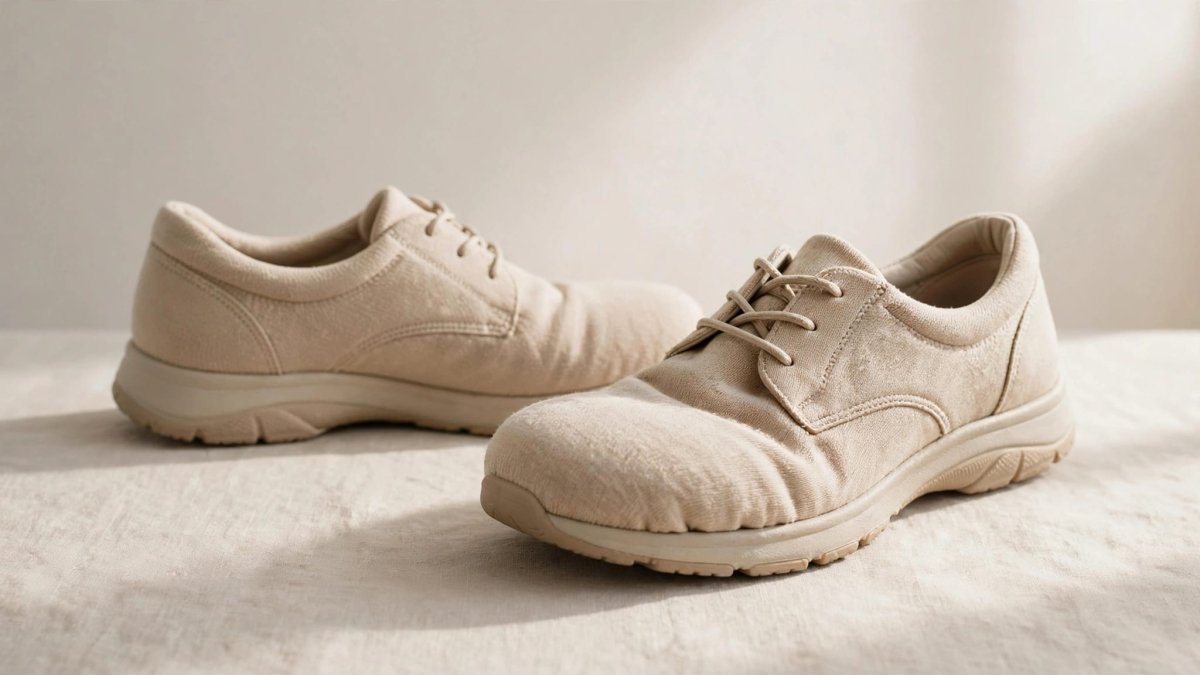
Choose shoes for bunions with a broad toe box, a soft upper, and enough depth to avoid squeezing the joint. The right fit gives your forefoot room while keeping your heel secure.
Buying a longer shoe rarely solves pressure at the side of your foot, because length and width are different measurements. Focus on space around the joint, then use a walking test to judge how the shoe fits in motion.
Key Takeaways
- Look for a toe box that follows your forefoot's shape without pushing the big toe toward the other toes.
- Choose soft uppers and avoid seams, straps, or stiff overlays directly across the bunion.
- Fit both feet while standing, using the socks and insoles you'll wear.
- Treat width labels and cushioning features as starting points, not guarantees of a pressure-free fit.
Start With Toe-Box Shape, Width, and Depth
A bunion is a bony prominence at the base of the big toe, often accompanied by the toe angling inward. Shoes need to accommodate that changed shape without pressing against the prominent joint.
Match the shoe to your forefoot
A broad, rounded, or foot-shaped toe box gives your toes more room than a sharply tapered front. However, a rounded appearance alone doesn't guarantee enough width across the ball of your foot.
While standing, your big toe should rest without being pushed sideways. The shoe shouldn't pinch the little-toe side either. If you loosen the laces completely and still feel pressure across the forefoot, try a different width or shape.
A secure heel matters, too. An excessively loose shoe lets your foot slide forward and rub against the upper.
Allow room above the joint
Depth is the vertical space inside the shoe. A wide shoe can still feel tight if its upper sits low over the bunion or toes.
Look for enough height to move your toes without rubbing against the top. This matters if you also have hammertoes or wear an orthotic.
Your forefoot should sit within the sole's supporting area. If it spills over the edge, a stretchy upper alone won't provide the fit you need.
Choose Uppers That Don't Press on the Bunion
Material matters most where it contacts your foot. A soft upper elsewhere won't help if a rigid seam sits directly over the tender joint.
Favor flexibility at the pressure point
Soft leather, supple nubuck, and flexible knit can accommodate an uneven forefoot shape. Still, feel inside the shoe for stitching, lining edges, and hidden reinforcement.
Some knit shoes have firm overlays around the toe box. Likewise, leather shoes can have stiff toe caps that limit flexibility.
Light contact isn't automatically a problem. Persistent squeezing, burning, or a distinct pressure point is. Choose an upper that feels comfortable immediately rather than relying on weeks of wear to create space.
Position straps and closures carefully
Laces and adjustable straps let you fine-tune the fit as your feet swell during the day. However, their placement matters as much as their adjustability.
For sandals, avoid a strap edge that crosses the bunion. Your foot should also remain inside the footbed without the joint rubbing against a raised rim.
For dress shoes, look for a broad front and a low, stable heel. Higher heels shift more load toward the forefoot and can push your foot into the toe box.
Fit Shoes for Bunions While Standing and Walking
Your foot spreads under load, so judging fit while seated misses pressure that appears once you stand. Feet can also swell during the day, making a later-day fitting useful.
Bring your usual socks. Thick socks take up space, while a prominent sock seam can create irritation even inside a roomy shoe.
Use this fitting sequence:
- Measure both feet while standing. Fit the larger foot, and account for differences in width as well as length.
- Leave about half an inch between your longest toe and the shoe's front. Your big toe may not be your longest toe.
- Fasten the shoe normally. Your heel should feel secure without tightening the forefoot until it becomes compressed.
- Walk, turn, and pause with your weight on each foot. Notice whether your foot slides forward or the upper presses against the bunion.
- Remove the shoes and look for localized redness. A pressure mark over the joint, especially with soreness, is a reason to reject the fit.
Compare widths before adding length. A larger size may place the shoe's flex point incorrectly or leave your heel slipping.
Also distinguish general new-shoe stiffness from direct joint pressure. A sole may soften with use, but you shouldn't depend on break-in to resolve bunion compression. Keep any at-home trial indoors so the soles stay clean.
Balance Cushioning With Support and Interior Space
Soft cushioning can make a shoe pleasant underfoot. However, heel padding and shock absorption don't create room beside the big-toe joint.
Choose a stable base
Look for a sole that feels steady during turns and doesn't let your foot roll unpredictably. Extremely soft cushioning may feel comfortable at first but provide less stability than you prefer.
A rocker-shaped sole changes how the shoe rolls through a step. Some people find that motion comfortable, while others prefer a more conventional sole.
Judge either design through walking. Your stride should feel natural, and you shouldn't need to grip with your toes to keep the shoe on.
Account for replacement insoles
Removable footbeds make it easier to accommodate an insole or prescribed orthotic. Nevertheless, the replacement must leave enough room for your foot.
A thicker insole can lift your bunion into a tighter part of the upper, even when the shoe's width hasn't changed.
A full-length replacement generally takes the place of the removable factory footbed rather than sitting on top. Bring prescribed orthotics when trying shoes, and follow your clinician's fitting instructions.
Insoles can change support and how your foot sits. They can't make a narrow toe box wider.
Three Shoe Designs Worth Comparing
Different designs offer different ways to accommodate your forefoot. These options in our collection illustrate useful features, but each still needs to pass your standing and walking test.
Dansko Professional: a roomy toe box
Our Dansko Professional Honey Distressed clogs feature a roomy toe box, a contoured midsole, shock absorption, and a rocker bottom.
The toe-box space makes this design worth considering when toe crowding is your main concern. Meanwhile, the structured clog shape offers a different feel than a flexible sneaker.
Pay attention to the upper across the bunion and the instep. Generous toe room doesn't establish that every part of the shoe will suit your foot.
Birkenstock Super Birki: a listed wide option
The Birkenstock Super Birki Black clogs list a "Wide - R" width designation.
That gives you a width option to compare when standard-width footwear compresses your forefoot. However, width labels aren't standardized across all brands and shoe shapes.
Judge where your foot sits inside the shoe, particularly around the bunion and the outer forefoot. A wide label is useful information, but your foot still needs enough usable space in the right places.
Arche Drick: an accommodating upper
Our Arche Drick Black Nubuck shoes have a zip closure and a design intended to accommodate the toes without pinching. The upper is also designed to stretch for a more individual fit.
That flexibility offers another approach to accommodating a prominent joint. Even so, start with a comfortable fit rather than buying a tight pair in anticipation of stretch.
Recognize When Shoe Changes Aren't Enough
Roomier footwear can reduce contact with an irritated area, but shoes don't reverse the underlying bunion deformity. Persistent pain deserves attention even when the shoe seems spacious.
See a podiatrist if pain interferes with walking, the joint becomes increasingly stiff, or you develop recurring skin damage. Sudden severe pain, marked warmth, or redness may have another cause and needs medical assessment.
If you have diabetes, poor circulation, or reduced sensation, seek professional help promptly for blisters, sores, or skin breakdown. Don't use pain alone to judge whether a shoe fits safely.
Frequently Asked Questions
Should I buy wide shoes or size up?
Try a wider width or a different toe-box shape before increasing length. Sizing up can leave excess room at the heel while the front remains too tapered. You need adequate length and forefoot space together, so neither measurement replaces the other.
Are sandals better than closed shoes for bunions?
Sandals can remove pressure from an enclosed upper, but straps and footbed edges can still rub. Choose a design that holds your foot securely without crossing the bunion with a tight strap. Closed shoes can also work well when their shape and depth suit your foot.
Can bunion pads make tight shoes comfortable?
Pads can cushion contact, but they also occupy space inside the shoe. In a tight toe box, that extra bulk may increase pressure. If you use a pad, try the shoe with it in place and reject any fit that feels more compressed.
Choose Space Where Your Foot Needs It
The most useful shoes for bunions combine forefoot room with a secure heel and an upper that doesn't concentrate pressure on the joint. Width, depth, and toe-box shape all contribute to that fit.
Use a standing and walking test to judge the whole shoe. A pair that feels comfortable immediately is a better choice than one that depends on stretching or break-in to stop squeezing.


