

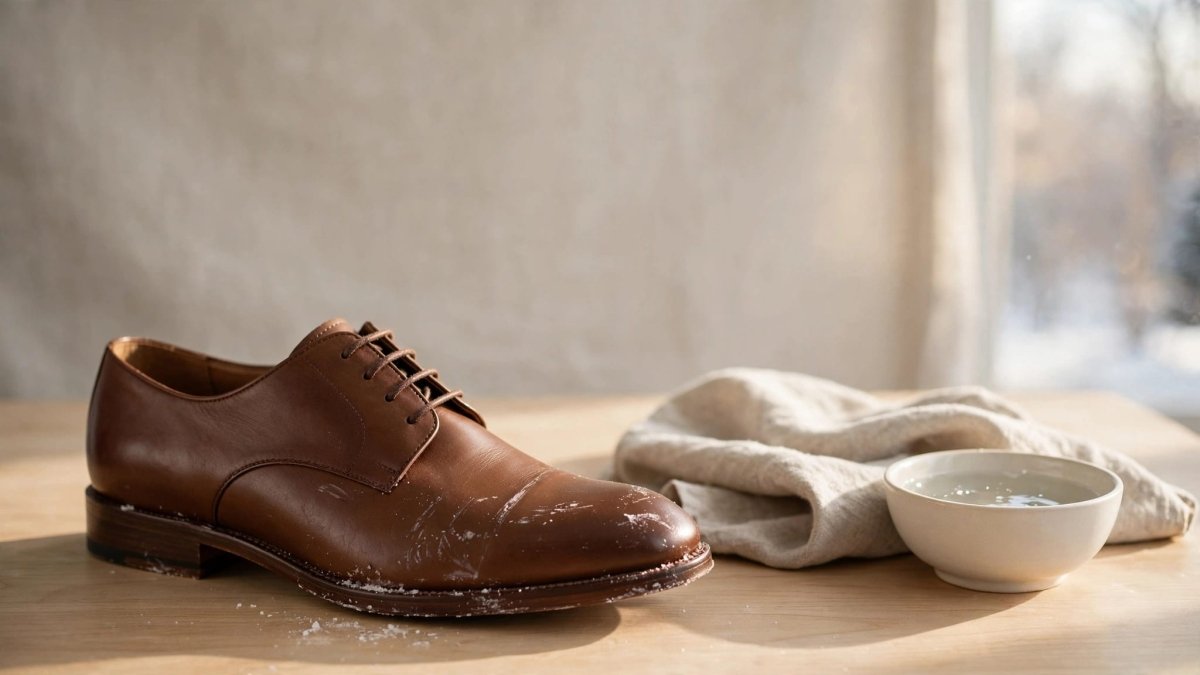
To remove winter salt stains from smooth leather shoes, gently lift loose dirt, wipe the residue with a slightly damp cloth, and let the shoes air-dry away from heat. Persistent marks need a salt-stain cleaner intended for the leather's finish, rather than harder scrubbing.
The safest approach uses minimal moisture and matches the treatment to the material. At our store, we recommend treating smooth leather, suede, and sheepskin as different care jobs, starting with the surface in front of you.
Key Takeaways
- Remove surface salt promptly with a soft cloth, using only light moisture on suitable smooth leather.
- Let shoes dry naturally before conditioning, polishing, or applying a protective treatment.
- Use material-specific care for suede, nubuck, and sheepskin, and leave persistent discoloration or damaged finishes to a shoe-repair professional.
Match the Cleaning Method to Your Leather
A pale winter stain doesn't justify using the same cleaner on every shoe. The upper's texture and finish determine how much moisture and which care products it can tolerate.
Smooth and oil-tanned leather
Smooth leather has a relatively even surface, while oil-tanned leather often has a richer, more matte appearance. Both still vary in finish, so test any cleaning treatment on a discreet area first.
Choose a spot near the inside heel or beneath a lace facing. Let the test area dry before judging the result, because damp leather often looks darker.
For suitable smooth leather, a barely damp cloth is a sensible first treatment. However, delicate, unfinished, or specialty finishes need their own care method. Stop if the test causes lasting discoloration, tackiness, or a noticeable change in texture.
Suede, nubuck, and sheepskin
Suede and nubuck have a raised surface that polishing and heavy conditioning can flatten or darken. Sheepskin footwear also needs gentler handling than ordinary smooth leather.
If these materials are damp, blot excess moisture and let them dry before brushing gently. Persistent salt marks need a cleaner intended for that material.
Never soak a casual sheepskin boot to speed up cleaning. Our guidance on winter care for suede and sheepskin covers the limits of water-repellent treatment and the importance of slow drying.
Remove Salt Stains With Gentle Surface Cleaning
Winter salt mixes with slush and dirty water, then leaves pale deposits as moisture evaporates. Cleaning promptly reduces the time that residue sits against the upper, especially along seams and near the sole.
Lift loose dirt before wiping
Set out two clean, soft cloths, a soft shoe brush, and clean water. Remove the laces if they block access to stained areas, particularly around the tongue.
Gently brush away loose surface dirt without dragging grit across the leather. Let caked mud dry before brushing it off, but blot fresh slush rather than leaving the shoes wet.
Pay attention to stitching and the junction between the upper and sole. These areas collect winter debris, yet aggressive brushing can scuff the finish. Our Iron Ranger winter care guidance also emphasizes gentle cleaning around cap-toe seams and prompt attention after salt exposure.
Wipe the residue without soaking
Dampen a clean cloth, then wring it out thoroughly. It should feel slightly moist, with no dripping water. After a successful hidden-area test, wipe the salt-marked leather with light pressure.
Keep turning to a clean part of the cloth so you lift residue instead of spreading it. Avoid concentrating water on one small point or scrubbing the outline repeatedly.
Then use the second cloth to blot excess surface moisture. If the deposit remains, use a salt-stain remover labeled for that leather finish according to its directions. More pressure isn't the next step, especially if the leather starts losing color or its surface becomes rough.
Let Leather Shoes Dry Naturally
Drying is part of cleaning, not an opportunity to rush the job. A shoe can look dry outside while moisture remains around the lining, toe area, or beneath a removable footbed.
Open the shoes to allow airflow. If the insoles are removable, take them out and let them dry separately. Loosely placed plain paper can help support the shape and absorb moisture; replace it when damp.
Don't pack the toes tightly. Wet footwear needs support without being forced wider or stretched beyond its shape.
Leave the shoes at room temperature, away from radiators, hair dryers, and direct high heat. Heat can stiffen leather and weaken adhesives. Also, avoid putting damp shoes into a closed cabinet or storage box.
Wait until the leather and interior are dry before deciding whether the salt mark needs another treatment. Applying more cleaner while the shoe is still damp makes it harder to judge the stain and the finish.
A wet patch can resemble lasting discoloration. Let the shoe dry before treating the same area again.
Restore Condition and Color After Cleaning
Cleaning, conditioning, and polishing have different purposes. Remove the salt first, let the leather dry, and then decide whether the surface needs further care. Applying several products immediately makes changes harder to assess.
Condition only when the leather needs it
Leather that feels dry or less flexible may benefit from a small amount of suitable conditioner. However, conditioning after every salty walk can leave too much product on the surface and change its appearance.
Apply a light amount according to the product directions, after testing a hidden area. Let that test dry fully because conditioner can darken leather, particularly lighter brown finishes.
Our guidance on conditioning smooth and oil-tanned leather explains why different boot leathers need different treatment. Keep smooth-leather conditioners off roughout unless the product is intended for that surface and you accept the appearance change.
Use polish for faded color
Once the leather is clean and dry, assess whether the pale area was residue or whether the finish has lost color. Polish can improve the appearance of faded smooth leather, but it doesn't remove salt deposits.
For suitable black smooth leather, our Pedag black shoe polish combines a pigmented cream with conditioning care and includes a sponge applicator.
Use black polish only where that color and finish are appropriate. It doesn't belong on brown shoes, suede, or nubuck. If the finish is peeling or cracked, covering the area with pigment won't repair the underlying damage.
Prevent Salt Buildup Between Winter Walks
The most useful winter routine starts when you come indoors. Blot slush, remove surface residue, and give the shoes time to dry before wearing them again. Rotating pairs makes that drying time easier to accommodate.
Water-repellent treatment can reduce exposure to moisture and dirt, but it doesn't make every shoe waterproof. Apply protection to clean, completely dry footwear, and match the product to the upper.
Our Pedag Waterproof Repellant Spray lists smooth leather, suede, nubuck, and other materials among its intended uses. Its directions specify spraying from 30 cm (12 inches) away and allowing the shoes to dry. Test colorfastness in a hidden area and apply it in a well-ventilated space.
Protection also has practical limits. A spray can't compensate for a low opening that lets slush enter or a sole poorly suited to slippery pavement.
When shopping for winter footwear, consider waterproof construction and defined tread alongside warmth. A soft lining adds insulation, but it doesn't establish that a shoe will keep water out or provide dependable footing.
For repeated wet-snow exposure, choose footwear designed for those conditions. Save delicate leather dress shoes for drier routes or change into them indoors.
Know When a White Mark Needs Professional Care
A removable salt deposit usually sits on or within the leather surface. However, a pale area can also involve a changed finish, lost color, or damage that cleaning alone won't reverse.
If gentle, material-appropriate cleaning doesn't improve the mark, stop repeating the treatment. Repeated wetting and rubbing can enlarge the affected area without addressing the cause.
A shoe-repair professional can assess persistent discoloration, hardened leather, cracked surfaces, or salt marks on delicate finishes. This is also the safer route for valuable shoes whose original color or texture you want to preserve.
Bring both shoes so the repairer can compare their appearance. Explain which cleaners or conditioners you've already applied. That information helps distinguish the original stain from changes caused by later treatment.
Frequently Asked Questions
Are winter salt stains permanent?
Surface deposits often respond to prompt, gentle cleaning. However, staining, finish loss, and hardened or cracked leather can remain after the residue is gone. The result depends on the leather and the extent of exposure. Assess the shoe only after it has dried, rather than assuming every pale area is still removable salt.
Why does the white line return after cleaning?
Moisture can carry remaining dissolved salt toward the surface as the shoe dries. A returning line can therefore mean residue remains. Allow the shoe to dry, then use a material-appropriate salt cleaner rather than repeatedly soaking the area. If the line persists despite suitable treatment, a repairer can assess it.
Can I wear the shoes while they're still damp?
Give them time to dry before wearing them again. Wearing damp leather can affect its shape, and another wet outing adds moisture before the interior has aired out. Use another pair while the lining, toe area, and footbed dry. Avoid trying to shorten the process with direct heat.
Keep Salt Care Gentle and Material-Specific
The safest way to remove salt stains is to clean promptly, use little moisture, and let the shoes dry naturally. Match every treatment to the leather, especially when moving between smooth finishes and suede or sheepskin.
Condition or restore color only after removing residue and assessing the dry surface. A simple between-wear routine can prevent buildup, while persistent marks deserve professional attention before repeated cleaning causes more damage.


