


The Brooks Adrenaline GTS 26 is worth trying if you want cushioned road shoes with added guidance for running or walking. Its GuideRails support and 10 mm heel-to-toe drop describe the design, but comfort in motion should decide the purchase.
A stability label can't tell you whether the forefoot will squeeze or the heel will slip. Start with what the shoe offers, then judge how the complete pair fits your normal stride.
Key takeaways
- GuideRails provide guidance around the heel, but the upper, cushioning, and sole shape also affect comfort.
- The GTS 26 has a 10 mm drop, matching the GTS 25. That measurement doesn't describe total cushioning.
- Fit both feet with your usual socks. Prioritize toe space, secure heel hold, and comfortable midfoot pressure.
- Pronation and low arches alone don't establish that you need stability shoes. Choose support according to comfort and your individual needs.
What the Brooks Adrenaline GTS 26 offers
The Adrenaline is an everyday road-running shoe that also suits walking when its shape and support feel comfortable. Brooks describes the GTS 26 as combining structured guidance, nitrogen-infused cushioning, and a breathable mesh upper.
Brooks lists the women's Adrenaline GTS 26 at $155. Our women's GTS 26 listings are $154.95.
These specifications provide a useful starting point.
| Feature | Brooks Adrenaline GTS 26 |
|---|---|
| Support system | GuideRails |
| Heel-to-toe drop | 10 mm |
| Listed women's weight | 9.6 oz / 272.2 g |
| Listed men's weight | 10.8 oz / 306.2 g |
| Upper | Breathable mesh |
| Cushioning | Nitrogen-infused |
Use weight figures for comparison rather than expecting every size to weigh the same. Also, men's and women's listed weights aren't measurements of an identical shoe size.
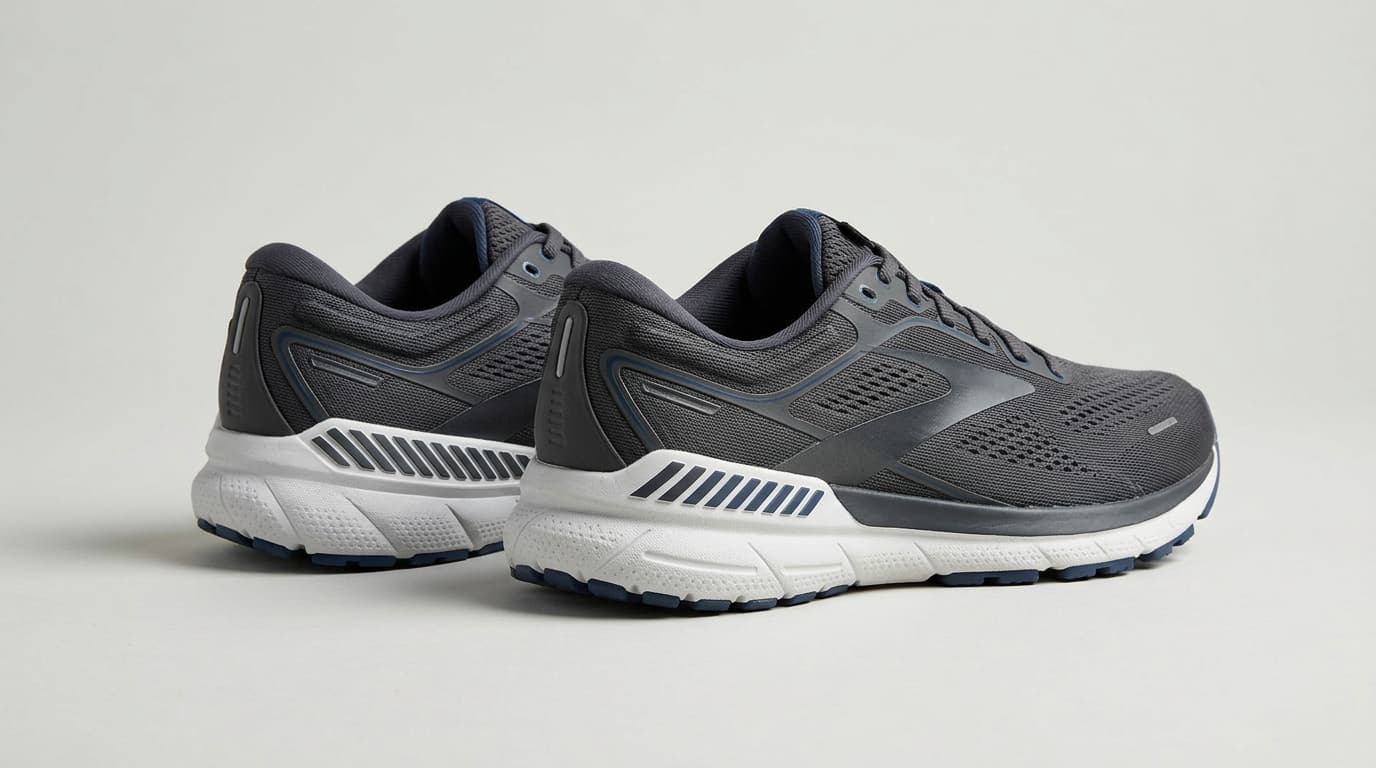
Illustrative running-shoe rendering, not an exact GTS 26 product image.
The 10 mm drop describes the height difference between the heel and forefoot. It doesn't tell you the shoe's total sole thickness or how soft it will feel. Because cushioning also depends on foam and construction, judge the ride while moving.
How GuideRails support should feel
GuideRails are one part of the shoe's construction. Our guide to Brooks GuideRails support explains how the system works alongside cushioning and fit.
Guidance around both sides of the heel
Brooks places supportive elements along the inside and outside near the heel. Firmer foam helps limit excessive movement while allowing your foot to move through a stride.
The inner element addresses excessive inward rolling. Meanwhile, the outer element helps limit outward heel movement. This differs from a traditional medial post, which concentrates firmer material along the inner side.
Expect a guided sensation rather than rigid restraint. How noticeable that guidance feels depends on your movement and the shoe's overall construction. You don't need to feel strong pressure beneath your arch to know the shoe has support.
Support and softness are separate features
Cushioning describes how the material beneath your foot compresses. Support concerns how the shoe helps guide movement. Therefore, a soft shoe can include stability features, and a neutral shoe can provide substantial cushioning.
During a fitting, separate those sensations. Notice whether the cushioning feels comfortable, then assess whether the platform feels steady through each step.
Strong arch pressure isn't proof that a stability shoe is working. A guided shoe should still feel comfortable through your normal stride.
Start with length, width, and heel hold
Fit the larger foot if your feet differ in size. Wear the socks you'll use for running or walking because their thickness changes the space inside the shoe.
Give your toes room without losing heel security
Leave roughly a thumb's width ahead of your longest toe while standing. Your toes should move freely without striking the front or pressing against the upper.
Then walk and turn. The heel should remain comfortably seated without repeated lifting or rubbing. Your foot also shouldn't slide forward when you stop.
A slightly roomier forefoot can be useful, but extra length shouldn't create an unstable fit. Our proper shoe-fit guide covers these standing and movement checks in more detail.
Solve width problems with width, not extra length
Pressure across the ball of the foot differs from pressure beneath the laces. The first can indicate insufficient forefoot width; the second may involve instep volume or the upper's shape.
Sizing up may add unnecessary length while leaving the original pressure unresolved. Instead, compare widths and notice how each option holds your heel.
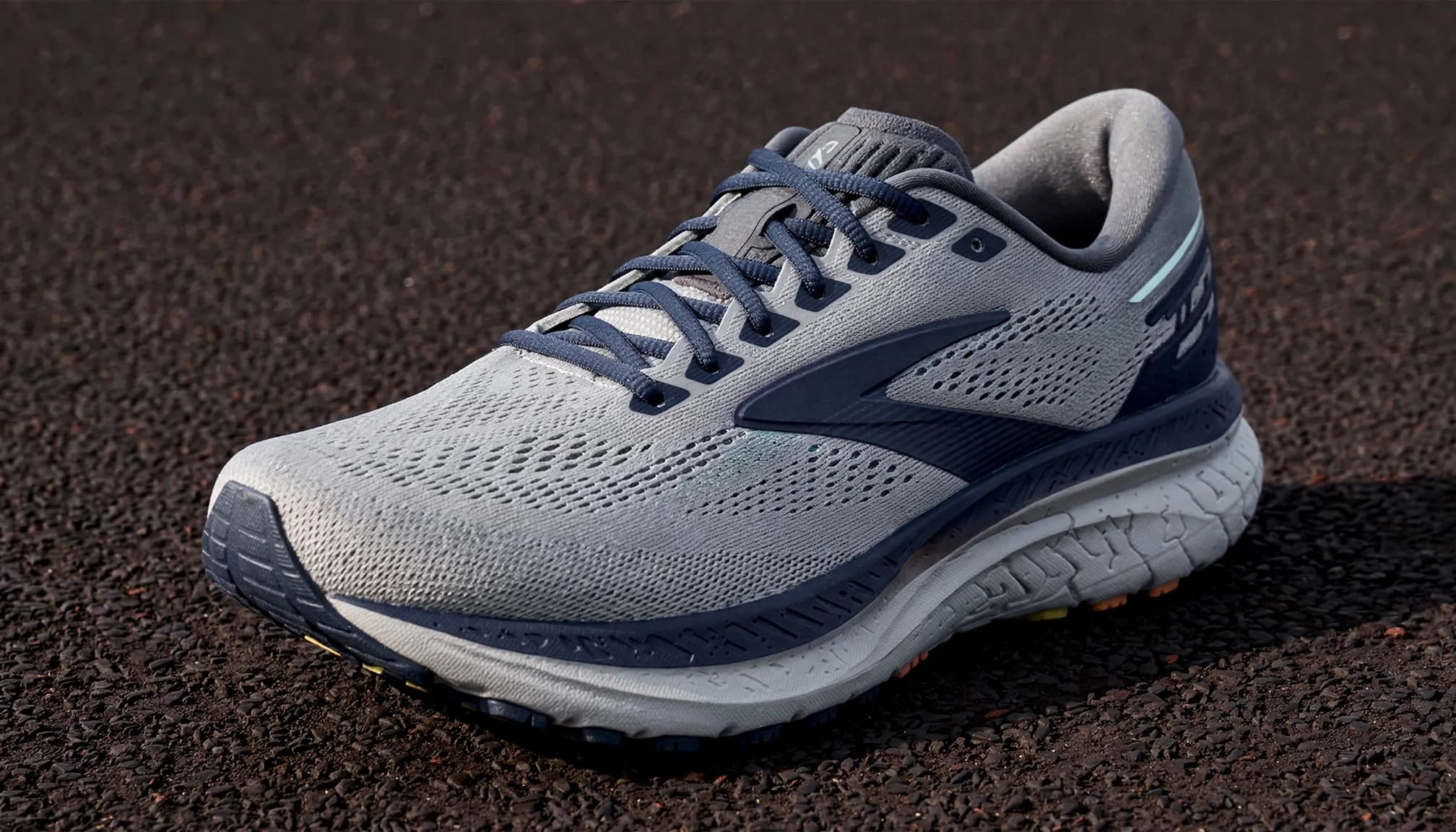
Illustrative close-up for considering forefoot shape and upper coverage, not an exact product image.
Our women's Navy/Cornflower/Pink GTS 26 listing includes medium and wide options. However, a width label doesn't describe every part of the fit. Our advice on shoe size and width differences can help you distinguish forefoot space from heel hold.
Compare the GTS 26 with the GTS 25
The previous version remains a useful comparison because both models address everyday running and walking with guided support.
Compare the details that matter
Our women's Adrenaline GTS 25 is listed at $154.95 and pairs GuideRails with nitrogen-infused DNA LOFT v3 cushioning.
Here's how the listed women's specifications compare.
| Detail | Adrenaline GTS 25 | Adrenaline GTS 26 |
|---|---|---|
| Our listed price | $154.95 | $154.95 |
| Heel-to-toe drop | 10 mm | 10 mm |
| Listed weight | 9.5 oz | 9.6 oz |
| Support | GuideRails | GuideRails |
The small weight difference shouldn't outweigh an obvious difference in comfort. Likewise, the matching drop doesn't establish that both shoes will feel identical underfoot.
Give each version a separate fitting
Try a complete pair of each model with the same socks. Comparing one version on each foot can confuse the result because your feet may differ.
Use the same walking route and pace for both pairs. Then compare heel hold, forefoot room, and pressure beneath the laces.
Pay attention to where your foot bends during push-off. Even familiar models deserve a fresh fitting because the complete shoe, rather than its version number, determines comfort. Choose the pair that accommodates your foot without requiring awkward lacing or a changed stride.
Use a movement test that matches your day
Standing comfort is only the first stage. A shoe for pavement walks needs to feel comfortable at your walking pace. A running shoe also needs to suit your running stride.
Use this short sequence during a fitting:
- Stand in both shoes and settle your heels naturally. Adjust the laces for an even hold without pulling them painfully tight.
- Walk at your usual pace, then include several turns and stops. Notice heel movement, toe pressure, and whether your foot shifts sideways.
- If you're buying for running, include an appropriate short running trial where space permits. Assess the transition through landing and push-off.
Afterward, identify the location of any discomfort. Pressure at the little toe calls for a different comparison than rubbing behind the heel.
If you use prescribed orthotics, bring them to the fitting. They occupy space and can change heel position, midfoot pressure, and the fit beneath the laces. Follow your clinician's guidance about how to use them.
We recommend judging both shoes through the same movements. You shouldn't need to grip with your toes, shorten your steps, or repeatedly retighten the laces to keep the pair secure.
When to try a different shoe
The Brooks Adrenaline GTS 26 is a candidate, not an automatic answer for every foot shape. A low arch doesn't establish a need for GuideRails. Similarly, a higher arch doesn't rule out a support shoe.
Pronation is a normal part of foot movement. If a neutral shoe feels comfortable and steady, the presence of inward rolling alone isn't a reason to replace it.
Try another shape or support option if the Adrenaline presses into your arch, pinches your forefoot, or feels awkward through push-off. Our guide to Brooks stability shoe choices provides broader context for that comparison.
Also, separate fit problems from medical concerns. Persistent pain, recurring injuries, or symptoms that change your walking or running deserve assessment by a qualified clinician. GuideRails' design goal doesn't establish that the shoe prevents injuries or treats a condition.
Frequently asked questions
Is the Brooks Adrenaline GTS 26 suitable for walking?
Yes. Its cushioning and guided support make it an option for walking as well as running. However, judge it at your normal walking pace. Comfortable turns, secure heel hold, and unrestricted toes matter more than the running-shoe label.
Does the 10 mm drop mean it has more cushioning?
No. Drop measures the height difference between the heel and forefoot. It doesn't measure total cushioning or softness. Two shoes with the same drop can feel different because their foam, sole thickness, and geometry differ.
Should stability shoes feel tight?
They should hold your foot securely without squeezing it. Tightness across the forefoot, painful lace pressure, or numbness aren't useful forms of support. If loosening the laces causes heel slipping, compare another width or shoe shape rather than accepting either problem.
Will the GTS 26 feel like the GTS 25?
Shared GuideRails support and a matching drop don't guarantee an identical fit or ride. Try each version separately. Keep your socks and movement test consistent so you can identify which complete pair feels better.
Choose the pair that stays comfortable in motion
The strongest reason to choose the Adrenaline GTS 26 is a comfortable, steady fit through your normal steps. GuideRails and cushioning matter, but neither compensates for crowded toes or a slipping heel.
Compare widths and give each Adrenaline version its own fitting. You can try shoes with us at 155 West 72nd Street in New York City.
Choose the pair that lets you move naturally without pressure or repeated adjustments.


