

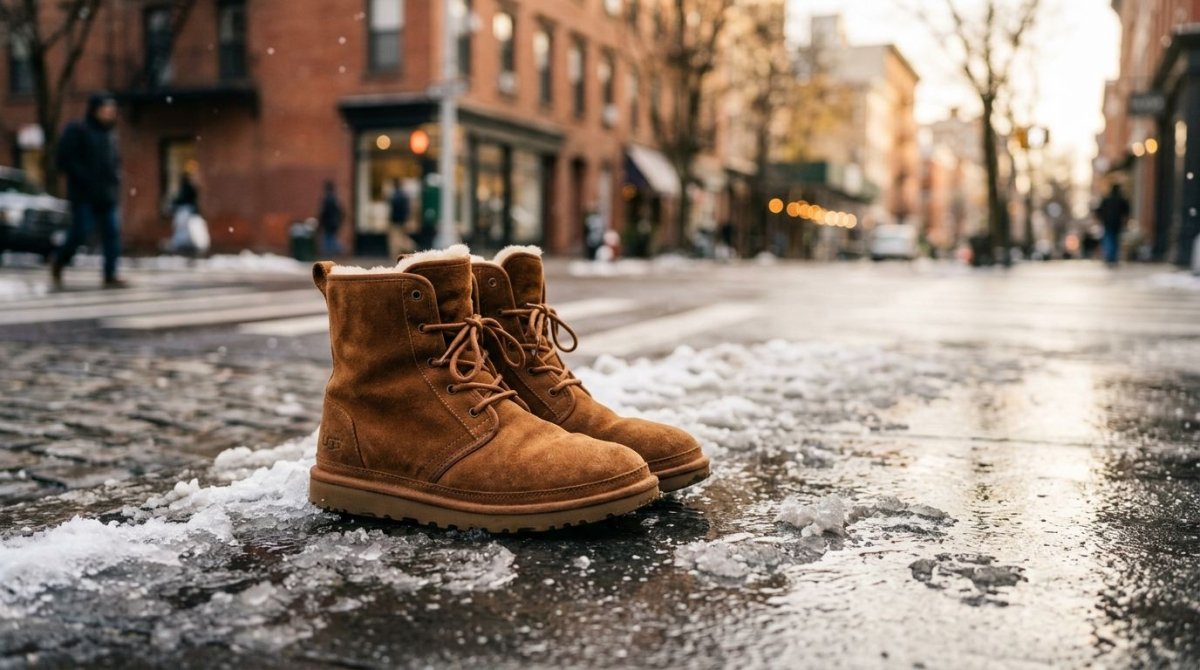
Cold city weather asks more of your footwear than a low temperature alone. Your UGG boots need to keep feet warm on concrete, handle damp sidewalks, and stay comfortable through long walks, stairs, and crowded commutes.
The right pair depends on your route and the forecast. A soft, water-repellent Classic may suit dry winter days, while the Adirondack line makes more sense when slush and snow are part of the plan. Start with the conditions you face most often, then compare height, traction, protection, and fit.
Start With the Weather Underfoot
Winter in a city rarely stays consistent. One morning may bring dry, cold pavement. By afternoon, melting snow can leave puddles beside the curb, while road salt collects around crosswalks and subway entrances.
Dry cold needs warmth and comfort
For dry winter weather, sheepskin-lined Classic styles offer the warmth most shoppers want. They work well for errands, coffee runs, casual offices, and commutes that don't involve deep snow.
However, water-repellent suede has limits. A treatment can help with light moisture, but it doesn't turn a casual boot into a fully waterproof winter boot. If the forecast calls for steady rain, wet snow, or slush, choose a model with stronger weather protection, like the women's waterproof boots Tip Top carries.
Wet streets demand better traction
City sidewalks can become slippery when snow melts and refreezes. Smooth pavement also becomes slick when it carries water, salt, or fallen leaves.
Look for a sole with a defined tread rather than a completely flat base. A supportive heel and stable platform also matter when you walk several blocks each day. Warm lining won't help much if the boot feels unstable on stairs or forces you to shorten your stride.
A warm boot and a winter boot aren't always the same thing. Sheepskin provides insulation, while waterproof construction and tread address wet, slippery conditions.
Compare the Best UGG Boots for Cold City Wear
UGG's current lineup includes casual Classic silhouettes, the Neumel, Tasman styles, and the winter-focused Adirondack family. Each one fits a different city routine.
| UGG style | Best suited to | Main point to check |
|---|---|---|
| Classic Ultra Mini | Dry cold and short daily trips | Low shaft, water-repellent treatment, and casual traction |
| Classic Mini II | Everyday city wear with moderate winter conditions | Warmth, ankle coverage, and the listed weather treatment |
| Classic Tall II | More leg coverage and colder commutes | Water and stain resistance, lining, and outsole tread |
| Adirondack III or XXV | Snow, slush, and harsher winter use | Model-specific waterproofing, insulation, and sole details |
Pick a lower shaft for convenience
The UGG Classic Ultra Mini Caribou boots have a 3.5-inch shaft, which makes them easy to pull on and remove. The product page lists 17mm Twinface sheepskin and a topical water-repellent treatment. That combination suits casual city wear when your route is mostly dry.
A low shaft also works well with straight-leg jeans, cropped trousers, and wide-leg pants. It leaves more room around the ankle and feels less restrictive than a tall boot.
Choose a tall boot for more coverage
Tall boots cover more of the lower leg and pair well with leggings, tights, and long coats. They also reduce the chance of exposed skin between your boot and trouser hem on windy days.
Tip Top's black UGG Classic Tall II boots are listed with a soft sheepskin insole, water and stain resistance, and a Treadlite by UGG outsole. The black color works with most winter clothing, while the taller shape gives more coverage than an ankle-height style.
When the Adirondack Line Makes More Sense
UGG positions the Adirondack III as a winter boot, unlike the Classic collection, which centers on casual sheepskin styles. The Adirondack Boot XXV is also part of the current 25th-anniversary Adirondack range in 2026.
That distinction matters when your winter includes more than cold pavement. A winter-specific design is the better place to start when you regularly walk through packed snow, wet sidewalks, or slush near the curb.
Choose protection for your regular route
Consider the worst section of your commute, not the easiest part. If you walk through a dry office district but cross several slushy avenues, those wet stretches should guide your choice.
Read the product details for the exact Adirondack version you are considering. Check its waterproof construction, insulation, shaft height, and outsole pattern. UGG uses different names and editions within the line, so specifications can vary.
When wet protection matters more than the traditional UGG look, compare the waterproof Blundstone thermal boots available at Tip Top. They offer a different shape, but their waterproof construction and thermal insulation suit consistently wet winter routes.
Keep a Classic for dry, flexible wear
A Classic Mini or Ultra Mini is a practical choice when snow is occasional and you mainly want warmth for daily city clothing. These boots are also easier to wear indoors, especially when you spend much of the day in heated shops, offices, or restaurants.
Avoid relying on a Classic style for deep puddles simply because it feels warm. Treat warmth and water protection as separate features during your comparison.
Get the Fit Right Before You Judge Comfort
A shearling boot should feel secure without compressing your toes. When you try on UGG boots, wear the socks you expect to use during winter. Thick hiking socks can change the fit significantly compared with thin cotton socks.
Leave room for your toes
Your toes should move freely without touching the front of the boot. Too much extra space can make your foot slide, while a tight toe box reduces comfort and can make feet feel colder.
Sheepskin may compress slightly with wear, but don't depend on that to solve a cramped fit. Walk on a firm surface and check the boot while standing, turning, and climbing a few steps. Your heel may lift slightly in a new soft boot, yet the foot shouldn't slide forward with every step.
Check the instep and calf
The boot should sit comfortably across the top of your foot. Pressure at the instep often becomes more noticeable during long walks, even when the length feels correct.
Tall styles also need enough room around the calf for your leggings, jeans, or winter socks. Try the boot with your usual trousers before buying. A shaft that bunches against your leg can become irritating well before you reach your destination.
Match Boot Height to Your City Wardrobe
Height affects more than appearance. It changes how easily you dress, how much protection you receive, and how useful the boots are across the season.
Low silhouettes are convenient for quick errands and indoor-heavy days. They also work with clothing that has a wider leg or shorter hem. If you use public transportation, easy pull-on access can save time during a wet morning commute.
Taller boots give you more coverage in cold wind and pair naturally with longer outerwear. They can also help keep trouser hems away from wet pavement. A tall Classic, however, still needs careful treatment around puddles and heavy precipitation.
Color affects versatility as well. Black works with dark denim, wool trousers, and most coats. The moss green UGG Ultra Mini boots add color while keeping the compact shape of a lower Classic style. Use a noticeable color when the rest of your winter wardrobe is neutral.
Pay Attention to the Sole
A boot's upper usually gets most of the attention, but the outsole determines how confidently you walk. Study the tread pattern and the listed sole material before choosing a pair for winter streets.
The Classic Tall II product listing includes a Treadlite by UGG outsole. Some Ultra Mini options list a choice between sugarcane EVA and Treadlite outsoles. Read the details for the exact color and version, because availability and construction can differ across products.
For a daily city commute, look for a sole with enough flex for normal walking and enough tread for damp pavement. A very soft sole may feel comfortable indoors but provide less confidence on uneven sidewalks. A heavily lugged winter sole may offer more grip, though it can feel less sleek with dressier clothes.
The best choice balances the surface you walk on most often with the amount of weather protection you need. Don't choose based on the lining alone.
Protect UGG Boots From Salt and Moisture
Suede and sheepskin need regular care during winter. City salt can leave pale marks, while repeated moisture can change the texture of the upper.
Treat new boots before heavy wear
Follow UGG's official care instructions for the specific material. Apply only products intended for suede or sheepskin, and test any treatment on a hidden area first.
Water-repellent treatment works best before the boots face repeated exposure. It doesn't remove the need for care, and it won't protect against every puddle. Never soak a casual Classic boot to clean it quickly.
Dry them slowly after wet walks
If your boots become wet, remove excess moisture with a clean cloth and let them air-dry at room temperature. Keep them away from radiators, hair dryers, and direct high heat, which can stiffen or damage suede and affect the shape.
After the surface dries, use a suede brush according to the care directions. Brush gently instead of scrubbing salt deeper into the material. For persistent marks, use a cleaner made for the boot's material rather than household soap.
UGG maintains official care and cleaning guidance, so use those instructions when a product's material or finish requires special handling. Proper care won't make a casual style waterproof, but it can help preserve its appearance through repeated winter wear.
Set a Budget Around How Often You'll Wear Them
Price matters, but cost per wear gives you a clearer comparison. A pair used five days a week may justify a higher price than a boot reserved for occasional cold weekends.
UGG's US Classic Mini II listing showed prices ranging from $119.99 to $175 at the time of research in August 2026. Tip Top listed the Classic Ultra Mini Caribou at $164.95 and the Classic Tall II black at $224.95. Retail prices and color availability can change.
Before choosing, answer three practical questions:
- Will these boots face mostly dry pavement or regular slush?
- Do you need a low shaft for convenience, or more coverage around the leg?
- Will you wear them often enough to justify investing in care products and regular maintenance?
If your answer points to dry, casual wear, a Classic Mini or Ultra Mini may cover your needs. If your route includes frequent wet snow, compare the Adirondack line and verify the exact weather specifications. A boot that matches your actual commute will usually earn more wear than a fashionable pair that stays home during bad weather.
Conclusion
Choosing UGG boots for city winter starts with the surface beneath your feet. Classic styles provide comfortable sheepskin warmth for dry, cold days, while the Adirondack family deserves closer attention when snow, slush, and wet pavement are routine.
Check the boot's weather treatment, outsole, height, and fit before focusing on color. When those details match your commute, your boots can stay comfortable through the long walk after the temperature drops.


