

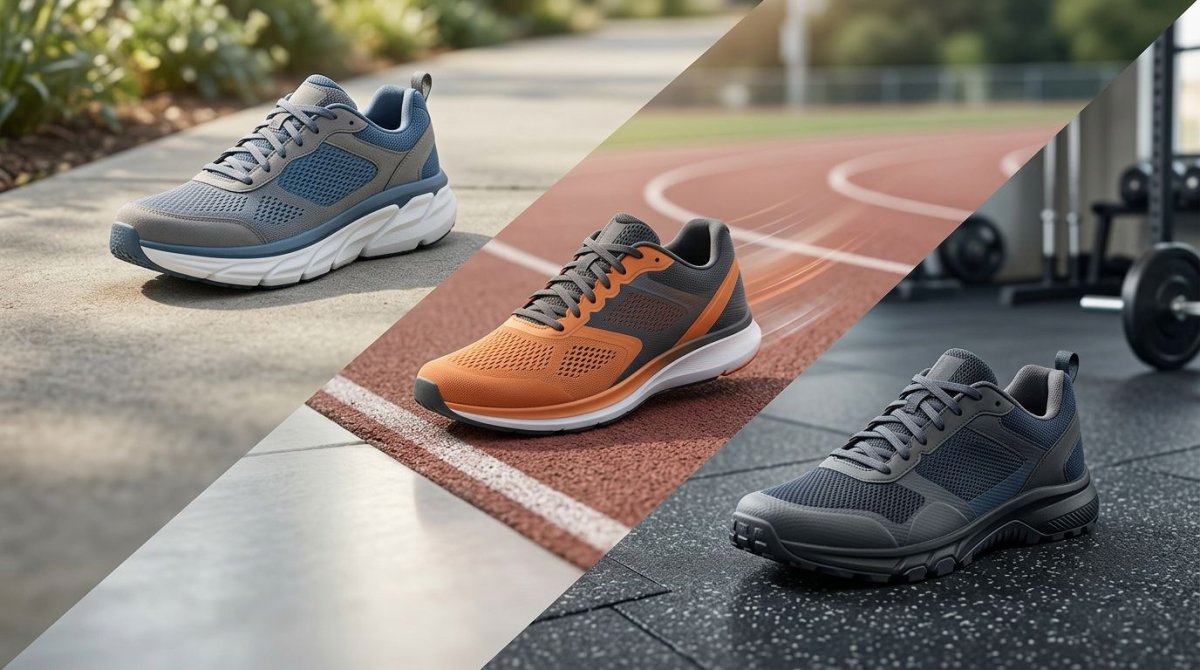
Choosing adidas shoes gets harder when the labels start to overlap. A walking shoe may handle errands, a running shoe may feel comfortable for daily wear, and a training shoe may look ready for any workout. Understanding Adidas shoe categories helps you match the shoe to the way you actually move.
The right choice depends on more than color or cushioning. Consider the surface, movement pattern, distance, fit, and level of support you need. Start with the category, then compare the specific model.
How Adidas shoe categories are organized
Adidas uses two naming systems that shoppers should understand. The first describes the activity: walking, road running, trail running, or training. The second points to a technology or product family, such as Cloudfoam, Boost, Terrex, or Dropset.
Activity labels tell you the intended use
Walking shoes focus on daily comfort, commuting, errands, and easy exercise walks. Road running shoes are built for repeated mileage on pavement. Trail shoes address uneven ground, while training shoes support gym workouts that include lifting, jumping, cutting, and side-to-side movement.
These categories overlap in appearance, but their soles and midsoles handle different demands. A soft everyday sneaker may feel pleasant during a short walk, yet lack the grip or stability needed for a weight workout.
Technology names add another layer
Cloudfoam is associated with cushioned walking and lifestyle footwear. Boost appears in some walking models and is known for a responsive feel. Terrex identifies adidas outdoor footwear, including trail shoes with terrain-focused features.
Training families have more specialized names. Dropset focuses on strength work, while Rapidmove supports high-intensity, multi-directional movement. Everyset and Amplimove sit between comfort and workout support for people who mix several gym activities.
The most useful Adidas shoe categories are therefore the activity labels. Technology names help you compare models within that category.
Adidas shoe categories for everyday walking
Adidas positions its walking collection around all-day comfort, commuting, getting steps, and easygoing walks. The category includes casual walking shoes, Cloudfoam walking shoes, and Boost walking shoes, so the range covers both lifestyle use and more active daily wear.
Choose walking shoes for daily movement
Walking shoes make sense when most of your time is spent on sidewalks, indoor floors, shops, offices, or neighborhood streets. Their cushioning is designed to feel comfortable during regular steps rather than repeated running impacts.
Look for a flexible forefoot, a padded tongue, and a heel that stays secure without pressing against your ankle. A breathable upper helps when you wear the shoes for several hours. If you stand at work, also check that the outsole feels stable rather than overly soft.
Cloudfoam models can suit shoppers who prefer a softer step. Boost walking styles may appeal to people who want a springier response. Still, the foam name shouldn't replace a proper fit check. The shoe must hold your foot comfortably at the heel and midfoot.
Walking shoes can handle light exercise
A walking shoe works well for power walks, casual treadmill sessions, and everyday activity. However, regular running creates more impact and demands a design made for that movement.
For children, an active sneaker can cover school, play, and short walks. Tip Top's adidas toddlers' Runfalcon 6 shoes include Cloudfoam cushioning, a durable mesh upper, and a non-marking rubber outsole. Elastic laces and a hook-and-loop strap also make them practical for younger children.
Road running shoes are built for pavement mileage
Road running is the clearest category for sidewalks, paved paths, roads, and treadmills. Adidas describes its road-running shoes as durable, comfortable footwear for people who regularly put in miles.
Match road shoes to your running routine
A road-running shoe is the better choice if you run several times each week or cover longer distances. Its midsole is designed to cushion repeated landings while returning energy through the next stride. The upper typically uses breathable materials and supportive construction to help keep your foot secure.
Daily trainers usually offer a balance of cushioning and durability. Faster shoes may feel lighter and more responsive, but they aren't automatically better for every runner. A comfortable daily trainer is often the more useful option if you want one pair for regular mileage.
You can also use road shoes for walking. The reverse is less reliable. A walking shoe may not provide the cushioning, upper support, or outsole durability you want for consistent running.
Pay attention to fit and running feel
Your toes need room to spread without sliding forward. Many runners prefer about a thumb's width between the longest toe and the front of the shoe, especially when feet swell during longer runs.
Try running shoes with the socks you normally wear. Walk, jog, and bend your knees in the store. Your heel should stay in place, and the upper should hold the midfoot without creating pressure across the instep.
Adidas road models vary in firmness, stack height, and geometry. Don't choose based on softness alone. A very soft shoe may feel comfortable at first, while a slightly firmer model may give you a more controlled stride.
Trail running shoes handle rougher surfaces
Trail running shoes are designed for dirt paths, rocks, roots, loose ground, and uneven outdoor routes. Adidas places many of these models within the Terrex family, which focuses on outdoor use and terrain-specific performance.
Look for grip, protection, and stability
Trail shoes need an outsole that can bite into changing surfaces. Adidas uses Traxion on selected trail models to improve grip across outdoor terrain. The lugs and rubber compound matter because smooth road outsoles can slide on wet dirt or loose gravel.
A supportive upper helps your foot stay centered when the ground tilts or changes height. Some models also add weather protection. The Terrex Tracefinder 2 CLIMAPROOF Trail Running Shoes use CLIMAPROOF to help block weather, and the shoe includes a Traxion outsole.
The Tracefinder 2 has a listed 10 mm midsole drop, with a 30 mm heel and 20 mm forefoot. Adidas lists its weight at 12.9 ounces in UK size 8.5. Those details can help you compare the shoe with lighter or lower-profile trail options.
Pick trail shoes for the route, not the appearance
Trail shoes can work for hiking and walking on uneven paths, but their lugged soles may feel less smooth on pavement. If your route includes mostly sidewalks with a short dirt section, a road shoe or walking shoe may feel more natural.
For mixed outdoor use, the Tracefinder Trail Running Shoes offer a balance of cushioning and breathability. Adidas lists a 10 mm drop and a weight of 12.2 ounces in size 9. For wet routes, choose a model with weather protection. For hot, dry trails, a more breathable upper may be the better tradeoff.
Training shoes support gym movement
Training shoes are a separate category because gym workouts rarely involve only forward steps. Strength sessions, HIIT, classes, and circuit workouts require a stable base and controlled movement in several directions.
Dropset is suited to strength training
The Dropset line is built around strength workouts, weightlifting, circuit training, and dynamic gym movements. Its dual-density midsole gives heavier lifts a firmer base while retaining enough flexibility for other exercises.
Adidas describes Dropset shoes with features such as a reinforced heel, breathable mesh upper, grippy outsole, and cushioning for impact during plyometrics. The Dropset 3 uses a 6 mm heel drop, a dual-density midsole, and an Adiwear 6 outsole with a Traxion heel.
Current adidas ratings place Dropset 4 at 7 out of 7 for stability and grip, 4 out of 7 for speed, and a suggested running distance of 1 kilometer. That profile tells you how to read the category: it favors controlled strength work over long-distance running.
Adizero Dropset models shift the balance toward fitness racing and hybrid workouts. The Adizero Dropset Elite is rated higher for speed, while the Adizero Dropset Pro sits between stability and speed.
Rapidmove, Everyset, and Amplimove suit mixed workouts
Rapidmove Pro is aimed at high-intensity workouts with multi-directional support. The Rapidmove line uses an EVA midsole and an asymmetrical Torsion System to help the foot remain stable during quick cuts and changes of direction.
Everyset suits shoppers who combine weights, bodyweight exercises, and cardio machines. Its soft knit upper has a snug feel, while the dual-density midsole uses firmer EVA around softer EVA. The result is a more grounded feel without making the shoe rigid.
Amplimove is another option for HIIT, beginner gym sessions, and workouts that require agility. Its mesh upper and zoned TPU overlays hold the foot, while the sculpted midsole provides cushioning and flexibility. A multi-directional outsole helps maintain contact with the gym floor.
Compare Adidas shoe categories at a glance
This quick comparison shows which adidas category fits the most common shopping situations.
| Category | Best for | Main design priority | Less suitable for |
|---|---|---|---|
| Walking | Commuting, errands, standing, easy walks | All-day cushioning and flexibility | Regular running or heavy lifting |
| Road running | Pavement, treadmills, daily mileage | Impact cushioning and energy return | Rocky or loose terrain |
| Trail running | Dirt, rocks, roots, uneven paths | Traction, stability, and protection | Mostly indoor gym workouts |
| Training | Weights, HIIT, classes, circuits | Ground contact and multi-directional control | Long-distance road running |
The simplest rule is practical: choose the shoe for the activity you do most often. If two activities are equally important, select the category that matches the harder demand.
How to choose the right adidas shoe
Once you've narrowed down the category, use your routine and fit to choose the model. A shoe can have excellent technology and still feel wrong if it doesn't match your foot or movement.
Start with the surface and movement
Write down where you spend most of your active time. Sidewalks point toward walking or road running. Dirt and rocks call for trail shoes. Weight rooms, studios, and HIIT sessions need training shoes.
Next, consider how you move. Straight-line distance favors running shoes. Squats, lateral shuffles, jumping, and quick direction changes favor training shoes. Commuting and standing favor walking shoes with comfortable cushioning.
If you perform more than one activity, choose based on the activity that places the greatest demand on the shoe. A gym shoe can handle a warm-up jog, but it isn't a replacement for a dedicated running shoe when you regularly cover several miles.
Test the fit at the end of the day
Feet often expand during the day, so an afternoon fitting gives you a more realistic sense of comfort. Wear your usual athletic socks and check both shoes, since one foot may be slightly larger.
Your heel should remain planted when you walk or jog. The midfoot should feel secure, while your toes should have space to move. Avoid relying on a break-in period to solve pinching, rubbing, or heel slipping.
For training shoes, try a side step and a shallow squat. For running shoes, jog briefly and notice whether the shoe feels smooth through the stride. For trail shoes, check that your toes don't hit the front when you step downhill.
Build a rotation when your activities differ
One pair can cover casual use and light activity, but separate shoes last longer when each pair has a clear job. A walking shoe can handle daily errands, a road shoe can stay fresh for mileage, and a training shoe can remain reserved for the gym.
Let shoes dry fully after use, especially trail shoes exposed to mud or rain. Remove loose dirt with a soft brush and follow the care instructions for the upper. Replacing worn shoes is also part of fit management, since compressed cushioning and smooth tread can change how the shoe feels.
Casual adidas shoes belong to a different category
Some adidas shoes are popular because they pair easily with everyday clothing, not because they are designed for exercise. The Stan Smith is a clear example. Tip Top's women's adidas Stan Smith sneakers have a leather and synthetic upper, an OrthoLite sockliner, and a rubber cupsole.
That combination can work for casual walking, travel, and daily outfits. However, a lifestyle sneaker isn't the right tool for road mileage, trail routes, or demanding gym sessions. Its value is everyday style and comfort, while athletic categories address repeated or specialized movement.
Families may also shop across several categories at once. A child may need an active sneaker for school and play, while an adult needs a road-running shoe or a stable training model. Separate the visual style from the activity label, then choose each pair for its actual use.
Conclusion
The Adidas shoe categories become easier to understand when you start with movement and surface. Walking shoes suit daily comfort, road runners suit pavement mileage, trail shoes suit uneven ground, and training shoes suit gym movement in multiple directions.
Technology names such as Cloudfoam, Boost, Terrex, Dropset, and Rapidmove help refine the choice, but fit still decides whether a shoe works for you. Choose the category that matches your routine, then look for a secure heel, comfortable toe room, and the right level of cushioning and grip.


