

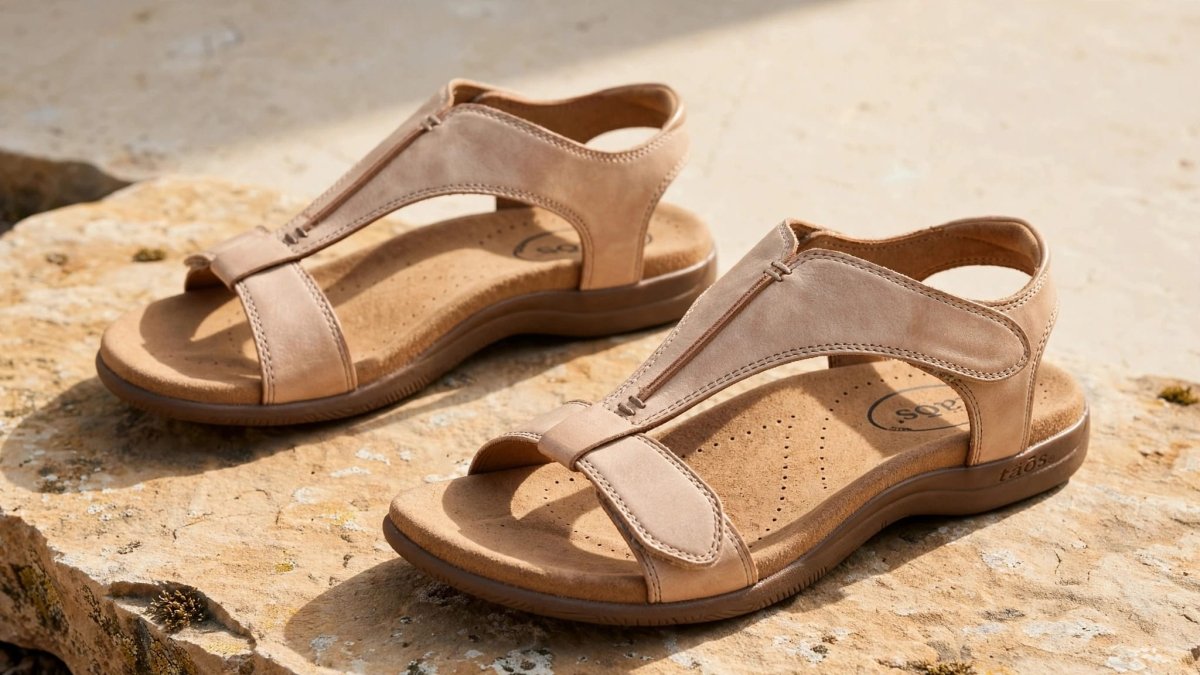
A sandal can feel soft in the store and still leave your feet tired after an afternoon of errands. Taos sandals combine shaped footbeds with cushioning, but the right pair also needs to match your foot and daily routine.
For everyday wear, support placement matters as much as softness. An adjustable upper helps keep your foot positioned over those contours instead of sliding around.
Start with the footbed, then compare materials, strap adjustment, and outsole design before choosing a style.
Key Takeaways
- Arch and metatarsal support are separate features, so check how both feel when you stand and walk.
- Taos uses different footbed constructions, including cork-polyurethane, SOFT SUPPORT, and Structured Support. Each deserves its own fit assessment.
- Adjustable straps help accommodate foot volume, but they can't correct a footbed that's too narrow or poorly positioned.
- Match the sandal to your plans. Everyday leather styles and water-friendly outdoor styles have different materials and care requirements.
How Taos sandals support daily wear
The footbed is the surface beneath your foot. Its shape determines where you feel support, while its padding affects the sensation underfoot.
Arch and metatarsal support do different jobs
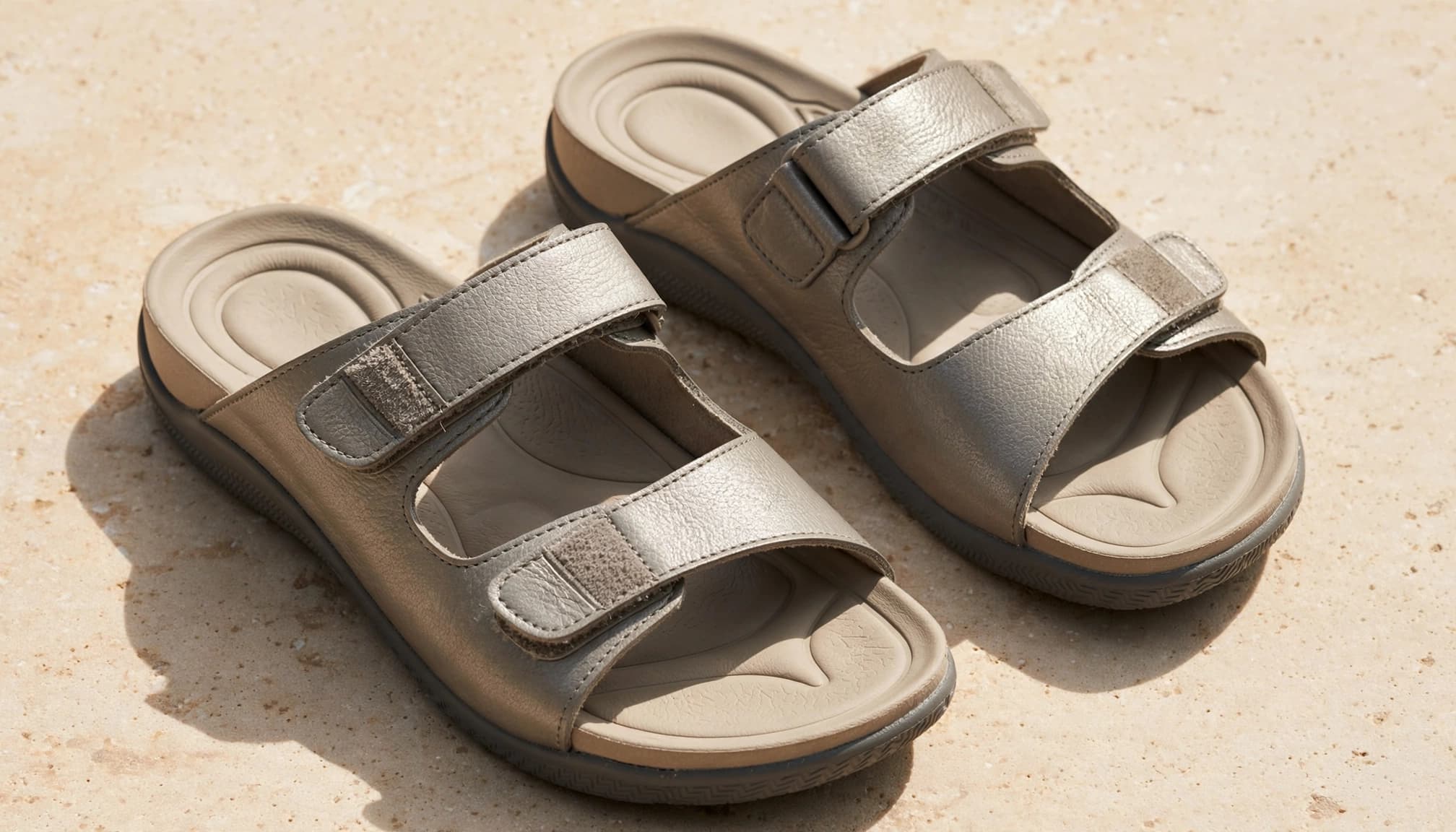
Arch support follows the curve beneath the middle of your foot. Metatarsal support sits closer to the forefoot, behind the ball of the foot. Taos identifies both features across much of its footwear.
Because feet differ, a prominent contour isn't automatically a better contour. The arch should feel comfortably placed rather than pushing into one small spot.
Likewise, evaluate the forefoot support while walking. If it feels like an intrusive bump, try another size or footbed shape. A supportive design still needs to suit your anatomy.
Cushioning and heel shape affect the ride
Forefoot cushioning adds padding beneath an area that bears pressure during walking. Meanwhile, a shaped heel area helps locate your foot within the sandal.
These features work together, but softness and support aren't interchangeable. A padded surface can feel pleasant without providing much structure. Conversely, a contoured footbed may feel more noticeable than a flat sandal.
During a fitting, pay attention to both sensations. You want cushioning that feels comfortable and contours that remain well positioned as you move. Don't judge the entire sandal by pressing its footbed with your thumb.
Understanding Taos footbed materials
Taos doesn't use one construction throughout its sandal range. Compare the named footbed and lining on the individual product page.
Cork-polyurethane with a suede lining
The Trulie bronze leather sandals have a lightweight, padded, contoured cork-polyurethane footbed covered in suede. The listing also identifies extra forefoot cushioning.
That description gives you three separate details to assess: the molded base, the padding, and the surface against your skin. Suede has a different feel from microfiber, so personal preference matters here.
During a fitting, check whether your heel rests comfortably and your arch lines up with the contour. Then walk long enough to notice any forward movement. The material description helps narrow your choices, but your foot determines the final fit.
SOFT SUPPORT and microfiber
Taos describes its SOFT SUPPORT collection as combining arch and metatarsal support with Cool Recovery Foam. However, always check the individual model's specifications rather than transferring every collection feature to every sandal.
For example, Big Time natural leather sandals have a SOFT SUPPORT footbed with a microfiber lining. Their listing also describes a padded heel area and flexible construction.
When comparing microfiber with suede, consider how each feels against bare skin. Also assess the whole sandal's weight and flexibility. A familiar footbed name doesn't mean two styles will feel identical once their uppers and outsoles come into play.
Trulie: A contoured option for everyday outings
Trulie combines a leather upper with woven hook-and-loop straps and a padded cork-polyurethane footbed. Tip Top Shoes describes the style as made in Spain.
The adjustment lets you change the fit across the foot. That's useful when one strap needs more room than another, or when your feet feel fuller later in the day.
The Trulie stone leather sandals listing shows $174.95. Confirm current pricing and size availability before ordering, since both can change.
For daily shopping, judge Trulie on how securely it holds your foot over its contours. The suede lining and forefoot cushioning are worth considering if you prefer a softly covered surface beneath bare feet.
However, don't assume the footbed will suit you because you like the upper. Stand in both sandals and walk at your normal pace. If the straps need excessive tightening to prevent sliding, compare another size or shape before buying.
A secure fit should feel comfortable without leaving deep strap pressure across your foot.
Super Z: Structured support for outdoor plans
The Super Z tan multi sandals take a different approach. Their design includes waterproof leather, nylon straps, and a Structured Support footbed.
Taos specifies arch and metatarsal support, forefoot cushioning, an energy-return midsole, and an all-terrain rubber outsole. Super Z also has hook-and-loop adjustment and a listed heel height of 1 3/8 inches.
Those details make it a useful style to compare when your daily plans include outdoor walking or water-friendly footwear. Still, an all-terrain outsole doesn't guarantee grip on every surface. Wet stone and other slick materials deserve care regardless of the sandal.
Pay attention to how the adjustable upper holds your foot during turns. Also check whether the sole feels comfortable under your usual walking stride.
Super Z's construction differs from Trulie's suede-lined cork-polyurethane design. Choose between them according to your intended conditions and preferred underfoot feel.
Finally, heel height describes the shoe's external height. It doesn't tell you everything about cushioning, arch shape, or how elevated your heel feels relative to your forefoot.
Fit checks that make support useful
Even a well-shaped footbed needs the right size and upper fit. Take time to assess both feet, since they may need different strap settings.
Check length, width, and contour placement
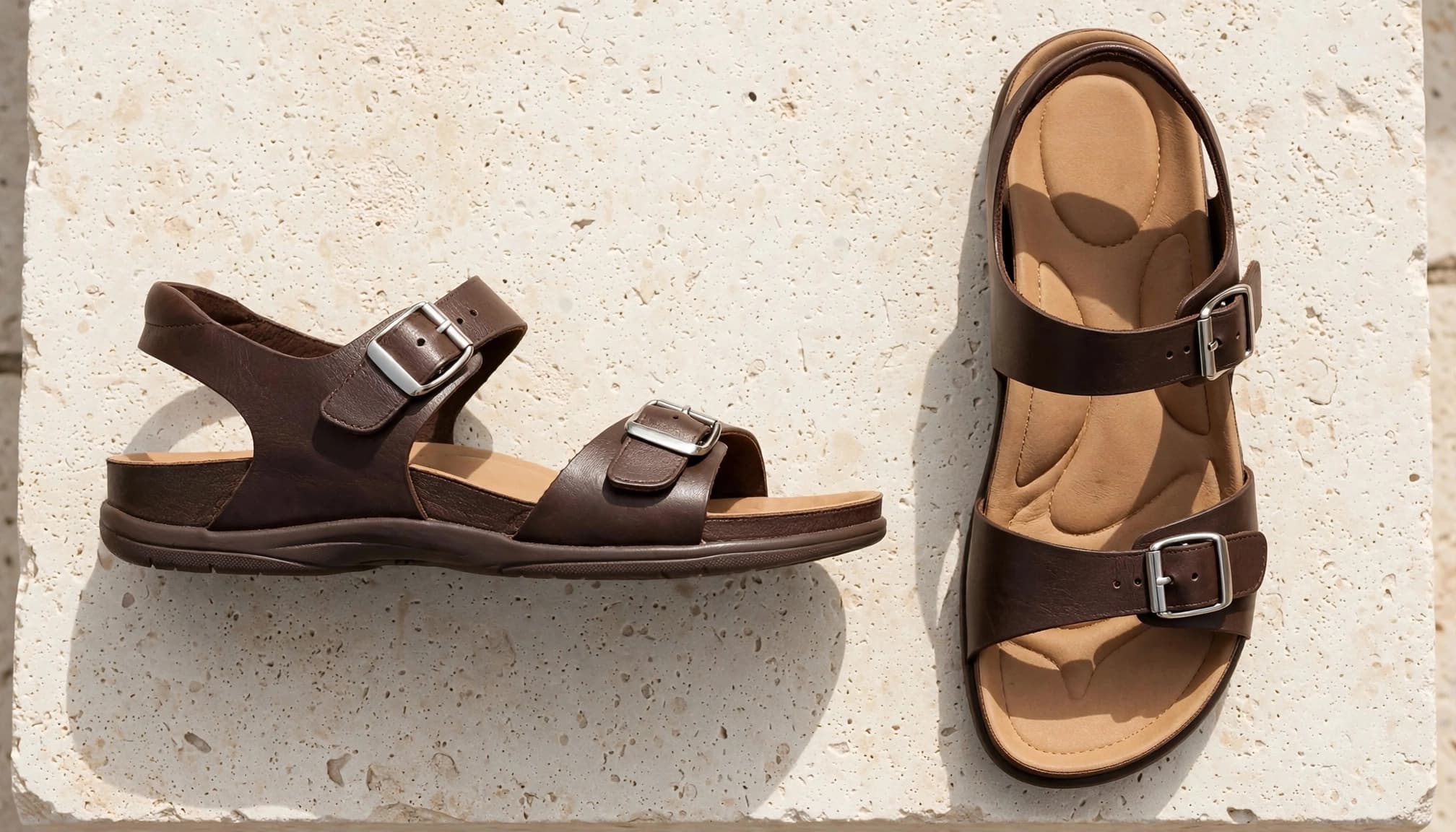
Your heel and toes should stay within the footbed while standing and walking. Also look at the sides: your foot shouldn't spill over the edges.
Taos says most of its styles are medium width. Therefore, don't assume an adjustable upper creates a wide footbed. Loosening a strap adds room above the foot, not width beneath it.
Check arch placement before settling on a size. A longer sandal may move the support too far forward, even if it gives your toes more space.
If you're unsure, ask for a fitting assessment. Tip Top Shoes has focused on comfort footwear since 1940, and personal fitting advice can help you compare shapes.
Adjust the straps, then walk naturally
Start with the straps comfortably snug. Your foot should feel held in place without pinching or excessive pressure.
Next, walk at your normal pace and make a few turns. Notice whether your heel shifts sideways or your toes grip to keep the sandal attached.
If movement persists, reassess the fit rather than continuing to tighten every strap. Too much pressure can make an otherwise comfortable sandal unpleasant.
Strap adjustment changes the upper's fit, but it doesn't move the arch or metatarsal contours beneath your foot.
Try sandals later in the day if that's when you expect to wear them most. Your fitting should reflect your routine.
Match daily wear to your routine and care habits
A sandal for short errands may face different demands from one packed for a walking-heavy vacation. Consider your longest likely outing, not only your easiest one.
Build up wear before a busy day
Give a new pair several shorter outings before relying on it for a full sightseeing day. This lets you assess strap pressure and footbed placement under normal movement.
Although a new sandal may feel unfamiliar, persistent rubbing or concentrated pressure deserves attention. Don't count on prolonged wear to fix a poor fit.
Also consider the demands of your route. Long periods on pavement, repeated stairs, and uneven paths can change what you prefer underfoot.
For demanding outings, compare your sandals with a comfortable walking shoe rather than assuming either category suits every task.
Follow the model's care requirements
Water-friendly construction is a model-specific feature. Super Z's waterproof leather and nylon straps don't establish that other Taos leather sandals tolerate the same conditions.
Follow the care instructions for your selected pair. Suede-lined footbeds, microfiber surfaces, and leather uppers can require different cleaning methods.
After cleaning, allow footwear to dry according to the manufacturer's guidance. Avoid experimenting with harsh cleaners or direct heat.
Periodically inspect the outsole and closures, too. Worn traction, damaged straps, or closures that no longer hold securely can affect daily use even when the footbed still feels comfortable.
Frequently Asked Questions
Can you add orthotics to Taos sandals?
Don't assume a sandal accepts an orthotic because another Taos shoe has a removable footbed. Check the exact product specifications before buying.
Trulie and Super Z have described supportive footbeds, but those descriptions don't establish that they accommodate custom inserts. Adding an insert can also change strap fit and leave your foot sitting too high.
If you depend on prescribed orthotics, bring them to a fitting and ask which footwear can accommodate them. Choose a compatible design rather than modifying a sandal without guidance.
Are Taos sandals suitable for painful feet?
Supportive features can be useful shopping considerations, but they don't establish treatment for a foot condition. Comfort also depends on your foot shape, fit, activity, and individual needs.
If you have persistent pain, seek advice from a qualified healthcare professional. Bring information about your symptoms and usual footwear.
During shopping, avoid any sandal that causes discomfort at the fitting. Arch support, metatarsal support, and cushioning are product features, not guarantees of pain relief or evidence that one model works for every foot.
Choosing Your Everyday Pair
The right Taos sandals place their support where your foot needs it and hold that position as you walk. Materials and cushioning matter, but fit comes first.
Compare the footbed construction, adjust the straps, and test both sandals at your normal pace. Then choose the style that suits your everyday conditions.
A sandal that feels comfortable while moving is a stronger choice than one that feels soft only while standing still.


