

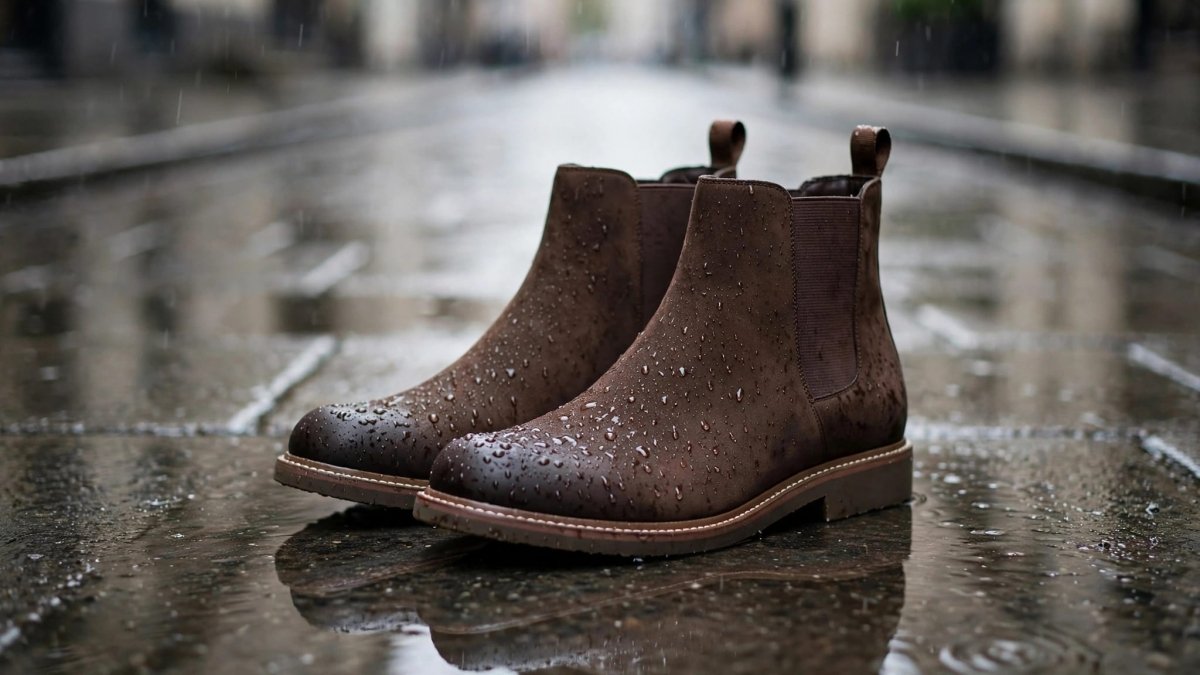
A polished ankle boot can look perfect for a rainy commute, then let water in at the first long puddle. If you're shopping for Blondo waterproof boots, the details matter more than the label alone: the upper, seams, shaft height, and fit all affect what reaches your feet.
Blondo offers styles that look at home with everyday clothes, including suede and nubuck options. Before choosing a pair, it helps to know what the waterproof construction can handle and where any boot has limits.
How Blondo's waterproof construction works
A leather or suede upper can shed rain, but water may still enter where pieces of the boot join. That's why construction matters alongside the material you can see.
AquaProtect and sealed seams
Blondo describes its AquaProtect waterproof certification as combining waterproof leathers or other materials with seam-sealed construction. The brand also identifies water and the effects of calcium and salt as conditions the protection is designed to address.
For a shopper, the distinction is useful. A protective spray applied to an ordinary boot treats its surface; it doesn't necessarily seal stitched joins. When comparing pairs, look for a waterproof designation on the exact product page rather than assuming every style from a brand has the same construction.
Both Tip Top Shoes' Valli 2.0 and Alida product listings identify those boots as waterproof. Their uppers differ, so material choice remains part of the decision.
The opening is still an opening
Waterproof construction doesn't close the top of a boot. Rain can run down a trouser leg, and a puddle deeper than the shaft can reach the opening. A short boot that handles a wet sidewalk may leave your socks exposed in deep slush.
That makes shaft height a practical feature, not merely a style choice. Match it to the conditions you actually walk through, especially if your route includes standing water or snow piled beside curbs.
A waterproof upper can't keep feet dry when water enters over the top of the boot.
Compare Blondo waterproof boots by shape
For city wear, start with how much coverage you need. Then compare the heel, upper, and space around the leg. These published measurements offer a useful starting point; they can't replace trying a boot on.
| Model | Published measurements | Detail to consider |
|---|---|---|
| Valli 2.0 | 2-inch heel; 4-inch shaft; 9-inch shaft circumference | Black nubuck, rounded toe |
| Alida | 2.25-inch heel; 5-inch shaft; 9-inch shaft circumference | Black suede, rounded toe |
| Cathleen | 1¼-inch heel; 5½-inch shaft | Side zip and elastic gore inset |
| Carolena | 1½-inch heel; 15-inch shaft; 14-inch calf circumference | Knee-high shape with side zip |
Measurements come from the individual retailer listings and may vary by size. The clearest split is coverage: the ankle boots suit lighter exposure, while Carolena reaches much higher on the leg.
Valli 2.0 and Alida for ankle coverage
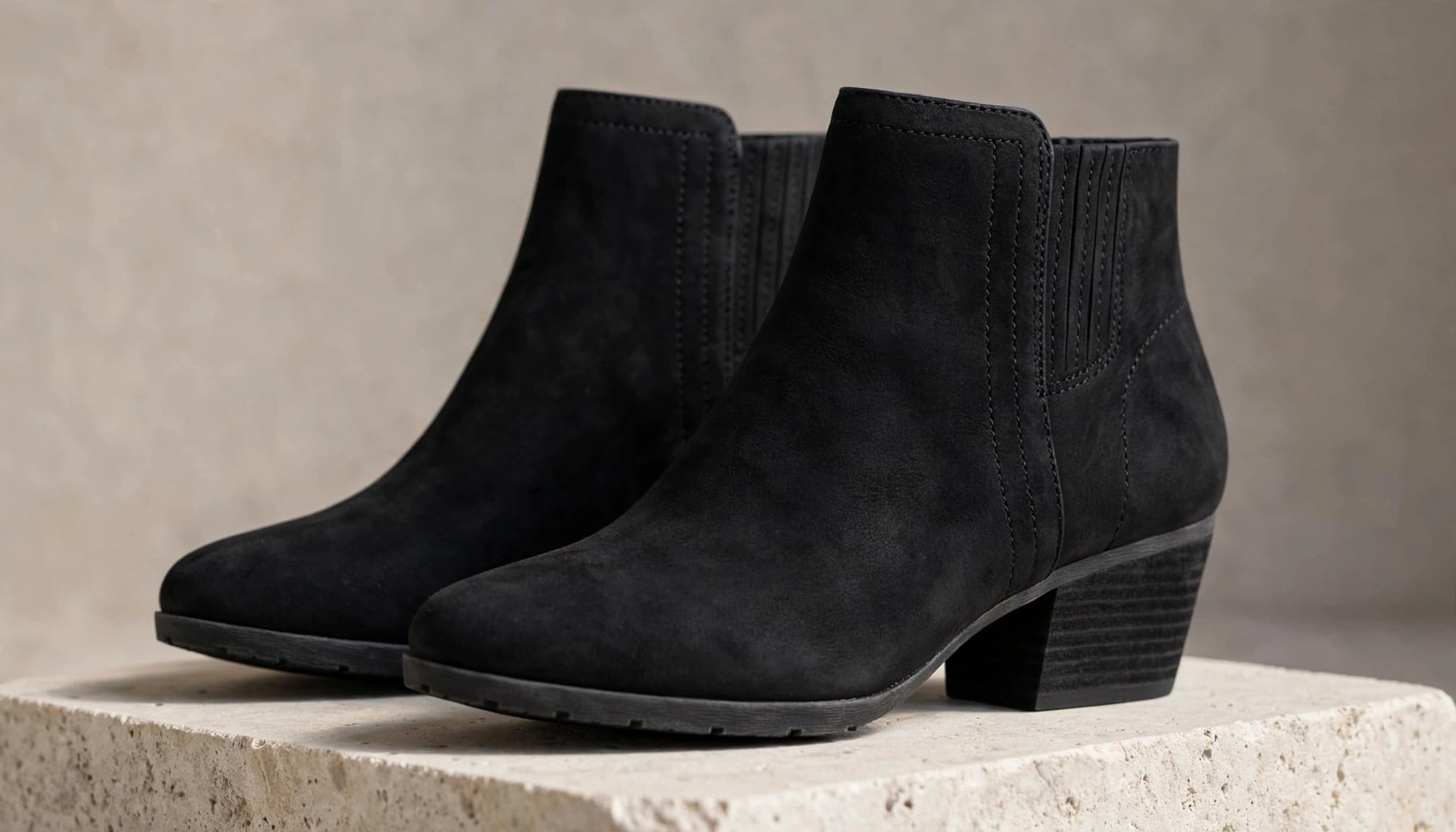
The Blondo Valli 2.0 waterproof ankle boots pair a black nubuck upper with a rounded toe and a 2-inch block heel. Their 4-inch shaft makes them easy to wear under many trousers, though it offers less coverage above the ankle.
For a slightly taller shape, the Blondo Alida black suede waterproof boots have a 5-inch shaft and a 2.25-inch block heel. The listed 9-inch shaft circumference matches Valli's, but the extra height can change where the boot meets your leg. Try both with the socks and trousers you expect to wear.
Cathleen and Carolena for different priorities
Nordstrom lists Cathleen with a side zip, elastic gore inset, and memory foam cushioning. Its 5½-inch shaft gives more coverage than either ankle style above. The gore may also matter if you dislike a rigid feel at the opening, although the fit still needs checking on your foot.
Carolena is a different proposition. Nordstrom lists a 15-inch shaft and 14-inch calf circumference, so the calf measurement deserves as much attention as shoe size. A tall boot can cover more of your leg, but it should close comfortably over your usual layers.
Fit details that affect a rainy-day walk
Dry socks won't make a boot comfortable if your toes feel crowded or your heel slips. Try waterproof footwear with the socks you plan to use, preferably later in the day when feet may be a little fuller.
Check the toe, heel, and opening
Your toes should have room to move without pressing into the front. As you walk, watch for your heel lifting excessively or your foot sliding forward. A block heel can feel stable underfoot, but heel height alone doesn't tell you whether the boot fits.
Next, sit and walk in the boots to check the shaft. An opening that rubs with every step can become irritating on a long commute. With a knee-high style, confirm that the calf closes without pinching when you bend your leg. Published circumferences are helpful for narrowing choices, but your own fit test settles the question.
Look closely at the sole
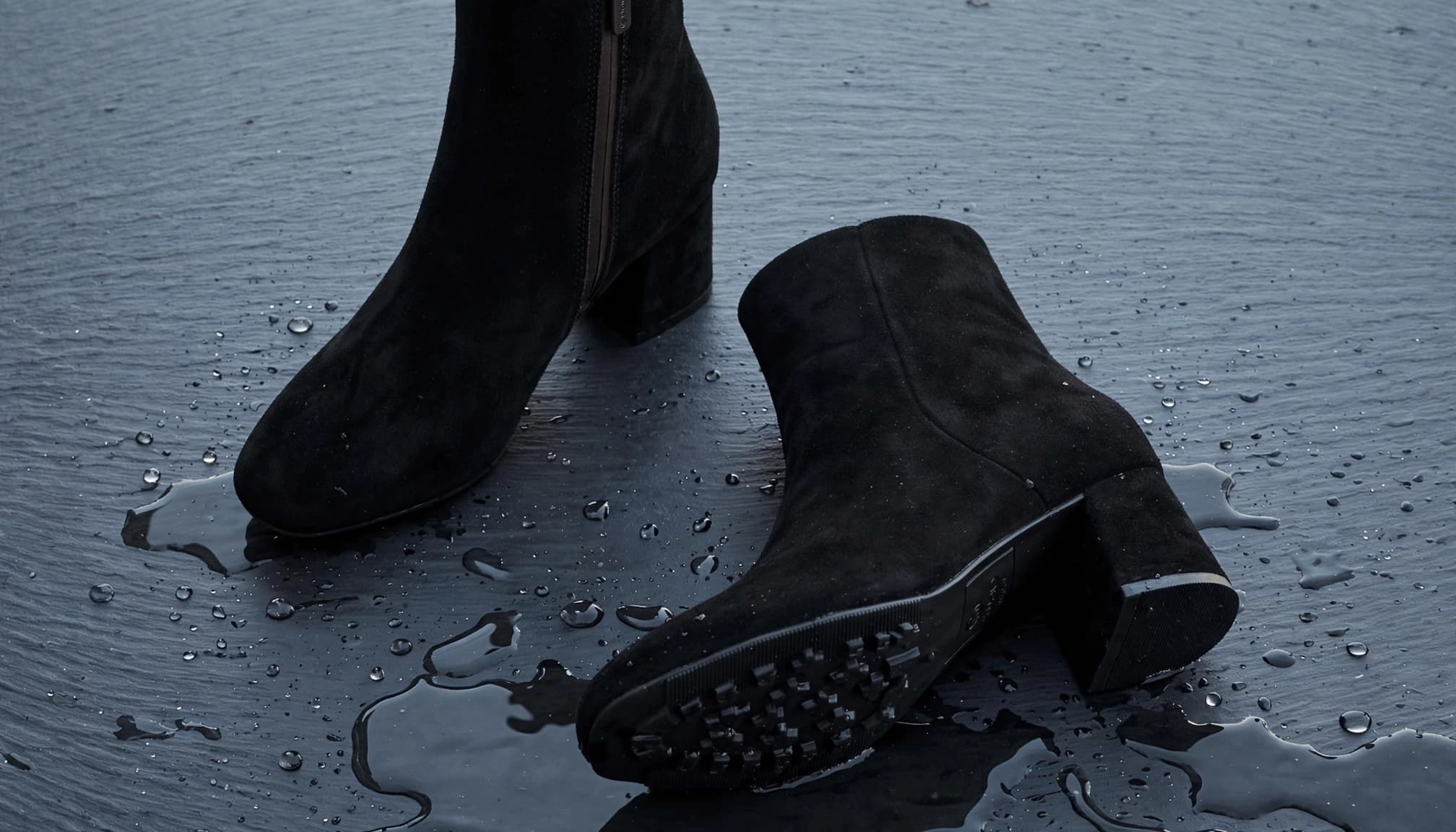
Waterproof and slip-resistant describe different jobs. Before buying, turn the boot over and inspect the outsole pattern. Smooth wet tile, painted crossings, and icy pavement can all challenge your footing, whatever the upper is made of.
If winter ice is a regular part of your route, don't treat a waterproof claim as an ice-traction claim. Check the sole and walk cautiously in freezing conditions. The right pair should suit both the weather above the pavement and the surface beneath it.
What waterproof boots can and can't do
Blondo's waterproof designation is useful for rain, damp sidewalks, and ordinary wet-weather travel. It isn't an invitation to stand in deep water indefinitely. The retailer listings don't give an immersion depth or duration for the models discussed here.
Rain protection isn't a warmth rating
A waterproof boot can block outside moisture while still feeling cold. Warmth depends on factors such as insulation, socks, fit, and the weather. Don't assume a suede upper or a taller shaft means a boot has winter insulation.
Socks also affect how your feet feel. A pair that's too thick can crowd the boot and make walking uncomfortable. If you expect to switch between everyday and warmer socks, test both before committing to a size.
Wet feet don't always mean a leak
Moisture inside a boot may come from rain entering at the top, a wet sock you put on earlier, or perspiration during a long walk. When troubleshooting, note where you first feel dampness. Water around the ankle after stepping into deep slush points to a different problem than moisture beneath the foot on a dry day.
If a boot repeatedly feels wet after normal rain exposure, inspect it for wear and contact the retailer about the pair. Avoid trying to diagnose a construction fault by soaking the boots yourself.
Care for suede, nubuck, and the waterproof finish
The Alida's suede and Valli 2.0's nubuck bring texture to wet-weather footwear. They also need more thoughtful cleaning than a quick coat of polish.
Remove salt and dirt gently
Blondo advises wiping away dirt and salt with a damp cloth. That's useful after walking on winter sidewalks, where residue can remain on the upper even after the water dries. Let the boots dry away from direct heat, then use a suede brush to restore the nap on suede.
Skip ordinary shoe polish on suede or nubuck. Polish intended for smooth leather can change the appearance of a textured upper. If you're uncertain about a mark, start with the gentlest cleaning method recommended for that material rather than scrubbing harder.
Test any care product first
Blondo recommends testing a spray protector on a small area before broader use. Its care guidance also warns against liquid silicones and oils, including mink oil, because they can affect the finish or waterproofing. For cleaners or protectors sold in vaporizer bottles, the brand advises applying the product to a cloth rather than directly onto leather.
Care products aren't a substitute for the boot's original waterproof construction. Their immediate job is to help you look after the upper. Follow the instructions for your particular pair and avoid assuming a treatment suitable for smooth leather belongs on black suede.
Compare prices without losing sight of fit
Prices differ across stores and can change with color, size, and promotions. As retailer listing examples, Nordstrom showed Cathleen at $159, while DSW showed Cathleen at $159.99. DSW also listed Mayes at $109.99, Valli at $149.99, Marina at $129.99, and McKenna at $239.99. Check the current listing before treating any of those figures as today's price.
Those differences make a model name important. Valli and Valli 2.0 shouldn't be assumed to have identical specifications simply because their names are close. Compare the actual product page, especially its upper material, measurements, and waterproof description.
At Tip Top Shoes, the most useful starting point is the specific Valli 2.0 or Alida listing linked above. If you're shopping in person, bring the socks you'll wear and mention whether your main concern is rain, slush, heel height, or room around the ankle. A few minutes walking in the boots can tell you more about fit than a measurement chart alone.
Key Takeaways
- Blondo describes AquaProtect as waterproof materials paired with seam-sealed construction; check the waterproof designation for the exact style you want.
- Shaft height limits coverage. Valli 2.0 and Alida are ankle boots, while Carolena is knee-high.
- A waterproof boot isn't automatically warm or slip-resistant. Consider socks, the outsole, and your usual walking surfaces.
- Clean salt promptly, and treat suede or nubuck with products suited to those materials.
Frequently Asked Questions
Are Blondo suede boots really waterproof?
The Alida product listing describes its black suede upper and identifies the boot as waterproof. The suede look alone doesn't tell you how a boot handles rain, so rely on the waterproof description for the exact model. Care for its finish with methods suitable for suede, including a suede brush when needed, rather than smooth-leather polish.
Can I wear Blondo waterproof boots in snow?
They can make sense for wet, snowy errands when conditions suit the boot's height and sole. However, snow deeper than an ankle boot's shaft can enter from above. Waterproofing also doesn't establish an insulation rating or guarantee grip on ice. For colder days, assess the room available for appropriate socks without squeezing your toes.
Should I size up for thick socks?
Don't size up by default. Try the boots with your intended socks and check toe room, heel movement, and pressure across the foot. An overly roomy boot can slip as you walk, while a tight one can make a long day uncomfortable. If you need a thicker sock for winter, fit the pair with that sock before choosing your size.
Conclusion
A boot can keep its promise in the rain and still be wrong for a deep puddle, an icy crossing, or your particular foot. Start with the exact model's waterproof claim, then check its shaft, sole, and fit against the route you walk.
For Valli 2.0 and Alida, that means choosing between two waterproof ankle shapes as well as two textured uppers. The better pair is the one that covers your everyday conditions and feels right after more than a few steps.


