

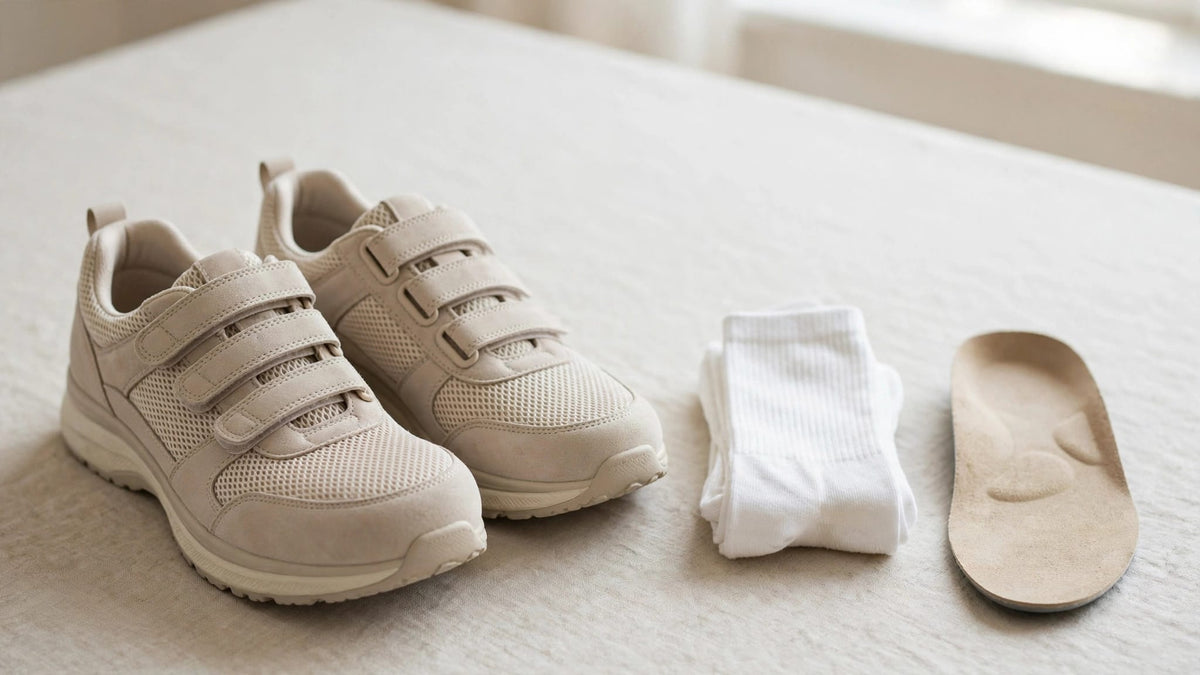
Choose shoes for diabetes by looking for toe room, a secure fit, and space for the socks or prescribed inserts you wear. Because diabetes can reduce foot sensation, comfort alone can't tell you whether a shoe is putting harmful pressure on your skin.
Daily foot care matters alongside footwear, particularly if you have numbness, circulation problems, or a history of skin damage. Start by comparing how each shoe fits, then make foot inspection part of your routine.
Key Takeaways
- Choose enough room for your toes without allowing your feet to slide or your heels to rub.
- Try both shoes with your everyday socks and any prescribed orthotics, then assess them while standing and walking.
- Inspect your feet daily and follow your clinician's footwear guidance if you have reduced sensation. New wounds or sudden changes in color, warmth, or swelling need medical attention.
What to Look for in Shoes for Diabetes
A useful shoe comparison starts with your foot's shape and your daily activities. A soft lining or cushioned sole won't compensate for pressure across your toes or an insecure heel.
Give Your Toes Space Without Losing Heel Hold
Your toes should move without curling, pressing against the upper, or hitting the front. Look at the space beside and above them, as well as the length ahead of your longest toe.
Meanwhile, your heel should stay comfortably positioned. If your foot slides forward or you grip with your toes to keep the shoe on, compare another size or shape.
Don't automatically buy a longer shoe to solve tightness across the forefoot. Added length may leave your heel loose while the original pressure remains. Width, depth, and overall shape deserve separate attention.
Compare Closures, Linings, and Underfoot Support
Laces and adjustable straps let you change how the upper holds your foot. However, fastening a poorly matched shoe more tightly can create pressure over the instep.
Feel inside the shoe for rough seams, folded lining, or other areas that could rub. Also compare the footbed: a pronounced arch contour shouldn't create a concentrated pressure point.
When choosing comfortable everyday shoes, consider where you'll walk and how long you'll wear them. Judge cushioning alongside stability, heel hold, and the room inside.
Try Shoes With Your Everyday Socks and Inserts
A seated try-on gives you only part of the picture. At our store, we recommend assessing the complete shoe, sock, and insert combination while standing and moving.
Prepare for a Realistic Fitting
Bring the socks you'll normally wear. Our guidance on how socks affect shoe fit explains why changing sock thickness changes the available space inside.
Include prescribed orthotics during the fitting. A removable footbed can help accommodate an insert, but it doesn't guarantee sufficient depth. Follow the instructions for your prescribed device rather than stacking inserts or modifying it yourself.
Try both shoes, since your feet may differ in size or shape. Fit the larger foot without leaving the other insecure. If your feet swell during ordinary wear, try shoes when that swelling is present.
Stand, Walk, Turn, and Stop
First, stand with your weight on both feet. Assess the toes, sides, instep, and heels separately. Next, walk at your normal pace, turn in both directions, and stop.
Notice whether your toes contact the front, your heel repeatedly lifts, or your foot shifts sideways. A shorter stride or toe-gripping can also indicate a poor fit.
Afterward, remove the shoes and inspect your skin for rubbing or localized redness. If you have reduced sensation, don't rely on the absence of discomfort. A clinician may need to assess the fit.
A shoe that feels painless can still cause pressure when neuropathy limits what you feel.
SAS Tour Options to Compare
Our SAS Tour listings include features worth considering when shopping for shoes for diabetes: adjustable laces, breathable uppers, and removable footbeds. We list these styles as diabetic-approved options, but individual fit and any prescribed footwear plan still determine suitability.
The SAS Women's Tour Black Mesh combines suede and mesh uppers with a padded tongue and collar. Its lace-up closure lets you adjust the hold across the top of your foot.
The removable CoolStep footbed has an anti-friction lining designed to manage moisture. The shoe also includes SAS Tripad cushioning and an Arcfit heel stabilizer. During fitting, assess how those features contact your foot rather than judging by the feature names alone.
For another color option, the SAS Tour Mesh Dust Leather offers the same listed construction features. These include the removable CoolStep footbed, adjustable laces, and a non-marking rubber outsole.
Because these are versions of the same model, the choice begins with color preference. More importantly, either pair needs enough internal space for your foot and any prescribed insert without crowding the toes or lifting the heel excessively.
When you shop with us, tell us where a shoe presses and what you'll wear it for. We can help you compare footwear features; medical footwear needs belong with your treating clinician.
Build a Daily Foot-Care Routine
Protective footwear works alongside regular skin care. A daily routine helps you notice a small change before repeated pressure or friction makes it worse.
Inspect, Wash, and Dry Your Feet
Look over the tops, soles, heels, and spaces between your toes every day. Watch for blisters, cuts, redness, cracks, or drainage. Use a mirror for areas you can't easily see, or ask someone to help.
Wash gently with lukewarm water, then dry carefully, including between the toes. Avoid soaking your feet. If sensation is reduced, don't use your feet to judge water temperature.
Apply moisturizer to dry skin, but keep it out of the spaces between your toes. Don't cut away corns or calluses or use acid-based corn removers yourself. A podiatrist can manage these areas safely.
Protect Your Feet Indoors and Outside
The American Diabetes Association advises people with diabetes to avoid walking barefoot. That includes at home, where small objects or hot surfaces can injure an unprotected foot.
Choose indoor footwear that stays securely on your foot rather than a loose slipper that requires toe-gripping. Also look inside shoes before putting them on for grit, foreign objects, or damaged lining.
Wear clean socks that don't bunch or create constricting bands. If you're considering barefoot or minimalist footwear, discuss the change with your clinician when you have neuropathy or prescribed footwear needs. A thin sole may offer less protection than your foot requires.
Know When Footwear Needs Medical Guidance
Shoes can reduce avoidable rubbing, but they can't diagnose burning, numbness, swelling, or pain. Don't assume a new symptom comes only from the pair you're wearing.
Get Individual Advice for Reduced Sensation
Neuropathy can make pressure or injury difficult to detect. Poor circulation can also complicate healing. If either affects you, follow the footwear and foot-care plan from the clinician managing your care.
A history of ulcers, recurring skin damage, or changes in foot shape also calls for individual assessment. Ordinary retail footwear may not address those needs.
Similarly, don't set aside prescribed orthotics or supportive shoes simply because another style feels softer. The prescription may address a problem you can't judge through a brief try-on. Bring recurring fit problems to your clinician's attention.
Act on Wounds and Sudden Changes
Stop wearing a shoe that causes rubbing, skin damage, or altered sensation. Contact a healthcare professional promptly for an open sore, drainage, spreading redness, or increasing warmth.
A suddenly hot, red, swollen foot needs urgent medical assessment, even if it isn't painful. Fever or an inability to bear weight adds urgency.
Get emergency care for a foot that suddenly becomes unusually cold, pale, blue, or severely painful. Don't wait for a different shoe or insole to resolve these changes.
Frequently Asked Questions
Does Everyone With Diabetes Need Special Shoes?
Some people can wear well-fitting everyday footwear. Others need therapeutic shoes or inserts based on sensation, circulation, foot shape, and their history of wounds.
Diabetes alone doesn't identify the right model. A clinician should guide footwear choices when complications or prescribed devices affect your needs. A product's diabetic-approved label doesn't establish that it suits every person with diabetes.
Can Thicker Socks Fix Shoes That Feel Loose?
Thicker socks may take up some extra space, but they can also crowd the toes or instep. They won't correct every mismatch in shoe shape.
Assess the complete combination while standing and walking. If your heel still slips or you need to grip with your toes, compare another fit. Don't keep adding thickness to compensate for a shoe that doesn't hold your foot securely.
Should New Shoes Need Breaking In?
Choose shoes that fit without pinching or rubbing from the start. Leather may soften, and a sole may feel more familiar with wear, but those changes won't make a short shoe longer.
Begin with brief periods of wear and inspect your feet afterward. Follow any wear schedule from your clinician if you have reduced sensation. Stop using a pair that causes skin irritation rather than trying to wear through it.
Make Fit and Foot Inspection Work Together
The right shoes for diabetes give your toes room and hold your feet securely. They also accommodate the socks or prescribed inserts you need. Daily inspection adds protection when your feet can't reliably warn you about pressure.
For your next fitting, bring your usual socks and inserts, and assess both shoes while standing and walking. Keep your clinician involved when sensation, circulation, wounds, or changes in foot shape affect your needs.


