

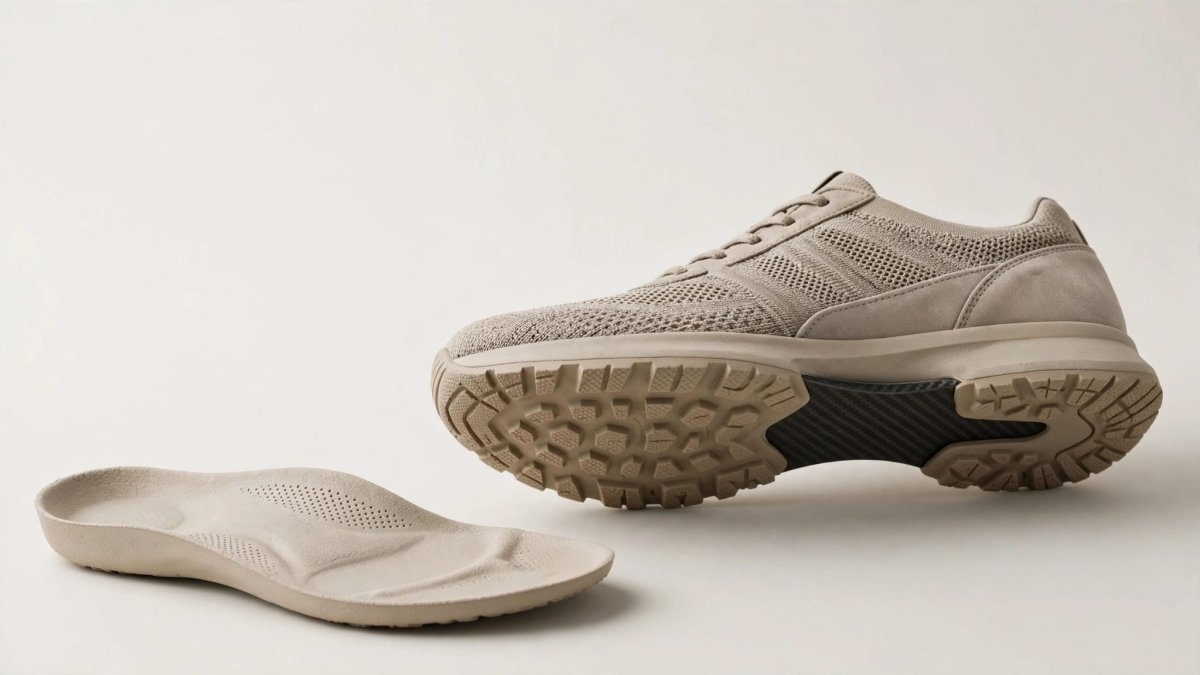
A shoe shank and an arch-support insert are different footwear features. When you're shopping for midfoot support, the shoe's overall fit matters as much as any single feature.
A supportive shoe should feel comfortable under your arch while giving your toes room to move. Start by looking at the parts of the shoe you can feel, then pay attention to how they work together as you walk.
Shoe Shanks and Midfoot Support
The midfoot is the area between your heel and the ball of your foot. When a shoe feels supportive there, you may notice contact beneath your arch and a secure fit around the middle of your foot.
That sensation comes from more than one part of a shoe. The footbed, the shape of the sole, and the way the upper holds your foot can all affect how it feels. A shoe shank is a separate feature, so a soft or shaped footbed alone doesn't tell you whether a shoe has one.
For shoppers, the distinction matters because product descriptions often use "support" as a broad term. Look for details about the features a shoe offers, then judge whether its fit works for your feet.
How a Shoe Shank Differs From an Insole
An insole is the layer inside the shoe that sits directly beneath your foot. A shank and an insole are different features, and each belongs to a different part of the support discussion.
Insoles Shape the Surface Underfoot
Some insoles are flat and cushioned, while others have a raised area beneath the arch or a contoured heel. The shape changes where you feel contact when you stand and walk.
For example, our Pedag Men's Viva Full Insoles have a semi-rigid longitudinal arch. They're an option for shoppers who want a separate insert with a more structured feel underfoot.
Inserts Change the Fit Inside a Shoe
A removable insert takes up space. In a roomy shoe, that may be comfortable, but in a close-fitting dress shoe, it can leave too little room above your toes or across your instep.
If the original insole comes out, try the new insert in its place rather than stacking them. Then walk in the shoes and notice whether your heel stays secure and your toes still have room.
How to Judge Midfoot Support in Person
A product description can narrow your choices, but standing and walking tell you more about how a shoe fits your foot. Wear the type of socks you expect to use with it.
Start With the Fit Around Your Arch
Stand in both shoes and notice where the footbed meets your arch. Contact should feel comfortable rather than sharp or concentrated in one spot. Also pay attention to the width: a shoe that presses against the sides of your midfoot can feel restrictive even if its footbed is cushioned.
Adjust the laces or other closure before judging the fit. Your foot should feel held in place without needing to pull the shoe excessively tight.
Walk at Your Normal Pace
Take several passes across the room, including a few turns and stops. Notice whether your heel slips, your foot moves forward, or the arch feels different once you start walking.
Our guide to testing shoe fit covers what to notice while standing and moving. If a shoe creates uncomfortable pressure during a short try-on, choose another fit or style instead of counting on that pressure to disappear.
Supportive Shoe Features to Compare
A shoe shank is only one feature shoppers may encounter in a product description. When comparing shoes, look at the footbed and sole as well, and avoid assuming that two models will feel alike because both are described as supportive.
Footbeds and Heel Cups
A contoured footbed creates contact beneath different parts of your foot. A heel cup surrounds the heel and changes how it sits in the shoe. Neither feature should force your foot into a position that feels uncomfortable.
Our Finn Comfort Ikebukuro walking shoes have an anatomical heel cup and a rocker-shaped forefoot and heel. The shape produces a different walking feel than a flatter sole, so try it in motion before deciding whether you like it.
Cushioning and Adjustable Closures
Cushioning can make the surface underfoot feel softer, but softness alone doesn't tell you how a shoe will fit around your midfoot. An adjustable closure lets you change how closely the upper holds your foot.
The Mephisto Match walking shoe combines a leather upper with speed lacing and a padded collar. Those features give shoppers a different fit and feel to consider alongside the shoe's cushioning. Neither example should be taken as a claim about whether the shoe contains a shank.
When to Consider an Arch-Support Insert
An insert can be useful when you like a shoe's fit but want a different feel beneath your arch. Start with shoes that have enough interior room, and pay attention to how the insert changes the fit around your heel and toes.
Keep the original insoles until you've tried the new pair. That makes it easy to compare the two under the same conditions. Also try both shoes, since your feet may not feel identical.
If you have persistent foot pain or need help choosing an insert for a medical condition, a podiatrist can assess your needs. A supportive feature should feel comfortable during normal movement, not create a new pressure point.
Choose the Support That Feels Right
Shoe shanks, footbeds, and inserts are distinct features. For a shopper, the most useful test is how the whole shoe fits when you stand and walk.
Compare the contact under your arch with the space around your toes and the hold at your heel. The right choice is the shoe that feels comfortable through your normal stride.


