

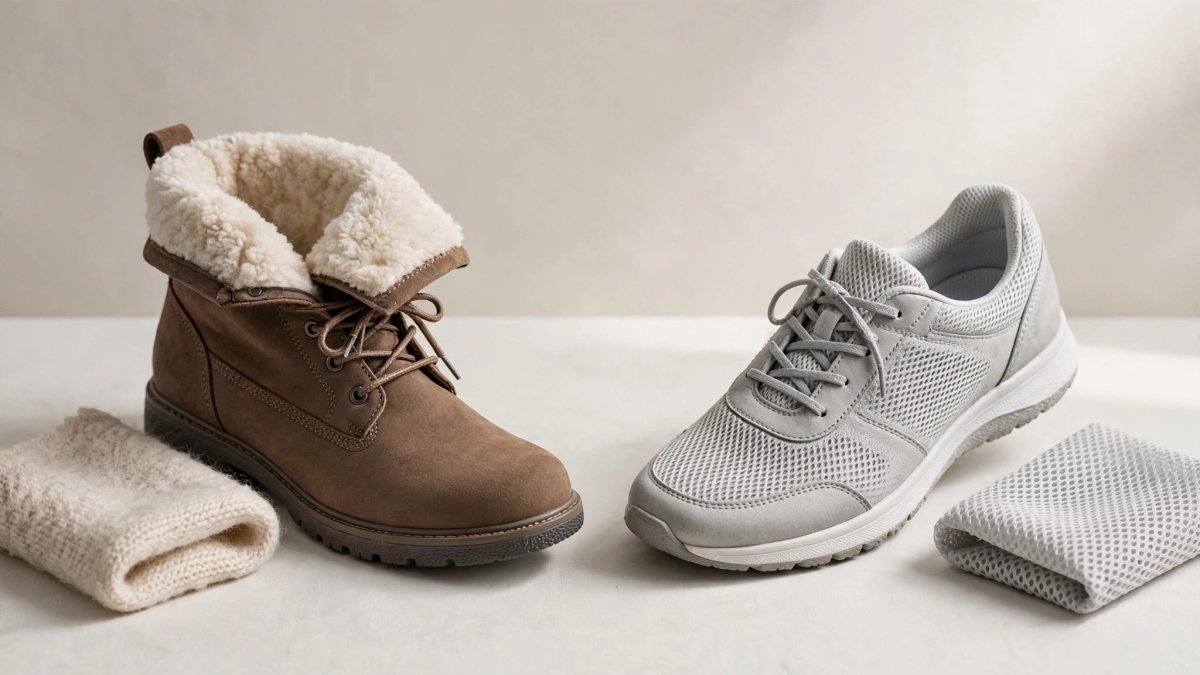
Shoe lining materials affect how warm a shoe feels against your foot and how moisture moves inside it. A plush lining can add warmth, while a lighter interior may feel more comfortable when temperatures rise.
The lining is only one part of the picture. Insulation, airflow, socks, and weather protection also shape how a shoe feels during the day. Here's how to compare those details before choosing a pair.
What a Shoe Lining Changes
The lining is the material on the inside of a shoe, where it comes into contact with your foot or sock. Depending on the design, the material underfoot may differ from the lining around the sides.
Warmth and insulation
A soft, thick lining can hold a layer of air near your foot, which helps reduce heat loss. That's appealing in a winter boot or a slipper, but the same interior may feel too warm in a heated office.
A lining isn't necessarily the shoe's main insulation. Some winter footwear has a separate insulating layer between the lining and the outer material. The sole, boot height, sock thickness, and your activity level also affect how warm your feet feel.
Moisture and airflow
Feet release moisture throughout the day. A lining can affect how that moisture feels against your skin and how it moves within the shoe.
Absorbing moisture and moving it away from the skin are different functions. Neither means the shoe will dry immediately. Air still needs a path out, and an enclosed shoe may retain moisture longer than an open or ventilated design.
Comparing Common Shoe Lining Materials
A material name is a useful starting point, but it doesn't tell you how the whole shoe will feel. Thickness, construction, and the layers around the lining all matter.
Wool and sheepskin
Wool and sheepskin have a soft feel that many shoppers like in cold-weather footwear. Sheepskin can add insulation, while the texture underfoot gives a boot or slipper a different feel from a smooth lining.
Our UGG Girls Classic Mini has an UGGpure lining and a wool-lined cushioned footbed. Its description identifies warmth and breathability as features of that footbed. It's a useful example of a cozy interior, though the lining alone doesn't make the boot waterproof.
When comparing plush styles, notice how much room remains around your toes. A thick interior takes up space that a thinner lining wouldn't.
Leather and textile linings
Leather linings offer a smooth surface against the foot, which some shoppers prefer in dress shoes and everyday styles. Their feel depends on the leather and the rest of the shoe's construction.
Textile linings cover a broad range, including soft fleece and lighter fabrics. A fleece-lined shoe may feel warmer at first contact than a smooth-lined shoe, while a lightweight textile may appeal when you want less bulk. Labels alone can't tell you how much airflow a particular pair provides, so compare the complete shoe.
Separate Inside Moisture From Outside Water
A damp feeling inside your shoes can come from foot moisture, rain, or both. The distinction matters because warmth and water protection are separate features.
For a wet commute, look for footwear described as waterproof rather than assuming a warm lining will keep rain out. Water-repellent treatments can help with light moisture, but they don't turn a casual suede boot into a waterproof boot.
A waterproof design also doesn't make a shoe automatically warm. If you'll spend time outside in cold, wet conditions, consider insulation and coverage alongside the waterproof construction. Water can still enter through the opening if it reaches above the top of the shoe.
For warmer, drier days, mesh panels or perforations may give a shoe a more open feel. Our guide to choosing shoes for burning feet looks at ventilation and fit together, since neither a lining nor an open upper is a treatment for a persistent symptom.
Try the Lining With Your Everyday Socks
The material touching your foot may be your sock rather than the shoe lining. A thick sock adds another layer and changes the fit, while a thin sock leaves more room inside. Socks can also absorb or move moisture, depending on their material and construction.
Try both shoes with the socks you expect to wear most often. Your toes should move freely, and your heel should feel secure when you walk. Don't count on a plush lining compressing enough to fix a shoe that feels cramped at the start.
Run your hand around the inside before trying a pair. Notice any seams or edges that might rub, then walk in the shoes to see how those spots feel against your feet. A lining can feel soft to your hand yet uncomfortable when your foot moves against it.
If you plan to wear a shoe without socks, assess it that way during the try-on. The interior's texture and seams may feel different against bare skin.
Give Shoes Time to Dry Between Wears
Even a comfortable lining needs time to air out after a long day. Open the shoes after wearing them and remove the footbeds if they're designed to come out. Rotating pairs gives each interior more time to dry.
If shoes get wet, let them air-dry away from direct heat. You can loosely fill them with paper to help maintain their shape. Our everyday shoe care guide covers material-specific care for the outside of the shoe as well.
Suede and sheepskin need particular attention in winter. Salt can leave marks, and repeated moisture can change an upper's texture. Use care products intended for the material, and test them on a hidden area first.
Choose for the Conditions You Wear Most
The right lining depends on where you'll wear the shoe and how warm you like your feet. Plush materials can make a cold-weather pair feel cozy, while a lighter interior may suit heated spaces.
Consider the whole shoe, including its fit and protection from water. Then try it with your usual socks and choose the pair that feels comfortable as you move.


