

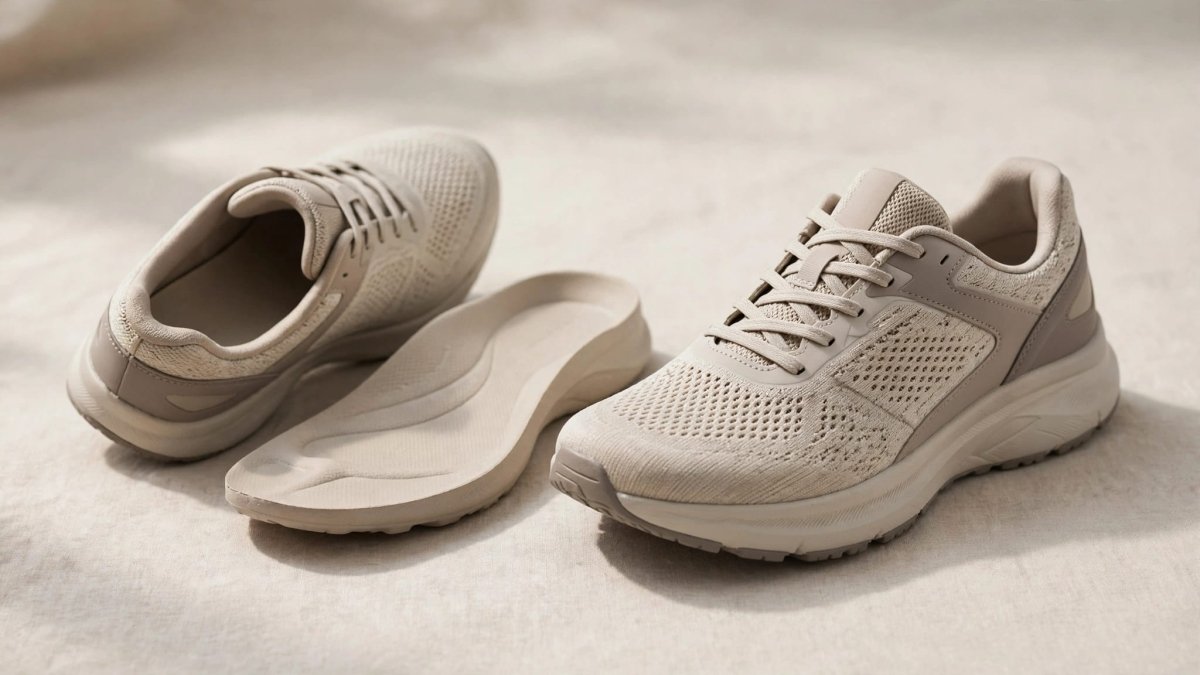
The best shoes for flat feet feel supportive without pressing painfully into your arch. Look for a footbed that makes comfortable contact, along with enough room for your toes and a secure fit at the heel.
Flat feet don't all have the same shape, so a shoe that works for someone else may feel uncomfortable on you. Start with the way the whole shoe feels when you stand and walk.
Key Takeaways
- Choose arch contact that feels comfortable, rather than a raised contour that creates a pressure point.
- Give your toes room to move, and look for a heel that stays secure without excessively tight laces.
- Consider a removable footbed if you wear an insert or want the option to change the support.
- Try both shoes with your usual socks, then walk, turn, and stop before deciding.
- Seek advice from a podiatrist if pain persists or your foot shape changes.
What Flat Feet Mean for Shoe Fit
Flat feet have a low or absent arch when bearing weight. Some people have flexible flat feet, where an arch appears when the foot isn't bearing weight. Others have a flatter shape whether they're standing or sitting.
Many people with flat feet have no pain and don't need special treatment. Others experience discomfort or find that certain shoe contours press against the underside of the foot.
A low arch doesn't tell you exactly how wide your foot is, how much cushioning you prefer, or where a shoe's support will touch. It also doesn't mean you need the most structured shoe on the shelf.
The goal is to find a shape that fits your foot and feels steady during your usual activities. Start with the footbed, but assess the rest of the shoe too.
Choose Arch Support That Feels Comfortable
Arch support can range from a gentle rise to a pronounced, firm shape. Neither the height nor the firmness tells you on its own whether a shoe will suit you.
Compare the shape and placement
When you stand, notice where the footbed meets your arch. Broad, comfortable contact may feel good, while a small, hard spot may mean the contour doesn't match your foot.
Placement matters as much as height. A raised area can feel intrusive if it sits too far forward or back for your foot, even when the contour looks modest.
Our Rieker D0T09-04 shoes offer one shape to compare. They have soft arch support and stretch material at the forefoot. Try them while standing and walking to judge how that support feels under your own feet.
Don't confuse softness with stability
Cushioning and support are different features. Cushioning softens the surface underfoot, while the footbed and sole shape affect how the shoe feels as you move.
A plush shoe can feel pleasant at first yet feel unsteady during a turn. On the other hand, a firmer sole may feel secure but put too much pressure beneath your arch. Compare the complete shoe rather than judging it by pressing the foam with your hand.
If a shoe creates painful arch pressure during a short try-on, choose another fit or style rather than counting on wear to fix it.
Give Your Feet Room Without Losing Heel Hold
Shoes for flat feet should fit comfortably around the entire foot. If the forefoot is crowded or the heel moves around, a comfortable arch alone won't make the pair a good fit.
Look beyond the size number
Stand in both shoes and give your toes room to move without curling or pressing against the front or sides. The widest part of your foot should fit without squeezing.
If a shoe feels tight at the sides, a wider size or a different toe-box shape may help more than a longer shoe. Extra length can leave your foot sliding forward without solving the width problem.
The Kizik Lima 2 Lite has a generous toe box and comes in wide and extra-wide sizes. Its molded foam midsole and shaped insole give you another combination to compare, though the fit still depends on your foot.
Adjust the closure without squeezing
Laces and adjustable straps can help hold your foot in place. They should feel secure without pressing painfully across the top of your foot.
Some heel movement can occur as you walk, but repeated rubbing or substantial slipping calls for another fit. If you have to pull the closure uncomfortably tight to keep the shoe on, try a different shape rather than accepting pressure over your instep.
Decide Whether You Need a Removable Footbed
A shoe's original footbed may feel comfortable as it comes. A removable one gives you the option to use a suitable replacement or an orthotic, provided the shoe has enough room.
Compare built-in support with replaceable options
A removable footbed is useful when you already wear an insert or want more flexibility in how the shoe feels. For example, our Dansko Pro XP 2.0 clogs have a removable dual-density insole with cushioning and an arch stabilizer. The model is available in medium and wide widths.
Try the original footbed before deciding to replace it. If its contour creates a concentrated pressure point, a removable design gives you another option, but the rest of the clog must still fit well.
Leave space for your insert
The Taos Banter leather flat has a removable footbed and is designed to accommodate orthotic inserts. It also has cushioning beneath the forefoot, giving you a dressier option to compare with a sneaker or clog.
When fitting a replacement insole, remove the original footbed if appropriate. The new insert should lie flat without buckling. Don't stack it over the existing footbed unless that arrangement is appropriate for both the shoe and the insert.
Then reassess the fit. An insert can reduce room over your instep, crowd your toes, or raise your heel enough to cause slipping. If you use prescribed orthotics, bring them when you shop and ask the prescribing clinician about any needed changes.
Compare Different Footbed Shapes
Some shoppers prefer a gentle, cushioned feel. Others like a more defined footbed. These two styles offer different shapes and closures to try.
A lace-up shoe with a shaped footbed
The Finn Comfort Vassa is a men's leather lace-up with a footbed described as molding to the shape of the foot. Its product details list flat feet among the conditions it helps with.
The Vassa gives you a more structured option to compare with a softer-feeling shoe. Pay attention to the location of the arch contour as well as the room across the front. If the shape presses into one spot, another footbed may be a better match.
A sandal with adjustable straps
The Naot Kayla sandal has an anatomical cork-and-latex footbed, an adjustable instep strap, and a backstrap. A wide option is also available.
Its shaped footbed offers a different sensation from a flatter sandal. Adjust the straps, then walk to see whether your foot stays comfortably in place and the arch contact feels right. A footbed that molds over time should still feel comfortable during the initial try-on.
Test Shoes for Flat Feet While Standing and Walking
Product descriptions can narrow your choices, but your feet experience the entire shoe at once. Give each pair a fair comparison under conditions close to how you'll wear it.
Start with both feet on the floor
Wear the socks you expect to use with the shoes, and bring any inserts you plan to wear. Sock and insole thickness change the space available inside.
Put on both shoes and fasten them as you normally would. Then stand with your weight on your feet. Notice the arch, the sides of your forefoot, the top of your foot, and each heel. Your longest toe should clear the front, and your toes should move freely.
Feet can differ in size and shape, so assess each side. An afternoon fitting can also be useful for everyday shoes because feet may swell during the day.
Walk, turn, and stop
Take several passes at your normal pace. Turn in both directions and come to a comfortable stop. Notice whether the arch feels different as your weight moves forward, or whether your toes slide toward the front.
Watch for heel rubbing, sideways movement, or a sole that bends awkwardly beneath your forefoot. If you grip with your toes to keep the shoe on or shorten your stride, compare another pair.
At home, try shoes on a clean indoor surface. If you feel pain, stop the try-on. Localized redness after walking can help you identify an area to reassess, although a mark alone doesn't establish its cause.
Match the Shoe to Your Routine
For everyday walking, prioritize a secure closure and a sole that feels comfortable through your normal stride. If you'll be on your feet for long periods, compare how the shoe feels while standing as well as walking.
For work, consider the demands of the setting. A clog, for example, may offer different heel movement and a different sole shape than a lace-up shoe. Try both if you're deciding between styles.
For running or other exercise, test footwear with the socks and inserts you use for that activity. Shoes labeled for stability can feel different from one another, so compare their footbeds rather than assuming the label guarantees a comfortable fit.
Frequently Asked Questions
Do flat feet need arch support?
Flat feet don't automatically need a particular level of support. Some people feel comfortable with a gentle contour, while others prefer more structure. Choose a shoe that feels comfortable during movement. If you have persistent pain, a podiatrist can assess your needs.
Are flat shoes better for flat feet?
A flatter footbed may feel comfortable if a pronounced arch presses into your foot. However, a flat shoe can still crowd your toes or slip at the heel. Judge its fit, sole, and comfort in motion rather than its arch height alone.
Should I size up to relieve arch pressure?
Not automatically. If your toes need more length, a larger size may help. If the footbed contour is pressing into your arch, a different shoe shape may work better. For pressure at the sides, compare a wider fit before adding length.
Can I use an insole with any shoe?
An insole needs enough space to lie flat without crowding your foot or lifting your heel excessively. Shoes with removable footbeds can make fitting a replacement easier. Always test the shoe and insert together while walking.
Choose the Fit That Feels Right
Comfortable shoes for flat feet start with a footbed that contacts your arch without causing pain. Toe room, heel hold, and a steady feel through your stride matter just as much.
Compare a few shapes in both shoes, using your usual socks and inserts. At Tip Top Shoes, you can try styles with us at 155 West 72nd Street in New York City.


