

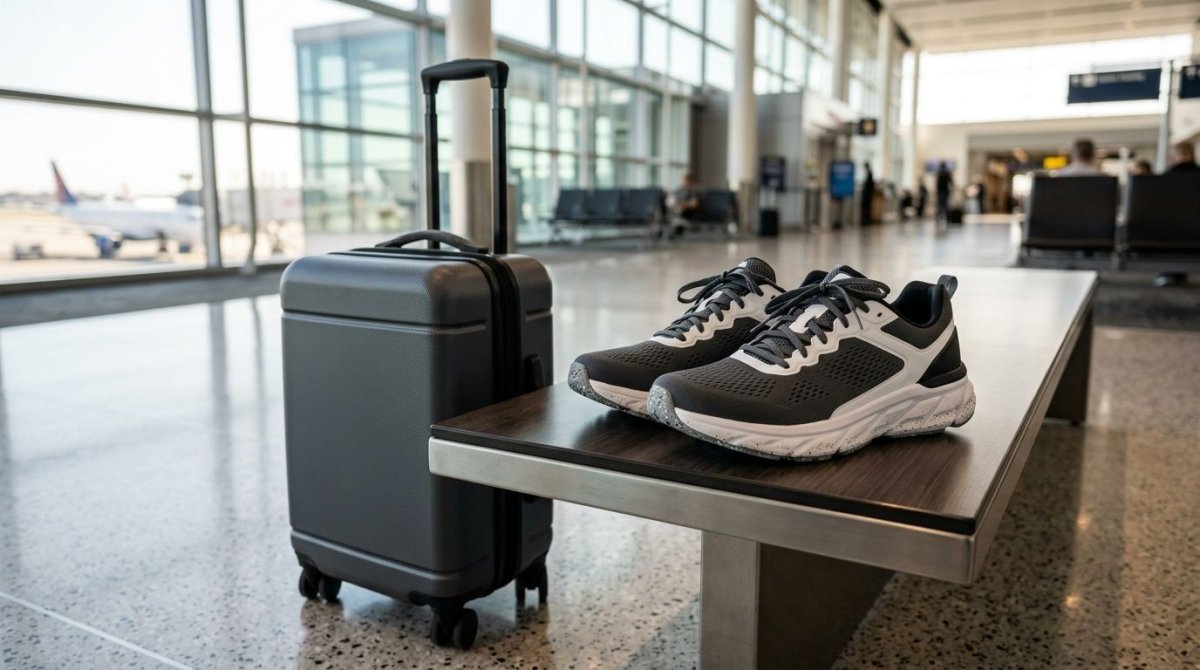
Airport walking hides in plain sight. A day that starts with a gate change can end with museum floors, city blocks, and a late hotel check-in.
On running shoes travel best when they support more than the walk to your gate. The right pair needs enough cushion for hard floors, a secure fit after hours of sitting, and a shape that still feels good when you pick up the pace.
Model names matter less than how the shoe fits your trip, your feet, and the miles between coffee and bedtime.
Airport Miles Put Different Demands on Your Feet
Airports combine surfaces that most daily routines don't. You move across hard tile, stand in slow lines, sit for long stretches, then walk again with luggage shifting your balance.
Hard floors magnify small fit problems
Polished terminal floors and concrete sidewalks don't soften your landing. A shoe that feels acceptable for a quick errand can feel flat and harsh after several hours of walking.
Look for cushioning that protects your feet without making the platform feel wobbly. Your heel should stay centered over the midsole when you turn quickly or walk down a jet bridge. A secure upper matters because feet slide forward on declines, especially when you carry a shoulder bag.
The forefoot also needs enough room for your toes to spread. Pressure at the little toe or top of the foot usually gets worse during a long travel day.
Cabin time changes how shoes fit
Feet often swell after prolonged sitting. That's why a pair that feels snug at home may feel restrictive before landing.
Try travel shoes later in the day, when your feet are closer to their largest size. Wear the socks you plan to use, then walk on a hard surface for at least 10 minutes. Leave roughly a thumb's width in front of your longest toe, but don't accept heel lift as the tradeoff.
A travel shoe should feel secure before you lace it tightly. Over-tightening can create numbness across the top of your foot.
How On running shoes travel through an airport day
On shoes combine lightweight uppers with CloudTec cushioning, which uses individual hollow elements in the midsole. The result is often a light, springy step that suits long terminals and daily city walking.
However, each On model places cushioning, structure, and flexibility in a different balance. The On Running shoe design history helps explain why two shoes with a similar silhouette can feel very different underfoot.
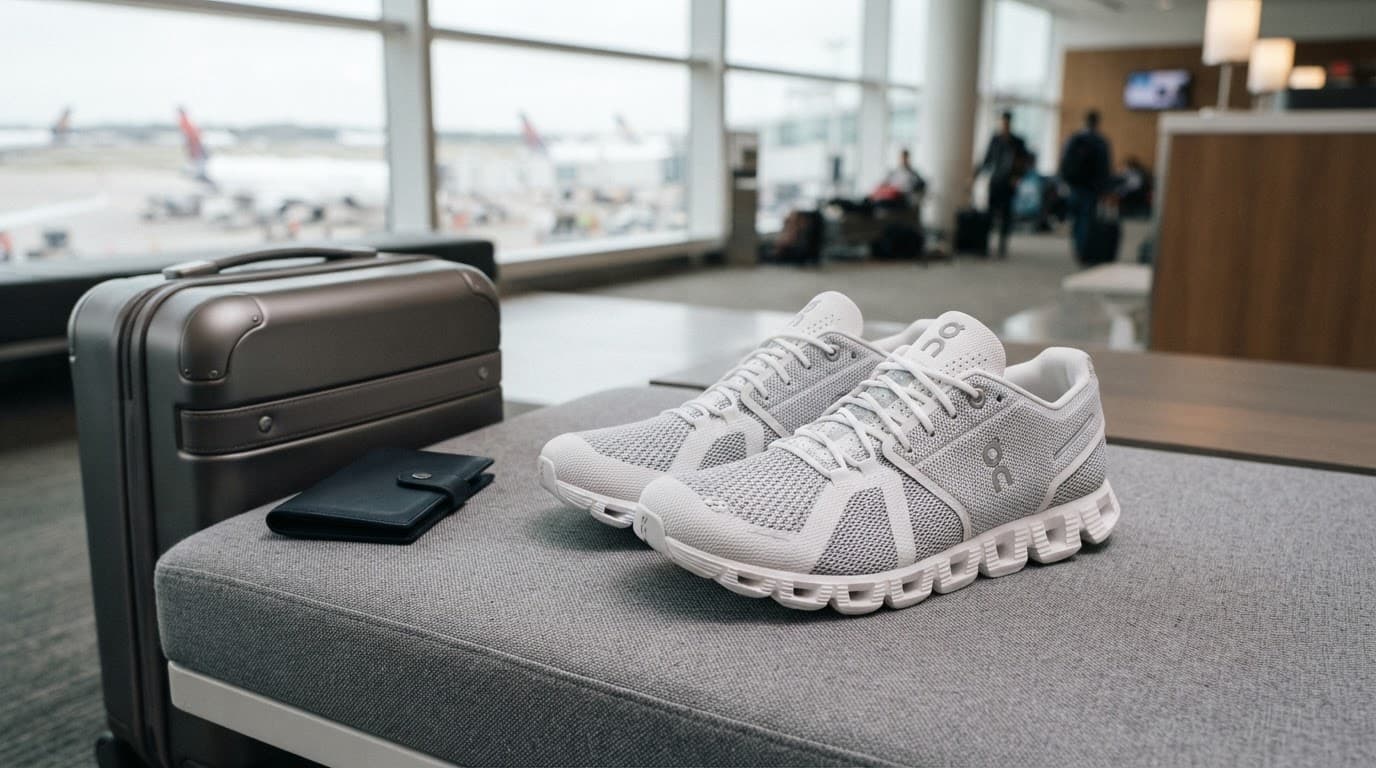
Cushioning should feel stable, not spongy
Softness alone doesn't make a better walking shoe. On an airport day, your feet handle abrupt turns, moving walkways, stairwells, and uneven sidewalk joints outside the terminal.
A moderately cushioned shoe often feels more natural for this mix than the tallest possible platform. It lets your foot roll forward while keeping you close enough to the ground for confident steps.
A shoe can feel plush while standing in a store, then feel unstable after 20 minutes of brisk walking. Test the movement you will repeat during your trip.
The upper and outsole matter as much as the foam
A breathable mesh upper helps on warm flights and active sightseeing days. Still, a flexible upper needs enough structure around the heel to stop unwanted movement.
Check the outsole before you commit. If your itinerary includes gravel paths, park walks, or cobblestones, inspect the grooves for trapped debris after each day. Also consider your climate. Waterproof uppers help in wet conditions, while standard mesh usually feels cooler in dry weather.
Choose On Shoes for Travel by Your Itinerary
On running shoes travel well only when the model matches the kind of walking you expect. A quick work trip needs a different shoe than a week of city exploring.
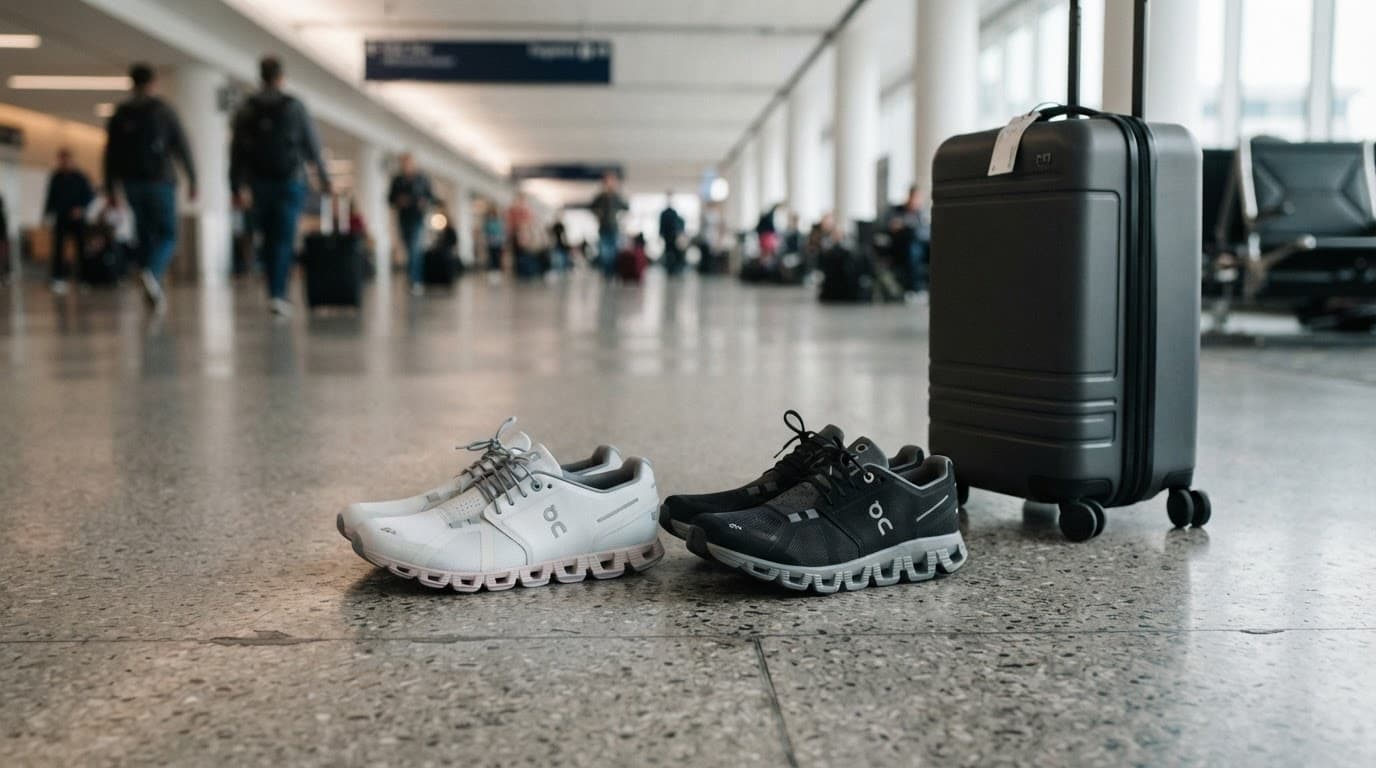
Choose the Cloud 6 for a versatile one-shoe trip
The Cloud 6 is the strongest all-purpose choice for travelers who want a light, clean-looking sneaker for airports, casual dinners, commutes, and moderate sightseeing. On positions it as an all-day lifestyle shoe, and the men's version weighs 267 grams with an 8 mm drop.
In August 2026, On lists the standard Cloud 6 at $160. The updated shoe has a wider opening, improved heel construction, and added reinforcement around high-wear areas. Those details make the On Cloud 6 everyday sneakers a practical option for travelers who prefer one pair on their feet and one less item in a suitcase.
The Cloud 6 Waterproof costs $180, while the Cloud 6 Wide remains $160. Choose the waterproof version for a rainy forecast, not as a default for every warm-weather trip.
Pick the Cloudtilt for walking-first comfort
The Cloudtilt suits travelers whose plans center on walking. On describes the Cloudtilt Remix as an all-day walking shoe, and the line uses CloudTec Phase cushioning with Helion foam for a smooth heel-to-toe transition.
Its sock-like construction and speed laces make it easy to put on, although you should still adjust the fit before a full day outside. The women's Cloudtilt Bloom/Sakura weighs 229 grams, while the men's Pearl/Ice version is listed at 303 grams.
At $170, the Cloudtilt costs slightly more than the Cloud 6. It makes sense when long city walks and standing in galleries or queues matter more than a traditional running-shoe feel.
When More Cushioning or Support Makes Sense
Some travelers need more structure than a lifestyle sneaker provides. If your usual walking shoe has guidance features or you regularly finish trips with tired legs, consider a running-focused option.
Cloudrunner 2 adds a steadier ride
The Cloudrunner 2 is a supportive daily running shoe that also works well for extended airport walking. Its heel clip, reinforced upper, and plush tongue create a more held-in feel than the Cloud 6 or Cloudtilt.
On lists the Cloudrunner 2 at 277 grams, with a 10 mm drop and a $160 price. Its Helion foam and CloudTec cushioning absorb impact, while the updated outsole helps reduce trapped stones. The On Cloudrunner 2 supportive running shoes are a better match if you value guidance and a secure heel over a minimal, casual profile.
Try them with your usual socks and orthotics, if you wear them. A support shoe should feel natural under your arch, never intrusive.
Cloudmonster suits cushion-first travelers
The Cloudmonster is built around a larger, springier cushioning experience. Its CloudTec midsole, Helion foam, and Speedboard create more rebound than the Cloud 6.
The men's On Cloudmonster Black/Black weighs 278.1 grams and has a durable rubber outsole for daily wear. It can be a good choice when you already enjoy max-cushioned running shoes and want that familiar feel on a trip.
Still, the Cloudmonster line is primarily a running option. Its higher, more energetic platform may feel less steady on uneven streets than the Cloudrunner 2. Test it with a loaded bag before making it your airport pair.
Fit On Shoes for a Full Day of Walking
On running shoes travel better when you fit them for the end of the day, not the first five minutes in a store. A good fit prevents more discomfort than any feature printed on a shoe box.
Start with your travel socks and usual inserts
Bring the socks you wear on flights and long walks. Thin no-show socks change the fit differently than cushioned crew socks, especially around the heel and instep.
If you use orthotics, test them in the shoe before buying. An insert can reduce interior volume and turn a comfortable fit into a tight one. Remove the shoe's original insole only if your orthotic maker recommends it and the replacement sits flat.
Walk at a normal pace, then take several faster steps. Your heel should remain stable without pressure at the Achilles tendon.
Check the toe box, width, and lacing
Your longest toe needs clear space in front, and the upper should not press down on your toenails. Pay attention to the widest part of your forefoot. The material should rest against your foot without bulging or pinching.
On offers a Cloud 6 Wide for travelers who need more room through the forefoot. Don't size up solely to gain width, because extra length can create heel slip. Choose a wide version when the shoe's length feels right but its sides feel restrictive.
Re-lace the shoe before you decide. A looser forefoot and secure heel can make a major difference after a flight.
Airport and Hotel Habits That Protect Comfort
Even the best travel sneaker needs a little planning. Wear your larger, heavier pair on the plane rather than packing it, especially if it is your only dependable walking shoe.
Keep shoes ready for security and the flight
Security rules vary by airport and screening program, so don't choose footwear only for quick removal. Instead, wear clean socks and use a lace setup you can loosen without pulling the shoe completely apart.
Once you are seated, loosen the laces slightly if your feet start to swell. Before landing, tighten them again for a secure walk through the terminal. This small adjustment reduces pressure without sacrificing stability.
If your trip includes a connection, keep your shoes accessible. You may need them for an unexpected gate change or a long walk to baggage claim.
Dry, clean, and reset them overnight
After a wet day, remove the insole if it comes out easily and let the shoes air-dry away from direct heat. A radiator or hair dryer can distort foam and weaken glued sections.
Brush grit from the outsole, especially around CloudTec elements. Then loosen the laces and open the tongue so moisture can escape. Starting the next morning with dry footwear matters more than packing a second pair you won't wear.
The Right Pair Makes Travel Miles Easier
A strong airport shoe keeps your feet comfortable without demanding attention. It should fit securely, leave room for normal swelling, and match the amount of walking your plans require.
The Cloud 6 is a smart default for versatile travel. The Cloudtilt favors walking comfort, while the Cloudrunner 2 and Cloudmonster suit travelers who prefer greater support or cushioning.
On running shoes travel best through airports and city streets when you choose the pair for your real itinerary, then test it before departure.


